

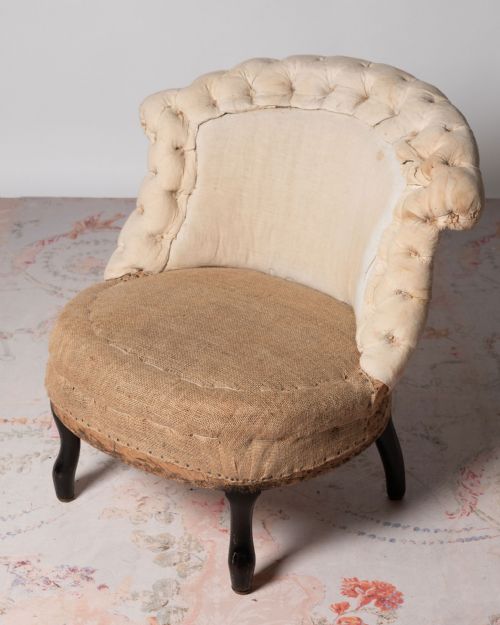


Tufted Boudoir Chair
A tufted boudoir chair offers intimate seating with low profiles and deep buttoning, making it an essential addition to a bedroom or dressing room.
Tufted Boudoir Chair
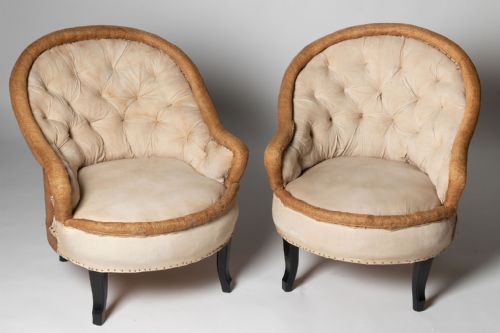
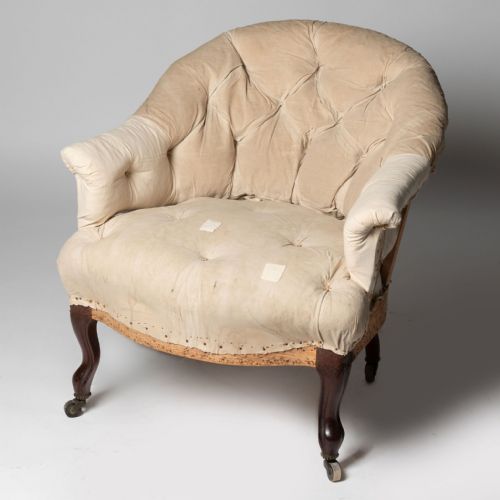
When you search for a tufted boudoir chair, you encounter nineteenth-century seating designed for private chambers, incorporating low seats and upholstered backs.
The versions most commonly met on this page originate from nineteenth-century France and Victorian Britain, frequently categorised as slipper chairs, accent chairs, or bedroom chairs.
Makers of the period shaped these armchairs with curvaceous silhouettes, often mounting them on gilt legs or adding decorative fringe to the base.
How they were made
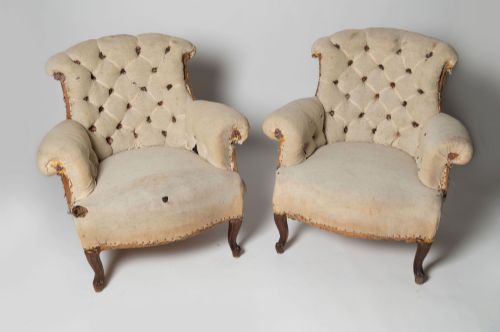
These nineteenth-century seats rely on sturdy wooden frames, predominantly constructed from beech, which provide the structural foundation for deep upholstery.
Traditional layers utilise hessian, calico, linen, and cotton fabrics to build the padded forms, finished with tight button tufting across the backrest.
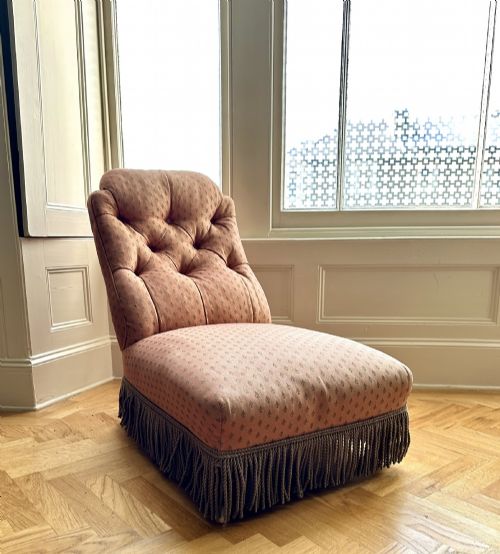
Visible details incorporate metal elements such as brass components alongside gilded wooden legs, while lower edges often display textile fringes.
Tufted Boudoir Chair Retail Price Guide 2026
Typical asking prices for tufted boudoir chair among the pieces listed under this phrase on Sellingantiques today, from the lower quarter to the upper quarter. They describe what is for sale here now, not the wider market.
Fringe edges let these little seats sweep the floor in true nineteenth-century style.
What varies in quality
The standard of a nineteenth-century boudoir chair rests upon the execution of the button tufting and the harmonious curves of the wooden frame.
Subtleties in the silhouette separate standard bedroom seating from finely shaped French Napoleon III or chateau examples with gilt details.
The integrity of the underlying beech structure and the precision of the upholstery work dictate the overall refinement of the piece.
The Tufted Boudoir Chair Glossary
- Slipper chair
- An armchair featuring short legs that sit close to the floor, traditionally designed for dressing rooms.
- Napoleon III
- A nineteenth-century French design style noted for opulent upholstery and revival influences.
- Hessian
- A coarse woven fabric utilised as a traditional foundation layer beneath outer upholstery textiles.
- Calico
- A plain-woven cotton cloth employed in traditional furniture construction for internal lining and stuffing containment.
Tufted Boudoir Chair: Frequently Asked Questions
Where do I put a boudoir chair?
These low seats function well in bedrooms or dressing rooms where space is intimate and furniture heights remain understated. Their compact proportions allow them to sit comfortably beside dressing tables or in corner spaces.
They also serve as occasional accent seating in living areas, adding nineteenth-century French character without overwhelming the room.
How do I identify a Victorian chair?
Nineteenth-century British pieces often display distinct joinery methods and specific wood choices like beech beneath the upholstery layers. Examining the internal webbing and padding materials helps confirm the period.
French examples from the same era frequently exhibit more curvaceous frames and gilt decorative elements.
What is a slipper chair?
A slipper chair is an upholstered seat built with low legs, historically intended for ladies to sit upon while dressing. The absence of arms makes dressing easier.
Nineteenth-century versions often incorporate deep tufting and decorative fringes along the base.
Are these chairs comfortable?
The low profile and deep buttoned backrests were originally designed for relaxed repose in private chambers. Traditional stuffing methods create a firm yet supportive sit.
Their compact scale means they are built for lounging rather than upright dining.