
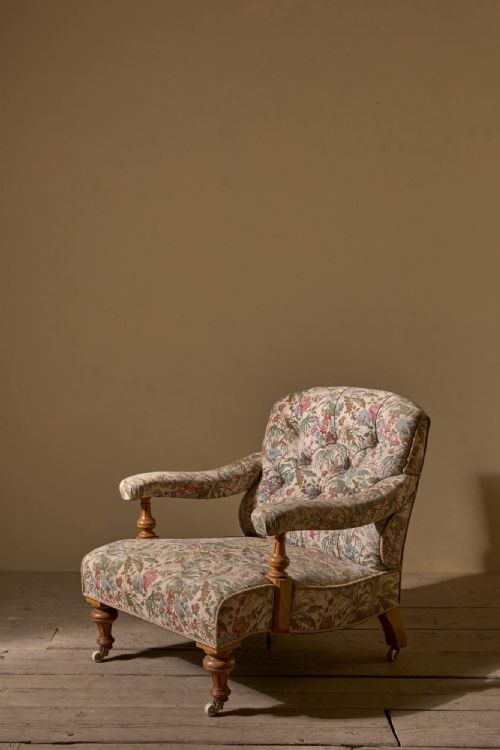
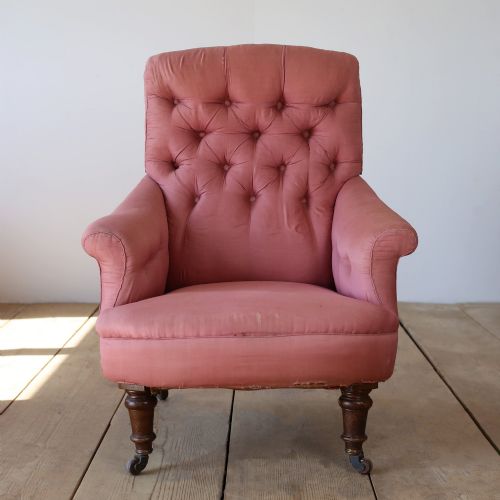
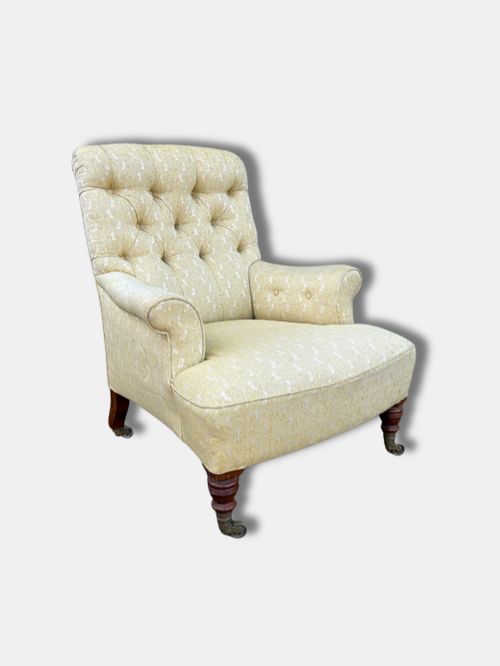
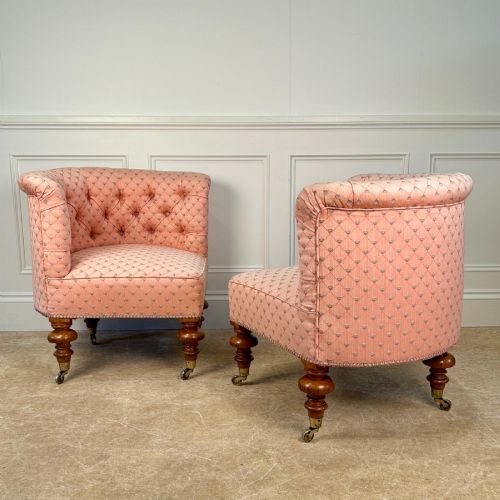
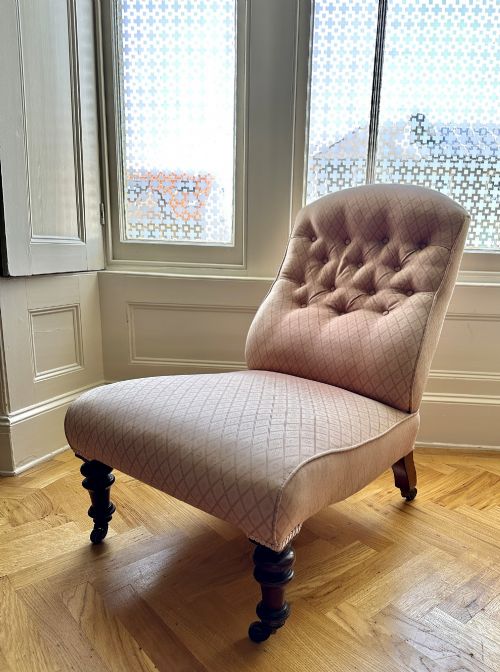
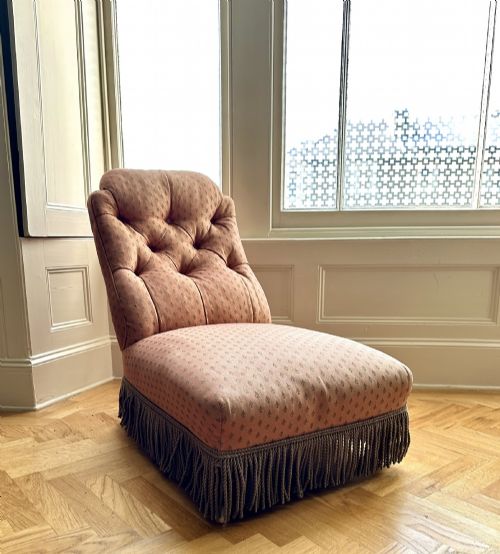


Tufted Back Low Chair
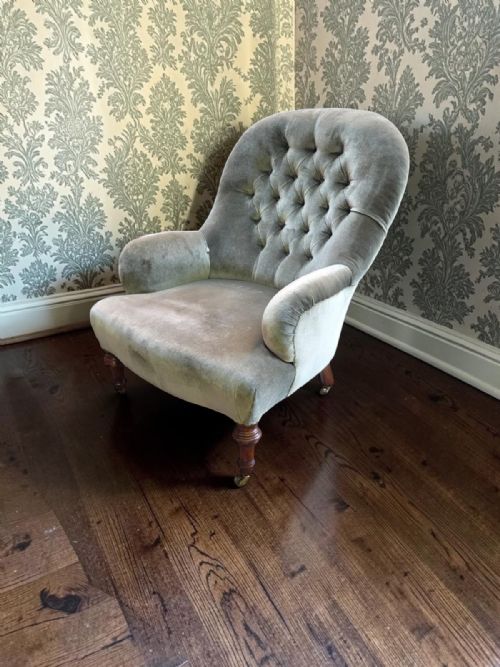
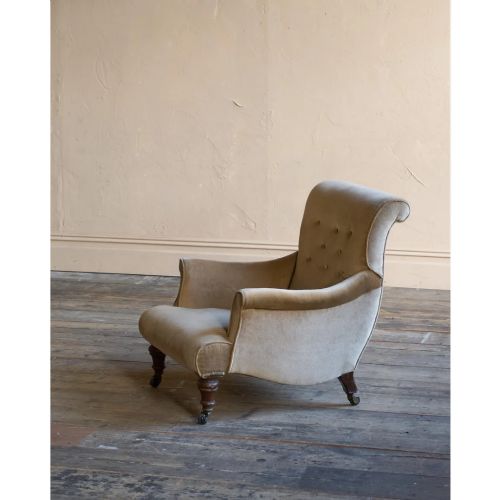
A tufted back low chair offers deep-seated comfort and low-slung proportions, bringing Victorian and Edwardian buttoned upholstery directly to the fireside or bedroom.
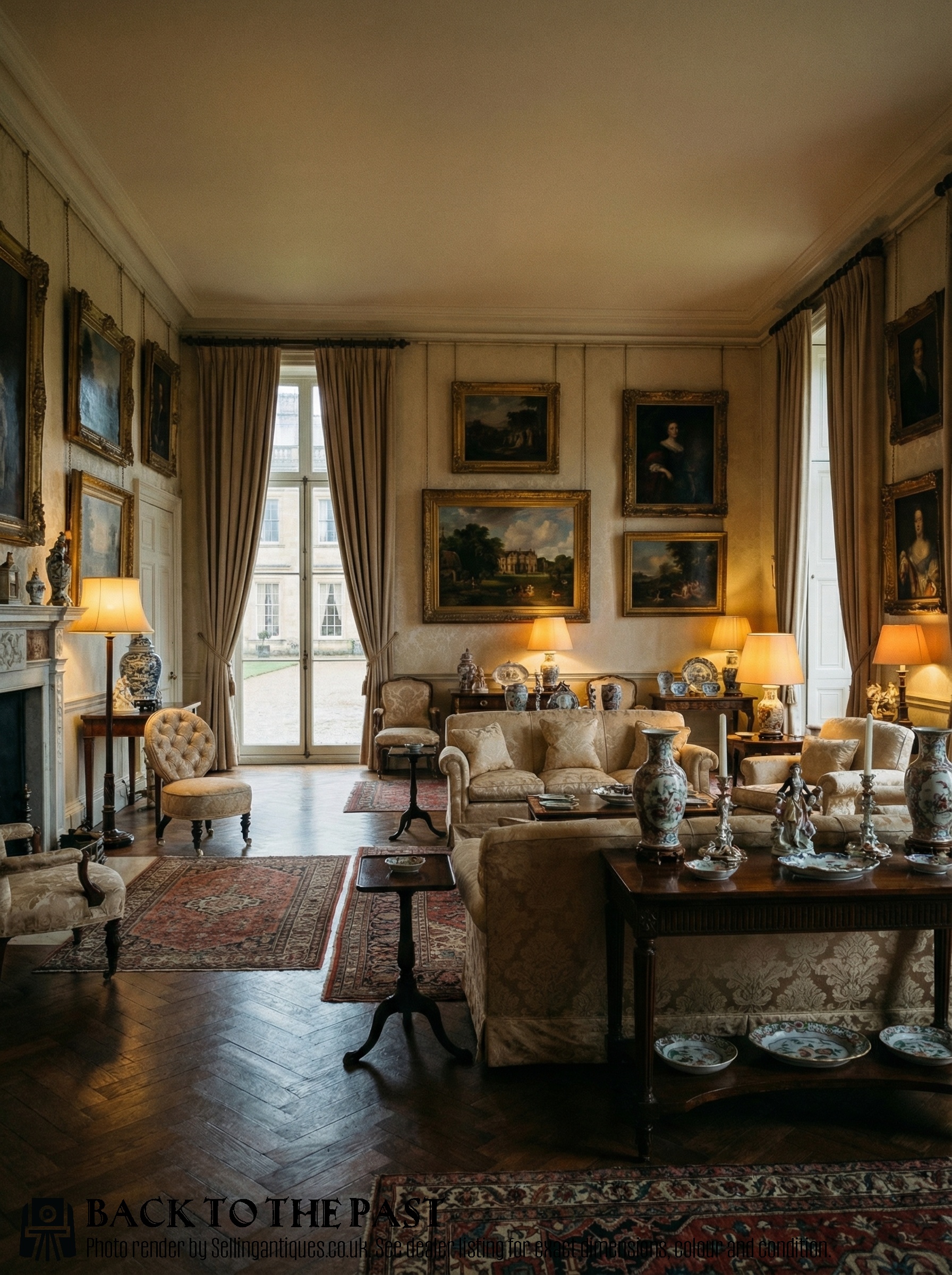
Tufted Back Low Chair
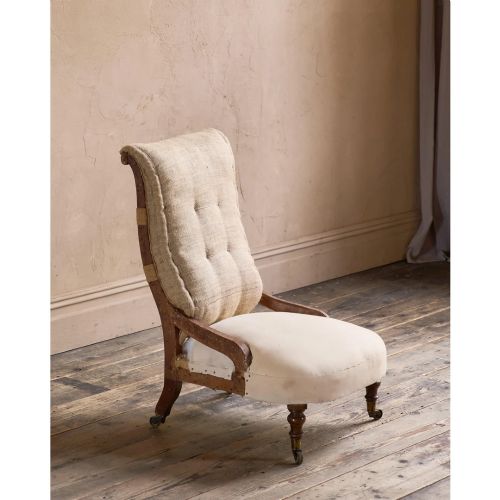
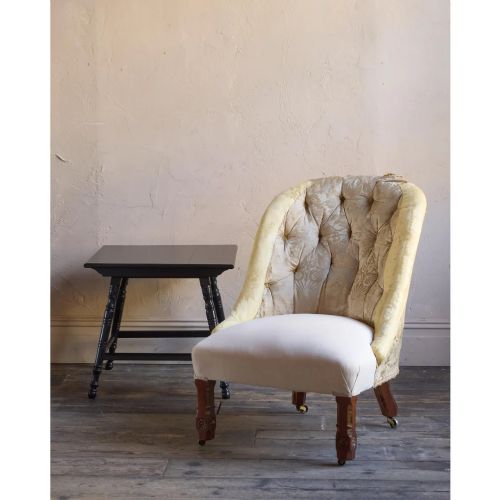
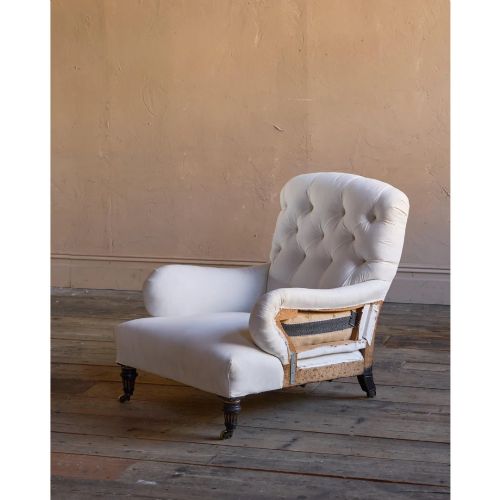
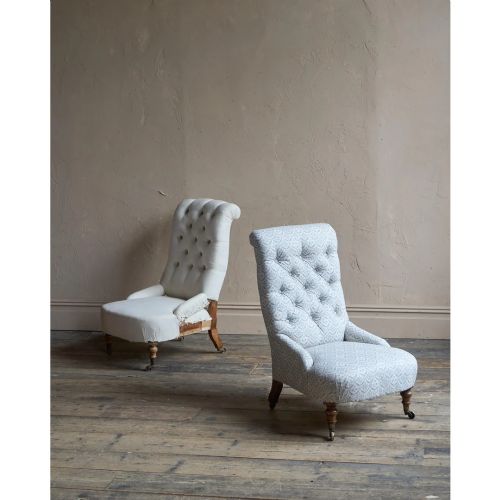
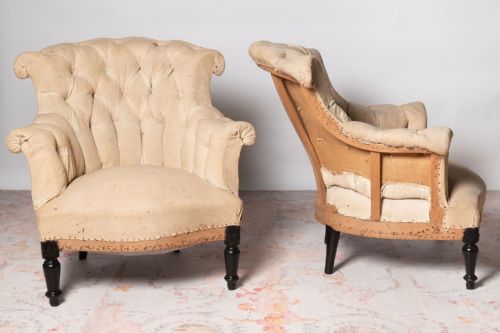
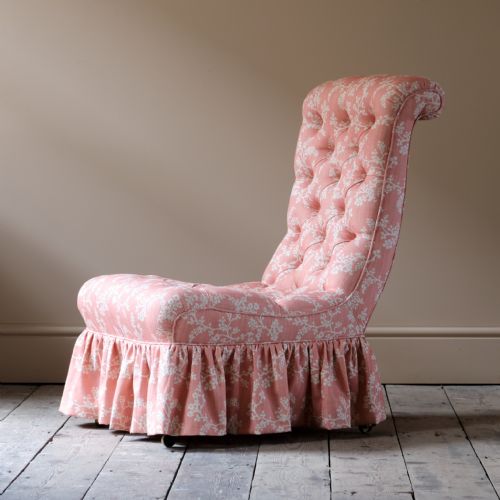
A tufted back low chair is a low-slung seat designed for the Victorian parlour, bedroom or drawing room, frequently appearing as slipper chairs, nursing chairs, salon chairs and low armchairs. The form prioritises a lower seating plane, often paired with a buttoned or tufted backrest to secure the fabric tension.
Examples on this page span the nineteenth century and the Edwardian period, encompassing English country house seating, French salon pieces and distinct aesthetic movement designs. Makers such as Howard and Sons and Gillows appear alongside vernacular walnut and mahogany frames.
Buyers encounter variations ranging from compact walnut ladies chairs to deep-seated upholstered armchairs resting on turned timber or brass-castor legs. The unifying trait across these pieces is the low centre of gravity combined with textile upholstery.
What varies in quality
Quality separates by the integrity of the underlying timber frame and the precision of the upholstery work. A superior piece maintains tight joinery in the legs and back supports, whereas lesser examples show looseness or replaced structural components.
The execution of the buttoning and the choice of covering materials indicate the grade of the original commission. Higher-tier pieces display balanced proportions, symmetrical tufting patterns and substantial secondary woods beneath the fabric layer.
Listings feature nineteenth-century and Edwardian pieces constructed from walnut, mahogany, oak and fabric.
Howard and Sons·Gillows
The Tufted Back Low Chair Glossary
- Button back
- An upholstery technique where indentations are formed in the padding by pulling twine or thread tight through the cushion to secure buttons, creating a tufted surface. This method keeps internal stuffing firmly distributed.
- Slipper chair
- An upholstered chair with low legs designed originally for bedchambers where ladies dressed and put on shoes. The low seat height is the defining characteristic.
- Nursing chair
- A low-seated Victorian armchair originally constructed without arms or with low arms to allow a woman to hold a baby comfortably. They frequently feature spoon-backs or buttoned upholstery.
- Tub armchair
- A fully upholstered chair where the back curves continuously into low arms to form a rounded enclosure. It provides enclosed seating comfort.
- Ebonised
- Wood treated with a chemical stain or black finish to imitate ebony. This treatment was common on Victorian and aesthetic movement furniture frames.
Tufted Back Low Chair: Frequently Asked Questions
Where should a low chair go?
A tufted back low chair suits bedrooms, dressing rooms and low-ceilinged sitting rooms where standard armchair proportions overwhelm the floor plan. Their reduced height creates an intimate seating grouping.
They pair well beside low mantelpieces or in corners where tall furniture obstructs light or sightlines.
What is a slipper chair?
A slipper chair is an upholstered seat with short legs built close to the floor, originating in nineteenth-century bedchambers for dressing. The lack of arms on many examples allowed full skirts to drape freely.
Today these chairs function as accent seating in living spaces and guest rooms.
How do I date a buttoned chair?
Dating relies on timber species, leg turnings and frame profiles rather than the fabric alone. Victorian pieces frequently employ walnut or mahogany with ceramic castors, while Edwardian versions show lighter frames.
Buttoning depth and internal webbing construction also offer clues to the exact manufacturing decade.
Are these chairs comfortable?
These chairs offer deep-seated comfort through sprung platforms and padded backrests designed for extended relaxation. The reclined posture angles the body backward rather than upright.
Original spring coils and horsehair stuffing provide a firmer, more supportive sit than modern foam equivalents.