

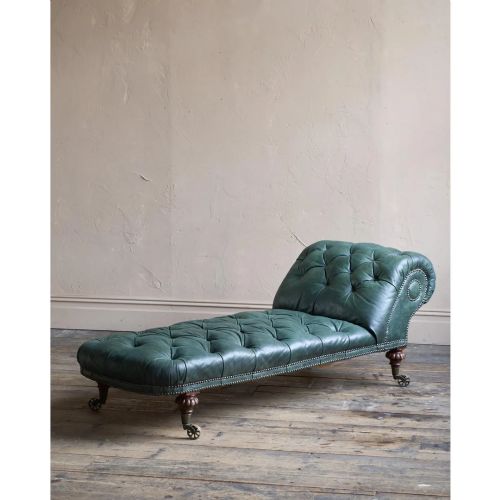


Tufted Chaise
A tufted antique chaise offers reclining comfort rooted in the nineteenth century, built for formal parlours and quiet reading rooms alike.
Tufted Chaise
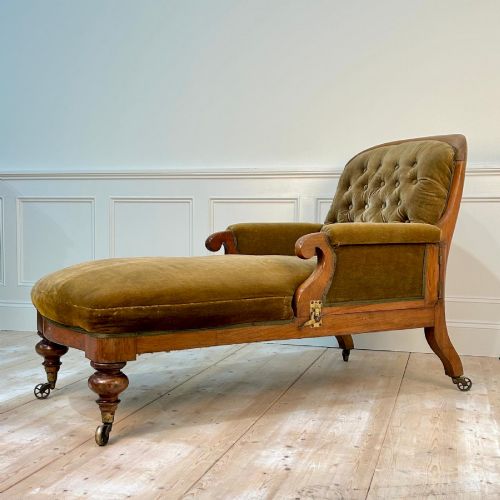
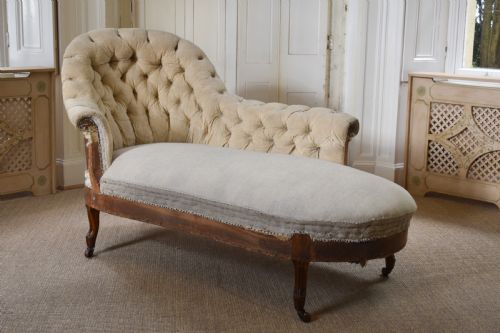
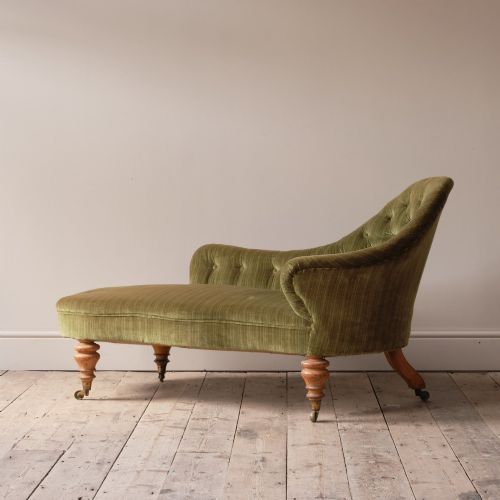
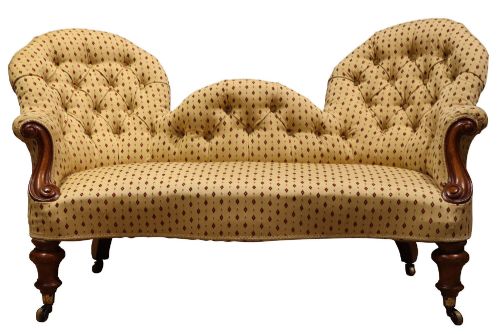
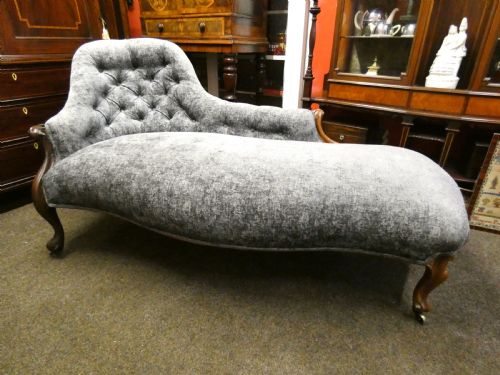
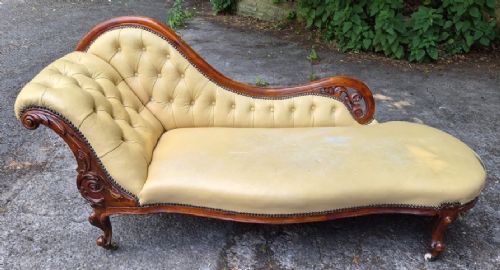
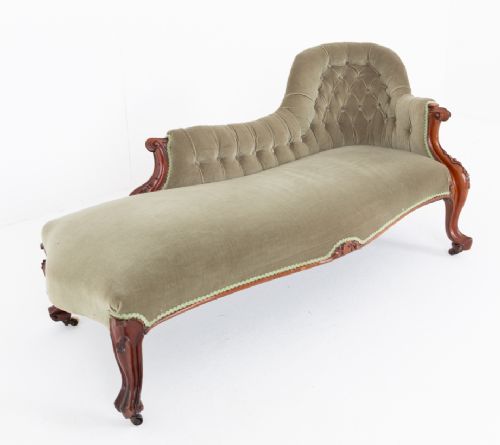
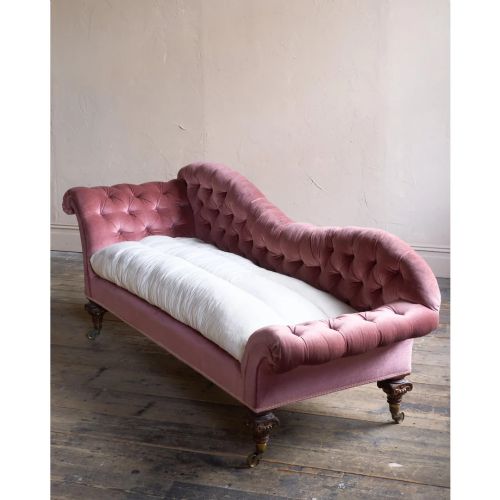
A tufted antique chaise combines an upholstered seat with an elevated headrest designed for semi-recumbent resting. The form emerges frequently in Victorian and Early Victorian variants, spanning double-ended settees, scroll ends, and daybeds.
Most examples hail from the nineteenth century, constructed with solid timber frames and deep buttoning on the backrest. The inventory relies heavily on Victorian mahogany and rosewood framework, often accompanied by matching footstools or conversation seats.
Makers of the period applied diverse stylistic influences, ranging from Regency lines to Louis XVI Revival and Victorian Rococo Revival. Buyers encounter single-ended loungers alongside larger double-ended pieces meant for central placement in a room.
Materials and construction
Timbers like mahogany, walnut, and rosewood form the structural skeleton of these daybeds and settees, shaped by hand carving and steam bending. Brass castors frequently support the legs, allowing movement across heavy carpets.
Upholstery relies on traditional stuffing secured by webbing and springs, finished with velvet, leather, damask, or woven fabric. Deep buttoning keeps the padding distributed evenly across the backrests and scroll ends.
Tufted Chaise Retail Price Guide 2026
Typical asking prices for tufted chaise among the pieces listed under this phrase on Sellingantiques today, from the lower quarter to the upper quarter. They describe what is for sale here now, not the wider market.
Mahogany, rosewood, and walnut dominate the timber frames across these nineteenth-century listings.
Distinctions in quality
The integrity of the carved timber frame and the depth of the mahogany or rosewood grain separate standard pieces from finer examples. Cabinetmakers executed scroll ends and foliage carvings with varying degrees of crispness and relief.
Original upholstery methods and the retention of maker signatures or attribution marks elevate certain daybeds above anonymous workshop production. The precision of the button tufting and the weight of the supporting brass fittings indicate the original tier of manufacture.
Howard and Sons·H Goodall and Sons·Holland and Sons·Jas Shoolbred·Miles and Edwards
The Tufted Chaise Glossary
- Button back
- A method of upholstery where buttons are pulled tight through the padding to create a diamond pattern of tufts. This technique secures the internal stuffing while adding texture to the backrest.
- Chaise longue
- A long upholstered chair allowing the occupant to recline with legs extended. French for long chair, the form serves as a hybrid between a sofa and a single bed.
- Scroll end
- A sweeping wooden or upholstered terminal curving outward in a spiral. The design provides an ergonomic headrest on nineteenth-century daybeds.
- Double-ended
- A seating form featuring raised headrests at both extremities rather than a single end. This symmetry allows the user to recline facing either direction.
- Barley twist
- A turned wooden column resembling a rope wound in a spiral. Craftsmen utilised this decorative lathe work for legs and structural stretchers on Victorian seating.
Tufted Chaise: Frequently Asked Questions
How do I use a chaise longue in a modern room?
Place the piece against a wall or float it at the foot of a bed to create a dedicated reading nook. The low backrest preserves sightlines across the room while offering a comfortable spot for daytime resting.
Ensure sufficient floor space surrounds the scroll end so the piece commands attention without crowding adjacent furniture. Pair it with a low side table to hold books or lighting.
How do I date a Victorian chaise?
Examine the timber choice, leg style, and frame carving to determine the decade of manufacture. Early nineteenth-century pieces show Regency influences with cleaner lines, while 1850 and 1860 examples embrace heavier rosewood and elaborate floral motifs.
Later Victorian pieces from the 1870s and 1880s often incorporate walnut frames or Chesterfield-style leather upholstery. Castor design and structural joinery provide further clues for precise dating.
What fabrics are correct for these daybeds?
Velvet, leather, damask, and heavy woven fabric dominate the historical record for nineteenth-century daybeds. Buttoned velvet and whisky brown leather appear frequently on Victorian models.
When assessing reupholstered pieces, look for traditional textile weights that respect the period aesthetic. Pattern choices should align with the specific stylistic revival of the frame.