

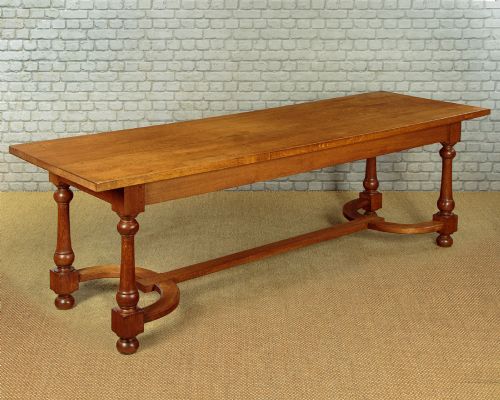
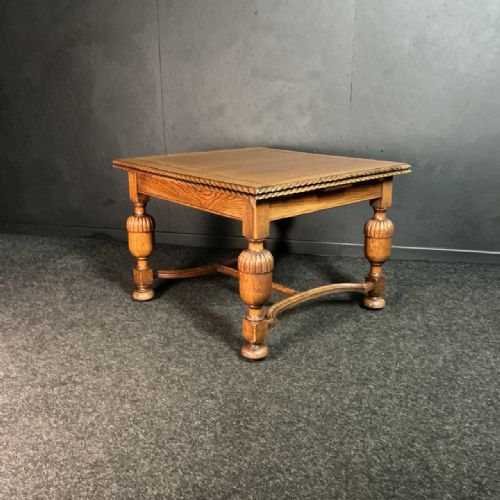
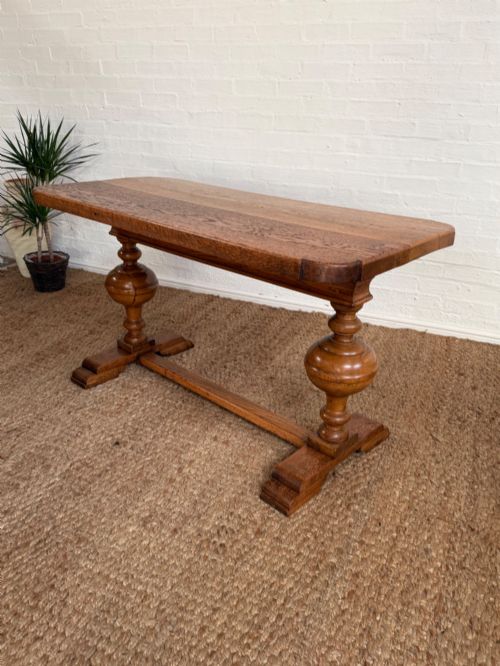
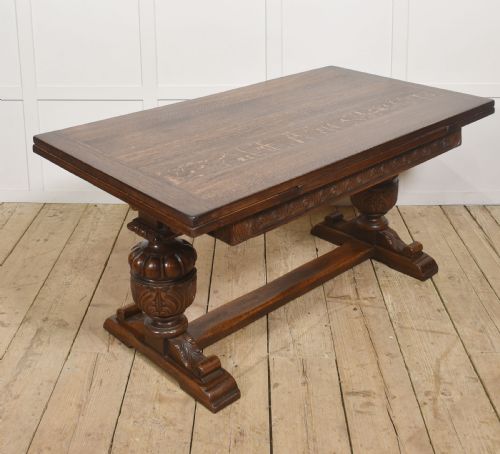


Tudor Oak Refectory Table
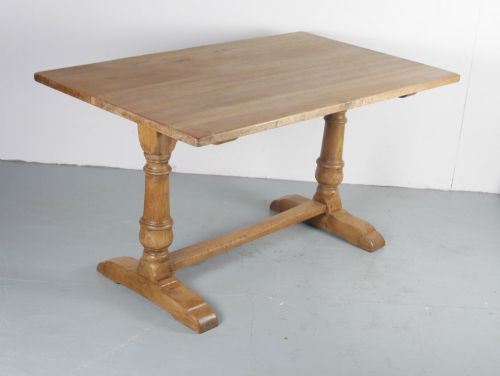
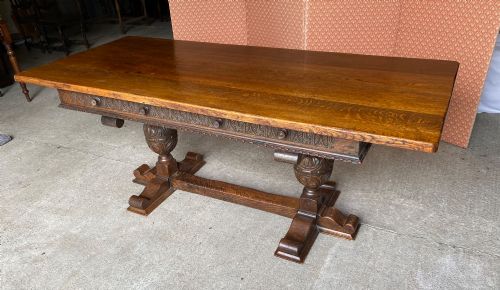
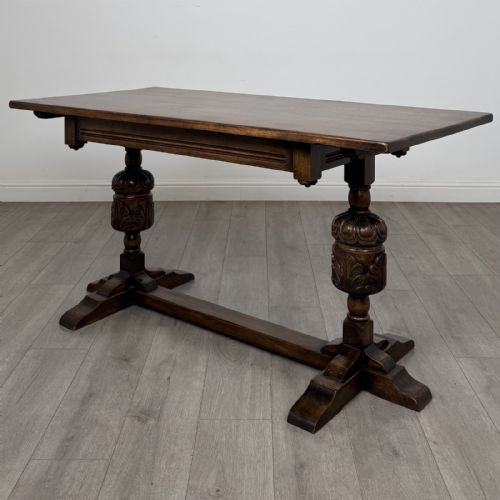
A Tudor oak refectory table brings unmistakable presence to a dining room, offering long timber planks and sturdy construction that anchors the entire space.
Tudor Oak Refectory Table
When you search for a tudor oak refectory table, you encounter substantial dining furniture built for communal meals and grand halls. The selection here spans authentic 17th Century examples alongside revival pieces from the 19th and early 20th centuries, including Jacobean Revival and Tudor Revival styles.
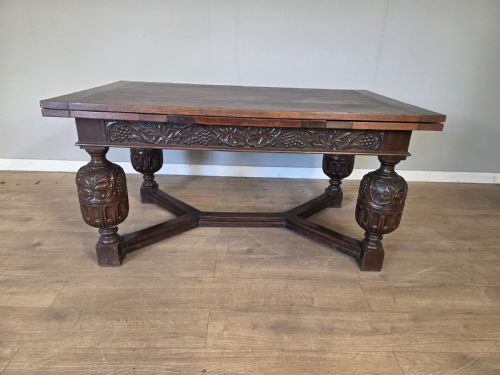
The most common form you will meet on this page is the solid oak dining table, often featuring extendable leaves or pull-out extensions. Alongside full-sized dining tables, the listings include smaller variants and coffee table adaptations fashioned from the same heavy timber.
Originating as long boards used in monastic and domestic refectories, these tables prioritize horizontal span and robust leg supports. Twentieth-century revivals capture this historic proportion faithfully while adapting to modern domestic spaces.
How they were made
Makers relied entirely upon solid oak, selecting timber for its strength and dense grain pattern. Construction techniques involved heavy pegged joints and substantial stretchers running beneath the top to brace the legs.
Surfaces often display carved detailing along the frieze rails and aprons, utilising traditional hand gouges and chisels. Draw-leaf mechanisms and pull-out extensions were engineered directly into the timber framework to allow the surface area to expand.
Tudor Oak Refectory Table Retail Price Guide 2026
Typical asking prices for tudor oak refectory table among the pieces listed under this phrase on Sellingantiques today, from the lower quarter to the upper quarter. They describe what is for sale here now, not the wider market.
What varies in quality
The distinction between ordinary and exceptional pieces lies in the integrity of the timber and the depth of the carving. Tables retaining their original top to base configuration command greater interest from collectors who value untouched historical context.
Proportion and execution of the revival styles dictate the overall harmony of the piece. Crisp, purposeful hand-carving elevates an oak dining table far above simpler production methods found in lesser revival furniture.
The Tudor Oak Refectory Table Glossary
- Refectory table
- A long dining table historically used in monastic dining halls. These pieces are characterised by substantial length, thick timber tops, and supporting floor stretchers.
- Draw-leaf table
- A table equipped with sliding leaves tucked beneath the main top. Pulling these extensions outwards increases the surface area instantly.
- Frieze
- The horizontal band running directly beneath the table top. This area frequently carries the carved decoration characteristic of Tudor and Jacobean styles.
Tudor Oak Refectory Table: Frequently Asked Questions
How do I care for solid oak?
Keep solid oak furniture away from direct heat sources and sudden temperature shifts to prevent the timber from splitting. Regular dusting with a dry cloth maintains the finish without needing harsh polishes.
Applying a traditional beeswax occasionally nourishes the grain and enhances the natural lustre of older wood over decades of daily use.
Can I seat eight people comfortably?
Many refectory tables are specifically built with generous lengths designed to accommodate larger dining parties easily. Tables featuring pull-out extensions offer flexible seating arrangements for gatherings.
Check the distance between the floor and the underside of the stretcher rails to ensure adequate legroom for your dining chairs.
Are 17th-century tables different from revivals?
Authentic 17th-century pieces display genuine age-related wear, hand- adzed surfaces, and construction methods characteristic of early joinery. Revival pieces, made centuries later, emulate these historical aesthetics using period-appropriate techniques.
Both categories provide substantial oak construction, though revival examples frequently incorporate clever extension mechanisms uncommon in the earliest monastic boards.
How do refectory tables work?
These tables rely on a fixed underframe of heavy legs connected by low horizontal stretchers for maximum stability. The top rests securely upon this framework, often secured with traditional wooden pegs.
Some variants include sliding leaves that pull outward from beneath the main surface to instantly lengthen the table for guests.