


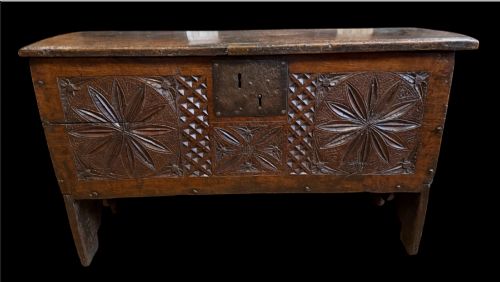


Tudor Carved Coffer
These tudor carved coffer pieces are sturdy storage chests built to endure centuries, offering solid oak construction and rich period carving that anchors a traditional interior.
Tudor Carved Coffer
A tudor carved coffer is a heavy wooden chest primarily utilised for secure storage and domestic utility during the sixteenth century and seventeenth century. Buyers examining this page will encounter substantial oak storage chests and coffers alongside associated architectural elements like linenfold panels and cupboard forms.
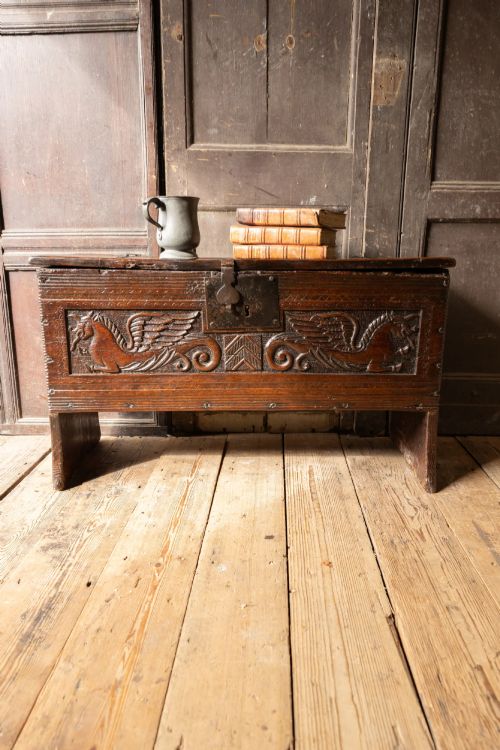
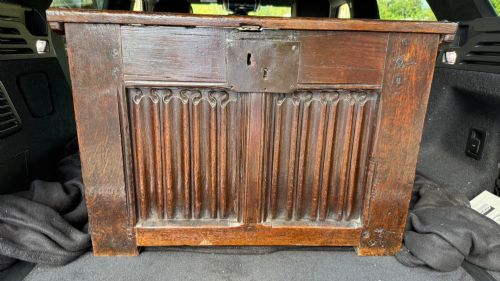
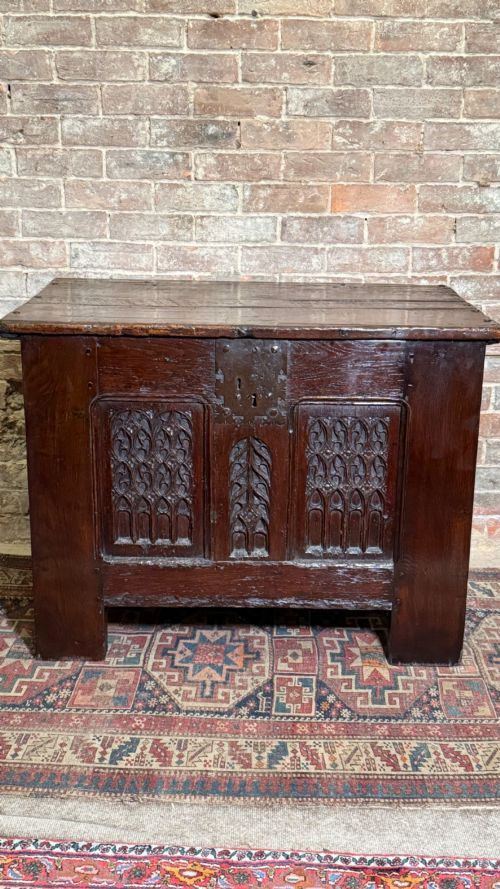
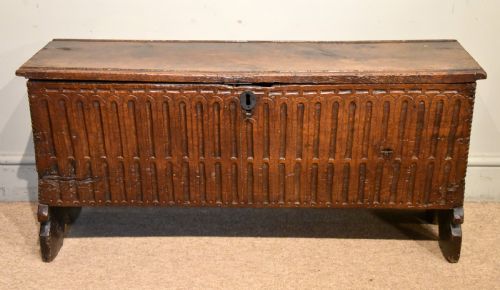
The dominant forms span plank construction and joined frameworks, frequently displaying characteristic period ornament such as fluting, linenfold motifs, and figural carvings. While sixteenth century examples form the core of the selection, later revivals including nineteen-twenties pieces also appear in the listings.
Origins stretch across English workshops, with specific regional pieces noted from the West Country and Wales. These objects functioned as secure repositories for valuables, linens, and documents before dedicated wardrobes became common.
Materials and construction methods
Construction relies heavily on native English oak, with occasional examples executed in walnut. Timber was hand-cleaved or sawn, resulting in thick boards joined by pegged mortise and tenon frames or sturdy plank assemblies.
Iron and wrought iron hardware, including hinges, straps, and primitive locking mechanisms, provided essential structural reinforcement and security. Carving was executed entirely by hand using gouges and chisels to create low relief patterns, linenfold folds, and fantastic beasts.
Tudor Carved Coffer Retail Price Guide 2026
Typical asking prices for tudor carved coffer among the pieces listed under this phrase on Sellingantiques today, from the lower quarter to the upper quarter. They describe what is for sale here now, not the wider market.
Listings feature oak and walnut pieces spanning the sixteenth century, seventeenth century, and nineteen-twenties revival periods.
Assessing quality and execution
Quality in a tudor carved coffer rests upon the crispness and depth of the hand carving, the integrity of the original timber, and the proportion of authentic period components. Pieces featuring intricate figural work or well-preserved linenfold panels demonstrate superior craftsmanship compared to simpler plank variations.
The survival of original ironwork, hinges, and structural joints without excessive modern intervention distinguishes exemplary survivals. Furthermore, regional distinctiveness, such as documented West Country or Welsh origin, elevates the interest of a piece.
The Tudor Carved Coffer Glossary
- Coffer
- A heavy wooden chest used for storage, typically fitted with a hinged lid and robust locking hardware. These pieces served versatile domestic functions in early households.
- Linenfold
- A style of wood carving that imitates folded linen cloth, frequently seen on sixteenth century panels and chest fronts. This decorative motif became popular during the Tudor period.
- Plank coffer
- A primitive chest constructed from thick boards joined directly at the edges rather than set within a frame. This construction method represents an early and straightforward form of chest building.
- Mortise and tenon
- A joint wherein a pegged protrusion fits securely into a corresponding cavity to lock timbers together firmly. This traditional technique underpins the structural integrity of joined furniture.
- Fluting
- Shallow, parallel concave grooves carved into the surface of wood for decorative effect. This classical architectural detail appears frequently on friezes and stiles.
Tudor Carved Coffer: Frequently Asked Questions
What were coffers used for?
Coffers served primarily as secure storage receptacles for valuables, family silver, church plate, and fine textiles in medieval and Tudor households. Because houses contained few fitted closets, these heavy chests acted as portable strongboxes.
Their robust timber construction and iron locks protected contents from theft and dampness. They also functioned occasionally as benches or tables when living space was at a premium.
How do I date a Tudor chest?
Dating relies upon examining construction techniques, tool marks, timber species, and stylistic motifs such as linenfold or Gothic tracery. Sixteenth-century pieces typically utilise hand-riven oak with pegged frame construction.
One must also evaluate the wear patterns on the feet and lid edges, as centuries of use create characteristic patina. Later revival pieces from the twentieth century often display machine sawing or different assembly methods upon closer inspection.
Are these chests heavy?
These pieces are exceptionally heavy, constructed from thick heartwood oak and reinforced with wrought iron hardware. Moving them generally requires multiple people to prevent structural strain on the ancient joints.
This substantial weight reflects their original purpose as secure repositories that could not be easily carried off by intruders. Once placed in a room, they remain very stable.
How do I care for old oak?
Old oak requires stable environmental conditions away from direct heat sources, rapid temperature fluctuations, and excessive moisture. Maintaining moderate indoor humidity prevents the dry timber from shrinking or cracking.
Application of traditional beeswax polish helps nourish the wood and preserve the historic surface patina. Avoid modern silicone sprays or harsh chemical cleaners that can permanently damage the porous grain.