
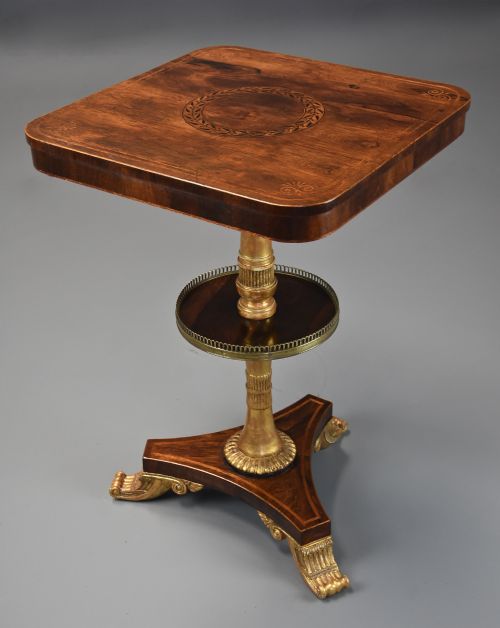


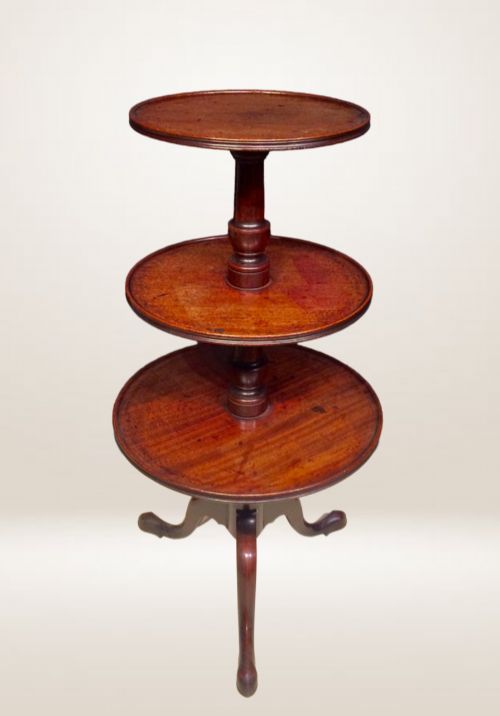
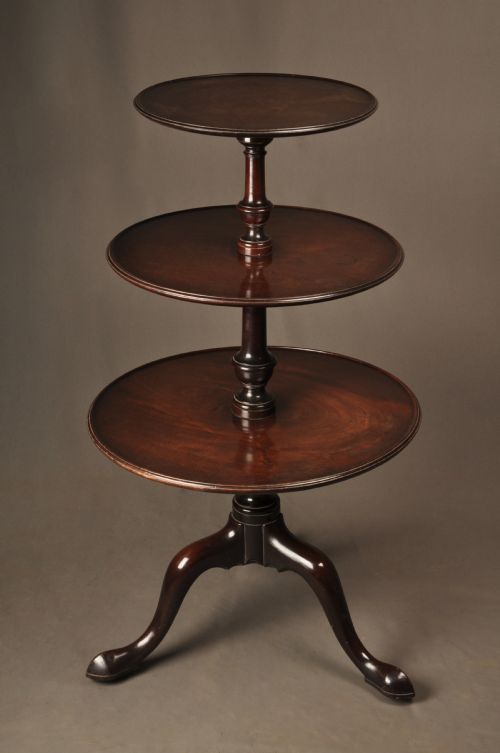


Tripod Tiered Stand
A tripod tiered stand serves wine and holds afternoon tea, offering stacked surfaces on a slender pillar that suits a tight corner.
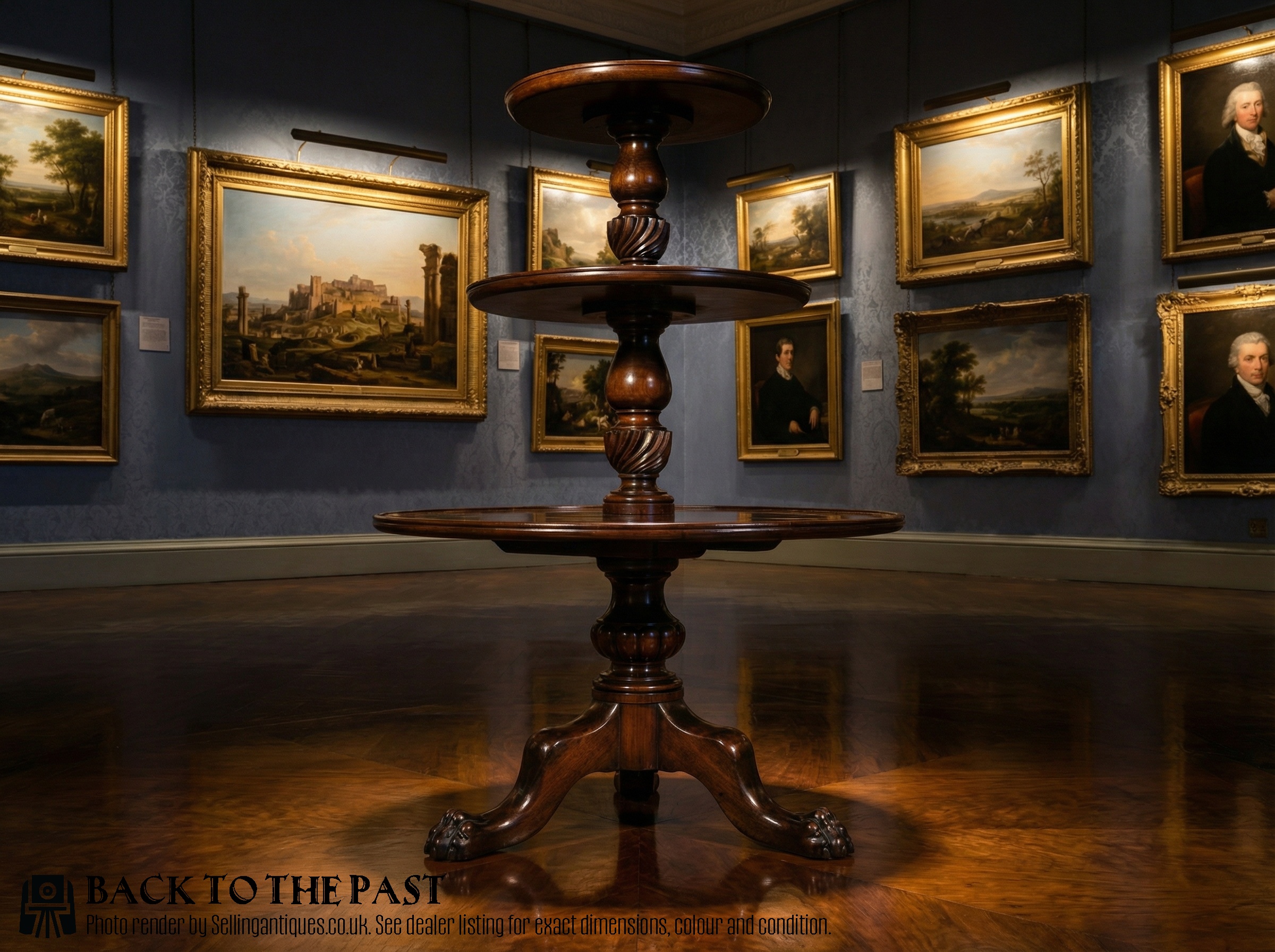
Tripod Tiered Stand
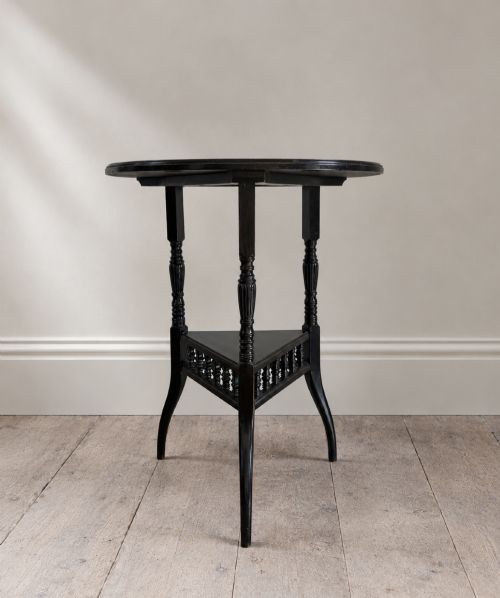
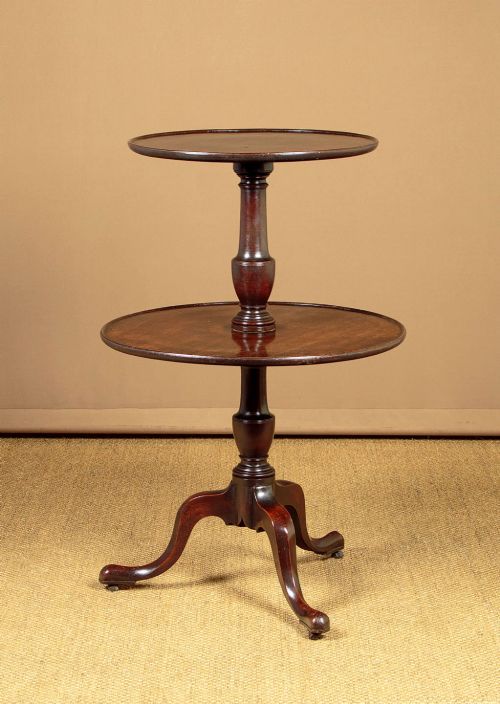
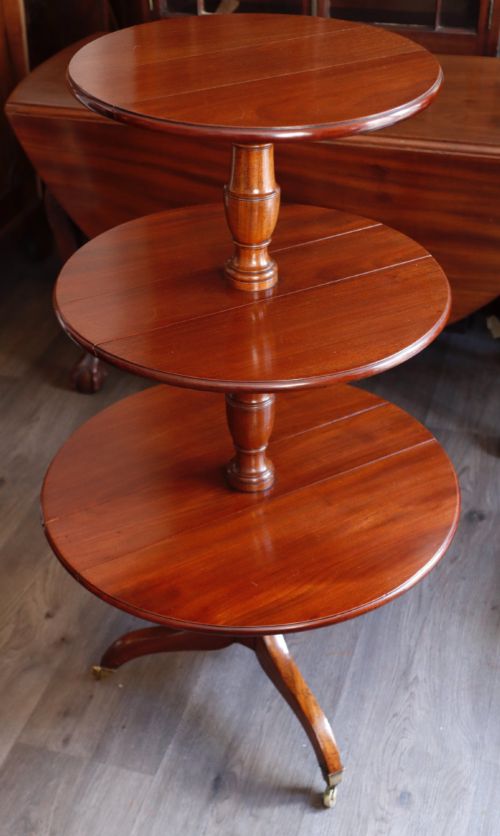
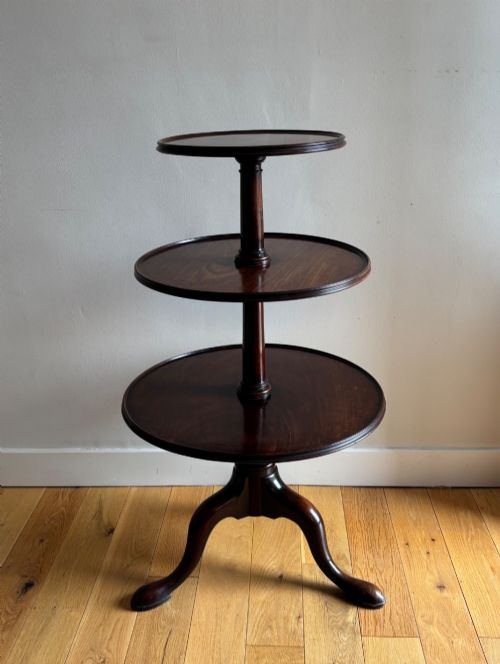
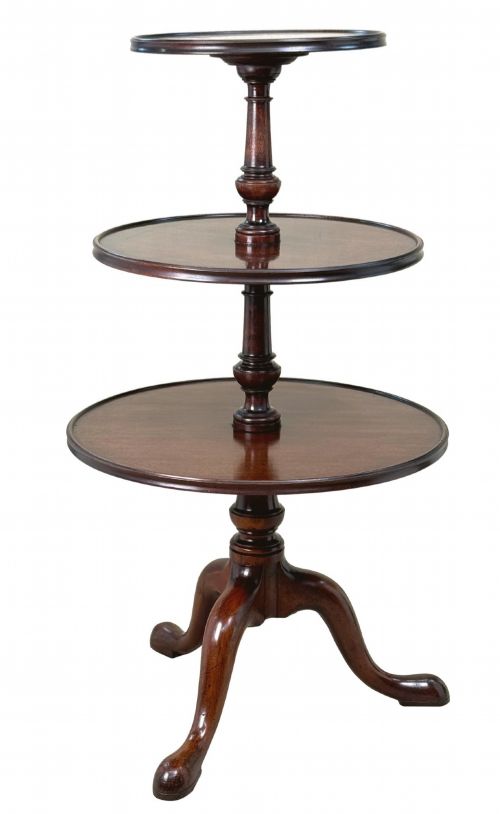
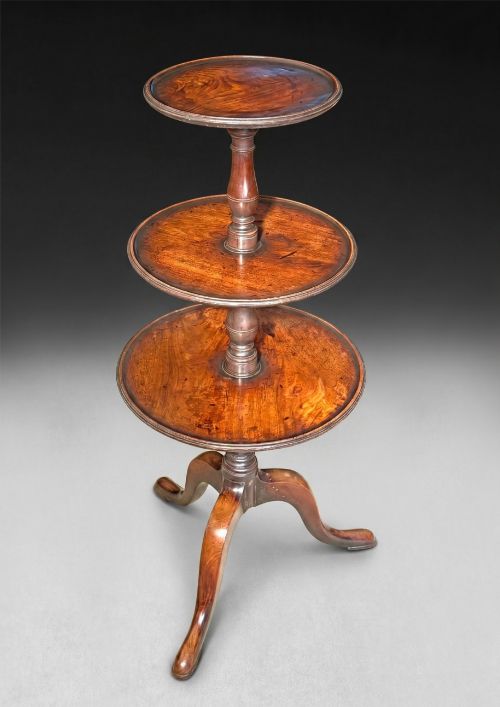
A tripod tiered stand takes the form of a dumb waiter, wine table or occasional table, rising in circular tiers upon a central pillar and three legs. These multi-tiered serving pieces appear frequently as Georgian or Regency examples, built to hold glassware and dishes in dining rooms.
Makers shaped these stands during the eighteenth and nineteenth centuries, spanning George III, Regency and Victorian periods. Buyers also encounter Edwardian wine tables and Arts and Crafts ebonised variations among the current selection.
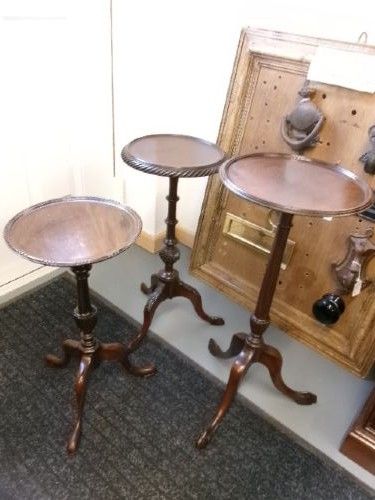
The primary formats include two-tier and three-tier revolving structures, alongside folding drop-leaf versions and smaller plant or jardiniere stands. Mahogany dominates the surviving pieces, supplemented by rosewood, walnut and painted hardwoods.
Materials and construction
Cabinetmakers constructed these stands predominantly in solid mahogany, sometimes utilising Cuban timber, alongside rosewood and walnut veneers on secondary woods. Ebonised hardwood and giltwood appear in later nineteenth-century interpretations.
The tiered trays mount onto a turned central pedestal supported by three splayed legs, forming a stable tripod base. Revolving mechanisms on certain dumb waiters allow diners to spin the graduated trays during meals without leaving their seats.
Listings feature mahogany predominantly, alongside rosewood, walnut and ebonised hardwood across Georgian, Regency and Victorian periods.
Distinctions in craftsmanship
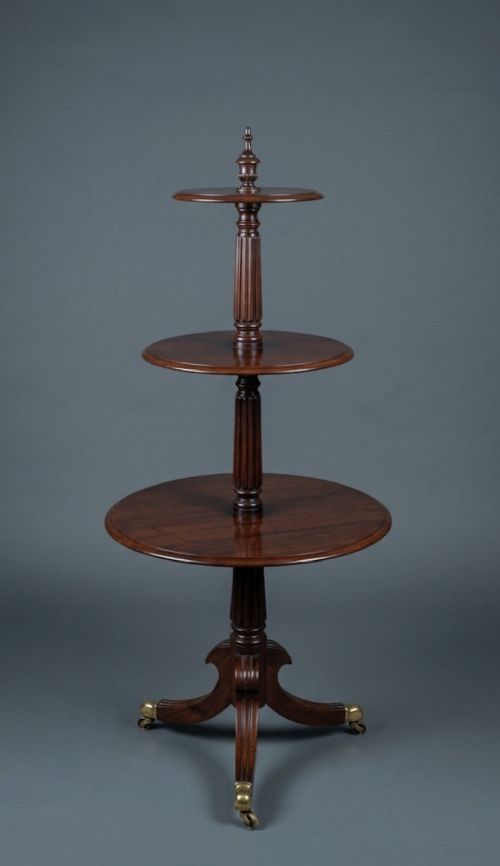
Quality rests in the weight of the timber and the crispness of the turned pillar and leg profiles, where finer examples display carved acanthus leaves or reeded detailing. The proportional graduation of the tiers from top to bottom dictates the visual balance of the stand.
The engineering of the revolving mechanism separates standard workshop production from superior pieces attributed to prominent designers. Original brass castors and unwarped circular trays anchored firmly to the central column preserve the structural integrity of the stand.
The Tripod Tiered Stand Glossary
- Dumb waiter
- A tiered serving table fitted with multiple rotating or fixed trays on a central pedestal. These stands held food and wine in dining rooms when servants left the room.
- Tripod base
- A three-legged support structure attached to the bottom of the central column. This design maintains stability on uneven floors.
- Etagere
- A piece of furniture consisting of a set of open shelves for displaying small objects or serving items. The term applies to multi-tiered tables found in later periods.
- Drop-leaf
- A table top featuring hinged flaps that fold down to save space. Some eighteenth-century dumb waiters utilise this mechanism on rectangular tiers.
- Cuban mahogany
- A dense, dark timber harvested in the Caribbean and prized for cabinetmaking during the Georgian era. It yields a rich patina over centuries of polishing.
Tripod Tiered Stand: Frequently Asked Questions
What is a tripod tiered stand used for?
These pieces function as serving tables, wine holders and display stands for plants or small decorative objects. Historically, diners used them to hold extra bottles and glasses during meals.
Today, they suit living rooms and hallways as lamp tables or afternoon tea stands, providing vertical surface space without occupying a large floor area.
How do I identify a Georgian tripod stand?
Georgian examples generally feature solid mahogany construction with heavy timber, fine grain patterns and subtle hand-turned columns. The tripod legs often terminate in pad feet or brass castors.
Later Victorian and Edwardian pieces frequently introduce rosewood, walnut, ebonised finishes or decorative painted elements while retaining the classic tiered silhouette.
Do the tiers rotate on all stands?
Many dumb waiters incorporate a revolving mechanism that allows the circular trays to spin independently around the central pillar. This feature enabled guests to reach dishes easily across the table.
Other variations, such as wine tables and plant stands, feature fixed tiers secured permanently to the central column.
How do I care for an antique mahogany stand?
Maintain the wood by applying natural beeswax periodically and buffing gently with a soft cloth to nourish the grain. Avoid placing the stand near direct heat sources or strong sunlight to prevent timber splitting.
Lift the piece by the central column or lower frame rather than the upper tiers when moving it across a room.