


Tripod Revolving Seat
A tripod revolving seat brings flexible seating and adjustable height to rooms, spanning Victorian industrial pieces to Georgian and Edwardian designs.
Tripod Revolving Seat
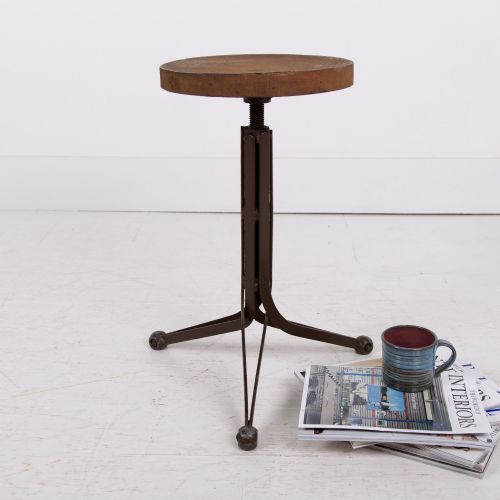
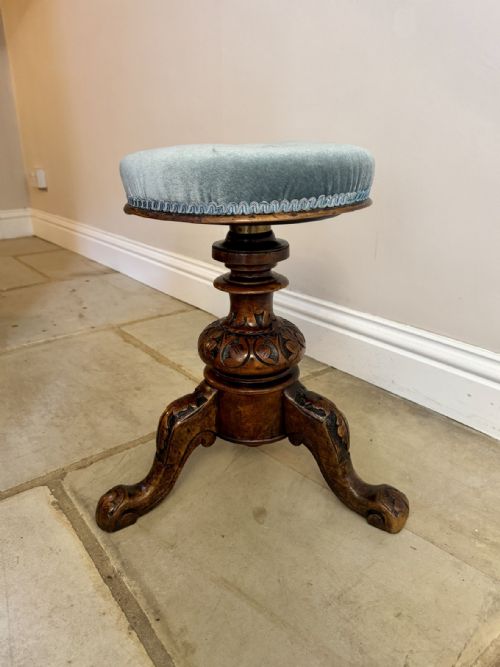
A tripod revolving seat functions primarily as a piano stool, music stool, or workshop stool, designed for adjustable height and movement. Buyers seeking a tripod revolving seat will most frequently encounter Victorian walnut and rosewood piano stools featuring carved pedestal bases and swivel tops.
The selection extends from Georgian rosewood examples to Edwardian bar stools and 1930s industrial workshop pieces. Forms vary from simple country swivel stools to elaborate Victorian grotto revival and industrial cast iron designs.
Originating largely from the 19th Century, these pieces combine practical height adjustment with decorative woodwork or metalwork. The three-legged base provides stable positioning on uneven floors while allowing the top to turn freely.
What varies in quality
Quality rests upon the crispness of the carving on the walnut, rosewood, or mahogany frames and the smoothness of the revolving mechanism. Superior examples display balanced proportions in the tripod base and retain original upholstery materials such as leather, velvet, or fabric.
The integrity of the central height adjustment screw determines mechanical reliability, distinguishing robust workshop or piano stools from lighter decorative variants. Finer pieces demonstrate careful timber selection and secure joinery where the legs meet the central column.
Periods represented span the Georgian era, the Victorian age including industrial and grotto styles, through to Edwardian and 1930s workshop pieces.
Rubery Owen Blade Workshop
The Tripod Revolving Seat Glossary
- Tripod base
- A three-legged support structure designed to maintain stability on uneven surfaces. This configuration appears frequently on piano stools and industrial seats.
- Revolving mechanism
- The internal swivel joint that allows the seat top to turn through a full rotation. It often incorporates an adjustable screw thread for height variation.
- Pedestal stool
- A seating form supported by a single central column rising from a multi-legged base. These often feature carved wooden enrichment.
- Grotto revival
- A decorative style inspired by natural shell and rockwork motifs. In seating, this translates into carved wood mimicking organic forms.
Tripod Revolving Seat: Frequently Asked Questions
How do I adjust the height?
The seat top rotates on a threaded central spindle or screw mechanism. Turning the seat clockwise or anticlockwise raises or lowers the sitting surface.
Ensure the mechanism is free of obstruction before turning to prevent wear on the wooden or metal threads.
Where were these placed originally?
These seats were primarily positioned beside pianos and music stands for domestic performance practice. Workshop and industrial variants served at benches and desks.
Country and dressing table examples placed them in bedrooms and living spaces for convenient movable seating.
How do I care for the wood and upholstery?
Maintain timber surfaces with appropriate wax polish applied sparingly with a soft cloth. Protect fabric, leather, and velvet upholstery from direct sunlight to prevent fading.
Check the central rotating joint periodically to ensure smooth movement without excessive sideways play.
How do I tell Victorian from Georgian pieces?
Georgian examples tend to show restrained classical lines in rosewood or mahogany. Victorian pieces often exhibit heavier carving, walnut timbers, and more complex pedestal bases.
Industrial Victorian variants introduce cast iron components which rarely appear in earlier domestic furniture.