





Tripod Base Plant Stand
A tripod base plant stand holds pots and lamps with three steady legs, offering height and a compact footprint.
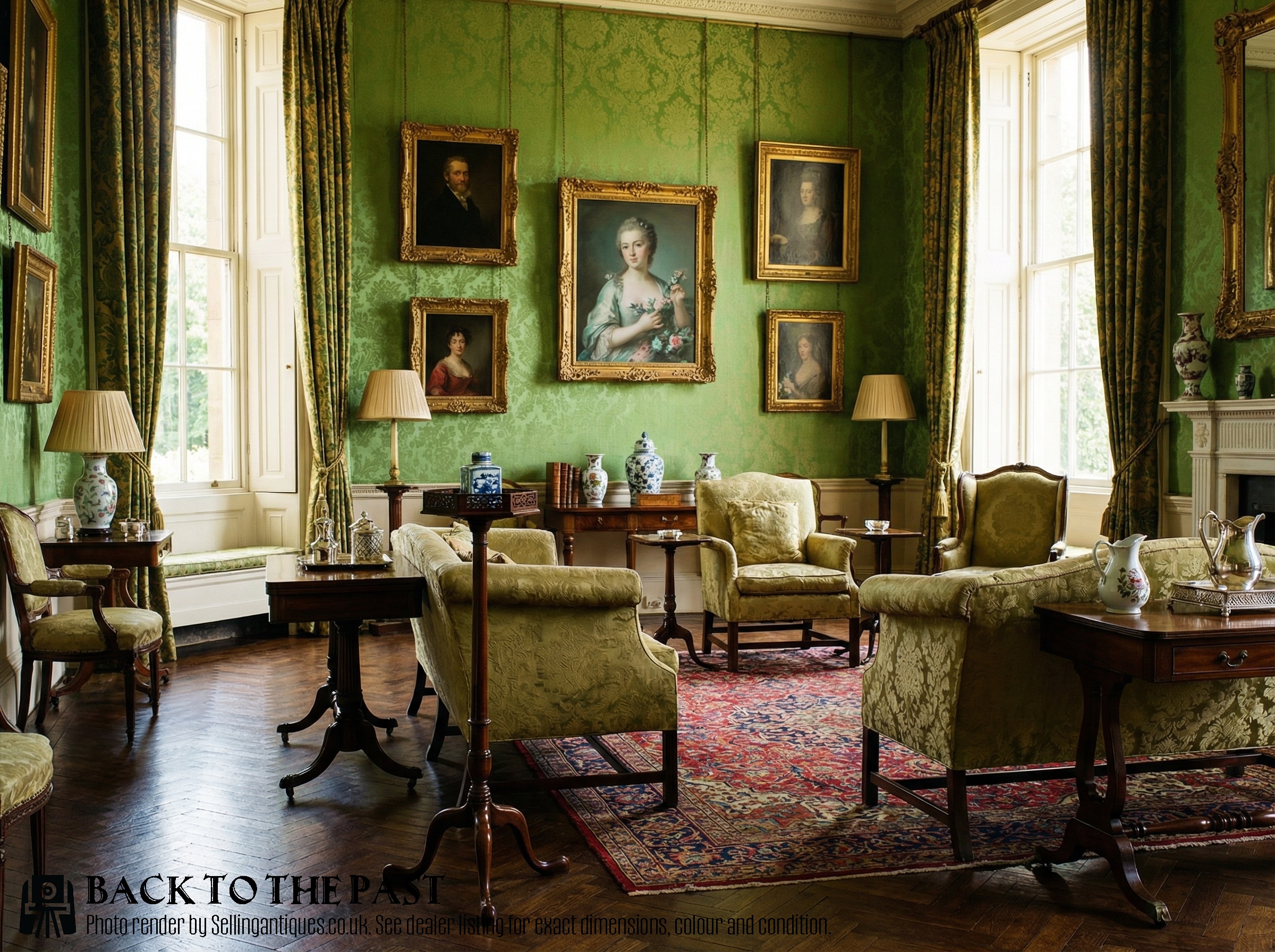
Tripod Base Plant Stand
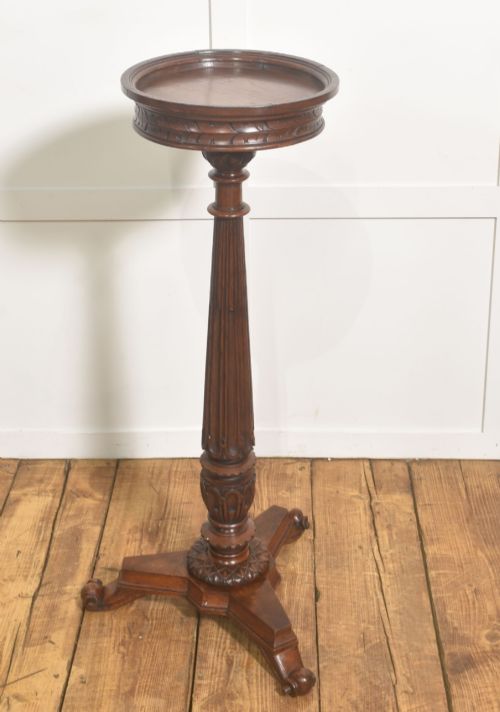
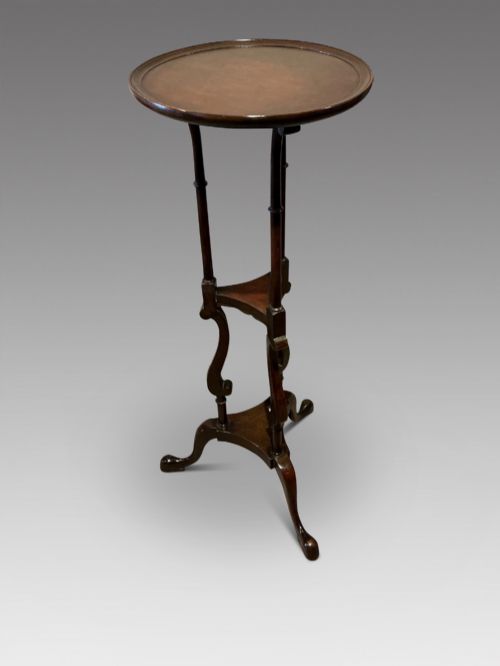
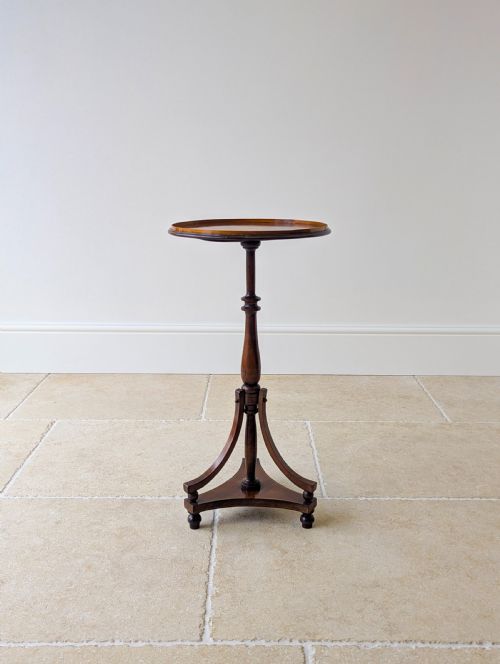
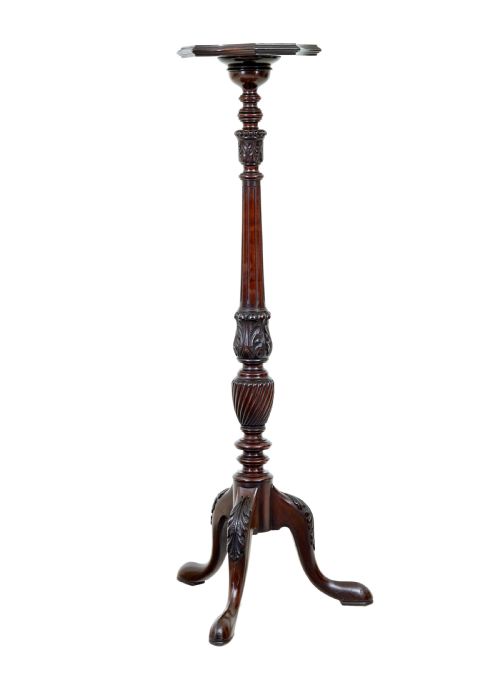
When you search for a tripod base plant stand, you look for a raised support featuring three legs that holds heavy planters, urns, or lamps off the floor. These pieces appear as torcheres, candlestands, pedestals, and occasional tables designed to elevate plants or decorative objects.
The versions most likely to meet you on this page date from the nineteenth and early twentieth centuries, spanning Victorian, Regency, Edwardian, and Georgian styles. They use three-footed configurations to maintain stability on uneven floors while occupying minimal floor space.
Makers fashioned these stands for corners and drawing rooms where vertical display mattered more than surface area. Their forms range from slender columns to carved pedestals and small circular tops suited for pots.
How they were made
Joiners and cabinetmakers built these stands predominantly in solid hardwoods like mahogany, rosewood, walnut, and oak, often turning columns on a lathe and shaping three splaying legs by hand. Some examples employ ebony, pine, or brass accents to create contrast and structural support.
Surface treatments include traditional French polish, paint, black lacquer decoration, and carved details such as rope twist columns or inlay. These finishes protect the timber while highlighting the natural grain of the woods used in the construction.
One stubborn nineteenth-century plant stand doubles as a sculptors stand, ready to hold wet clay instead of ferns.
What varies in quality
The calibre of a tripod base plant stand rests on the selection of timber and the precision of the joinery where the three legs meet the central column. Dense, figured hardwoods and crisp hand-carving distinguish finer pieces from simpler utilitarian items.
Stability and proportion dictate the standing success of each piece, with superior examples offering balanced weight distribution across the foot spread. Original surfaces and thoughtful turning further separate standard workshop output from exceptional cabinet work.
The Tripod Base Plant Stand Glossary
- Torchere
- A tall stand designed to hold a light or a decorative plant. These slender pieces provide vertical height in domestic interiors.
- Candlestand
- A small table or stand originally meant to support a candle. Their compact tops make them suitable for holding smaller potted plants.
- Tripod base
- A support structure utilising three legs radiating from a central point. This arrangement prevents rocking on uneven floors.
- Occasional table
- A small, moveable table used for miscellaneous purposes. They frequently double as plant or lamp stands in period rooms.
- Inlay
- The technique of inserting pieces of contrasting material into a wood surface to form patterns. Edwardian examples often feature delicate stringing.
Tripod Base Plant Stand: Frequently Asked Questions
What is a tripod base plant stand?
A tripod base plant stand is an elevated support with three legs designed to hold pots, vases, or lamps.
They bring height to plant displays while keeping a small footprint in the room.
How were they used historically?
These stands placed plants and lighting near windows or in dark corners to improve interior illumination and display greenery.
Victorians utilised them in drawing rooms to showcase exotic ferns and heavy ceramic planters.
How do I tell periods apart?
Georgian and Regency pieces tend to show cleaner classical lines and rich mahogany or rosewood surfaces. Victorian and Edwardian examples often incorporate heavier carving, inlay, or painted lacquer decoration.
Checking the turning style on the central column helps identify the manufacturing era.
How do I live with one?
Place your stand in a corner or beside seating where the three legs will not present a tripping hazard. Ensure the top surface matches the base diameter of your heavy plant pot.
Use a waterproof saucer beneath the pot to protect the antique wood finish from water damage.