
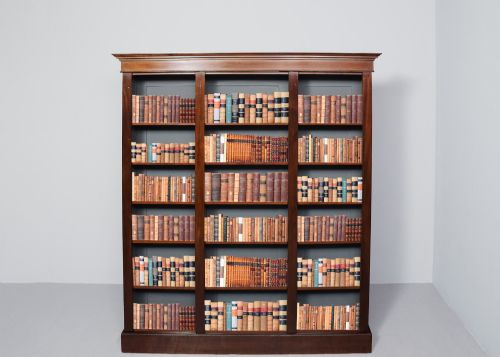
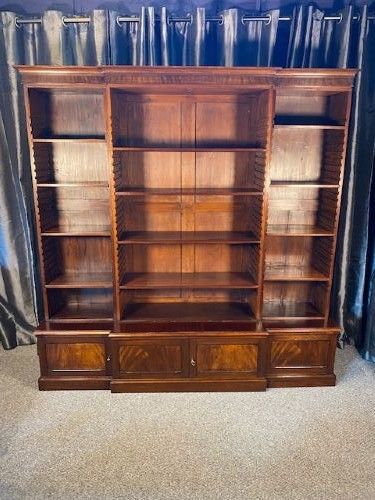
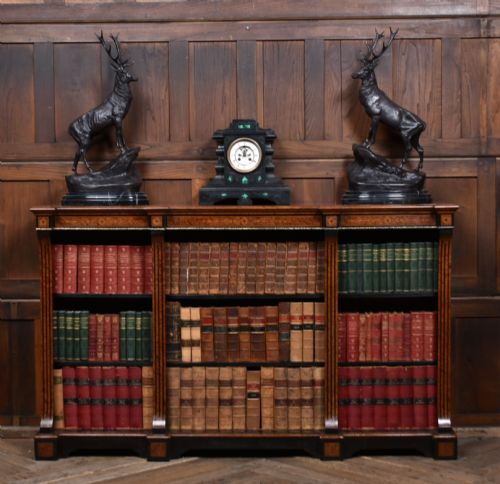


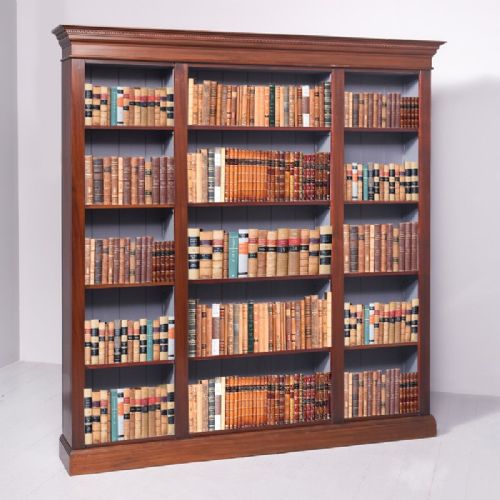
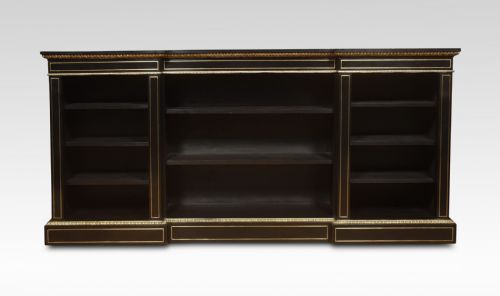


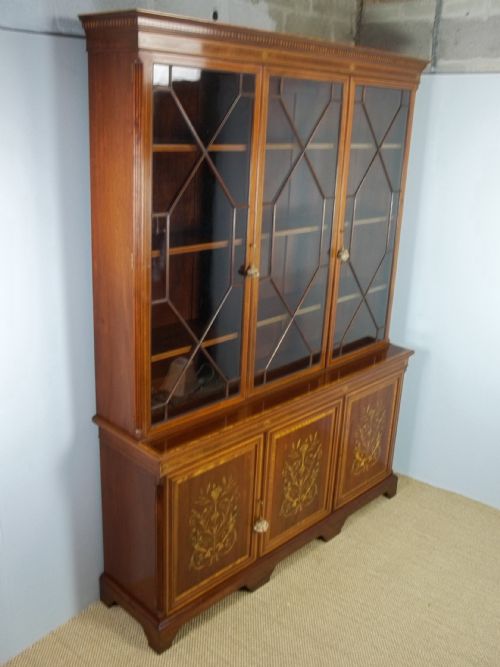
Triple Open Bookcase
These triple open bookcase examples offer serious library storage, pairing generous shelf space with stately proportions to anchor a traditional room.
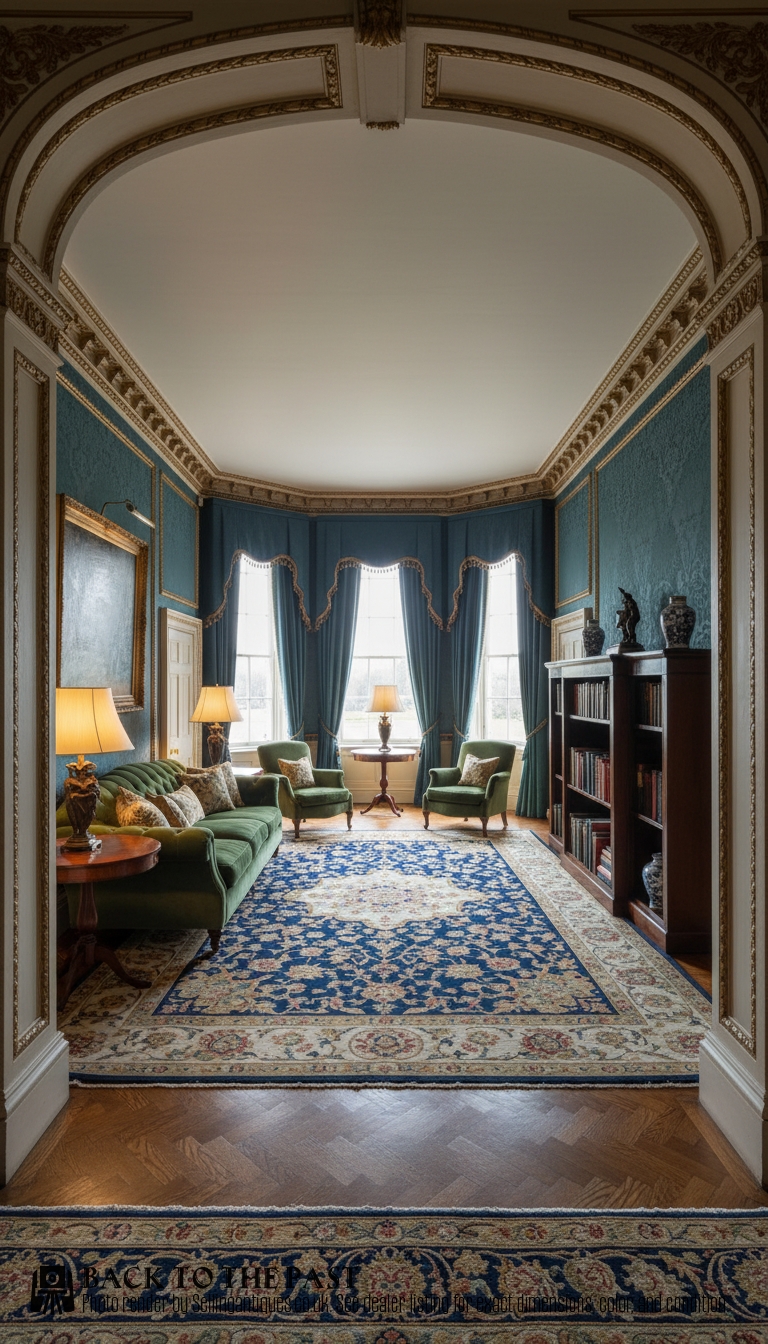
Triple Open Bookcase
A triple open bookcase provides expansive shelving divided into three distinct bays, designed to house substantial libraries and large collections of volumes. These grand pieces deliver immediate architectural presence and effortless access to books without the barrier of glazed doors.
The versions met on this page span the nineteenth century and revival movements, capturing the heavy utility of the Victorian era alongside the refined lines of Regency and Georgian design. Mahogany, oak and exotic timbers appear frequently, often scaled for domestic or institutional libraries.
Makers ranged from notable firms like Edwards and Roberts to skilled regional cabinet makers working in mahogany and amboyna. Buyers encounter everything from simple pine and oak library shelving to elaborate breakfront cabinets with marquetry inlay and brass mounts.
How they were made
Cabinet makers constructed these large pieces using solid foundational timbers like mahogany and oak, often applying flame mahogany veneer, amboyna, or birdseye maple to the primary display surfaces. These decorative veneers brought rich grain patterns and visual depth to the wide facades.
Brass mounts, gilded details and intricate marquetry inlay frequently decorated the exterior framework, particularly on Napoleon III and Renaissance Revival examples. Internal shelving was typically made adjustable to accommodate volumes of varying heights.
What varies in quality
Structural ambition also dictates quality, separating straightforward architectural shelving from sophisticated breakfront forms featuring brass mounts, marquetry inlay and bespoke architectural provenance. The precision of the joinery and the integrity of the adjustable shelving systems complete the distinction.
Edwards and Roberts·Sir Charles Barry
The Triple Open Bookcase Glossary
- Breakfront
- A cabinet design where the central section projects forward from the flanking wings. This configuration adds considerable depth and architectural drama to large library pieces.
- Marquetry
- The art of applying decorative pieces of veneer to a structure to form intricate patterns and pictures. This technique showcases the supreme skill of the cabinet maker.
- Ebonised
- Wood treated to imitate the dark appearance of ebony. This finish gained popularity during the nineteenth century for contrast and formal elegance.
- Regency
- An architectural and furniture style spanning the early nineteenth century. It draws heavy inspiration from classical Greek and Roman forms.
Triple Open Bookcase: Frequently Asked Questions
Where should a triple open bookcase go?
These large pieces require substantial wall space and work best in studies, libraries or spacious living rooms where their grand scale can be fully appreciated.
Because they lack doors, placing them away from direct, harsh sunlight protects delicate book bindings and timber finishes from fading over time.
How do I style a triple open bookcase?
Balance heavy rows of books with decorative objects, framed prints or ceramic pieces to break up the vertical and horizontal lines of the shelving.
Leaving small pockets of empty space allows the rich wood grain and backing materials to show through, preventing the shelves from feeling overcrowded.
Are the shelves adjustable?
Many library bookcases from the nineteenth century feature adjustable shelving systems to accommodate volumes of varying heights and sizes.
This practical flexibility allowed owners to reconfigure the internal layout as their book collections changed and expanded.
What wood types are most common?
Mahogany forms the foundation of most traditional library pieces on this page, appearing in both solid form and as decorative flame veneer.
Alternative materials include oak, ebonised wood, pine and exotic accents like amboyna and birdseye maple.