





Travelling Dressing Glass
A travelling dressing glass brings private grooming rituals into motion, offering portable mirrors and fitted compartments for personal care on the move.
Travelling Dressing Glass
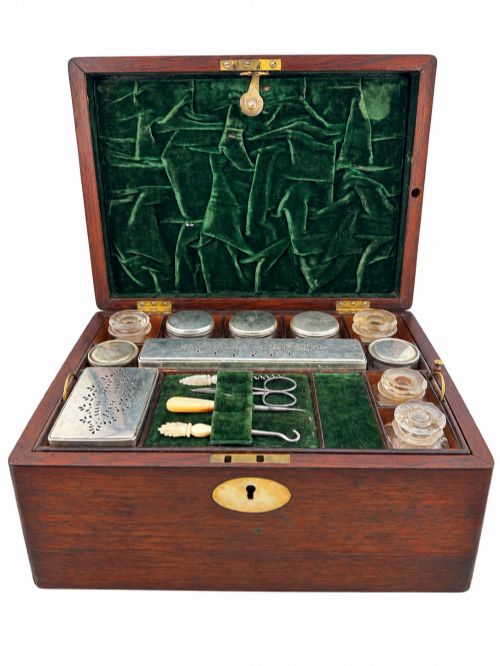
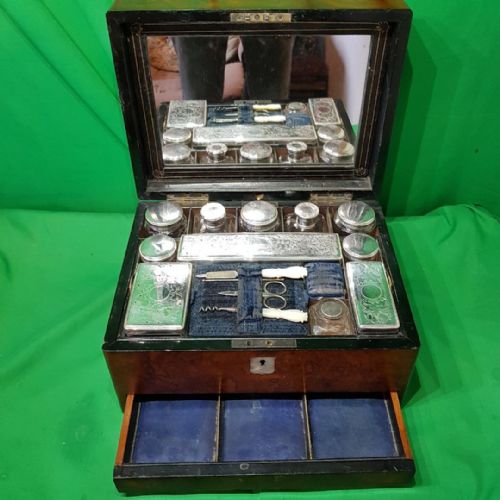
When you search for a travelling dressing glass, you encounter portable mirrors and fitted boxes designed to maintain personal grooming standards while away from home. These pieces combine mirrors with compartments for bottles, brushes, and small valuables, serving travellers across the nineteenth century.
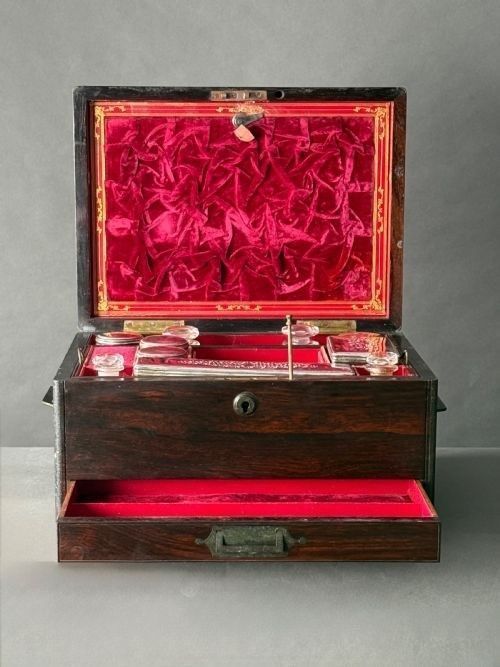
Makers housed these mirrors and dressing accessories within secure timber enclosures lined with velvet and leather. Each piece reflects the portable luxury demanded by gentlemen and ladies during nineteenth-century journeys.
Construction and materials
Cabinet makers utilised dense hardwoods such as rosewood, burr walnut, and coromandel to build robust outer carcases that could withstand the rigours of travel. These timbers received polished finishes to highlight natural grain patterns, occasionally accented with mother-of-pearl inlay.
Internal fittings combined moulded glass, sterling silver, silver plate, and celluloid to create secure housings for scent bottles and cosmetic jars. Velvet and leather linings cushioned these fragile items while brass hardware provided secure fastening points for the outer cases.
Travelling Dressing Glass Retail Price Guide 2026
Typical asking prices for travelling dressing glass among the pieces listed under this phrase on Sellingantiques today, from the lower quarter to the upper quarter. They describe what is for sale here now, not the wider market.
Some travel sets hide tiny secret drawers behind false partitions, designed to safeguard private letters or jewels from prying eyes on the road.
Judging quality and execution
The distinction between standard examples and superior pieces rests upon the precision of internal joinery and the completeness of original fittings. Finer specimens retain matching sets of silver-gilt and glass bottles alongside undamaged velvet interiors and functioning secret drawers.
Material selection further divides the range, with burr walnut and coromandel cases demonstrating higher craftsmanship than simpler timber constructions. The integration of brass mounts and well-fitted mirrors marks the work of accomplished workshops.
The Travelling Dressing Glass Glossary
- Swing mirror
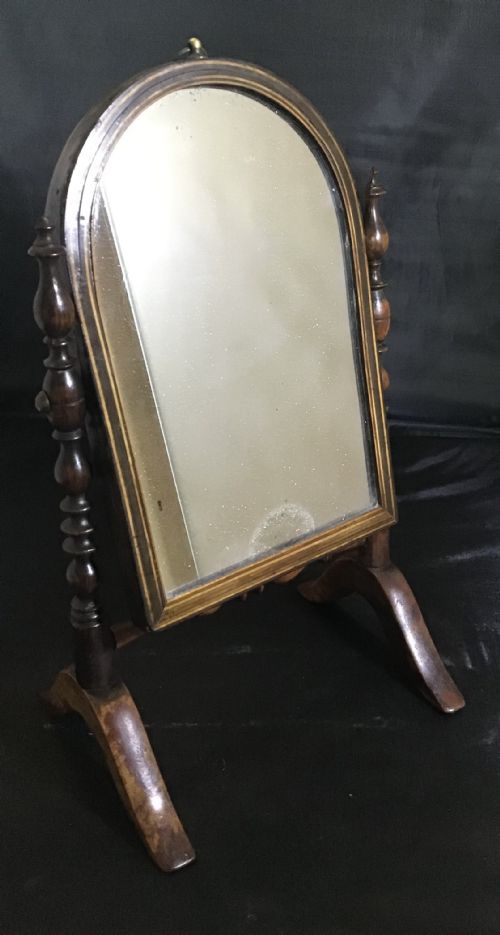
- A looking glass mounted on pivoting side arms within a supporting frame. This mechanism allows the user to adjust the angle of reflection during grooming.
- Vanity box
- A portable container fitted with internal compartments, trays, and receptacles for cosmetics and grooming implements. These boxes frequently incorporate secret drawers operated by concealed release mechanisms.
- Silver-gilt
- Sterling silver that has been coated with a thin layer of gold. This treatment provides a rich decorative finish while protecting the underlying silver from tarnishing in transit.
- Celluloid
- An early semi-synthetic thermoplastic material utilised for handles and toilet implements. It offered a durable alternative to natural ivory and bone in late nineteenth-century sets.
Travelling Dressing Glass: Frequently Asked Questions
What is a travelling dressing glass?
A travelling dressing glass is a portable mirror or fitted vanity box designed for personal grooming away from home. These pieces allowed travellers to maintain their daily toilet routines while on journeys.
They combine adjustable looking glasses with dedicated compartments for storing bottles, brushes, and small accessories. The sturdy exterior cases protected the fragile glass and silver contents during transit.
How were these mirrors used?
Owners placed these portable mirrors on tables or chest tops in temporary lodgings to create an instant dressing station. The integrated compartments kept grooming tools close at hand.
Gentlemen and ladies relied on these fitted boxes to organise perfumes, powders, and personal effects while moving between residences or travelling abroad.
How do I date a piece?
Dating relies on observing the prevailing timber choices, hardware styles, and internal materials associated with different nineteenth-century periods. Georgian and Regency pieces often feature simpler rosewood forms, whereas mid-Victorian examples frequently showcase burr walnut and elaborate fitted compartments.
Later Victorian and Edwardian items introduce materials like celluloid alongside sterling silver-gilt and specialised scent bottle sets. Examining the construction of secret drawers and locking mechanisms also helps narrow the period.
How do I care for the wood and velvet?
Maintain timber surfaces by keeping them away from direct sunlight and extreme temperature fluctuations to prevent the wood from splitting. Dust rosewood and burr walnut gently with a dry, soft cloth.
Protect internal velvet and leather linings by avoiding moisture and storing scent bottles completely empty. Gentle brushing helps keep fabric interiors free from accumulated dust.