



Transferware Pottery Jug
A transferware pottery jug brings bold monochrome or polychrome printed scenes straight from the kiln to the table.
Transferware Pottery Jug
A transferware pottery jug is a practical vessel decorated using a printed tissue pulled from an engraved copper plate. You will most frequently meet 19th-century earthenware and pearlware examples originating from English potteries, spanning Georgian and Victorian periods.
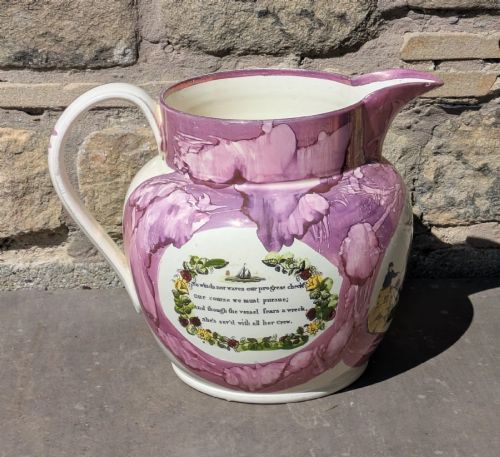
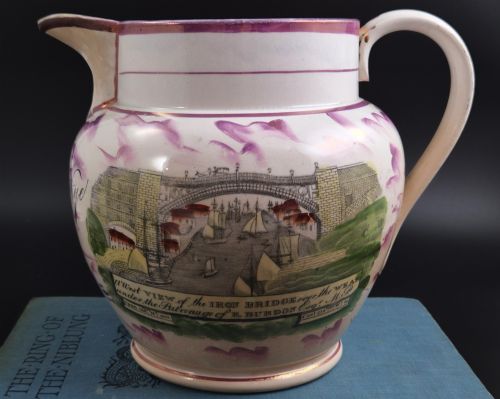
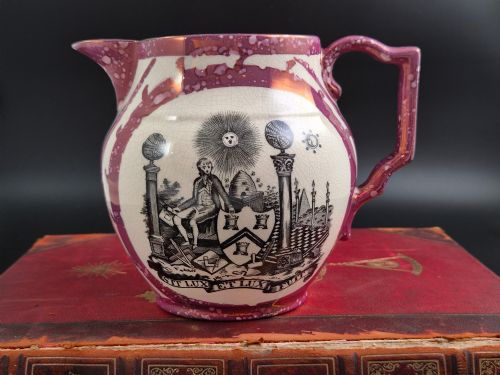
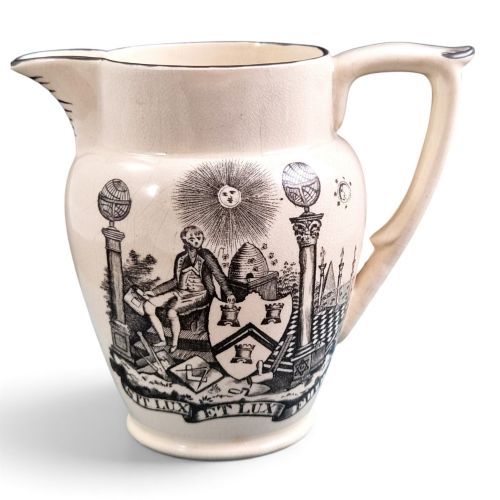
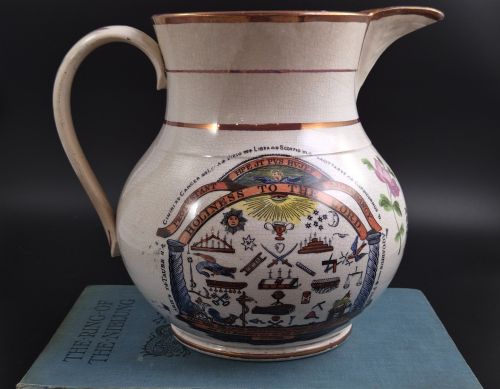
Forms vary from large one-gallon vessels and water jugs to smaller cream jugs and footbath pitchers. Many pieces celebrate specific themes, such as maritime subjects with tall ships, Masonic emblems, or commemorative scenes like the Iron Bridge over the Wear.
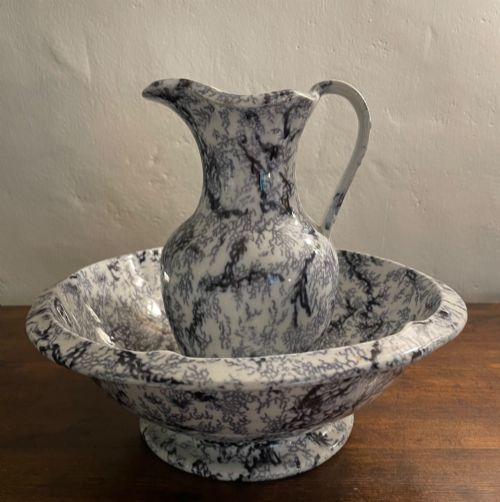
The aesthetic ranges from deep blue and white printing to flow blue and polychrome palettes often enhanced with pink lustre glazes or metallic accents. These jugs served domestic and ceremonial functions alike, surviving as bright records of early industrial ceramic design.
Materials and Technique
Potters shaped these vessels from earthenware, creamware, or pearlware bodies before applying a smooth glaze over the transferred design. The printing technique relied on an engraved copper plate transferring ink onto tissue paper, which was then pressed onto the unfired or bisque ceramic surface.
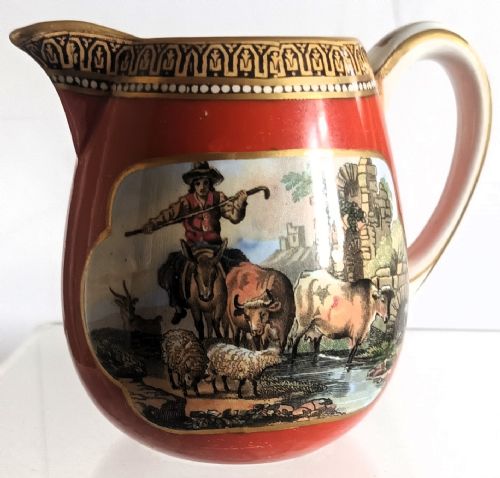
Many items received additional hand-painting over the print, introducing bright polychrome colours, metallic lustre glazes, or gilt highlights to enrich the finished appearance. Firing in kilns set the printed design permanently beneath or within the surface glaze.
Transferware Pottery Jug Retail Price Guide 2026
Typical asking prices for transferware pottery jug among the pieces listed under this phrase on Sellingantiques today, from the lower quarter to the upper quarter. They describe what is for sale here now, not the wider market.
Listings feature earthenware, pearlware, and creamware bodies decorated with metallic lustre glazes, gilt, and flow blue printing.
Judging Quality
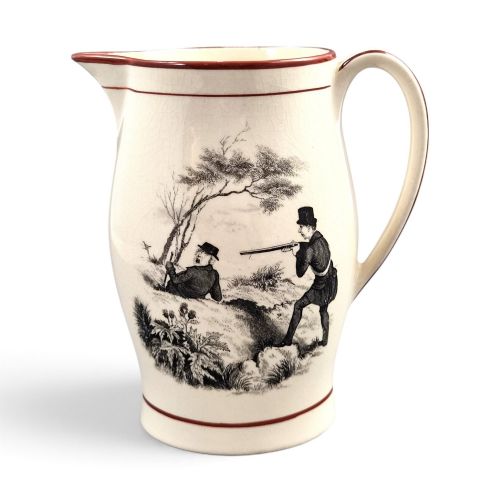
Quality rests in the crispness of the transfer print and the registration of any hand-applied enamel colours or metallic lustre work. Clean lines on complex pictorial scenes, such as maritime views or civic buildings, separate finer studio output from standard commercial wares.
The handling of the clay body, the evenness of the glaze, and the depth of secondary decorative treatments like pink splash lustre or marbling indicate the care taken during manufacture.
Minton·Doulton Burslem
The Transferware Pottery Jug Glossary
- Transferware
- Pottery decorated by transferring a printed design from an engraved copper plate onto the ceramic body. This technique allowed intricate pictorial scenes to be replicated consistently across multiple vessels.
- Pearlware
- A refined earthenware developed in the late 18th century featuring a bluish-tinted glaze that pooled slightly in crevices to mimic Chinese porcelain. It forms the base for many early 19th-century jugs.
- Creamware
- A fine-grained earthenware with a warm, yellowish cream-coloured glaze perfected in Staffordshire. It served as a popular canvas for early transfer-printed decoration.
- Pink Lustre
- A metallic glaze technique utilising gold or copper to create a shimmering pink or purple sheen on ceramics. It frequently borders nautical or commemorative transfer prints from Sunderland.
- Flow Blue
- A style of blue and white transferware where the cobalt colour intentionally bleeds into the surrounding white glaze during firing. This creates a soft, misty appearance popular on mid-19th-century vessels.
Transferware Pottery Jug: Frequently Asked Questions
What is a transferware pottery jug?
A transferware pottery jug is a ceramic container decorated with printed designs transferred from engraved plates. They were produced in large numbers across English potteries during the Georgian and Victorian eras.
These vessels display everything from simple floral motifs to complex historical and maritime scenes. Collectors value them for their detailed records of 19th-century social history and industrial printing techniques.
How were these jugs used originally?
These jugs served primarily practical roles in domestic settings for holding water, milk, or beer. Large one-gallon examples managed household hospitality, while smaller cream jugs sat on dining tables.
Many pieces also fulfilled commemorative or ceremonial duties, recording marriages, fraternal orders, and local landmarks. Their decorative prints often sparked conversation among guests during meals.
How do I care for an antique jug?
Living with these jugs requires gentle handling, keeping them away from direct sunlight and rapid temperature changes. Hand washing with mild soap in lukewarm water preserves the old glaze and any metallic lustre.
Avoid dishwashers and harsh scrubbers, which can damage the delicate earthenware body or fade the printed and painted decoration over time. Display them securely away from shelf edges.
How do I tell Georgian pieces from Victorian ones?
Georgian jugs often employ creamware or pearlware bodies with sharp, dark transfer prints, sometimes paired with hand-painted lustre. They tend to feature hand-thrown or early moulded shapes with simpler domestic utility.
Victorian pieces frequently utilise heavier earthenware bodies, flow blue printing, or complex geometric and naturalistic forms associated with later commercial wares. Marked pieces from larger registered factories also become more common as the 19th century progresses.