



Transfer Printed Ceramic Plates
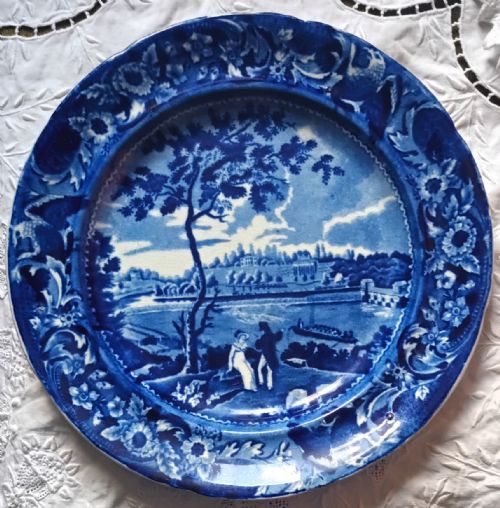
Transfer printed ceramic plates bring historical scenes to life on earthenware surfaces through blue and white pigment.
Transfer Printed Ceramic Plates
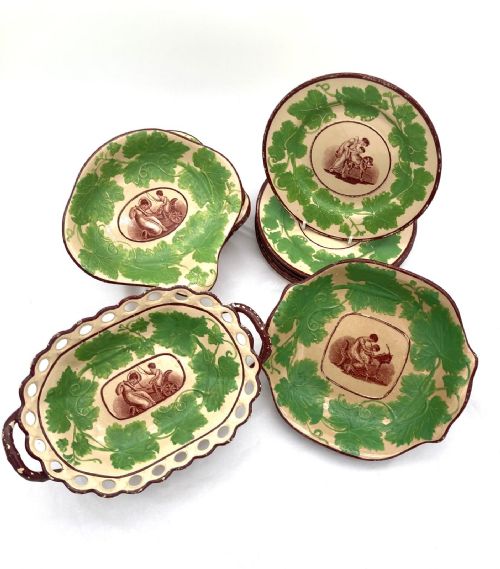
When searching for transfer printed ceramic plates, you are looking at functional and decorative vessels produced across the nineteenth century. The examples met on this page range from early Georgian meat platters and Regency childs plates to Victorian dessert services.
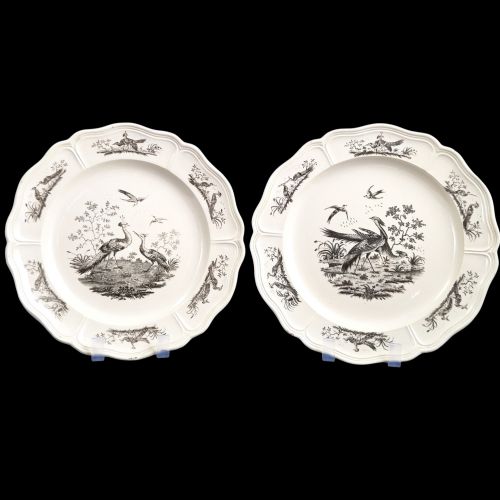
Makers utilised earthenware, pearlware, and glazed pottery to form plates, platters, serving dishes, and scale pans. These objects often display pictorial motifs such as classical ruins, London Bridge, and chinoiserie patterns.
The form spans from small cabinet plates to large meat plates and bread stands. Many items originate from English Staffordshire potteries working in the Georgian and Victorian eras.
How they were made
Potters shaped earthenware and pearlware bodies before applying cobalt pigment to transfer engraved designs onto the ceramic surface. Lead glaze and ceramic glaze were then applied to seal the surface before firing.
The transfer printing technique allowed workshops to repeat detailed pictorial scenes consistently across services. Cobalt pigment provided the deep blue coloration seen across Georgian and Victorian production.
Transfer Printed Ceramic Plates Retail Price Guide 2026
Typical asking prices for transfer printed ceramic plates among the pieces listed under this phrase on Sellingantiques today, from the lower quarter to the upper quarter. They describe what is for sale here now, not the wider market.
Listings feature earthenware, pearlware, and glazed pottery decorated with cobalt pigment.
What varies in quality
The clarity of the transfer print defines the visual success of the piece, separating crisp pictorial details from blurred impressions. Early pearlware bodies and well-applied lead glazes also indicate superior production standards.
The artistic ambition of the pattern, from named topographical views to intricate chinoiserie scenes, influences the standing of the plate. Complete sets and matched pairs carry greater weight than isolated examples.
Stubbs·Thomas Lakin·Brameld and Co·John Rogers and Son·Spode
The Transfer Printed Ceramic Plates Glossary
- Pearlware
- A refined type of earthenware developed in the late eighteenth century with a bluish glaze that pooled in recesses. It provided a paler ground for blue transfer printing than standard creamware.
- Transfer printing
- A process where an engraved copper plate applied an inked design to tissue paper, which was then transferred onto the unglazed or bisque ceramic body. This technique revolutionised pottery decoration in the nineteenth century.
- Prattware
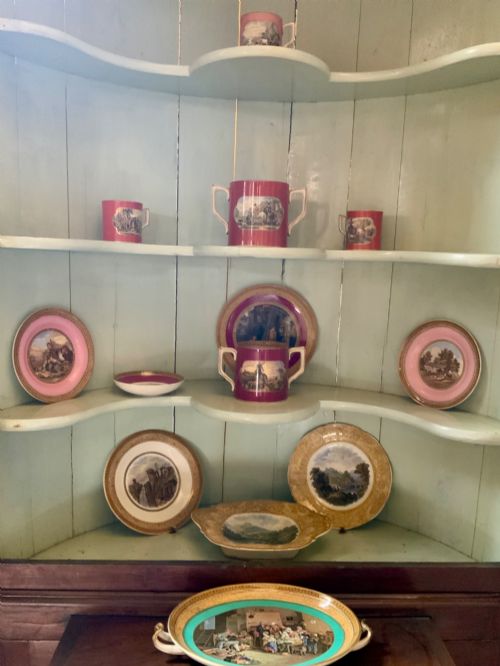
- A type of English earthenware associated with multi-coloured underglaze decoration, though related items appear in blue and white. It is frequently dated to the nineteenth century.
- Meat plate
- A large, sturdy serving platter designed to hold joints of meat at the dining table. These pieces often feature draining wells and rich pictorial borders.
- Chinoiserie
- A European stylistic interpretation of Chinese artistic motifs and landscapes. It appears frequently on nineteenth-century blue and white pottery.
Transfer Printed Ceramic Plates: Frequently Asked Questions
What are transfer printed ceramic plates?
Transfer printed ceramic plates are earthenware and pearlware vessels decorated by applying ink from a copper plate onto the pottery surface. They feature blue and white pictorial designs ranging from topographical views to classical ruins.
These pieces were produced in English potteries during the Georgian and Victorian periods. They served practical dining functions as well as decorative display roles.
How were these plates used?
Transfer printed ceramic plates fulfilled daily dining requirements, serving meals, meats, and desserts across nineteenth-century households. Larger platters accommodated joints of meat, while smaller childs plates and dessert services catered to specific courses.
Some specialised forms, such as scale pans and bread stands, served utility roles in domestic settings. Over time, many transitioned into decorative display items.
How do I date a transfer printed plate?
Dating relies on stylistic evidence, ceramic bodies, and recorded maker activity from the nineteenth century. Pearlware bodies and specific Regency or Georgian border patterns often point to earlier production phases.
Later Victorian pieces display heavier earthenware bodies and distinct stylistic treatments. Reference to known potteries and named views helps narrow the production window.
What is pearlware?
Pearlware is a refined earthenware body developed to mimic Chinese porcelain through the addition of flint and a slightly bluish glaze. The glaze pools visibly in crevices and provides a bright ground for blue transfer printing.
It appears frequently on plates and childs sets from the early nineteenth century. This material marks an intermediate step between creamware and later white ironstone.