


Traditional Wooden Clothes Horse
A traditional wooden clothes horse offers a practical solution for airing garments, combining functional framing with pleasing timber grains.
Traditional Wooden Clothes Horse
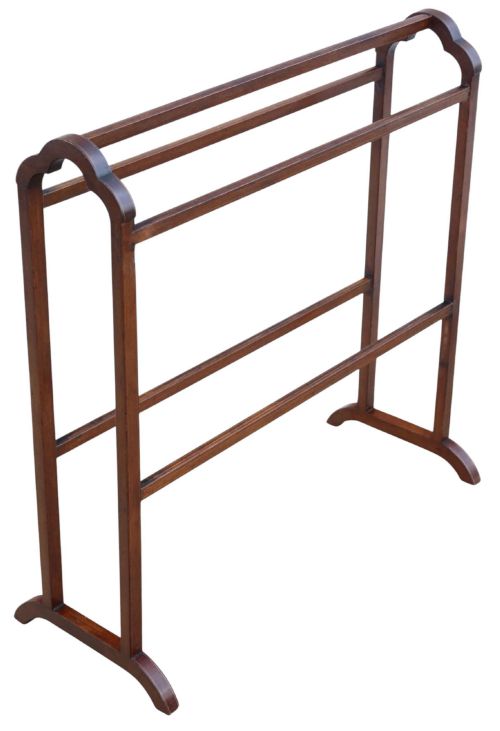
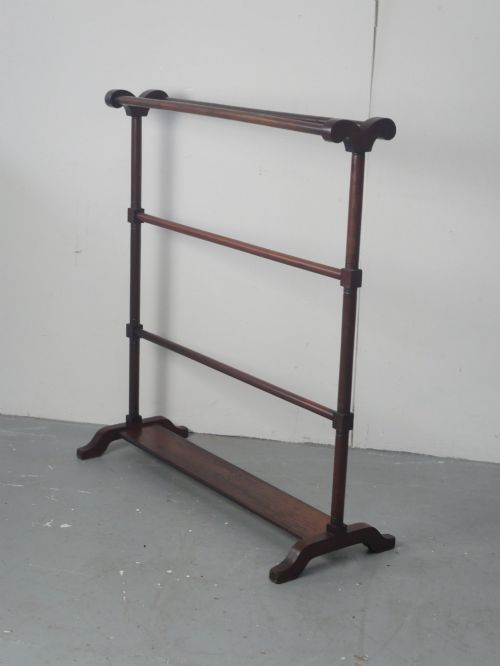
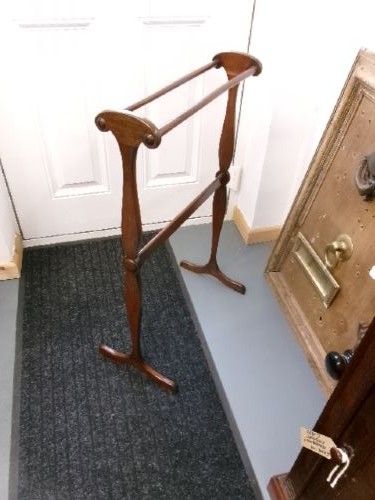
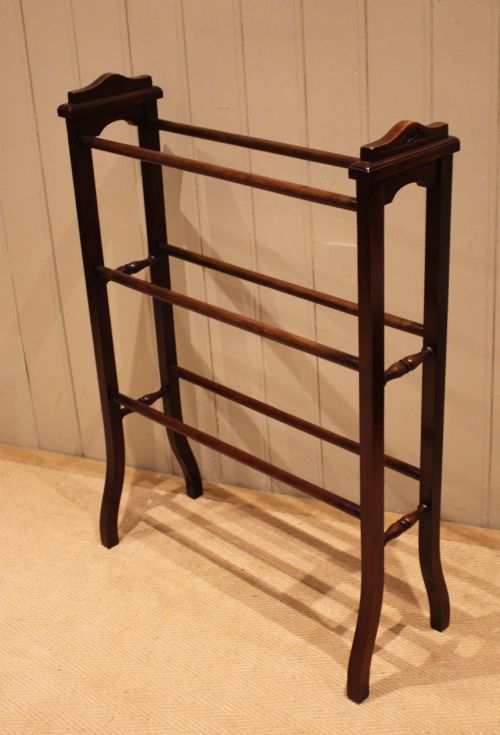
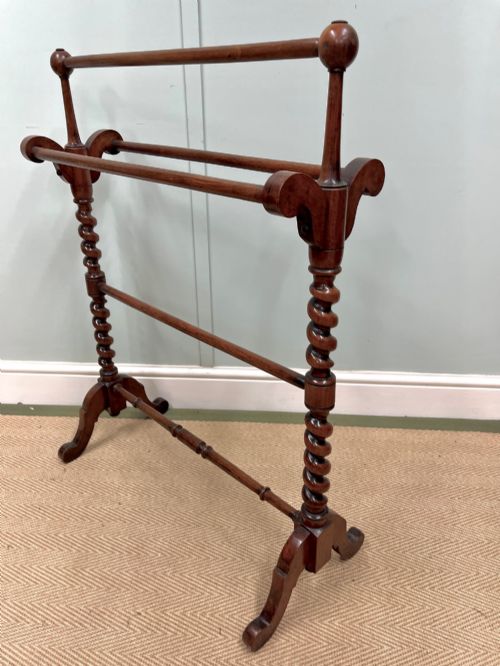
A traditional wooden clothes horse typically manifests as a standing towel rail or clothes rack designed for domestic utility. Examples on this page span the Regency period through to the Edwardian era, encompassing nineteenth century English designs and larger scale Chinese lacquered robe stands.
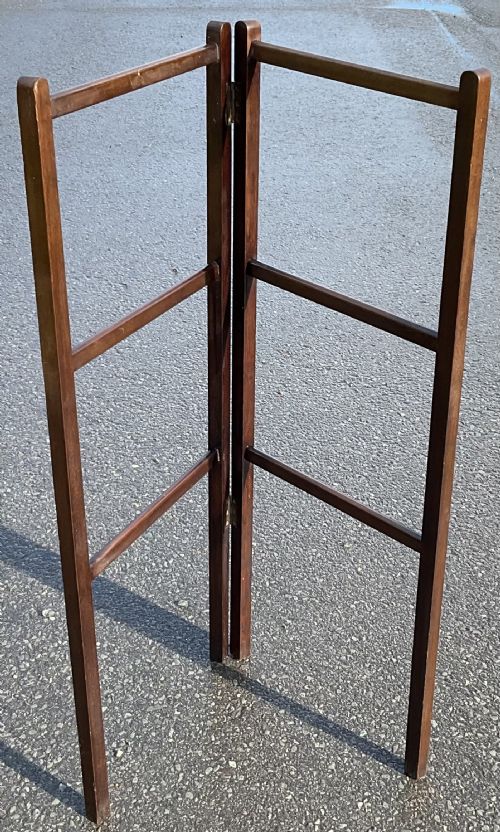
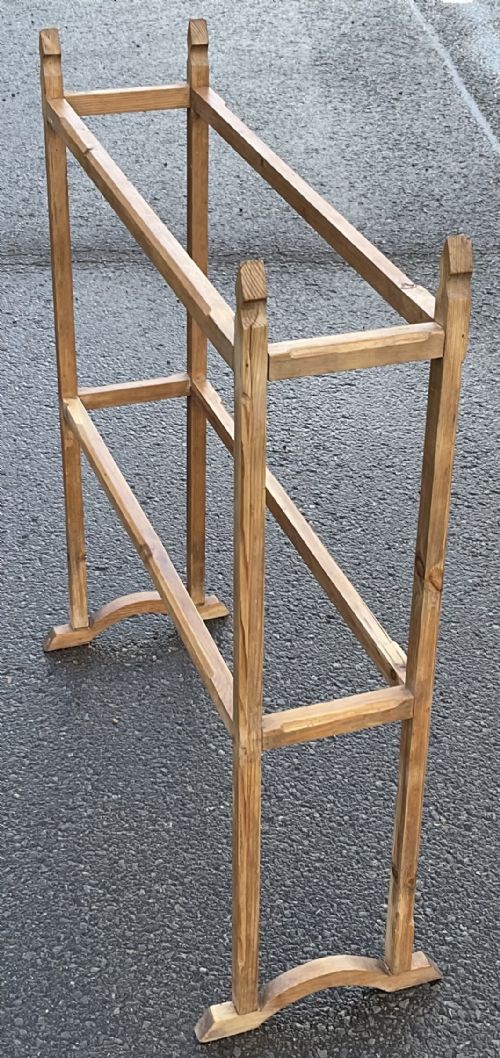
The prevailing form on this page is the mahogany towel rail, often featuring multiple bars or folding sections for daily use. Pine and elm variants also appear, ranging from compact nineteenth century items to larger standing configurations suited to period interiors.
How they were made
Construction relies heavily on timbers such as mahogany, pine, and elm, shaped into sturdy standing frames with horizontal rails. Certain pieces incorporate satinwood inlay or brass details, while others utilise ebonised or lacquered wood surfaces for distinct visual character.
Joinery methods vary from simple pegged frames to folding hinges that allow the airer to collapse when not in use. Surface finishes range from polished mahogany to painted and decorated pine, reflecting the domestic function and period of each item.
Listings on this page encompass multiple wood types, including mahogany, pine, elm, satinwood inlay, and ebonised wood across several centuries.
What varies in quality
Quality in a traditional wooden clothes horse rests upon the selection of timber and the crispness of any inlaid detailing. Dense hardwoods like mahogany command attention for their durability, whereas simpler pine or elm versions prioritise utilitarian charm.
Proportion and scale also distinguish finer examples, such as generous Regency proportions or robust five bar frames, from simpler everyday items. The integration of functional hinges and stable standing bases dictates how successfully the piece balances utility with period craftsmanship.
The Traditional Wooden Clothes Horse Glossary
- Edwardian
- A stylistic period spanning the early twentieth century, known for lighter proportions and refined mahogany framing. Pieces from this era often feature simple lines and practical folding mechanisms.
- Regency
- A design era from the early nineteenth century defined by classical restraint and generous proportions. Items from this time frequently display superior timber selection and subtle decorative turning.
- Ebonised wood
- Timber treated to imitate ebony, creating a dense black finish that contrasts with traditional natural grains. This technique appears on specific turn of the twentieth century stands.
- Satinwood inlay
- A contrasting light wood used to create decorative borders or motifs upon a darker mahogany ground. It adds refined detail to the uprights or crossbars of select rails.
Traditional Wooden Clothes Horse: Frequently Asked Questions
How were clothes horses used historically?
These pieces served primarily in bedrooms or sculleries for airing garments and drying linens near firesides. Their movable frames allowed households to manage laundry efficiently before mechanical drying.
Over time, many functional items transitioned into decorative hallway or bathroom fixtures. Their folding designs made them adaptable to various domestic spaces.
How do I date a wooden clothes horse?
Dating relies upon timber choices, construction methods, and stylistic cues present in the frame. Edwardian items tend to feature lighter mahogany sections, while Victorian pieces often utilise heavier pine or robust mahogany.
Earlier Regency or nineteenth century examples display distinct turning and proportions associated with period cabinet-making. Examining the joinery provides further clues regarding age.
Are these pieces suitable for modern bathrooms?
Many traditional rails function effectively as towel stands in contemporary settings, provided they are kept clear of excessive moisture. Their slatted frames offer ample hanging space for daily use.
Care should be taken with antique polished or lacquered surfaces to prevent water damage. Regular gentle maintenance preserves the timber finish.
What is the difference between a clothes horse and a towel rail?
While the terms often overlap in historical listings, clothes horses traditionally imply larger folding frames for garments. Towel rails generally describe smaller standing or fixed structures designed for washbasins.
Both serve similar functional purposes for draping textiles and sharing comparable wooden construction methods. Scale and rail count typically distinguish the two formats.