
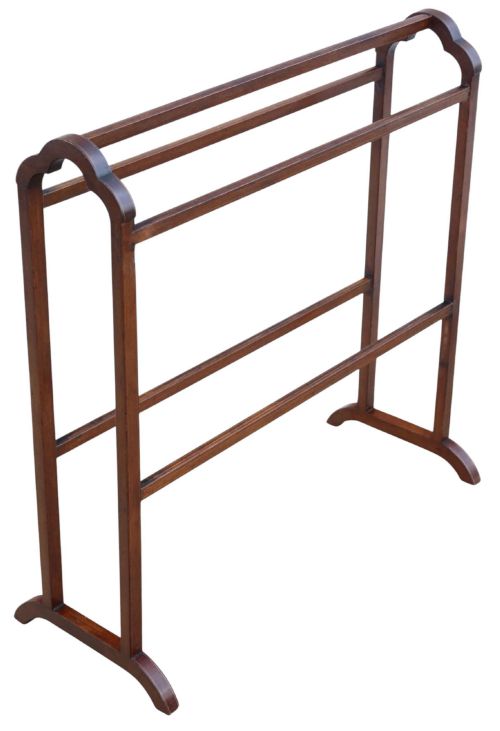
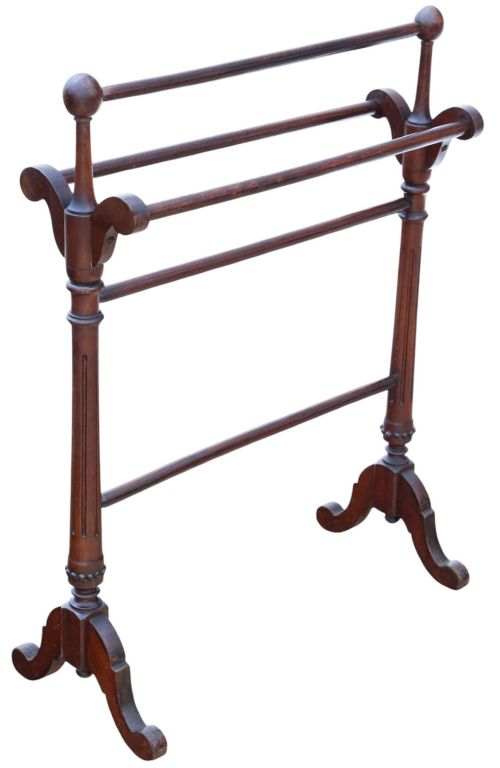
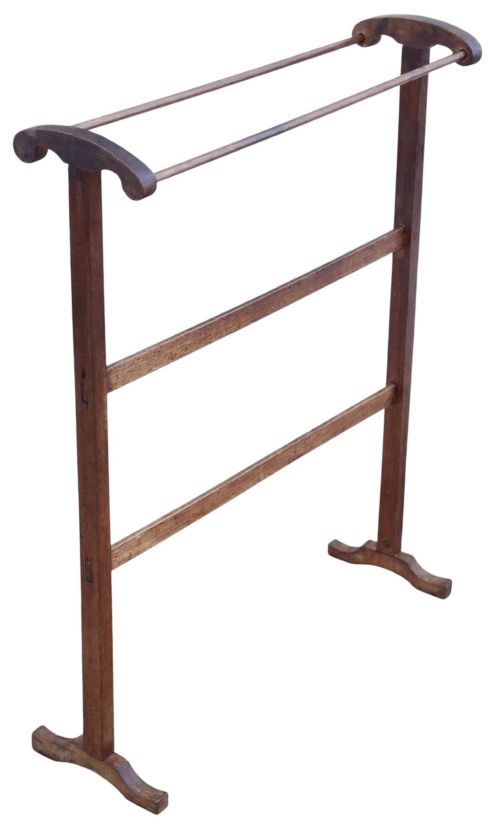
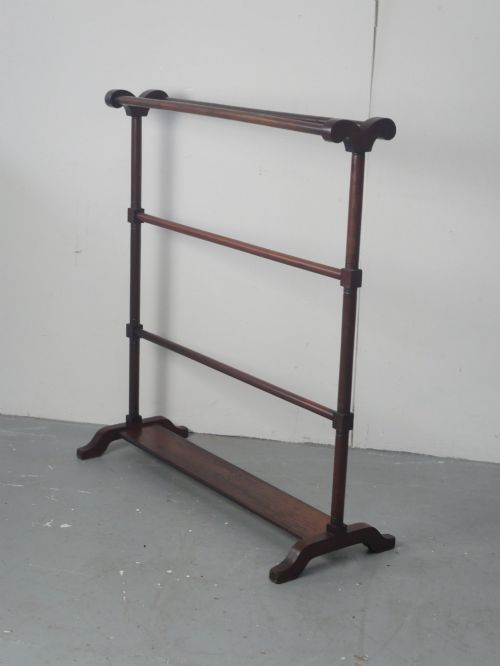


Edwardian Towel Stand
An edwardian towel stand offers practical elegance for hanging linens, bringing period charm and functional design to a traditional bathroom or bedroom.
Edwardian Towel Stand
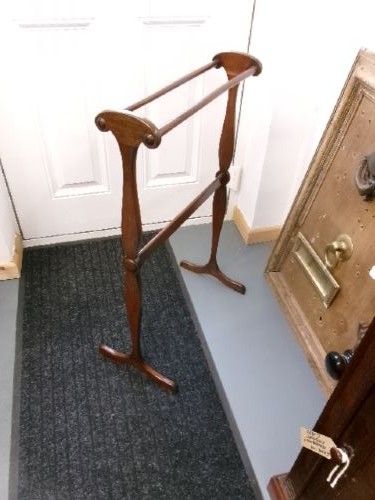
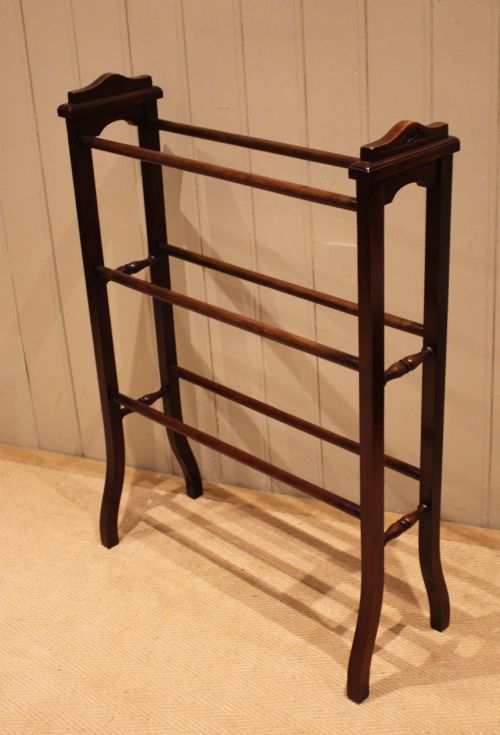
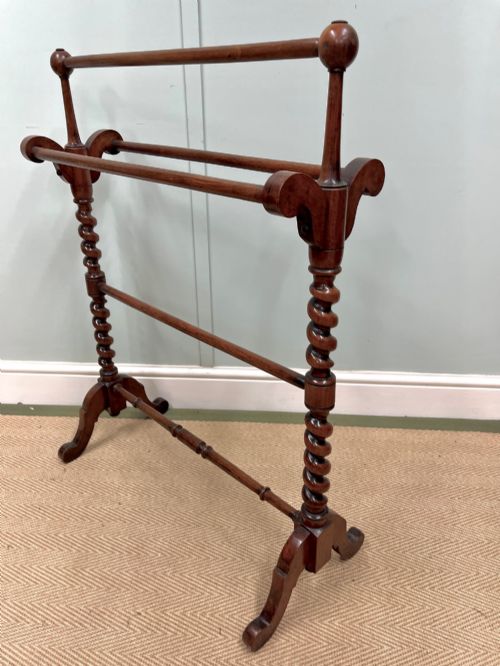
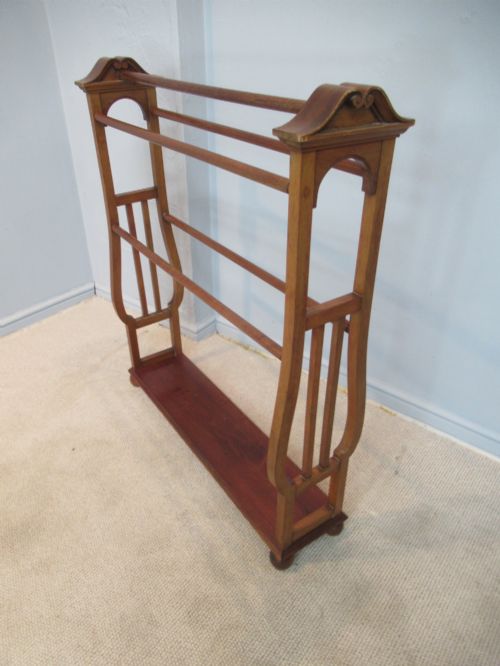
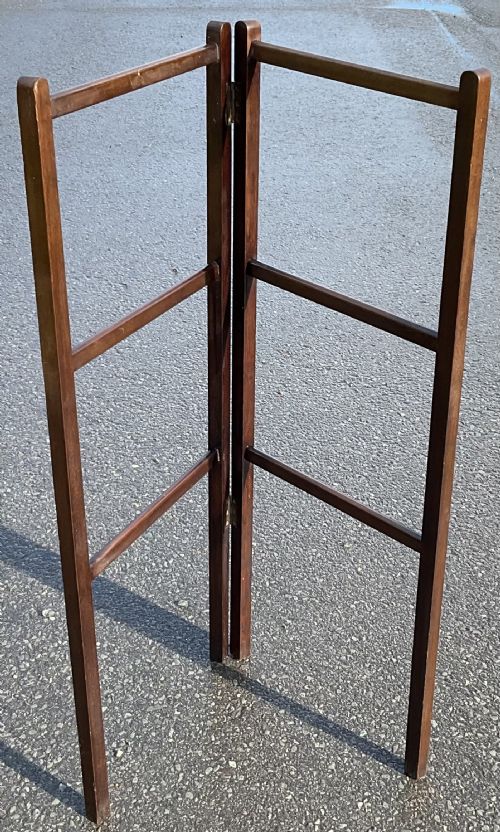
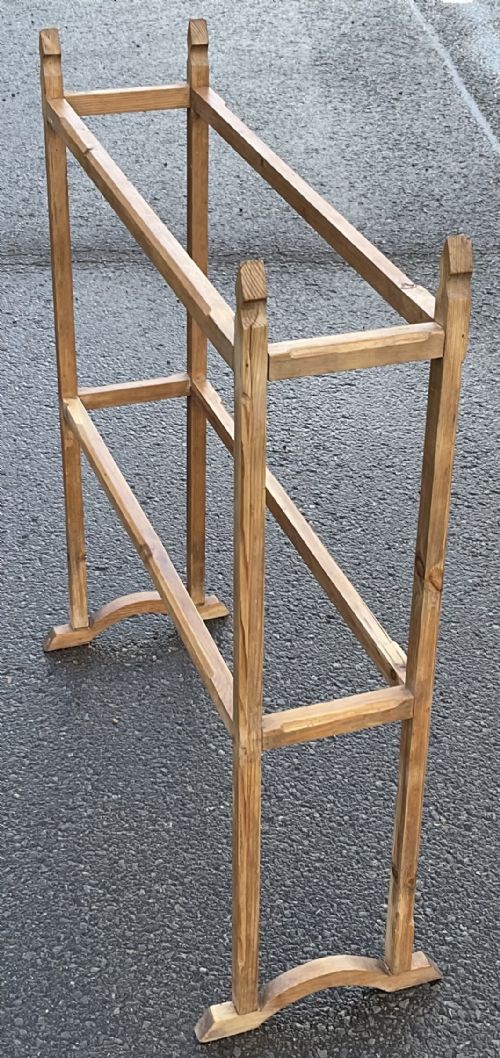
An edwardian towel stand serves as a dedicated freestanding frame designed to hold and dry towels or garments in domestic spaces. The pieces seen here encompass various formats, including multi-bar rails, folding designs, and occasional washstands or clothes stands.
The selections on this page are predominantly Edwardian in origin, alongside examples from the Victorian period, the nineteenth century, and the Regency era. Most variations rely on upright wooden frames configured with parallel rails to maximise hanging space.
Makers of the period produced these utility items in forms ranging from simple pine frames to inlaid mahogany structures suitable for country houses. Buyers will encounter both compact bedroom rails and larger multi-bar stands designed for heavier domestic use.
How they were made
Cabinet makers constructed these stands using timber stocks such as mahogany, oak, pine, walnut, and satinwood. Many examples incorporate contrasting inlay or boxwood stringing to add decorative detail to the functional wooden frame.
Joinery methods focused on stability and daily utility, utilising sturdy uprights and securely fitted horizontal rails to bear the weight of damp linens. Some pieces feature ebonised wood or bentwood techniques to achieve specific structural curves and dark finishes.
Listings feature woods including mahogany, oak, pine, walnut, and satinwood inlay across the nineteenth-century and Edwardian periods.
What varies in quality
The grade of timber selection and the precision of cabinet work separate standard utility items from finer country house commissions. Superior examples display carefully chosen grain patterns, balanced proportions, and refined details such as satinwood inlay.
Structural integrity and the retention of original fixtures, including brass fittings where applicable, influence the character of each piece. Stands that combine robust daily utility with thoughtful decorative embellishments represent the higher tier of surviving examples.
The Edwardian Towel Stand Glossary
- Ebonised wood
- Timber treated with a dark stain or finish to imitate ebony. This technique was popular for creating a formal, high-contrast appearance in nineteenth-century furniture.
- Satinwood inlay
- A contrasting light-coloured wood inserted into recesses on a darker primary surface. It provides delicate decorative borders on Edwardian panels and rails.
- Bentwood
- Wood softened by steam and bent into curved structural forms. This technique appears on specialised wash and shaving stands from the period.
- Boxwood strung
- Narrow lines of pale boxwood inlaid into grooves on furniture surfaces. The technique outlines edges and panels on finer mahogany pieces.
Edwardian Towel Stand: Frequently Asked Questions
How were towel stands used originally?
These stands functioned primarily in bedrooms, dressing rooms, and wash spaces to dry and display household linens.
They provided accessible hanging space for towels and garments before fitted bathroom furniture became standard in homes.
Where should I place a towel stand today?
A standing rail works effectively in a traditional bathroom, ensuite, or bedroom for hanging guest towels and garments.
Position the piece away from direct, excessive moisture sources to preserve the historic timber and any delicate inlay.
How do I distinguish Edwardian from Victorian pieces?
Edwardian examples tend to feature lighter timbers, simpler lines, and occasional satinwood inlay or stringing.
Victorian and earlier nineteenth-century pieces often display heavier proportions, darker finishes, and sturdier structural framing.
Are these stands suitable for daily use?
Most surviving wooden stands retain robust construction capable of supporting standard household towels and clothing items.
Gentle handling and regular care of the timber surface ensure the joints and rails remain stable during everyday use.