




Traditional Windsor Child Chair
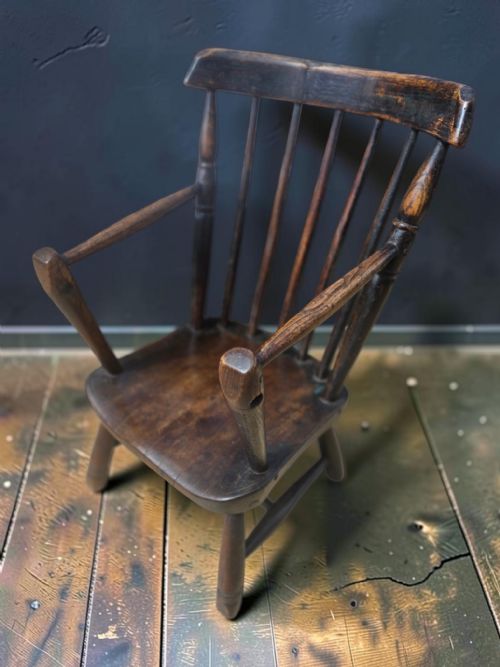
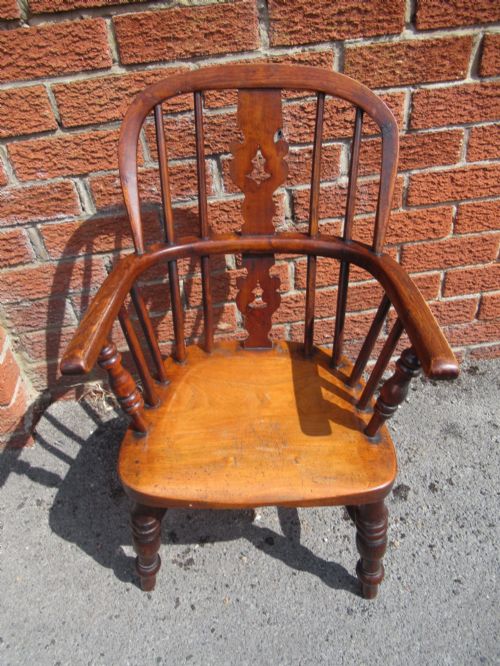
These traditional windsor child chair examples are miniature vernacular seating pieces shaped from native timbers for young family members.
Traditional Windsor Child Chair
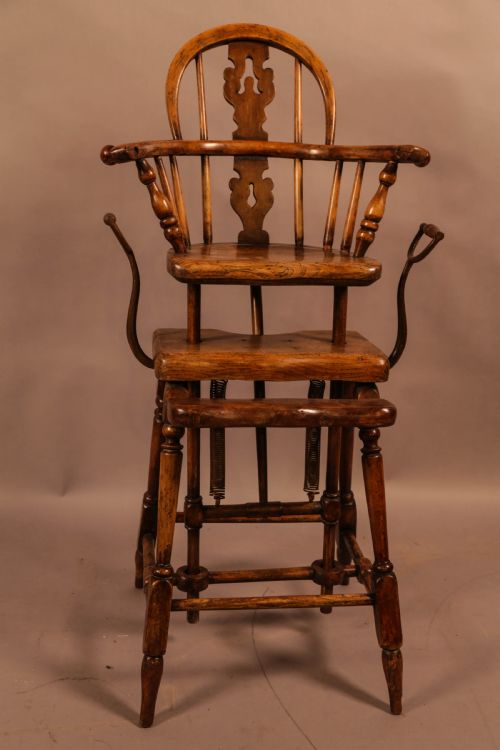
A traditional windsor child chair sits within the English country vernacular tradition, offering scaled-down seating intended for children in domestic interiors. These pieces appear in forms such as armchairs, rocking chairs, high chairs, and exercise chairs originating across various regional workshops.
The examples gathered here span from the mid eighteenth century through the Georgian and Victorian eras, showing the enduring appeal of traditional seating. Most pieces found on this page date from the nineteenth century, reflecting the survival rate of vernacular furniture from that period.
Makers shaped these items using familiar forms like stick backs and splat backs, supported by turned legs and joined seats. Each item demonstrates how cabinet makers and bodgers adapted full-scale domestic seating designs for younger occupants.
How traditional windsor child chair pieces were made
Craftsmen built these chairs using a combination of native woods selected for specific structural properties, frequently pairing elm for solid seats with ash or yew for spindles and legs. Yew wood appears frequently, prized for its dense grain and rich tone in smaller seating forms.
The construction relies on traditional bodging techniques where turned legs and back spindles fit directly into bored holes within a solid timber seat. Makers utilised steam-bending to form the curved bows and arm rails characteristic of the windsor style.
Victorian makers occasionally built miniature exercise chairs on wheels, ensuring toddlers could navigate the nursery with full vehicular momentum.
What varies in quality
The distinction between standard workshop production and finer vernacular pieces lies in the selection of timber and the complexity of the turning work. Yew wood examples generally command attention for their visual grain pattern and superior material selection.
Proportion and structural integrity dictate the standing of individual chairs, with well-balanced arm supports and carefully tapered spindles showing greater maker skill. The retention of original surface patination on elm seats and ash frames further separates preserved examples from heavily restored ones.
The Traditional Windsor Child Chair Glossary
- Vernacular
- Furniture made by regional craftsmen for local use rather than following strict metropolitan stylistic rules. These pieces often employ local timbers and traditional joining methods.
- Stick back
- A chair back constructed from multiple plain turned spindles inserted directly into the seat. This form provides sturdy support without requiring a carved central splat.
- Splat back
- A chair design incorporating a central vertical wooden slat, often shaped or pierced, positioned between the outer spindles. It appears on select regional seating variants.
- Bodger
- A travelling woodturner working in woodland clearings to produce chair components for assembly elsewhere. They utilised pole lathes to shape green timber.
- Patina
- The surface sheen and colour acquired by wood over decades of handling, exposure, and polishing. Original patination indicates an untouched historical finish.
Traditional Windsor Child Chair: Frequently Asked Questions
What is a traditional windsor child chair?
A traditional windsor child chair is a small-scale wooden seat built using regional vernacular techniques, featuring pegged legs and spindle backs.
Craftsmen adapted full-sized windsor seating designs for domestic use by children, utilising native timbers like yew, elm, and ash.
How do I date a child windsor chair?
Dating relies on observing construction methods, timber choice, and tool marks visible on the underside of the solid wooden seat. Georgian examples often display lighter turning and different wear patterns compared to later Victorian pieces.
Changes in chair forms, such as the introduction of rocking bases or exercise frames, also help establish the likely period of manufacture.
What woods were used for these chairs?
Makers relied on native British hardwoods, frequently combining elm for the thick saddle seats with ash or fruitwood for the legs and spindles. Yew wood was also utilised for its strength and decorative grain.
These material choices reflect what was locally available to regional carpenters and bodgers working outside major cities.
Where were these chairs made?
These chairs originated in rural workshops and regional centres across England, particularly in areas with access to hardwood forests like the Chilterns and the West Country. Regional makers developed distinct local styles in their spindle arrangements and arm bow shapes.
They supplied local farming families and country houses with durable seating tailored for young children.
How should I care for a antique child chair?
Maintain the wood by keeping the chair away from direct heat sources and sudden humidity changes that can cause the timber to split. Apply a microcrystalline wax periodically to nourish the surface without building up heavy residues.
Gentle dusting with a soft cloth preserves the historical finish and natural patination acquired over centuries.