


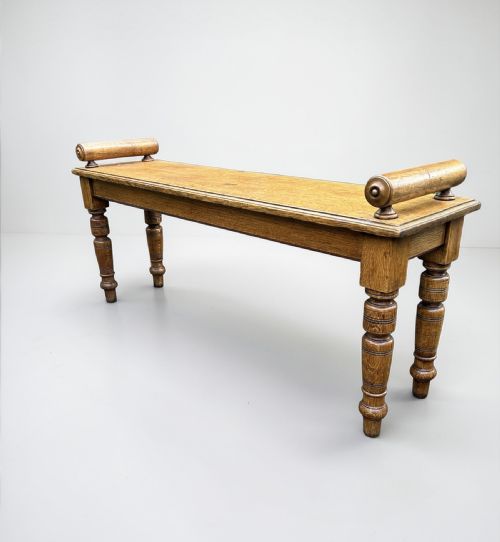


Traditional Window Seat
A traditional window seat places solid timber and upholstered comfort beneath the glass, offering a low place to sit by the light.
Traditional Window Seat
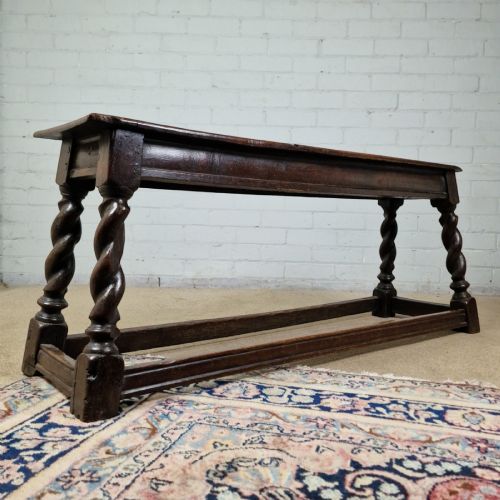
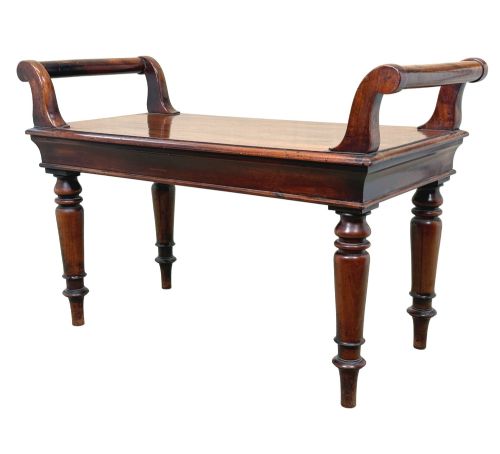
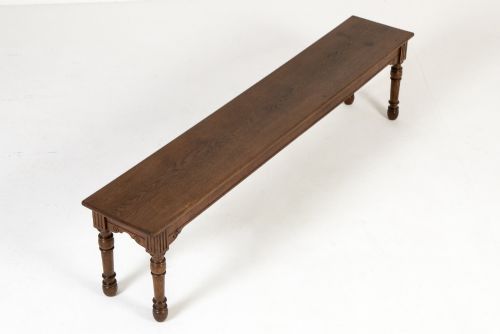
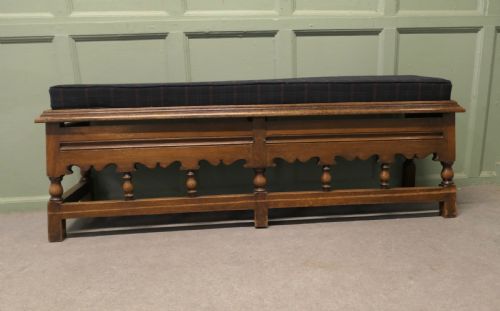
A traditional window seat takes the form of a long stool, bench or ottoman designed to sit low beneath a sill. The pieces gathered here span from the eighteenth century through the Edwardian period, built in mahogany, oak, walnut and rosewood.
Most examples on this page function as long benches, hall seats or piano stools, often upholstered in fabric, leather, wool or linen. Makers shaped these items in styles ranging from Regency and Victorian to Adam and English Country.
Origins stretch across English country houses and town residences, drawing on sturdy frames intended for daily use in corridors, bays and parlours.
How they were made
Cabinet makers relied on dense hardwoods such as mahogany, oak, walnut and rosewood to construct the structural frames of these benches and stools. Timber was frequently polished, carved or ebonised to suit the prevailing taste of the period.
Upholstery techniques combined traditional stuffing with fabrics including wool, leather, linen and specialised upholstery material. Details such as fluted legs, brass fittings and hinged seats completed the construction.
Materials span mahogany, oak, walnut, rosewood, brass, wool, fabric and leather across the 18th, 19th and early 20th centuries.
What varies in quality
The standard of timber selection and depth of carving set individual pieces apart. Solid mahogany or figured walnut with crisp hand-carving represents a higher tier of craftsmanship than simpler pine or plain oak variants.
The integrity of the frame construction and the quality of the upholstery materials determine how well a bench holds its form over decades. Original fabric coverings or skilled later re-upholstery in linen or leather distinguish finer survivals.
The Traditional Window Seat Glossary
- Window seat
- A long stool or bench sized specifically to fit within the recess of a bay or window. These pieces provide low seating without obstructing the light.
- Hall bench
- A sturdy timber bench placed in an entrance hall for sitting while removing boots. They frequently incorporate storage or simple wooden frames.
- Ottoman
- A padded upholstered seat or couch without a back, often fitted with a hinged lid for storage inside. Examples appear in rosewood and mahogany.
- Duet stool
- A wider piano stool designed to seat two musicians side by side. They often feature upholstered tops and hinged compartments for sheet music.
- Ebonised
- Timber treated with a finish to imitate ebony. This dark surface treatment is common on Victorian stools and benches.
Traditional Window Seat: Frequently Asked Questions
Where should I place a traditional window seat?
These pieces naturally suit bay windows, hallways, or the foot of a bed. Their low profile ensures they fit beneath sills without blocking natural light.
In corridors, they double as hall benches for boots and daily use, while bedroom placements offer a convenient spot for dressing.
How do I distinguish an 18th century piece from a Victorian one?
Look closely at the timber choice, joinery methods, and carved details. Eighteenth century examples often feature heavier oak or carved mahogany in Georgian styles.
Victorian pieces introduce ebonised finishes, rosewood, and machine-assisted turnings alongside bolder upholstery treatments.
Are these benches comfortable for daily sitting?
Most feature padded upholstery in fabric, leather, or linen supported by sturdy timber frames. While some are firm wooden benches, upholstered versions provide substantial cushioning.
Many period stools have been recovered in modern linen or traditional textiles to ensure practical comfort.