



Traditional Wellington Chest
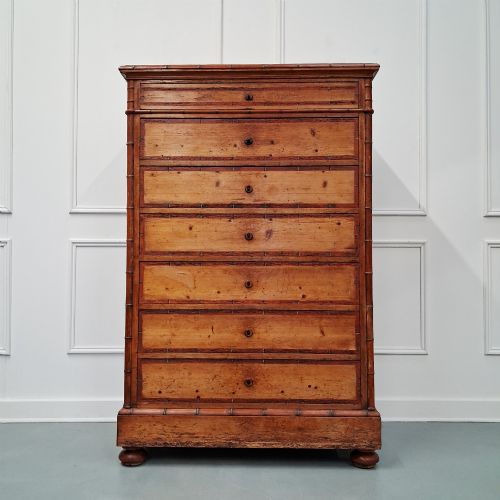
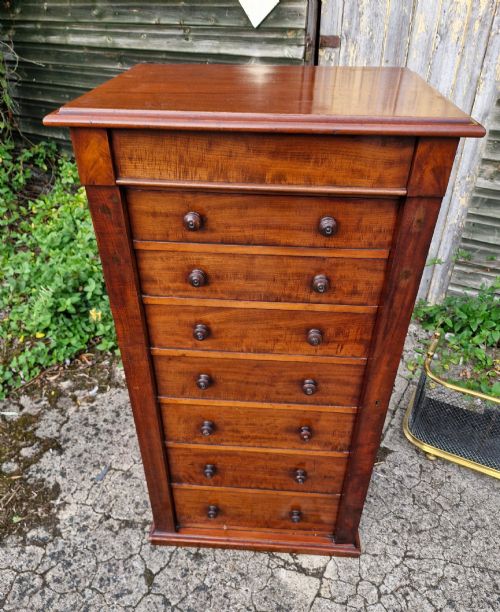
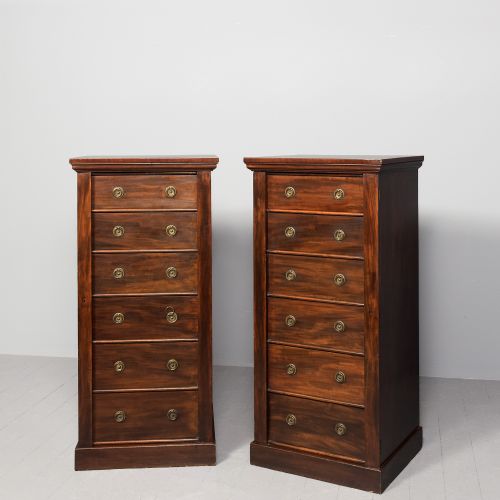
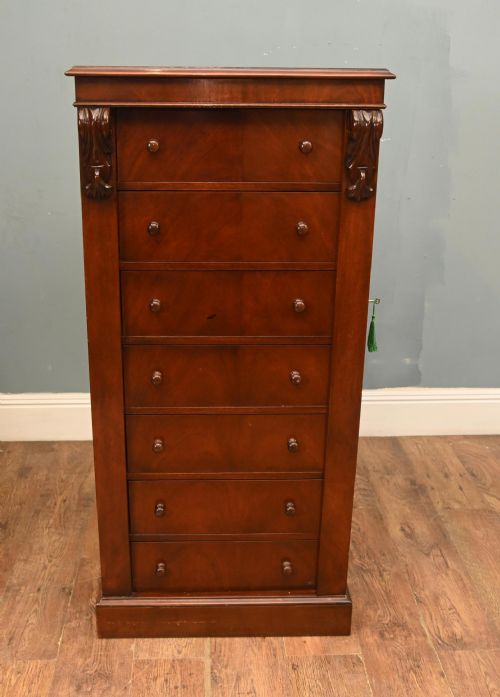
A traditional wellington chest is a tall, narrow mahogany drawer unit with a side locking bar, prized for holding papers or small items.
Traditional Wellington Chest
When you search for a traditional wellington chest, you are looking at a distinctive form of tall, narrow drawer unit designed to secure its contents with a hinged vertical locking stile. These pieces date across the Victorian, Edwardian, and earlier nineteenth-century periods, with William IV and Regency examples also appearing.
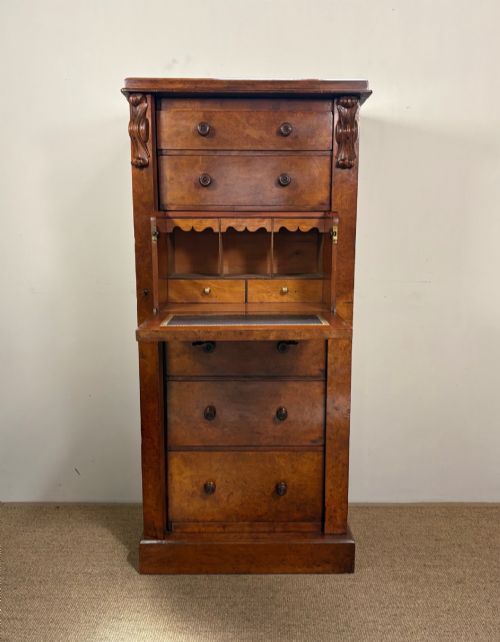
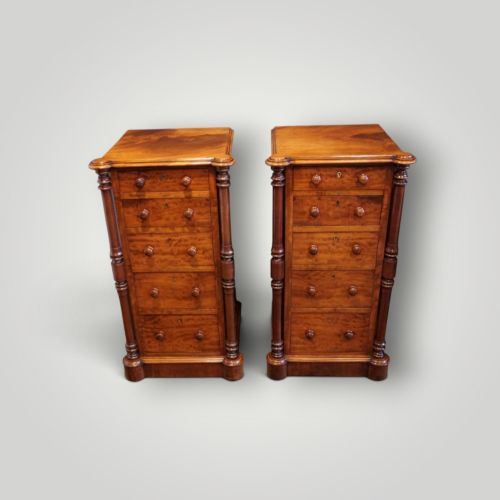
The version you are most likely to meet on this page is constructed from mahogany, often featuring flame mahogany veneer or solid timber. They appear primarily as chests of drawers, alongside bedside chests, collectors chests, and secretaire variants with a hinged fall front.
Originating in domestic and country house settings, these narrow chests suit spaces where floor area is limited yet vertical storage is required. They combine deep banks of drawers with a locking mechanism that fastens the entire unit with a single key.
How they were made
Makers built traditional wellington chests using solid mahogany and flame mahogany veneers applied to secondary woods such as pine. The distinctive side locking bar is hinged to the main carcase, dropping down over the drawer edges to secure them when locked.
Drawer construction typically involves tight dovetail joints, while interiors utilise secondary timbers and occasionally leather inserts. Surface finishes rely on traditional polishing techniques that highlight the grain patterns of the mahogany.
Traditional Wellington Chest Retail Price Guide 2026
Typical asking prices for traditional wellington chest among the pieces listed under this phrase on Sellingantiques today, from the lower quarter to the upper quarter. They describe what is for sale here now, not the wider market.
Some chests arrive wearing original country house scumble paint, proving that even formal mahogany furniture occasionally suffered a decorative disguise.
What varies in quality
Quality in these pieces rests upon the selection of timber figures, particularly the use of symmetrical flame mahogany veneers across the drawer fronts. Finer examples display careful matching of grain and robust internal framing that withstands daily use.
Hardware integration also distinguishes the tier of a piece, from the fit of the brass locks and hinges to the operation of the side locking bar. Original surfaces, such as country house scumble paint or patinated mahogany, preserve the integrity of the piece.
Warings Liverpool
The Traditional Wellington Chest Glossary
- Wellington Chest
- A tall, narrow chest of drawers secured by a hinged locking bar on one side that fastens over the drawer edges.
- Secretaire
- A desk form featuring a hinged fall front that opens to reveal a writing surface and small interior compartments.
- Flame Mahogany
- A veneer cut from timber where the grain creates a flamy, feather-like pattern across the surface.
- Collectors Chest
- A specialised cabinet fitted with shallow drawers designed for storing specimens, coins, or small objects.
- Scumble Paint
- A decorative surface finish applied with a translucent glaze and brushed or textured to imitate wood grain or texture.
Traditional Wellington Chest: Frequently Asked Questions
What is a traditional wellington chest?
A traditional wellington chest is a tall, narrow set of drawers distinguished by a hinged locking stile on one side. This bar fastens down the edge of the drawers to secure the entire unit with a single key.
Most examples seen here date from the nineteenth and early twentieth centuries, constructed predominantly in mahogany and flame mahogany veneer.
How do you lock a wellington chest?
The locking mechanism operates via a vertical wooden bar hinged to the side of the carcase. When the drawers are fully pushed in, this bar swings into place over their edges and is secured with a key in the side lock.
This design prevented unauthorized access to the contents of every drawer simultaneously, making them useful for personal papers or valuables.
Where were these chests used?
These chests originated in domestic bedrooms, studies, and country houses where floor space was at a premium. Their vertical proportions allowed them to fit into narrow wall spaces while offering substantial storage depth.
Today they function effectively as bedside tables, lingerie chests, or compact drawer units in living areas.
How do you tell the periods apart?
Periods are identified through stylistic cues in the mouldings, handles, and proportions. Regency and William IV examples often display bolder architectural details, while Victorian and Edwardian pieces lean towards simpler lines or inlaid decoration.
Mahogany remains the dominant wood across these eras, but veneer figures and secondary timbers help indicate the decade of manufacture.