



Traditional Watercolour Artwork
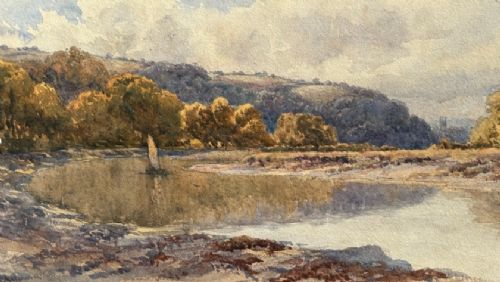
Traditional watercolour artwork captures pastoral views, coastal scenes and historic architecture through pigment on paper.
Traditional Watercolour Artwork
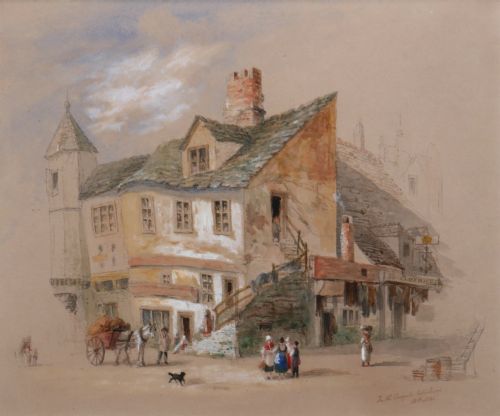
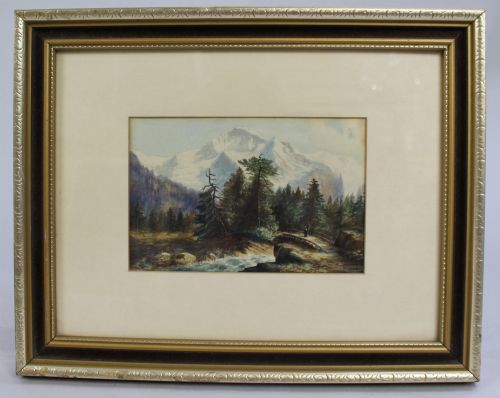
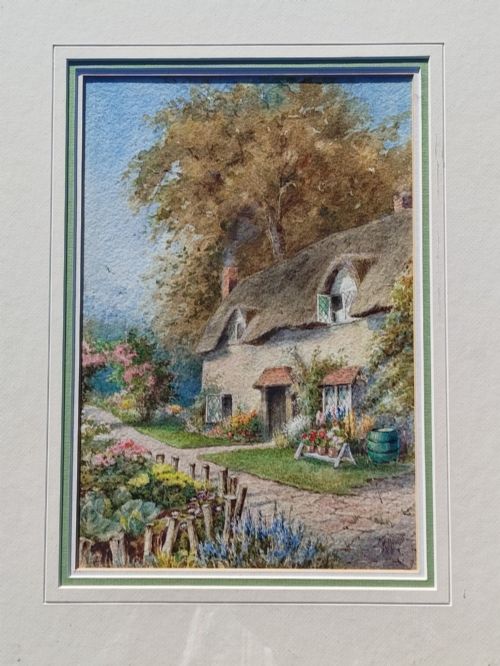
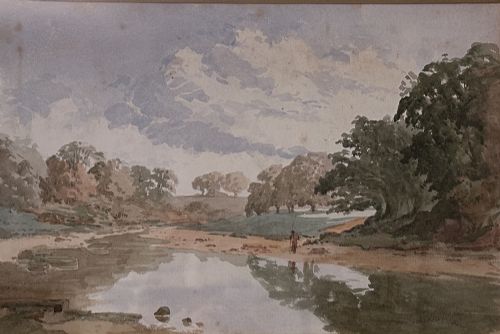
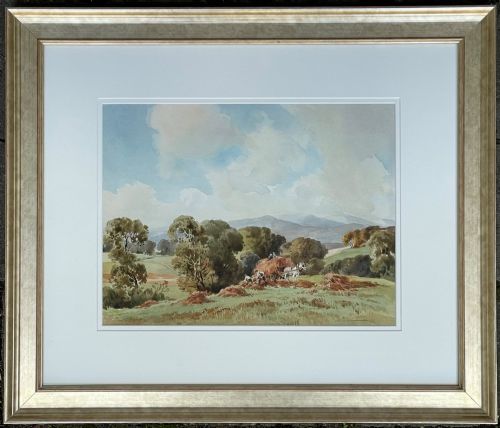
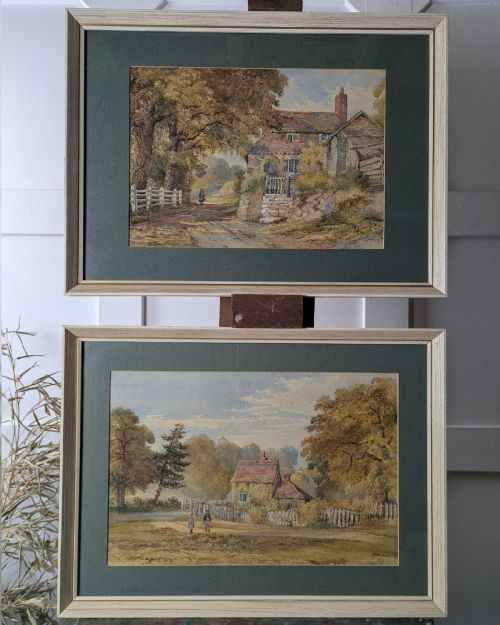
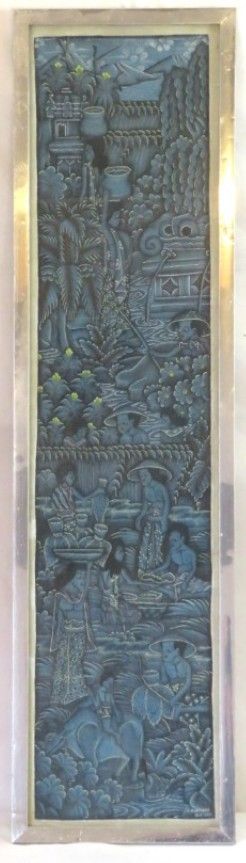
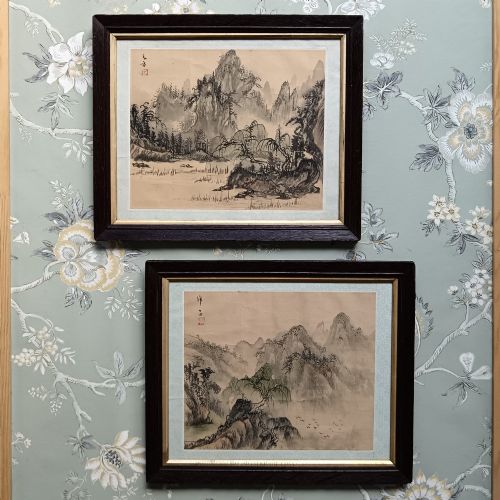
Traditional watercolour artwork spans landscape views, coastal harbours, pastoral scenes and portraiture created across the nineteenth and twentieth centuries. These paintings record specific topography, rural occupations and quiet domestic moments from Victorian, Edwardian and later periods. The works appear on paper or fabric, frequently framed behind glass with original wooden or gilded mounts.
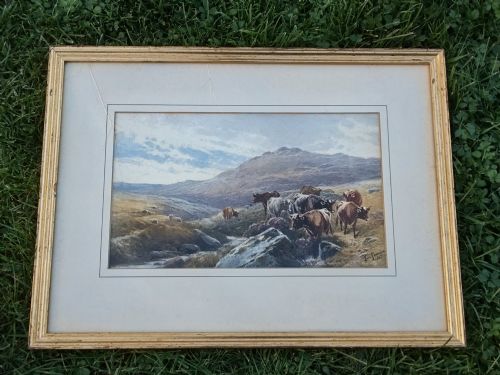
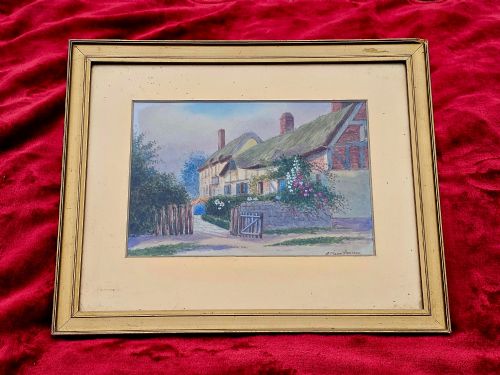
Most pieces on this page emerge from British artists working in regional styles, depicting familiar countryside, rivers and coastal waters. Scenes range from Scottish river landscapes and Welsh mountain passes to English country lanes and Devon cottages. Alongside these British views, occasional continental and overseas subjects expand the geographic scope of the collection.
Materials and technique
These works rely on finely ground watercolour pigment applied to absorbent paper sheets, sometimes supplemented with bodycolour for opaque highlights. Artists layer washes to build translucent colour, allowing the white of the paper to illuminate skies and water. Paper supports range from heavy textured sheets to smoother stocks chosen for fine detail.
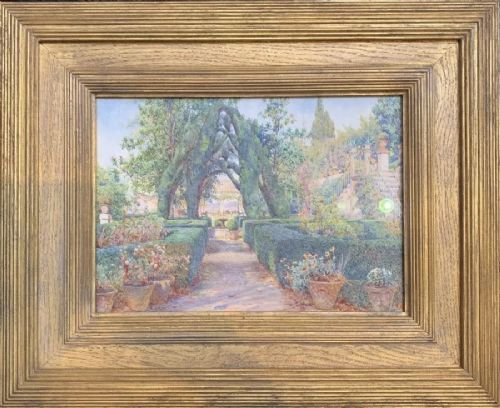
Framing forms an integral part of the physical object, utilising timber mouldings, gilt frames and protective glass plates. Many pieces retain their original period mounts and wooden frames, which safeguard the delicate pigment from environmental damage over the decades.
Traditional Watercolour Artwork Retail Price Guide 2026
Typical asking prices for traditional watercolour artwork among the pieces listed under this phrase on Sellingantiques today, from the lower quarter to the upper quarter. They describe what is for sale here now, not the wider market.
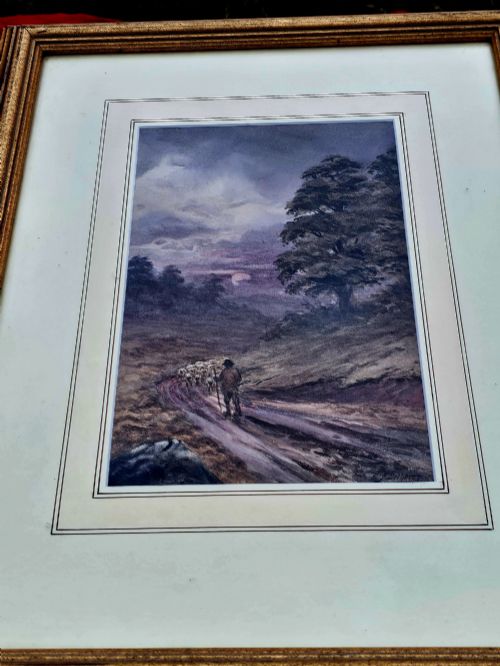
Several sheep, cattle and even a lone horse make regular appearances in these pastoral views, patiently enduring unpredictable weather.
Judging quality and execution
Quality rests upon the artist's handling of light, brushwork confidence and compositional balance across the paper surface. Stronger examples display assured pigment control that captures atmosphere, weather and distance without muddying the washes. Lesser works can appear stiff, overly formulaic or lacking in tonal depth.
Condition plays a vital role in evaluation, particularly regarding pigment retention and paper stability. Works protected behind glass away from direct sunlight preserve their original colour saturation, whereas exposure to light diminishes the delicate tints.
George Sydney Shepherd·Percy Lancaster·George Oyston·Henry Charles Fox·Arthur Tucker
The Traditional Watercolour Artwork Glossary
- Watercolour
- A painting method where fine pigment is suspended in a water-soluble binder and applied to paper. It creates translucent washes of colour that depend on the white paper beneath for luminosity.
- Bodycolour
- Watercolour mixed with a white pigment such as chalk to make the paint opaque. Artists use this technique to add highlights and solid areas of light to a composition.
- Gilt
- A thin layer of gold leaf applied to wood or metal frames. This decorative finish enhances the presentation of framed pictures.
- Pastoral
- A genre of art depicting rural life, shepherds, farm animals and gentle countryside views. These scenes evoke a calm, traditional way of living.
- Wash
- A fluid layer of diluted watercolour spread evenly across the paper to form skies, water or broad background tones.
Traditional Watercolour Artwork: Frequently Asked Questions
How should I frame and hang antique watercolours?
Keep watercolours out of direct sunlight to prevent the delicate pigments from fading over time. Use acid-free mounting boards and protective glass to safeguard the paper surface from humidity and environmental damage.
Ensure frames are securely hung on interior walls with stable temperature and moisture levels. Professional framing protects the structural integrity of both the paper and the original wooden surround.
What subjects do these traditional paintings feature?
The selections depict British landscapes, rural farming scenes, coastal fishing harbours and historic town views. Artists captured everyday country life, domestic animals and specific regional topography across changing seasons.
Foreign scenes also appear alongside domestic subjects, offering glimpses of continental landscapes and coastal views. Each piece records a distinct location through the observant eye of the period painter.
How can I tell a Victorian watercolour apart?
Victorian watercolours often employ traditional landscape motifs, detailed brushwork and subdued earthy palettes that reflect nineteenth-century aesthetic tastes. Paper quality, framing styles and signatures help establish the historical context of the piece.
Subject matter frequently centres on pastoral views, agricultural labour or maritime scenes rendered with careful attention to atmosphere. Comparing known artist signatures and exhibition labels further clarifies the period of origin.
Are these works painted on paper or canvas?
Watercolour paintings use paper or fabric supports rather than stretched canvas, reflecting the traditional medium requirements. The absorbent paper allows the water-soluble pigment to sink into the fibres and create translucent washes.
Most items feature protective glass glazing to shield the paper and pigment from dust and moisture. This delicate support differentiates watercolours from oil paintings and requires careful handling.