

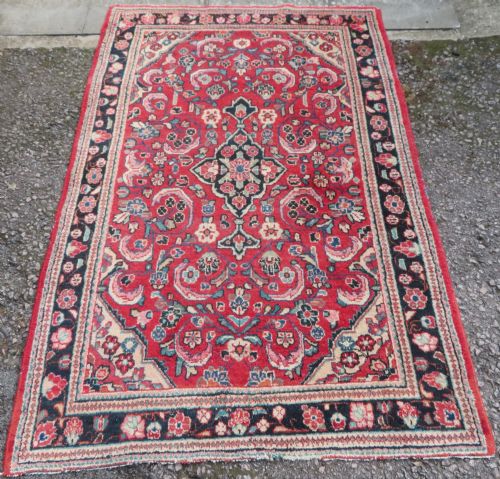
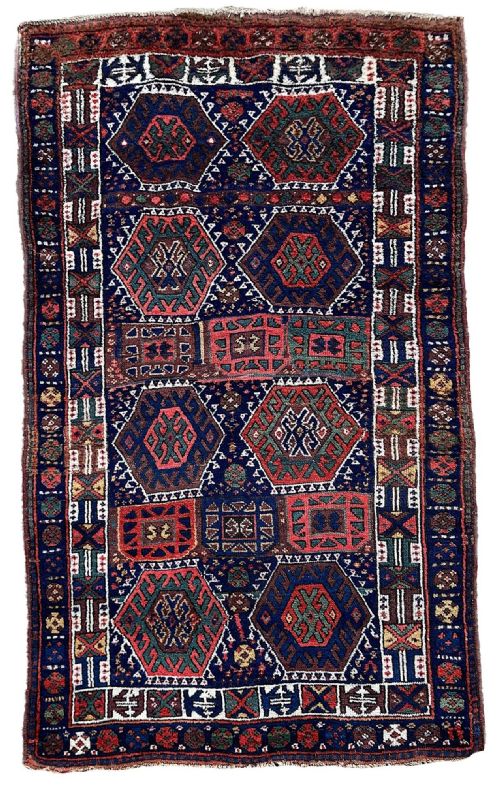


Traditional Village Weaving Carpet
These traditional village weaving carpet examples connect homes directly to historic Persian and Anatolian domestic workshops.
Traditional Village Weaving Carpet
A traditional village weaving carpet encompasses authentic hand-knotted pieces originating from domestic tribal and regional centres across Persia, Anatolia, and the Caucasus. These floor coverings reflect localized aesthetic traditions passed down through generations of rural weavers rather than centralized urban manufactures.
Buyers browsing this selection will frequently encounter formats such as scatter rugs, larger area carpets, and hallway runners dating from the mid-nineteenth century up through the early twentieth century. Common regional types represented include Hamadan, Heriz, Bakhtiari, Kurdish, and various Turkish village productions.
The aesthetic vocabulary typically relies on geometric medallions, tribal motifs, and stylized floral patterns arranged with charming local asymmetries. Each piece records the specific geographic identity and cultural heritage of the weavers who produced it for daily use.
Materials and Construction Methods
The construction of a traditional village weaving carpet relies heavily on durable wool foundations and hand-spun wool pile fibres designed to endure heavy household traffic. Cotton is also utilised in foundations and warps, particularly in specific Persian regional styles.
Weavers employed natural dyes extracted from local plants and minerals, creating rich, saturated palettes that mellow gracefully over decades of exposure and cleaning. Hand-knotting techniques vary slightly by region, yielding dense, resilient structures that distinguish rural work from urban court manufactories.
Traditional Village Weaving Carpet Retail Price Guide 2026
Typical asking prices for traditional village weaving carpet among the pieces listed under this phrase on Sellingantiques today, from the lower quarter to the upper quarter. They describe what is for sale here now, not the wider market.
Current listings feature hand-spun wool and natural dyes across Persian, Anatolian, and Caucasian regional village styles dating from the nineteenth and early twentieth centuries.
Factors Distinguishing Quality
Quality in a traditional village weaving carpet rests largely upon the integrity of the natural dye palette and the depth of saturation within the wool pile. Examples exhibiting harmonious ageing and complex, well-executed tribal motifs command greater appreciation among collectors.
Structural stability and the fineness of the knotting also dictate the tier of a piece, separating standard utility floor coverings from masterworks of rural textile art. Preserved original borders and minimal historic restoration enhance the integrity of surviving specimens.
The Traditional Village Weaving Carpet Glossary
- Natural dye
- Colourants derived from plant, insect, or mineral sources rather than synthetic chemistry. These dyes interact with wool fibres to produce complex, variegated tones.
- Hand-spun wool
- Yarn spun manually using a traditional spindle rather than an industrial machine, retaining natural lanolin and irregular thickness that adds texture to the pile.
- Medallion
- A central ornamental design motif placed in the field of a rug or carpet, often geometric or floral in structure.
- Warps
- The vertical foundation threads stretched tightly on the loom onto which the horizontalwefts and pile knots are tied.
- Prayer rug
- A small format rug featuring a directional mihrab niche design traditionally used for daily Islamic prayer.
Traditional Village Weaving Carpet: Frequently Asked Questions
How do I clean an antique village carpet?
Professional specialist cleaning is essential for antique wool carpets to protect natural dye stability and delicate hand-spun foundations. Regular gentle vacuuming without a beater bar removes surface grit between washes.
Avoid household chemical treatments or total immersion in water, as these methods can cause dye bleeding and weaken the historic wool fibres.
How can I tell a Persian village rug from an Anatolian one?
Regional attribution relies heavily on specific motif vocabularies, knotting structures, and structural materials like cotton versus wool foundations. Persian pieces often feature characteristic floral medallions and Heriz or Hamadan design attributes.
Anatolian and Caucasian village pieces frequently display bolder geometric polygons, hooked motifs, and prayer niche formats unique to Turkish weaving traditions.
What causes the soft colour palette in older rugs?
Decades of gentle exposure to natural light and repeated washing gradually soften raw natural dye colours into harmonious, muted tones. This natural ageing process is highly valued by collectors for the depth and warmth it brings to interiors.
Original vegetable dyes mellow gracefully without losing their fundamental character, unlike unstable synthetic alternatives.