




Traditional Vanity Desk
These traditional vanity desk pieces are classic timber writing tables and dressing furniture designed for daily utility and quiet elegance.
Traditional Vanity Desk
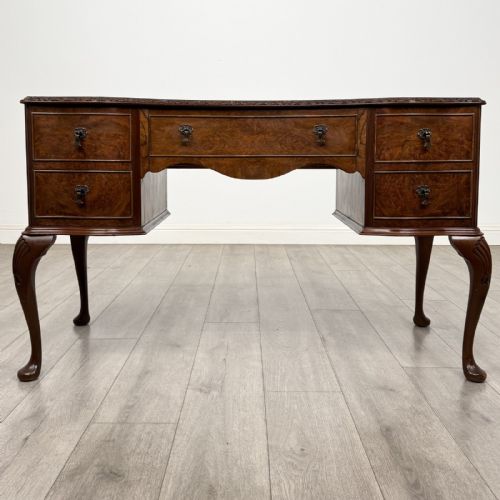
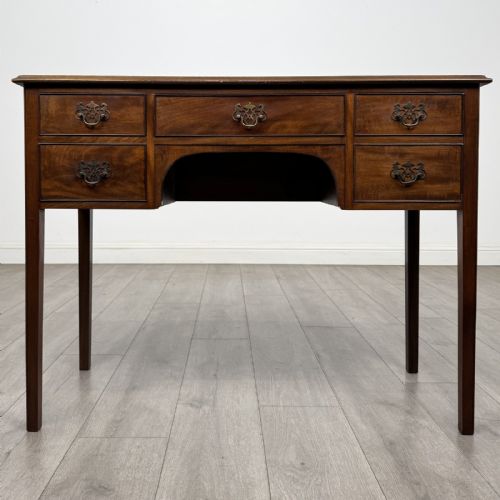
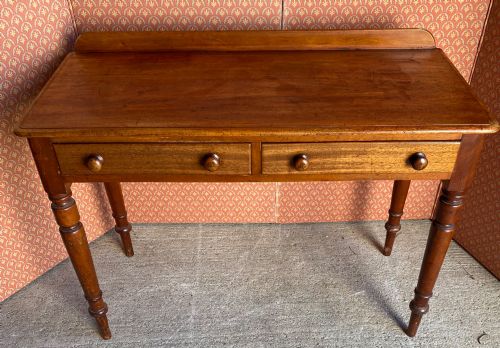
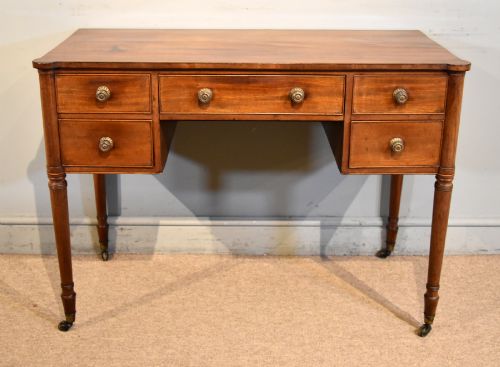
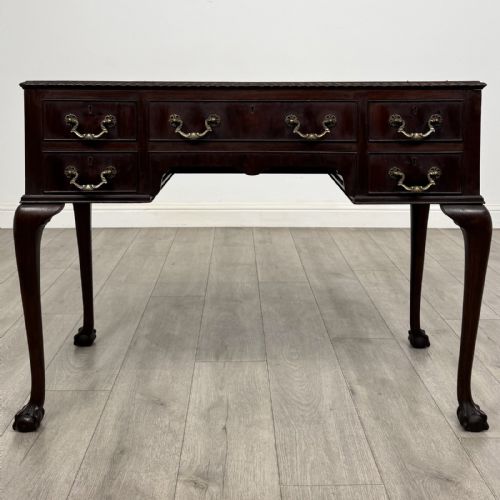
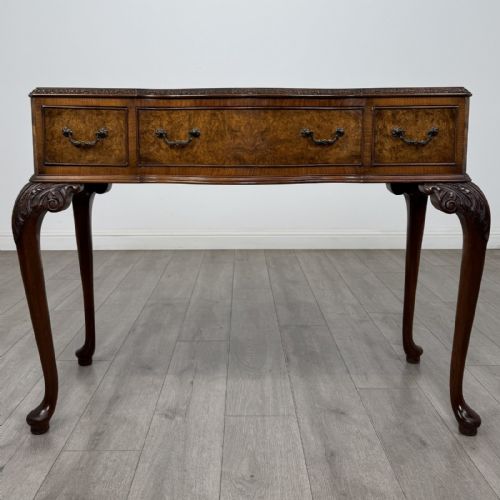
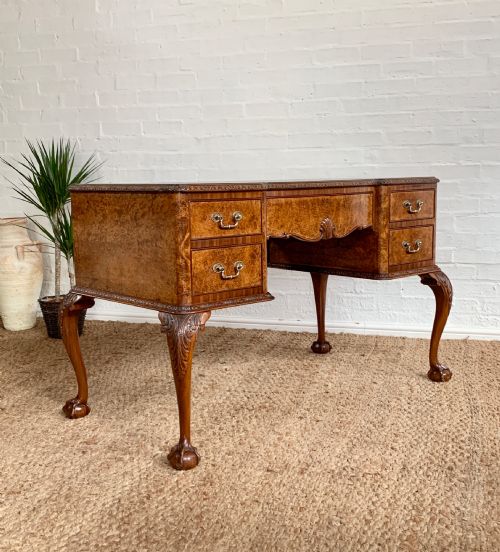
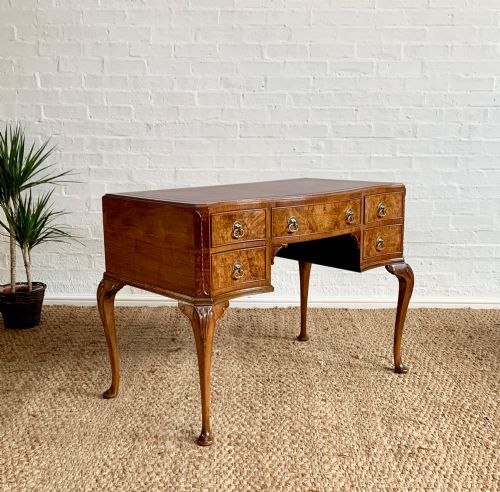
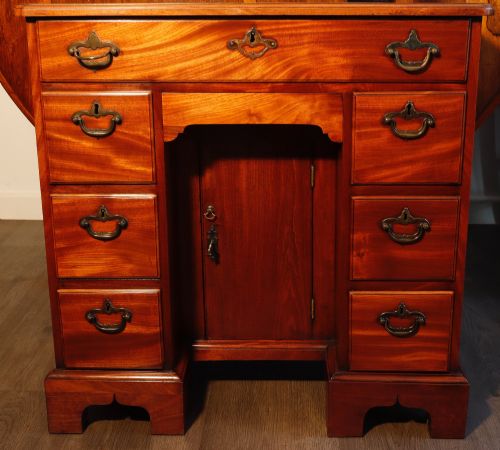
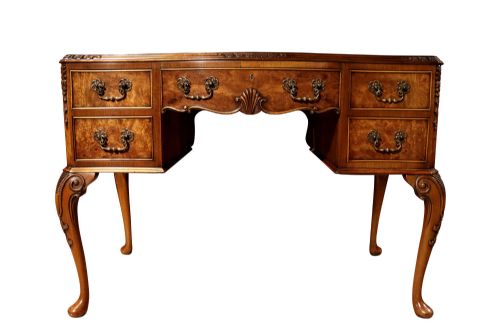
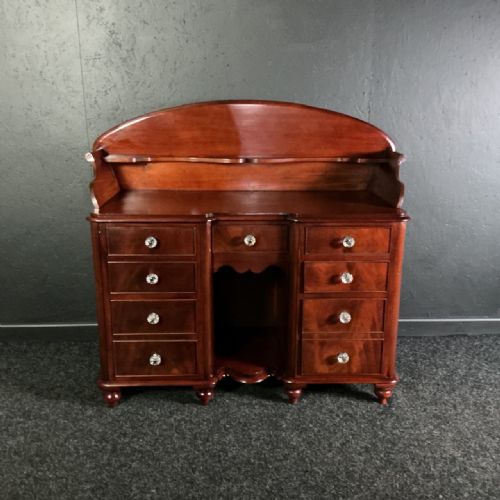
A traditional vanity desk encompasses timber writing tables, kneehole desks, and dressing furniture originating from the eighteenth century through to the early twentieth century. Buyers seeking this phrase encounter various forms built for writing and personal grooming, ranging from Georgian mahogany pieces to Edwardian walnut examples.
The most common iterations on this page are burr walnut and mahogany kneehole desks, alongside Edwardian writing tables and period dressing tables. These items typically feature multiple small drawers and fitted writing surfaces suited for a study or bedroom.
Origins stretch from English workshops to Dutch and Chinese makers, demonstrating diverse regional interpretations of classic furniture styles such as Queen Anne Revival and Chippendale.
Materials and construction
Construction relies heavily on dense hardwoods like mahogany, oak, and walnut, often enhanced with figured veneers such as burr walnut and flame mahogany. Timber selection determines the grain pattern and visual depth of the surface.
Secondary materials include brass for handles and key escutcheons, alongside inset writing surfaces of green tooled leather. Joinery techniques typical of the periods ensure structural stability across pedestal desks, lowboys, and dressing tables.
Traditional Vanity Desk Retail Price Guide 2026
Typical asking prices for traditional vanity desk among the pieces listed under this phrase on Sellingantiques today, from the lower quarter to the upper quarter. They describe what is for sale here now, not the wider market.
Current listings span the eighteenth, nineteenth, and early twentieth centuries, featuring walnut, mahogany, oak, and brass.
Markers of quality
Quality rests on the selection of timber veneers and the crispness of carved details, such as cabriole legs or crossbanding. Superior pieces display harmonious grain matching across drawer fronts and intact original brass hardware.
The integrity of secondary woods inside drawer construction and the smoothness of drawer operation separate standard utilitarian items from finer showroom pieces. Hand-tooled leather inserts and precise dovetail joints further indicate higher workshop standards.
Wylie & Lochhead Glasgow
The Traditional Vanity Desk Glossary
- Kneehole desk
- A writing table featuring a central recess for the sitter's legs, flanked by pedestals containing multiple small drawers.
- Crossbanded
- A border technique where thin strips of veneer are laid across the grain of the primary surface to create a framed effect.
- Lowboy
- A small dressing table or side table with a low profile, typically supported on four slender legs.
- Serpentine
- A curved furniture front characterised by a convex centre flanked by concave wings.
- Figured walnut
- Timber sourced from specific parts of the walnut tree exhibiting highly decorative, swirling grain patterns.
Traditional Vanity Desk: Frequently Asked Questions
How do I date a traditional vanity desk?
Dating relies on identifying timber choices, construction methods, and stylistic cues present in the piece. Eighteenth-century examples often utilise solid mahogany and hand-cut dovetails, whereas Edwardian and early twentieth-century versions frequently employ burr walnut veneers.
Hardware styles, secondary woods, and regional construction traits further narrow the decade of manufacture. Comparing the piece to known period exemplars clarifies its age.
Where should I place a kneehole desk?
These desks suit home offices, studies, or large bedrooms where their finished backs and compact proportions allow for flexible placement. Their traditional drawer configurations provide practical storage for stationery or grooming essentials.
Keep timber furniture away from direct heat sources and strong sunlight to protect the polish and leather writing surfaces from drying out.
Are leather desk inserts original?
Many period desks retain tooled leather writing surfaces, though replacements are common due to centuries of daily wear. Tooled leather inserts feature gilded borders and provide a durable writing substrate.
Inspect the leather edges and adhesive underneath to determine whether the surface represents an older replacement or the original installation.
What is the difference between a desk and a dressing table?
Desks focus on writing functionality, incorporating kneeholes, writing slides, and leather tops designed for paperwork. Dressing tables typically associate with personal grooming and often incorporate mirrors or compartments for toiletries.
Form overlap is frequent, as many historical tables served versatile multi-purpose roles within period bedchambers.