



Traditional Upholstered Tub Armchair
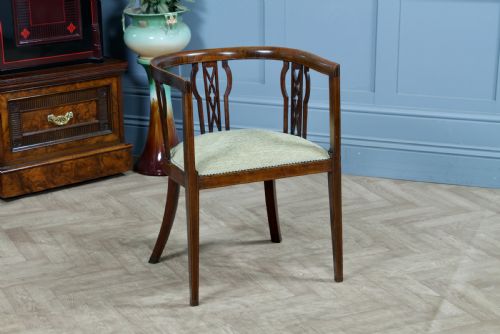
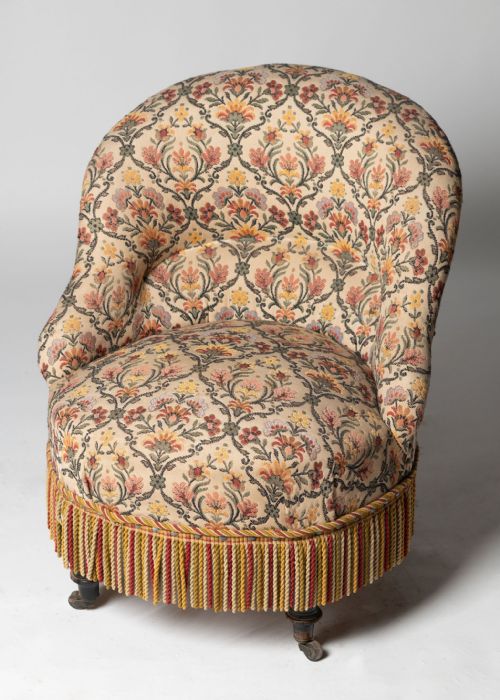
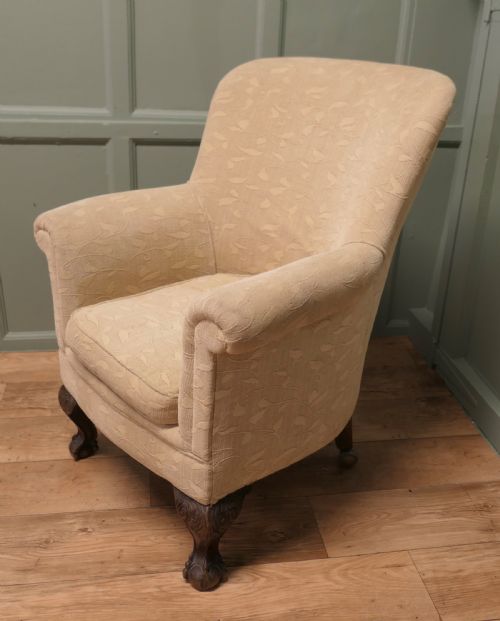
A traditional upholstered tub armchair offers a deeply curved, enveloping back designed for fireside comfort.
Traditional Upholstered Tub Armchair
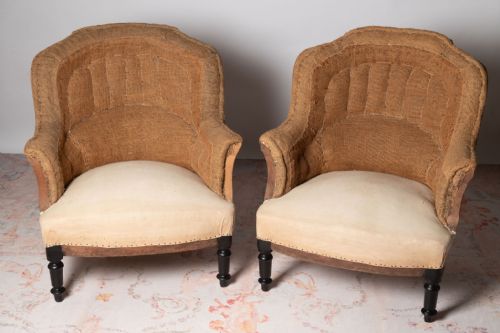
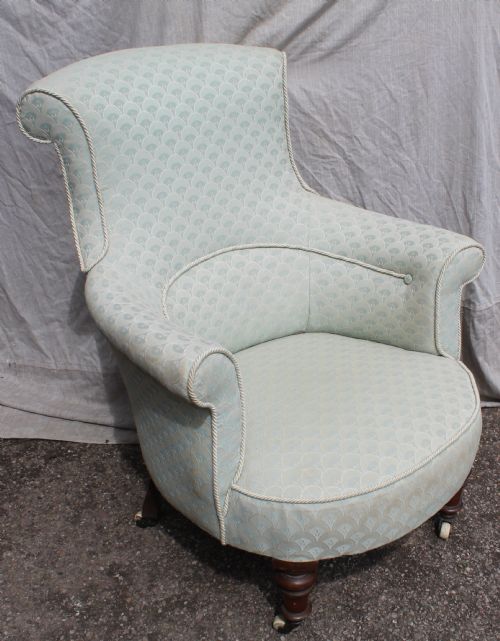
A traditional upholstered tub armchair is a seating form defined by its semicircular back that flows continuously into low arms. When you search for a traditional upholstered tub armchair, you encounter pieces spanning the nineteenth century, the Edwardian era, and the nineteen-thirties.
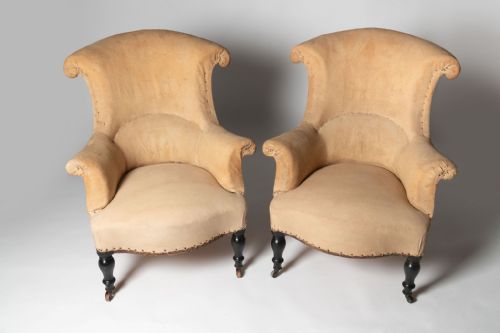
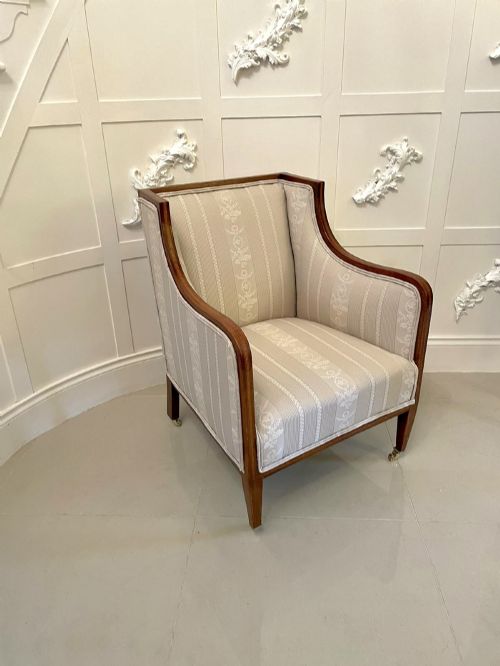
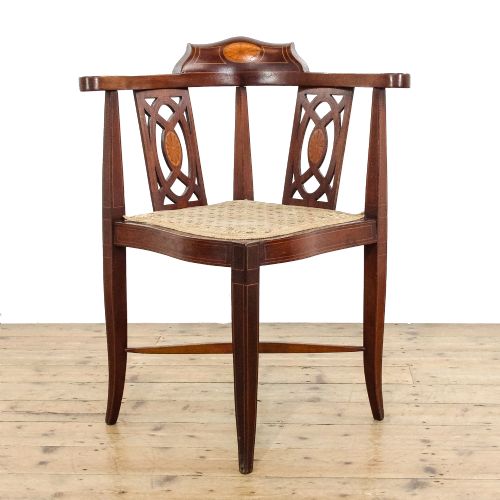
The selections available here range from single occasional chairs and corner armchairs to pairs and larger parlour suites. Woods such as mahogany, walnut, and oak form the structural frames, often paired with exposed wooden elements alongside fully upholstered bodies.
Makers and workshops including Howard and Sons, Hampton and Sons, and Gillows appear amongst the nineteenth-century examples. French provincial and Napoleon III influences also emerge alongside classic British Victorian and Edwardian styles.
Materials and construction
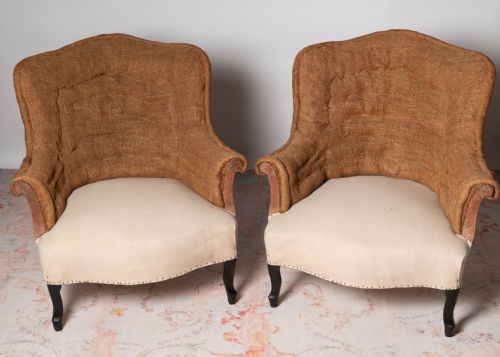
Frames are constructed from hardwoods such as mahogany, walnut, and oak, providing the rigid skeleton necessary to support deep upholstery. Traditional internal foundations utilise materials like hessian and calico to build up the supportive stuffing before the final covering is applied.
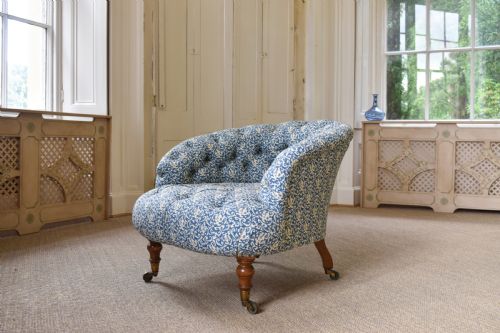
Exterior surfaces are finished in various fabrics, including velvet, alongside specific decorative details like button-back tufting. Metal elements such as brass appear on castors, whilst inlaid woodwork decorates the frames of particular armchairs.
Traditional Upholstered Tub Armchair Retail Price Guide 2026
Typical asking prices for traditional upholstered tub armchair among the pieces listed under this phrase on Sellingantiques today, from the lower quarter to the upper quarter. They describe what is for sale here now, not the wider market.
Listings feature mahogany, walnut, and oak frames upholstered in velvet, calico, and hessian across Victorian and Edwardian periods.
Judging quality in these armchairs
The distinction between standard examples and finer pieces lies in the precision of the woodwork and the pedigree of the maker. Stamped signatures or marks from established cabinet makers elevate certain nineteenth-century armchairs above unbranded counterparts.
The refinement of the carving, the integrity of the timber frame, and the stylistic harmony of the curved barrel back determine the overall calibre of the chair. Matching pairs and complete suites represent a higher tier of domestic seating than isolated single pieces.
Howard and Sons·Hampton and Sons·Gillows
The Traditional Upholstered Tub Armchair Glossary
- Tub armchair
- An upholstered seat with a continuous curved back and arms forming a low, enclosing semicircle. This shape developed to block draughts in period rooms.
- Barrel back
- A seating design where the upper rails curve deeply around the sitter in the manner of a wooden cask. This style provides substantial lateral support.
- Button-back
- An upholstery method where depressions are created across the padded surface using tightly pulled buttons in a geometric pattern. It secures the internal stuffing whilst adding texture.
- Occasional chair
- A movable, decorative seat intended to be brought into use when extra company arrives. These pieces are typically lighter in scale than primary lounge seating.
- Corner armchair
- A seat specifically configured to fit into the angle of a room, featuring a diagonal orientation and a continuous curved back rail.
Traditional Upholstered Tub Armchair: Frequently Asked Questions
How do I date a tub armchair?
Dating involves examining the underlying timber, the framing techniques, and the stylistic cues of the period. Victorian, Edwardian, and Regency examples each display distinct decorative traits.
Maker stamps or labels provide definitive chronological markers when present on the wooden framework or upholstery webbing.
Where should I place a tub armchair?
These compact armchairs suit reception rooms, bedrooms, and corners where space is measured. Their enclosed shape makes them practical fireside seating options.
Pairs function well flanking a fireplace or positioned together as part of a larger parlour suite arrangement.
Are these chairs comfortable for daily use?
The deep upholstery and curved backrests were originally engineered for extended domestic relaxation. The supportive internal foundations provide structured seating.
Modern comfort depends on the condition of the traditional stuffing materials hidden beneath the outer fabric cover.