
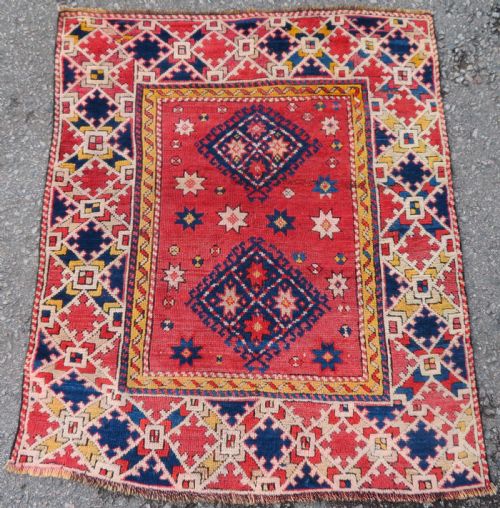
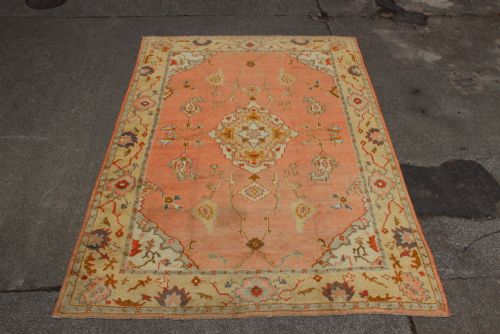

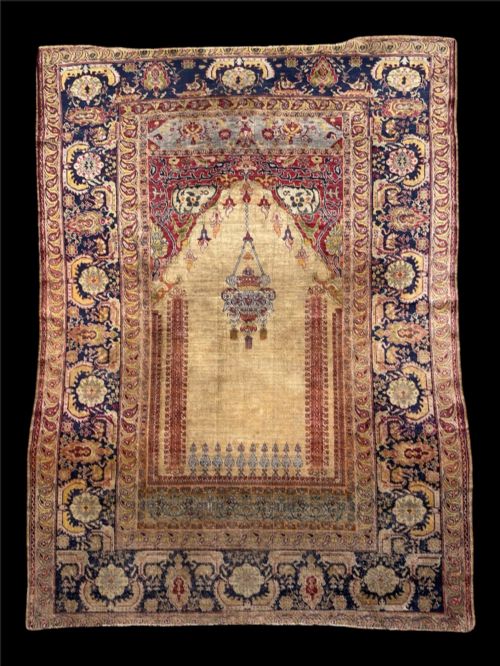
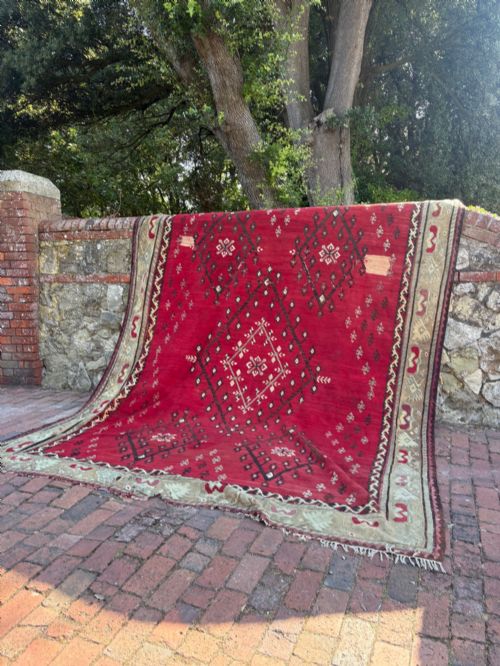
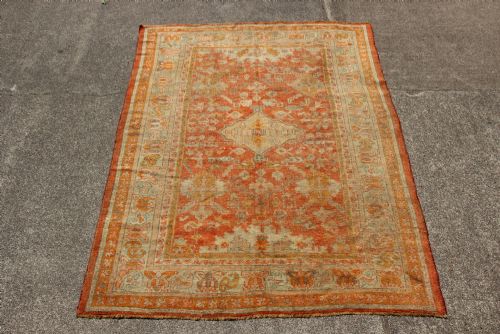


Traditional Turkish Woven Rug
These pieces are a traditional turkish woven rug, providing centuries of Anatolian craft and pattern for everyday floors.
Traditional Turkish Woven Rug
Most examples originate from specific Anatolian weaving centres and villages such as Ushak, Ghiordes, Bergama, and Kirsehir. Formats range from intimate village prayer rugs to large oversized carpets and long runners.
Materials and construction
The primary material is wool, often hand-spun and combined with cotton foundations, alongside occasional examples utilising silk, art silk, angora wool, or mercerised cotton. Weaving techniques encompass both hand-knotted pile construction and flatweave methods such as kilim and cicim embroidery.
Dyers employed natural colourants to achieve the tones seen across regional styles, while village weavers constructed certain larger kilims in two separate parts joined down the centre.
Listings incorporate materials spanning wool, cotton, silk, angora wool, and mercerised cotton across pile and flatweave formats.
Evaluating quality
Quality rests in the precision of the tribal or regional design execution and the handling of materials like hand-spun wool or silk. Finer knots per square inch and crisp geometry elevate certain prayer rugs and carpets above standard village work.
The integrity of the weave and the preservation of original borders and dye saturation dictate the standing of a piece within its particular stylistic group.
The Traditional Turkish Woven Rug Glossary
- Kilim
- A flatwoven carpet or rug produced without a pile. These textiles are created by tightly interweaving warp and weft strands.
- Prayer rug
- A small rug featuring a mihrab design or niche motif at one end. Historically utilised to indicate the direction of prayer.
- Cicim
- A supplementary weft-wrap embroidery technique applied to textiles. It produces raised decorative patterns across the woven surface.
- Warp
- The vertical threads stretched tightly on a loom before weaving begins. The weft threads pass horizontally through these structural elements.
Traditional Turkish Woven Rug: Frequently Asked Questions
How do I identify a prayer rug?
A prayer rug typically displays a distinctive arched niche or mihrab pattern at one end, which historically directed the placement during daily devotions.
These pieces tend to be smaller in format, allowing for portability and personal use within domestic spaces.
What is the difference between a kilim and a carpet?
A kilim is a flatweave textile made by interlocking warp and weft threads without forming a pile surface.
Carpets and standard rugs incorporate knotted pile construction, yielding a thicker texture underfoot.
Where were these textiles made?
Production centred across Anatolia, encompassing specific towns, nomadic camps, and villages such as Ushak, Ghiordes, Bergama, and Konya.
Each region developed distinct palettes, geometric motifs, and weaving structures passed down through generations.
Can I use these rugs as wall hangings?
Certain lighter flatweaves and embroidered panels are suitable for wall display rather than floor placement.
Their construction allows them to be hung securely without sustaining the friction caused by foot traffic.