

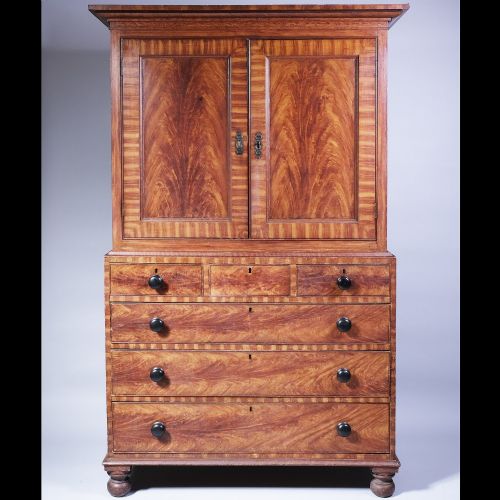


Traditional Timber Press
These traditional timber press pieces are substantial storage furniture built from pine, mahogany, and painted timber, offering genuine period utility for the home.
Traditional Timber Press
When you search for traditional timber press, you are looking at substantial storage furniture including linen presses, housekeeper's cupboards, and wardrobes from the eighteenth and nineteenth centuries. These items serve as functional storage pieces designed to house garments, household linens, and provisions within domestic spaces.
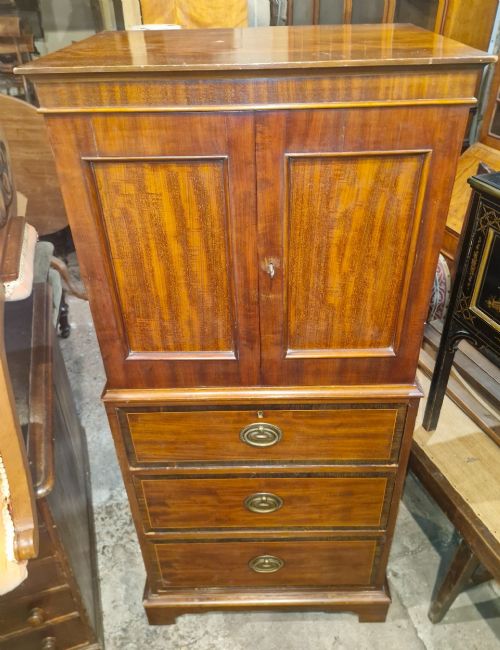
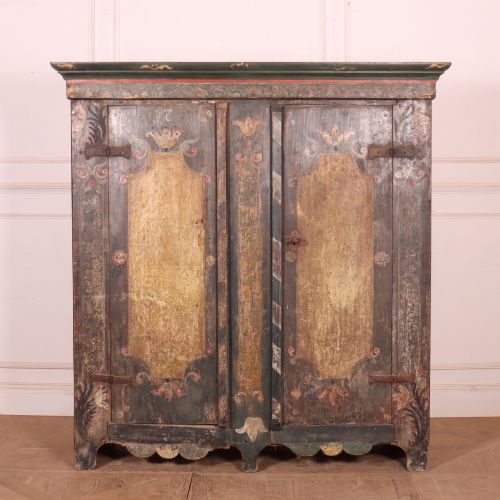
You are most likely to meet painted timber housekeeper's cupboards and mahogany wardrobes on this page, representing the dominant forms from English country, Georgian, and Victorian periods. These pieces combine utilitarian origins with regional craftsmanship, spanning vernacular folk art styles to formal George III designs.
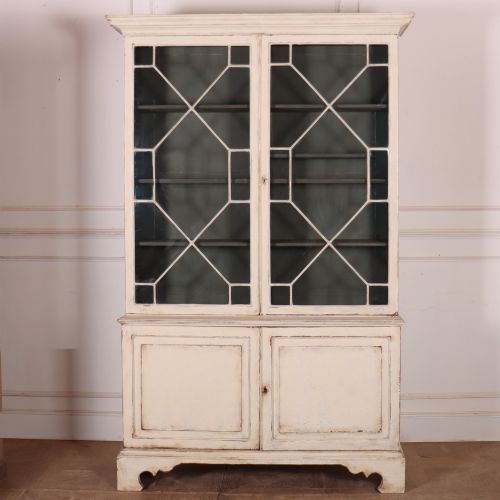
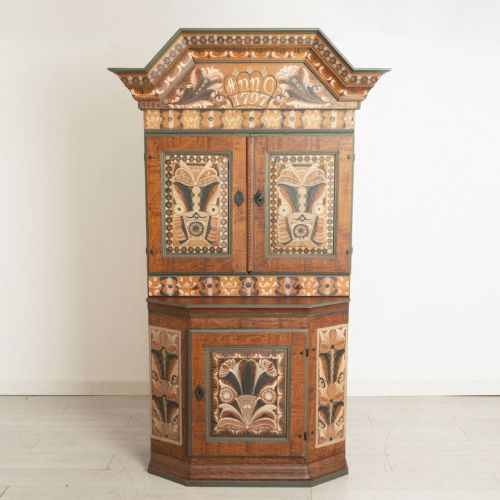
The category encompasses diverse regional expressions, from Welsh hanging cupboards and Scandinavian folk art pieces to elm court cupboards and French or Breton armoires. Each variation reflects the specific domestic needs and local material availability of its period of origin.
How they were made
Makers utilised solid native timbers such as pine, elm, oak, and beech, frequently applying mahogany veneers for more formal urban commissions. Construction relied on traditional joinery methods appropriate to large storage furniture, ensuring structural stability across heavy panelled doors and internal shelving.
Surface treatments varied widely between plain waxed timber, detailed mahogany polish, and decorative paint schemes including scumble painting and folk art motifs. Iron and brass hardware such as hinges, handles, and escutcheons were fitted to secure doors and drawers during daily use.
Traditional Timber Press Retail Price Guide 2026
Typical asking prices for traditional timber press among the pieces listed under this phrase on Sellingantiques today, from the lower quarter to the upper quarter. They describe what is for sale here now, not the wider market.
Alongside grand wardrobes, the selection includes a treen lemon squeezer and a lace folder, proving that historic timber work extended to the smallest kitchen and sewing tasks.
What varies in quality
Quality in a traditional timber press is found in the integrity of the timber selection and the retention of original surface treatments, whether polished mahogany or period paint. Pieces with untouched patination and original brass or iron hardware command greater interest than those stripped or overly restored.
The sophistication of the joinery and carcase construction distinguishes vernacular country pieces from formal workshop productions of the Georgian and Victorian eras. Well-proportioned cornices, balanced panel arrangements, and clean interior configurations indicate higher craftsmanship within the maker's tradition.
The Traditional Timber Press Glossary
- Housekeeper's cupboard
- A large storage cabinet designed for domestic utility, often combining deep cupboards and drawers for household stores. These were essential fixtures in large country houses.
- Scumble painted
- A decorative surface technique where a translucent coloured glaze is manipulated over a lighter base coat to simulate wood grain or create textured patterns. This finish was common on nineteenth-century vernacular furniture.
- Court cupboard
- An antique enclosed storage piece, often featuring a recessed upper section supported by pillars. Originating in earlier periods, these items served to display plate and store valuables.
- Treen
- Small handmade wooden domestic objects produced prior to the widespread use of plastics and metalware. Items range from lemon squeezers to lace folders.
Traditional Timber Press: Frequently Asked Questions
What is a traditional timber press used for?
These large storage pieces were originally built to hold folded linens, garments, and household provisions in domestic interiors.
Today, they function effectively as wardrobes, larder cupboards, or display storage within modern bedrooms, hallways, and kitchens.
How do I date a timber press?
Dating relies on examining the timber species, construction methods, hardware, and surface finishes against known period styles. Georgian pieces often show formal mahogany joinery, while eighteenth-century folk art examples feature native pine and hand-painted decoration.
Secondary woods used in drawer linings and panel construction also provide reliable clues to the exact era of manufacture.
Are painted finishes period original?
Many regional cupboards and housekeeper's pieces retain historic paint layers, scumble finishes, or folk art decoration applied during the eighteenth and nineteenth centuries.
Evaluating the wear, underlying crackle, and patina helps distinguish genuine early painted surfaces from later decorative overpainting.
How do I care for antique timber furniture?
Maintain stable humidity levels and avoid placing pieces in direct sunlight or close to heat sources to prevent timber splitting. Regular gentle dusting and occasional applications of traditional wax preserve the natural finish and patination.