


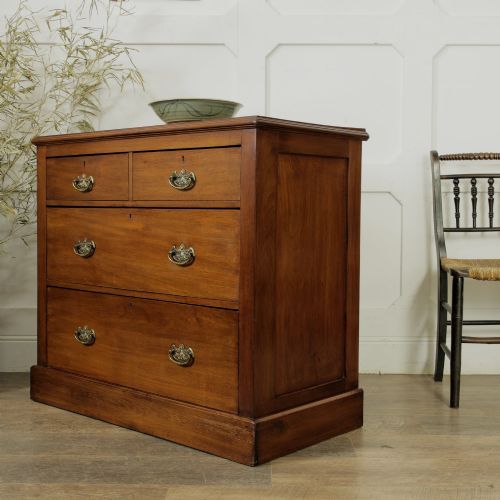
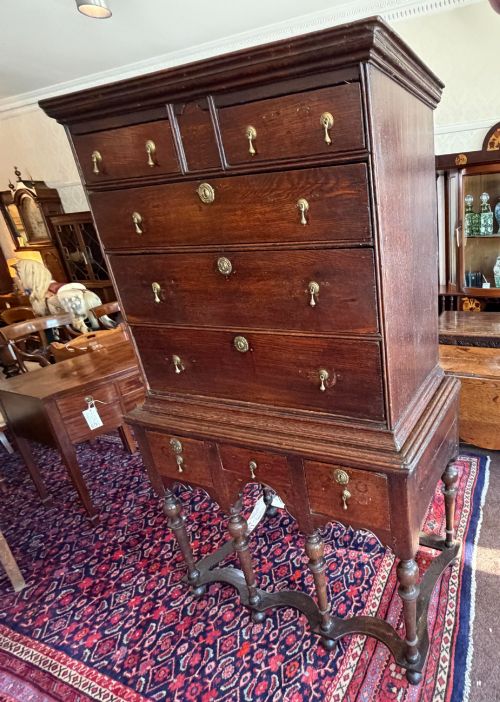
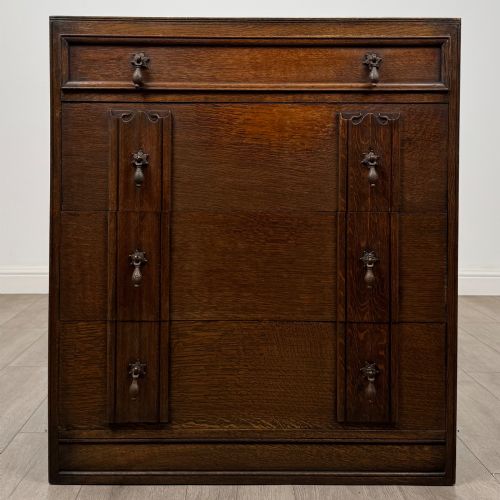
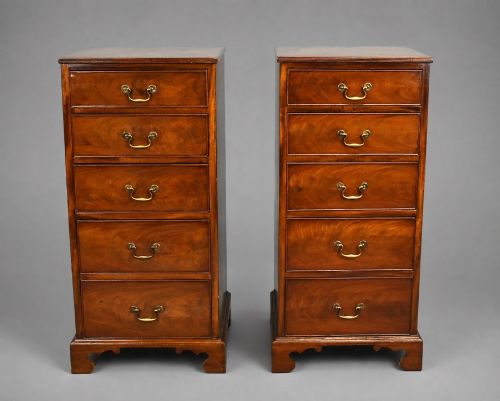
Traditional Tallboy Cabinet
A traditional tallboy cabinet offers vertical storage across stacked drawers, giving high capacity without claiming extra floor space.
Traditional Tallboy Cabinet
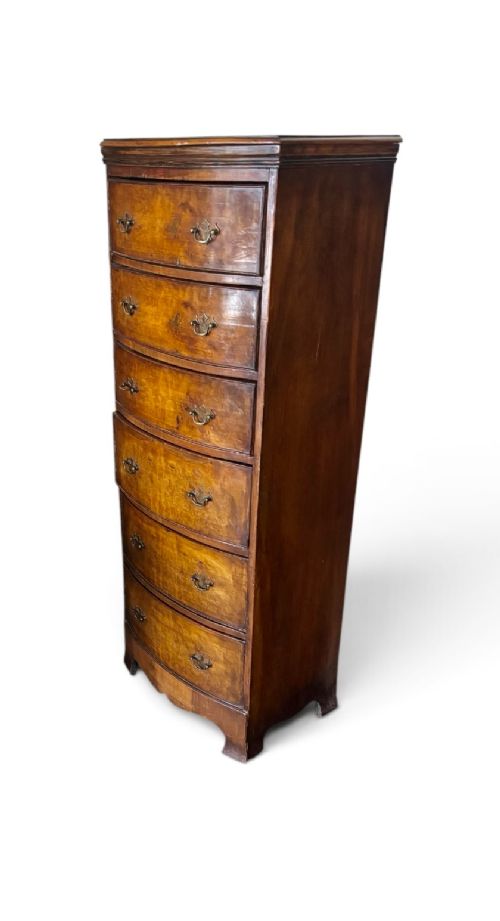
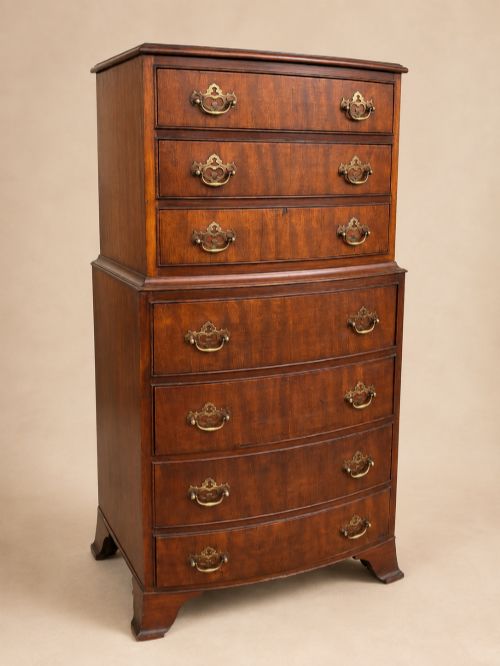
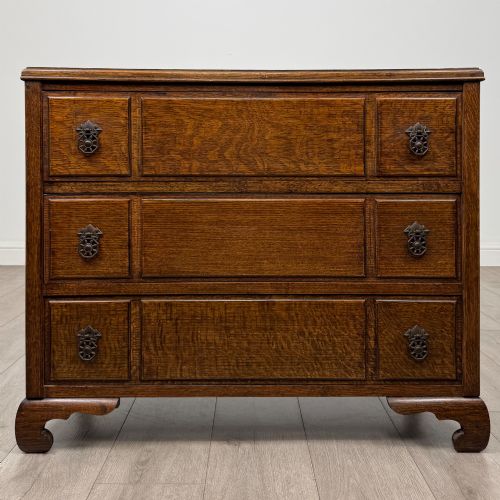
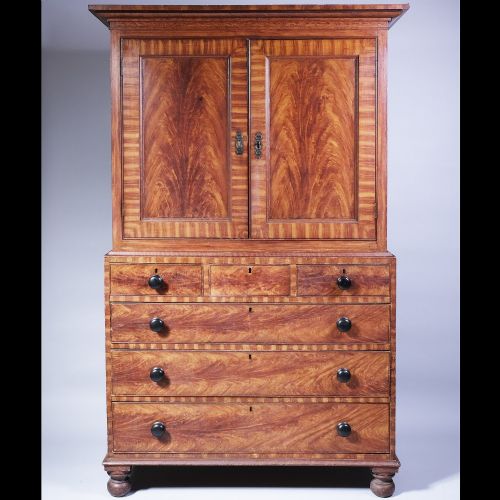
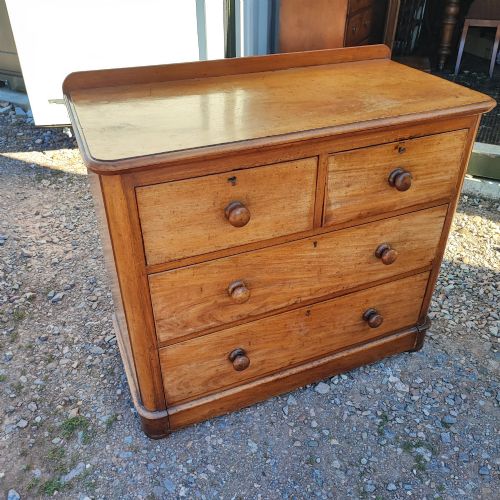
A traditional tallboy cabinet stands as a tall storage unit, frequently appearing as a chest on chest or a single towering chest of drawers. These pieces serve domestic storage needs by housing textiles, garments, and household goods within a compact footprint.
The selection ranges across several eras, featuring Georgian, Victorian, and Edwardian examples alongside pieces from the early decades of the twentieth century. Forms include standard drawer arrangements, linen presses, and specialised variations like the Wellington chest.
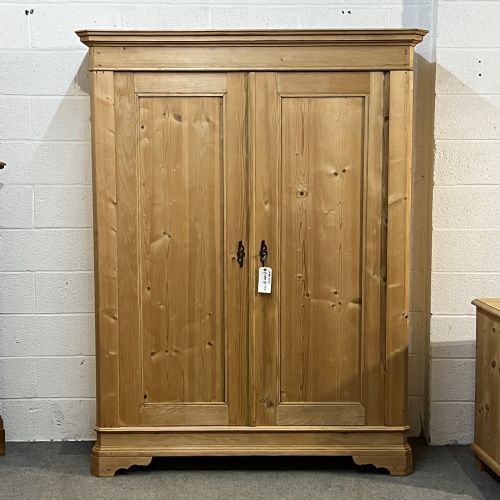
Makers utilise various woods suited to the period of construction, running from native oak and pine to imported mahogany and figured walnut. Regional influences appear in Dutch marquetry work, French pine wardrobes, and vernacular British country pieces.
Materials and construction methods
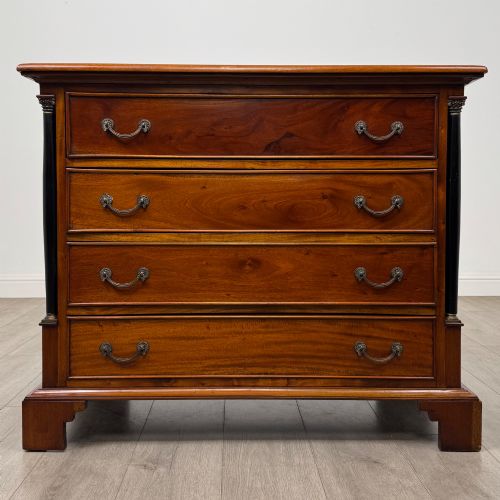
Joiners built these cabinets primarily using solid hardwoods such as mahogany, oak, and walnut, alongside softer woods like pine for internal components and secondary framing. Cabinetmakers frequently applied veneers, including burr walnut and satinwood crossbanding, to primary surfaces to create decorative grain patterns.
Drawer construction typically relies on hand-cut dovetail joints that secure the sides to the front and back boards. Brass hardware, including drop handles and escutcheons, secures to the drawer fronts using original pins or threaded posts.
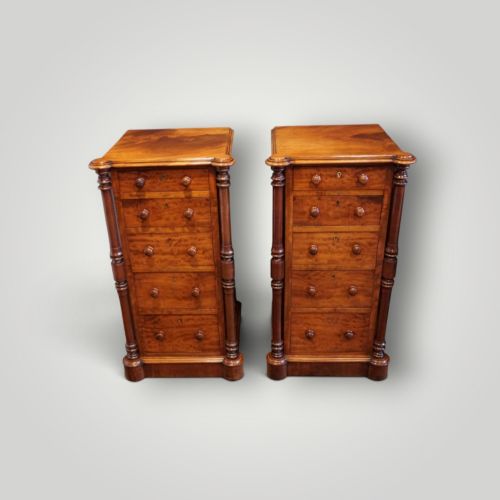
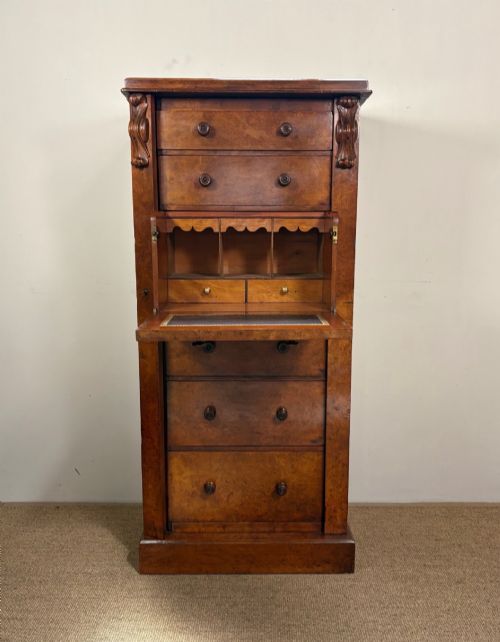
Wellington chests acquired their name from the Duke, whose administrative persistence matched the steadfast security of the locking sidebar.
What distinguishes finer examples
The choice of timber underpins the overall grade of the piece, with carefully selected figured grain, book-matched veneers, and secondary timbers of equal quality marking superior production. Cabinets displaying consistent colour across the timber surfaces retain greater integrity than those with mismatched repairs.
Execution of the joinery and hardware integration separates standard workshop output from finer cabinetmaking. Smooth drawer movement, intact original brasses, and crisp mouldings indicate skilled execution during the construction process.
Warings Liverpool
The Traditional Tallboy Cabinet Glossary
- Chest on chest
- A tall storage unit formed by stacking a smaller chest of drawers directly on top of a larger base chest. This two-part construction aids in moving the heavy piece.
- Linen press
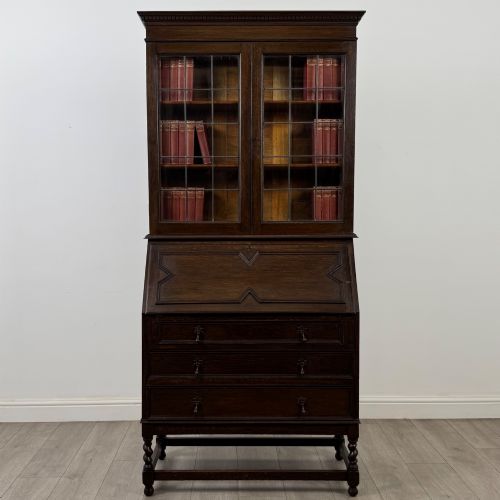
- A tall cabinet featuring upper doors that enclose sliding trays or shelves, positioned above a lower bank of drawers. Originally designed for storing household linens flat.
- Wellington chest
- A tall, narrow chest of drawers secured by a hinged vertical locking sidebar on one side. This locking mechanism holds all drawers shut simultaneously with a single key.
- Marquetry
- The art of applying fitted pieces of veneer to a structure to form decorative patterns or pictorial designs. Craftsmen utilise various coloured woods to achieve tonal contrast.
- Crossbanding
- A decorative border of veneer laid around the perimeter of a drawer front or tabletop so the grain runs perpendicular to the central panel.
Traditional Tallboy Cabinet: Frequently Asked Questions
What is a tallboy cabinet?
A tallboy cabinet is a vertical storage piece that combines the high capacity of a wardrobe or chest on chest with a relatively narrow floor footprint. These units provide substantial drawer space while occupying minimal room in a bedroom or dressing area.
Historically, these cabinets accommodated folded garments and linens that required protection from dust. The stacked drawer design kept everyday items within reach without demanding wider furniture layouts.
How do I date a tallboy?
Dating relies on examining construction methods, timber choices, and hardware styles across the piece. Earlier eighteenth-century examples feature hand-cut dovetails and solid primary woods like mahogany or walnut.
Later Victorian and Edwardian iterations introduce machine-sawn elements, pine linings, and different veneer treatments. Hardware changes from brass batwing pulls on Georgian pieces to simpler drop handles on later items.
Where should I place a tallboy?
These cabinets suit bedrooms, dressing rooms, and hallways where vertical wall space is available but floor area is restricted. Their height allows them to anchor a room visually while providing deep storage for bulky garments.
Due to their height, securing tall pieces to a wall prevents tipping, particularly in rooms with uneven historic flooring. Positioning them away from direct heat sources protects the timber and veneer from drying out.
Are tallboys and chest on chests different?
While often used interchangeably, a chest on chest specifically denotes a two-part construction where a smaller upper chest sits upon a deeper lower chest. A tallboy can describe this configuration or a single tall carcass fitted with multiple drawers.
Both forms share the characteristic vertical emphasis that defines tall storage furniture across the Georgian and Victorian periods.