
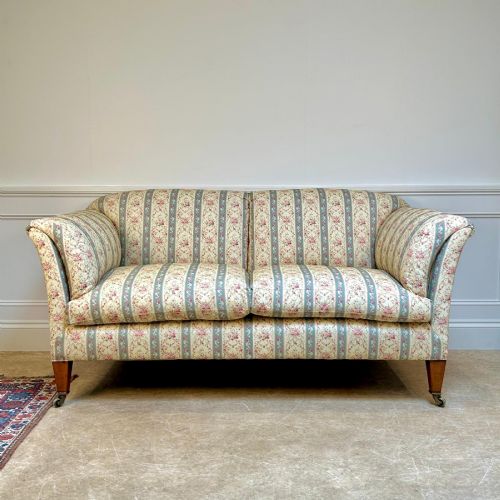
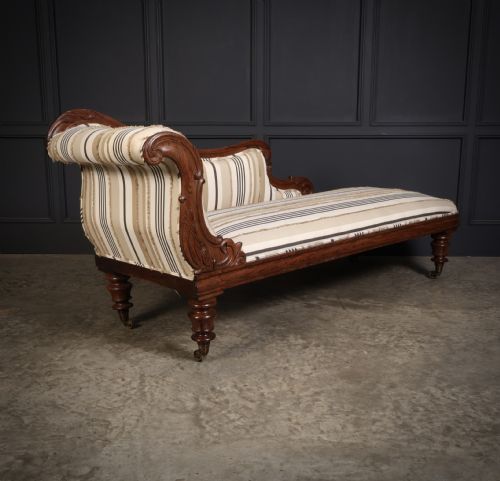


Traditional Striped Sofa
A traditional striped sofa brings character and timeless comfort to a room, offering classic design paired with enduring appeal.
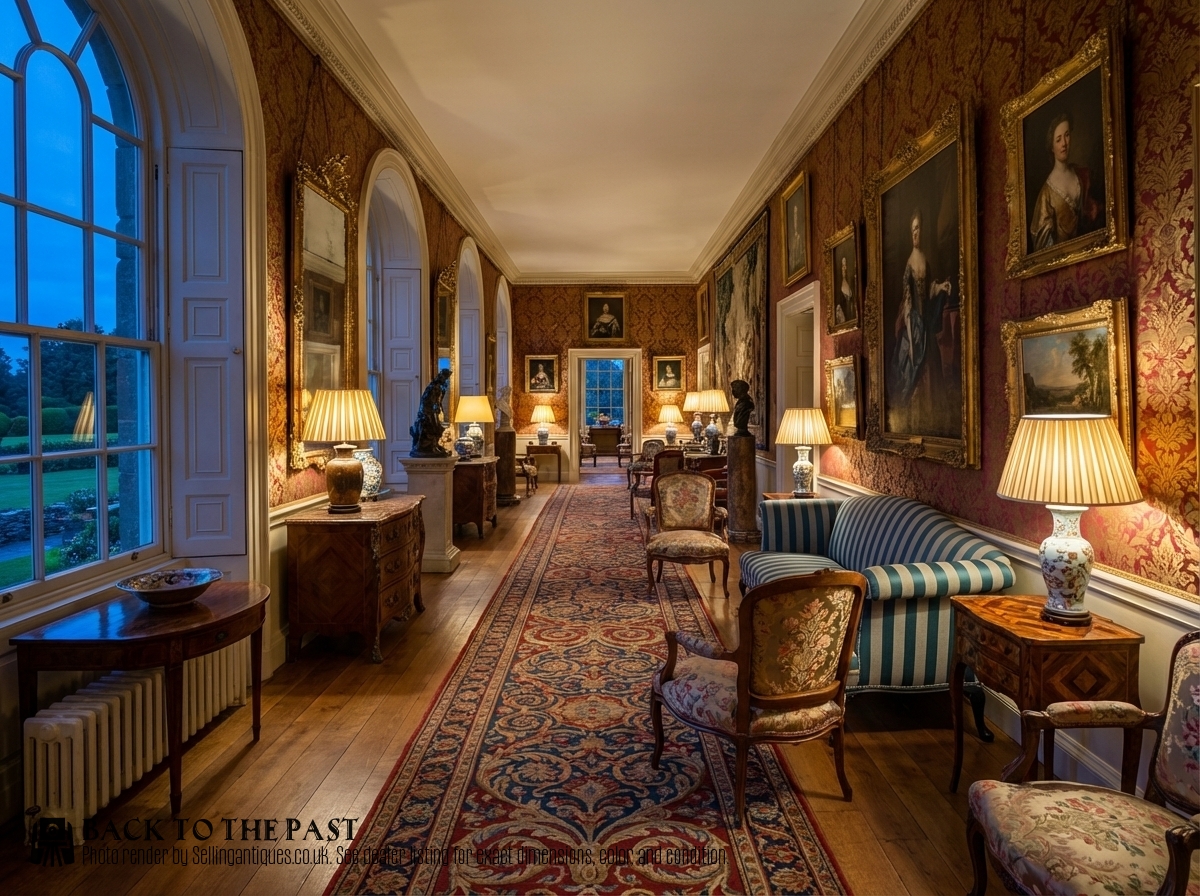
Traditional Striped Sofa
A traditional striped sofa encompasses seating from the 19th Century, Victorian, Edwardian, and Regency periods, alongside pieces designed in the English Country and English Country House styles. Buyers searching for a traditional striped sofa find varied forms including scroll arm sofas, double wingback settees, and day beds, alongside related seating such as chaise longues.
While many examples lean toward formal English Country House aesthetics, others incorporate distinctive elements like concealed storage or tribal bag face cushion details. Such variety ensures that buyers encounter both grand scroll arm settees and smaller, intimate parlour seating.
Materials and construction
The structural framework relies on dense hardwoods including mahogany, rosewood, walnut, and general hardwood, often fashioned with exposed wooden rails or detailed frames. Brass fittings occasionally appear on castors or structural accents, complementing the rich tones of the polished timber.
Upholstery techniques utilise traditional fabric coverings, cotton, and robust ticking fabric. Cushioning ranges from hand-woven textile applications to deep-sprung interiors hidden beneath durable cloth and ticking.
Some antique chaises come with secret compartments for hiding love letters from prying eyes.
Distinctions in quality
Quality rests in the refinement of the timber frame, distinguishing heavy, finely carved mahogany and rosewood from simpler hardwood structures. The joinery and the integrity of the wooden architecture dictate the longevity and structural fidelity of the settee.
The execution of the upholstery adds another layer of distinction, marked by the use of original ticking fabric, hand-woven textiles, or high-grade cotton. Finer pieces demonstrate superior tailoring and attention to detail in internal padding and fabric alignment.
Howard and Sons
The Traditional Striped Sofa Glossary
- Chaise longue
- An elongated upholstered chair designed for reclining, typically featuring a single headrest or scroll arm at one end.
- Scroll arm
- A curved, rolled armrest design that flows outward from the backrest, commonly seen on 19th Century and Regency seating.
- Ticking
- A tightly woven, durable cotton or linen fabric traditionally used to contain feather or down fillings in upholstery.
- Day bed
- A piece of furniture functioning as both a sofa and a bed, suitable for lounging and daytime resting.
- Wingback
- An armchair or sofa style featuring protective side panels attached to the backrest to shield against draughts.
Traditional Striped Sofa: Frequently Asked Questions
What periods do these sofas date from?
The pieces span the 19th Century, including specific examples from the Regency, William IV, and Victorian eras, as well as Edwardian items from around 1900 and 1920.
Such a broad chronological range means designs vary from formal classical frames to comfortable English Country House seating.
What woods were used for the frames?
Framing materials primarily consist of mahogany, rosewood, walnut, and general hardwood. These timbers provide the structural skeleton beneath the upholstery.
Master makers often left these rich woods exposed on armrests, legs, and frames to showcase the grain.
How do I identify a Regency sofa?
Regency pieces typically display classical symmetry, refined mahogany framing, and architectural lines influenced by ancient Greek and Roman design.
They often feature understated carving and elegant proportions that set them apart from heavier Victorian styles.
What is ticking fabric?
Ticking is a dense, sturdy woven textile traditionally utilised to encase stuffing materials and prevent feathers from poking through.
In period pieces, original ticking adds historical character and demonstrates traditional upholstery methods.