



Traditional Striped Chair
A traditional striped chair brings pattern and historic form into a room, offering seating across periods from the Georgian era to the Edwardian years.
Traditional Striped Chair
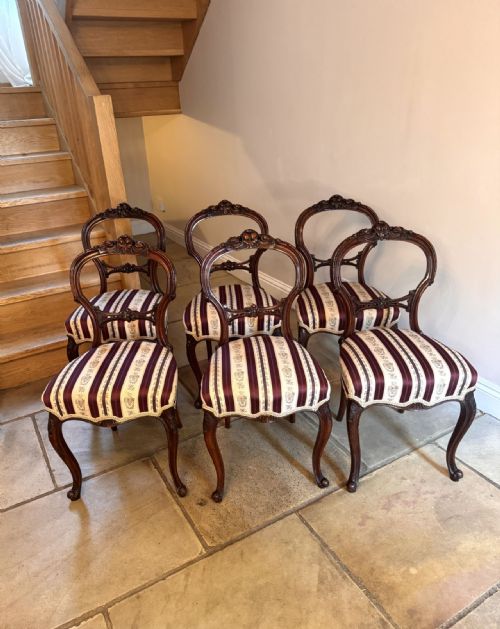
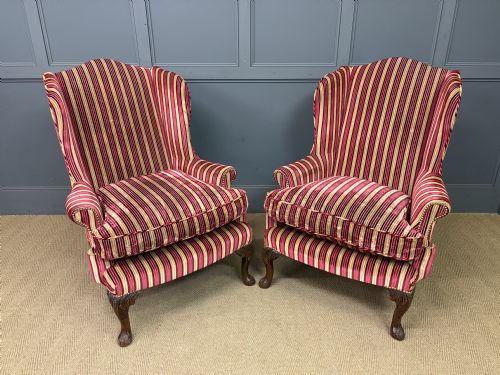
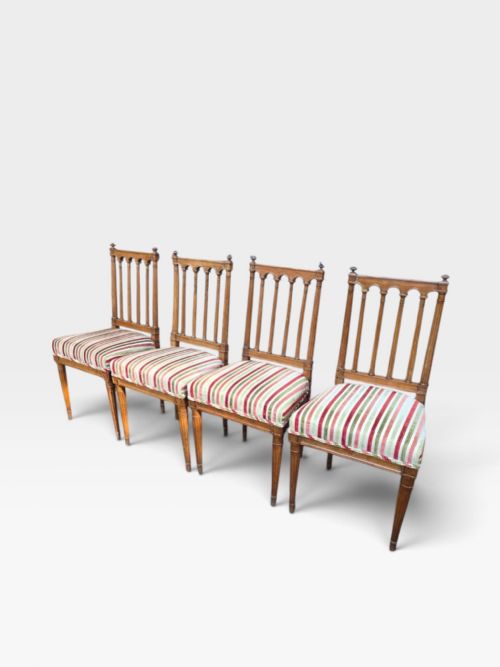
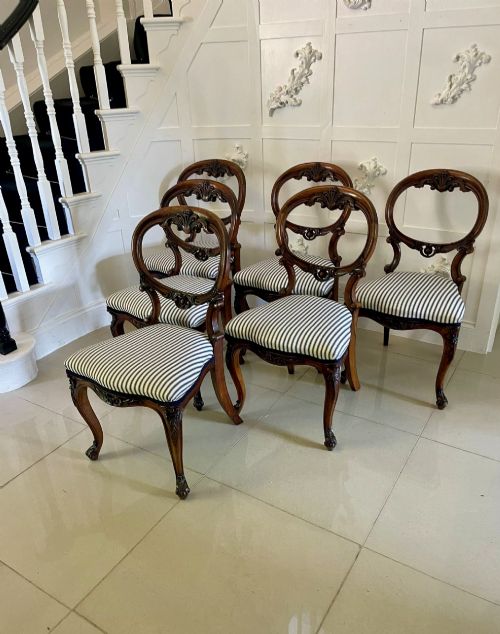
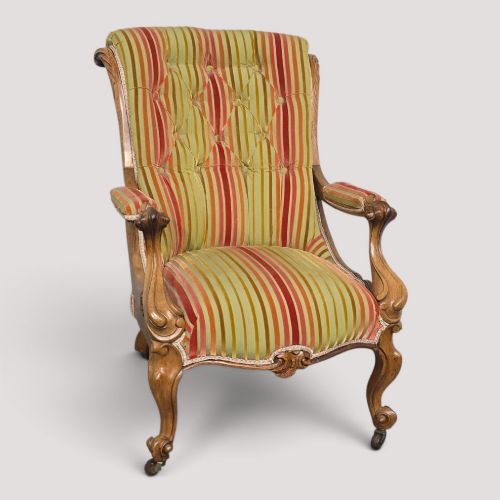
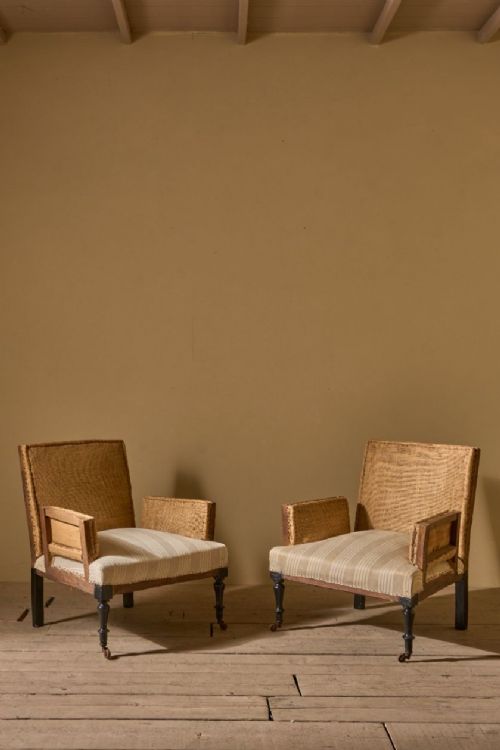
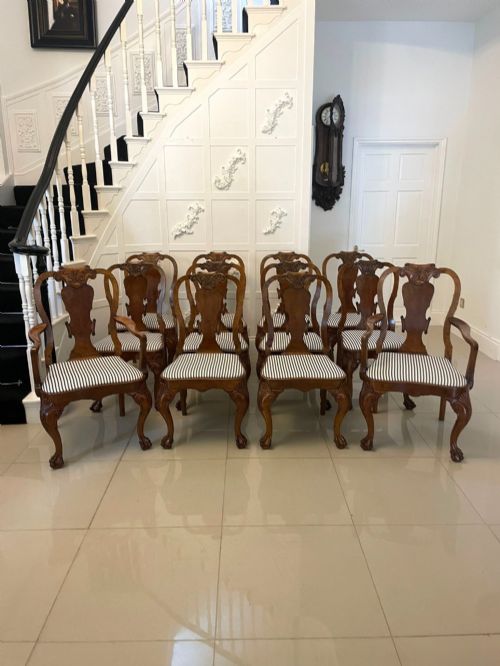
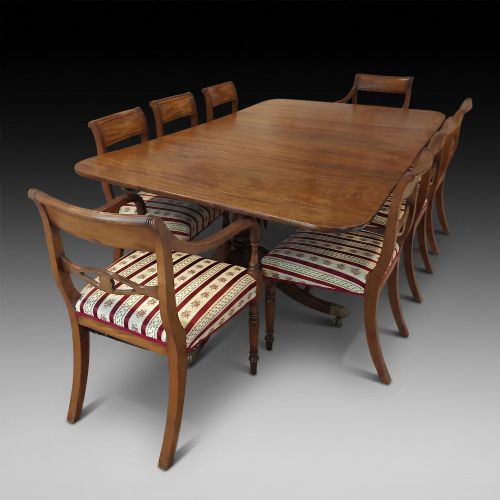
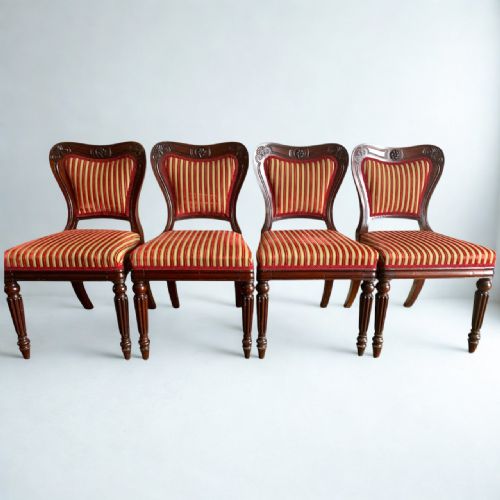
When searching for a traditional striped chair, you encounter a wide selection of seating forms spanning the Georgian, Regency, Victorian, and Edwardian periods. The inventory includes dining chairs, library armchairs, wingbacks, slipper chairs, and chaise longues.
Most pieces date from the 19th century and the Victorian era, utilising timber frames paired with textile upholstery. Dining chairs appear frequently in sets, while armchairs and chaise longues survive as individual pieces or pairs.
How they were made
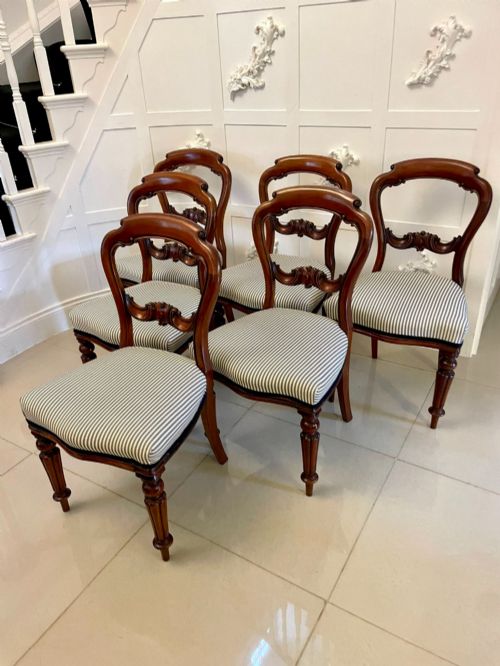
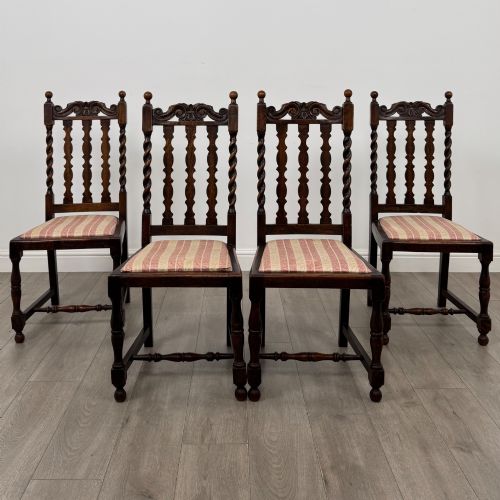
Frames rely on solid hardwoods such as mahogany, walnut, oak, and rosewood, shaped through turning, carving, and joinery techniques like barley twisting or balloon backs. Metal elements such as brass appear in castors or structural fittings.
Upholstery relies on fabric and textile coverings applied over frames, occasionally incorporating decorative elements like faux bird's eye maple or inlay work.
Traditional Striped Chair Retail Price Guide 2026
Typical asking prices for traditional striped chair among the pieces listed under this phrase on Sellingantiques today, from the lower quarter to the upper quarter. They describe what is for sale here now, not the wider market.
Listings span multiple historical eras including Georgian, Regency, William IV, Victorian, and Edwardian periods using mahogany, walnut, oak, and rosewood.
What varies in quality
The standard of carving and timber selection dictates the distinction between standard production seating and superior examples. Sets of dining chairs demonstrate varying degrees of uniformity across the entire group.
The execution of period details, such as ribbon backs, balloon backs, or specific revival styles, indicates the skill of the original maker and workshop.
The Traditional Striped Chair Glossary
- Balloon back
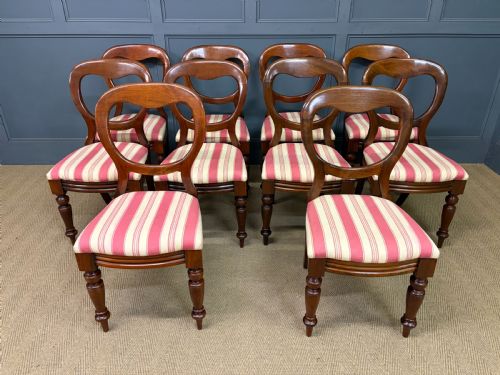
- A chair back shaped in a continuous curve resembling a rounded balloon, popular during the Victorian period. This design provides ergonomic support while presenting a light silhouette.
- Barley twist
- A type of furniture turning resembling a twisted rope or barley sugar stick. This decorative motif appears on chair legs and stretchers in oak and other timbers.
- Chaise longue
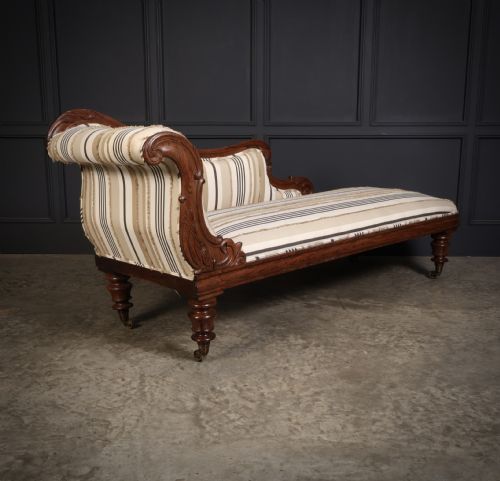
- An upholstered couch or day bed with a headrest at one end, designed for reclining. These pieces combine wood frames with textile upholstery and sometimes concealed storage.
- Wing back
- An armchair with side panels, or wings, attached to the back and armrests to shield the sitter from draughts. Georgian and Victorian examples often feature deep upholstery.
- Slipper chair
- A low-seated upholstered chair originally designed for bedrooms to assist with putting on shoes. Edwardian examples often feature solid wood frames.
Traditional Striped Chair: Frequently Asked Questions
How do I date a striped chair?
Dating relies on identifying the underlying style, such as Regency curves, Victorian balloon backs, or Edwardian oak frames. Secondary indicators include timber types like mahogany or walnut and construction methods.
Matching the overall form to documented periods from the 18th to the 20th century helps narrow down the decade of manufacture.
Were these chairs originally striped?
Upholstery fabric is frequently replaced during restoration to preserve the functional condition of the piece. Historic seating often received new textiles to match contemporary interior tastes.
The underlying frame remains the primary historical artefact rather than the surface fabric.
How were dining chairs sold?
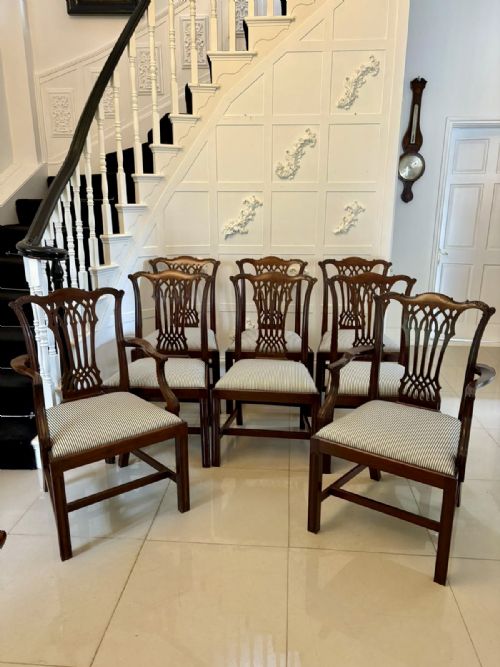
Dining chairs frequently survive in matched sets ranging from four up to fourteen pieces. Larger sets often include carver armchairs alongside side chairs.
Individual pieces appear more commonly among armchairs, library chairs, and chaise longues.
How do I care for wooden frames?
Maintenance involves dusting timber surfaces regularly with a soft cloth and avoiding direct sunlight to protect polished finishes. Maintaining stable indoor humidity prevents wood from drying or cracking.
Fabrics require gentle vacuuming with an appropriate attachment depending on the textile.