


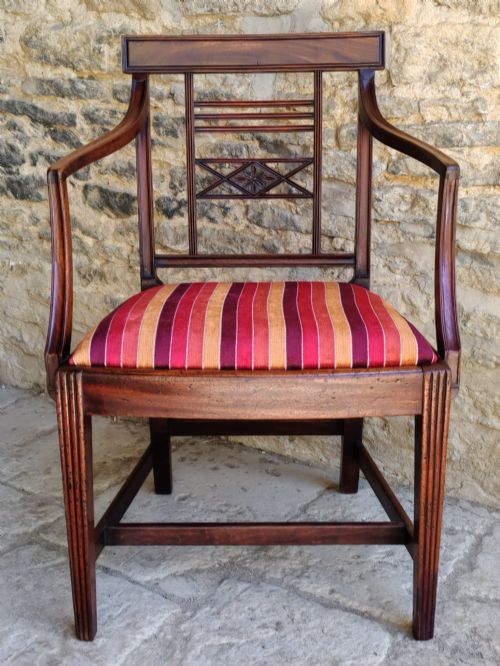
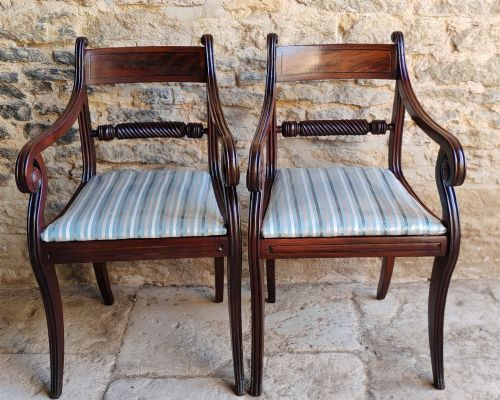


Striped Mahogany Armchair
A striped mahogany armchair brings structured timber and tactile upholstery together, offering a functional seat with distinct historical character for daily use.
Striped Mahogany Armchair
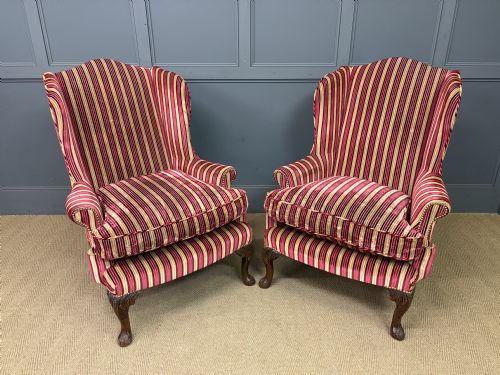
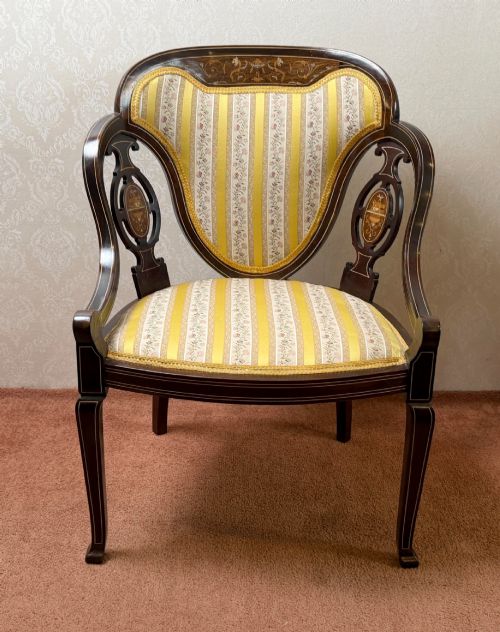
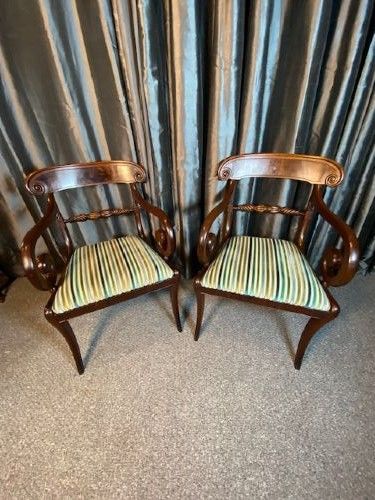
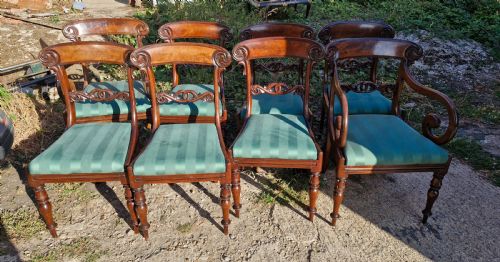
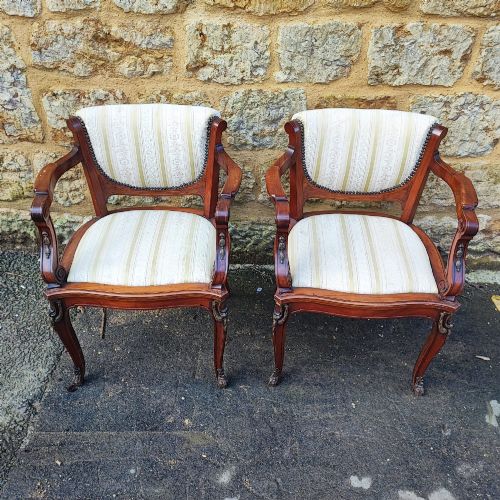
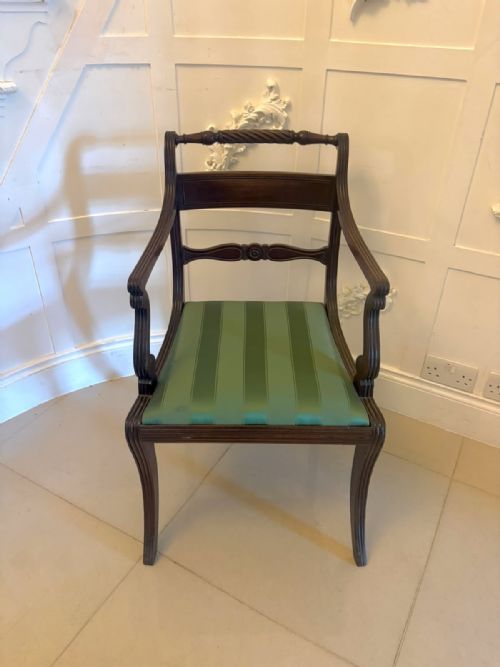
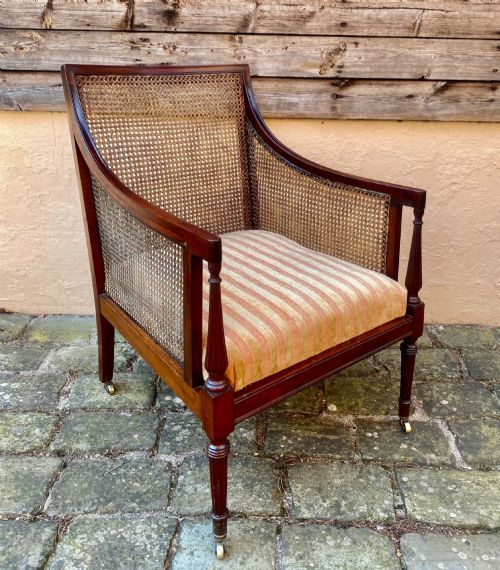
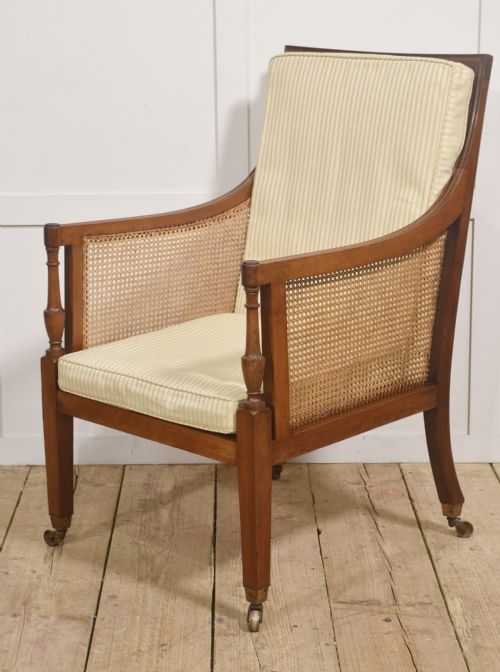
A striped mahogany armchair is a seated timber form designed for the library, desk, or parlour, combining dense wood with upholstered textile surfaces. When seeking a striped mahogany armchair on this page, buyers most frequently encounter Regency, Georgian, Victorian, and Edwardian examples fashioned as desk chairs, library armchairs, carvers, and salon seating.
The timber framework typically displays deep reddish-brown grain, occasionally accented with string inlay or carved scroll arms. These chairs appear in single forms, pairs, and larger suites, spanning formal library seating to lighter salon chairs.
Originating across British, French, and Italian workshops, these pieces incorporate historical revivals such as Louis XV and George IV designs alongside domestic vernacular styles.
How they were made
Makers shaped these chairs from dense mahogany timber, employing traditional joinery to construct robust frames with sabre, turned, or tapered legs. Brass castors, cane panels, and intricate carved details were integrated into the structural woodwork to enhance mobility and appearance.
Upholstery involved layering textiles like cotton, fabric, and horsehair over supportive webbing, secured to the frame and finished with tight fabric covers or buttoned backs. Decorative touches such as string inlay and hand-carved scrollwork completed the construction process.
Striped Mahogany Armchair Retail Price Guide 2026
Typical asking prices for striped mahogany armchair among the pieces listed under this phrase on Sellingantiques today, from the lower quarter to the upper quarter. They describe what is for sale here now, not the wider market.
Several armchairs retain nineteenth-century patent mechanisms, allowing weary nineteenth-century readers to recline with engineered precision.
What varies in quality
The standard of a striped mahogany armchair depends heavily on the crispness of the timber carving and the architectural proportions of the frame. Superior examples demonstrate refined joinery, well-balanced scroll or lyre arms, and harmonious integration of inlay or brass elements.
Upholstery finish and timber selection further distinguish the pieces, with denser grain figures and tighter fabric execution separating standard seating from finer library and desk chairs.
Henry Thomas Peters·Gillows·Robert Daws
The Striped Mahogany Armchair Glossary
- Mahogany
- A durable, reddish-brown tropical hardwood prized for its dense grain and stability in fine furniture construction. It takes a high polish and resists warping.
- Bergère
- An enclosed upholstered armchair with wooden framing exposed around the sides and back. The armrests are typically upholstered rather than open.
- Carver
- A sturdy armchair, often designed to match a set of dining chairs for the head of the table. These feature prominent armrests to accommodate the user.
- Curule
- An ancient X-shaped structural design adopted in nineteenth-century library armchairs. It provides geometric stability and a classical aesthetic.
- Inlay
- A decorative technique where contrasting strips of wood or other materials are inserted into recessed cavities in the mahogany surface. This creates delicate linear patterns.
Striped Mahogany Armchair: Frequently Asked Questions
What is a carver chair?
A carver is an armchair designed to match a set of dining chairs, traditionally placed at the head of a table.
These pieces feature supportive armrests and shared stylistic traits with the accompanying dining chairs.
How do I date a mahogany armchair?
Dating relies on observing structural characteristics, leg forms, and decorative motifs such as sabre legs, scroll arms, or string inlay.
Comparing these details against documented periods from the eighteenth to early twentieth centuries reveals the likely decade of manufacture.
Where were library armchairs used?
Library armchairs served in domestic studies, reading rooms, and large libraries for comfortable seated reading or desk work.
Their sturdy mahogany frames and upholstered backs provided support during long periods of use.