
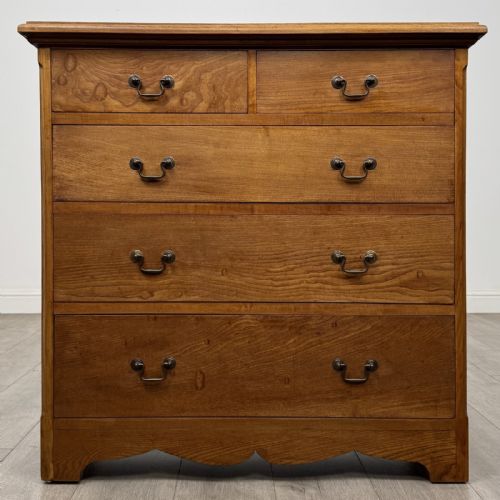
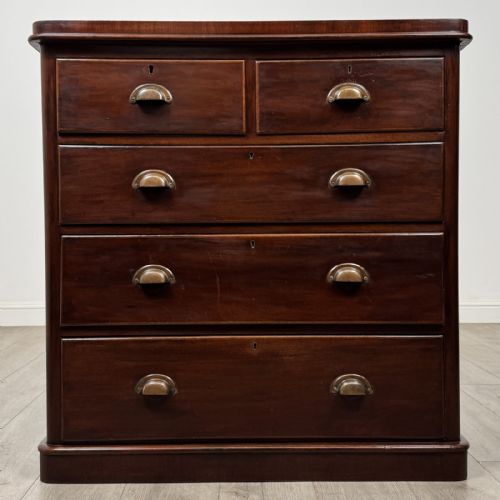
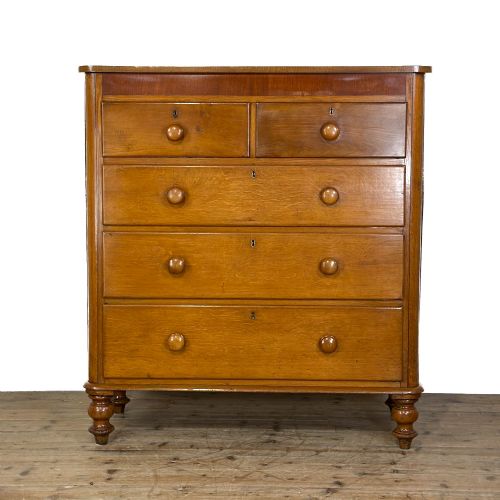
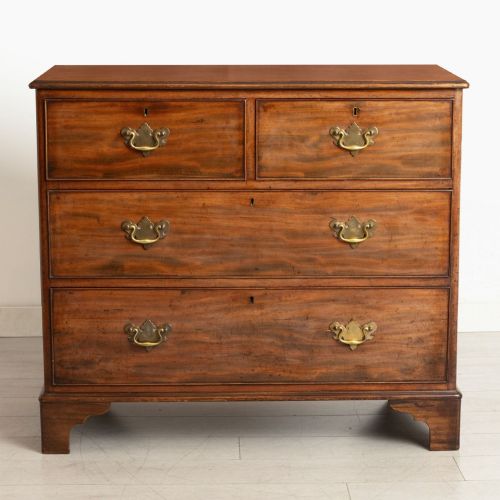
Traditional Storage Drawers
Traditional storage drawers are functional timber chests and cupboards holding generations of domestic belongings with quiet utility.
Traditional Storage Drawers
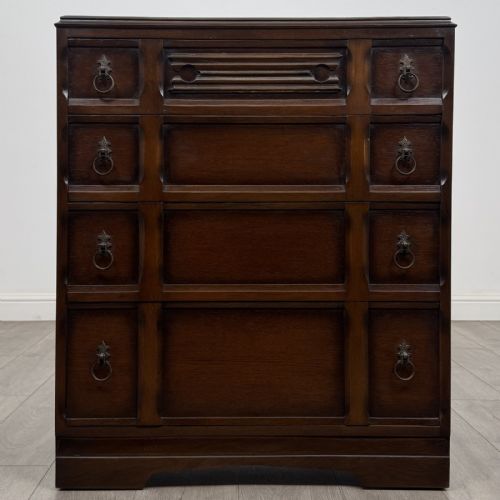
Traditional storage drawers encompass chest of drawers, mule chests, linen presses, and cupboards spanning periods from the eighteenth century through the 1930s. Buyers searching for traditional storage drawers encounter forms ranging from Georgian mahogany proportions to Victorian pine farmhouse pieces.
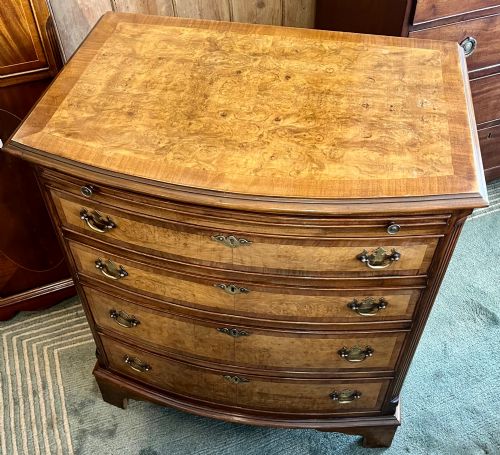
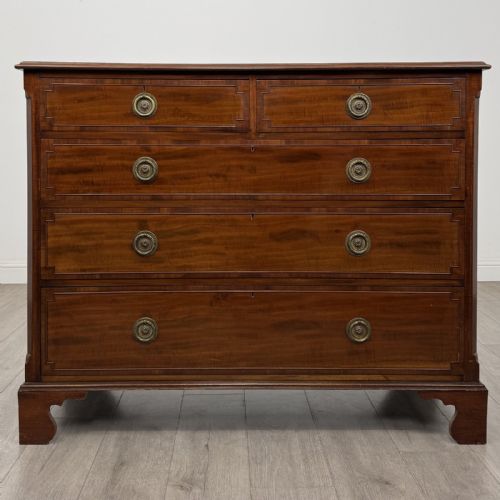
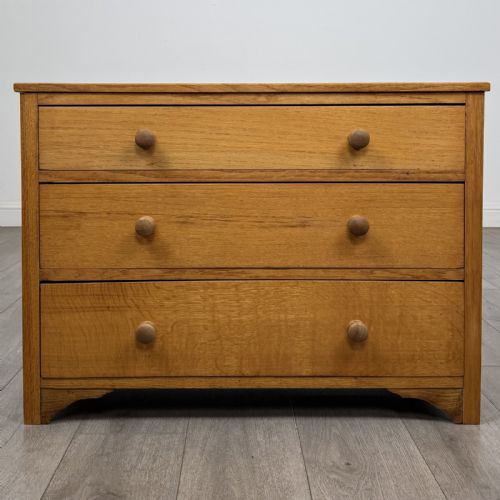
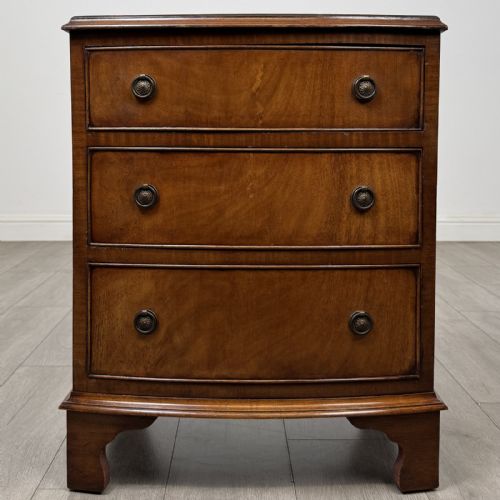
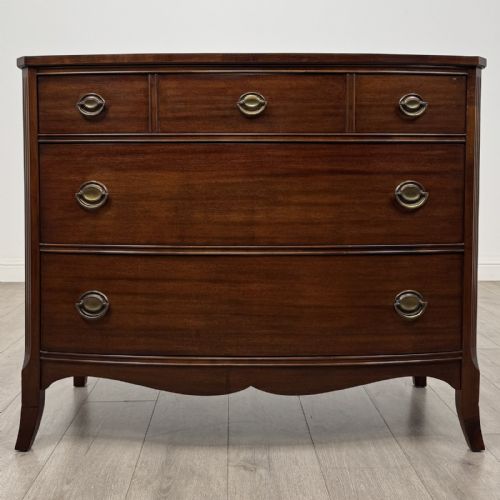
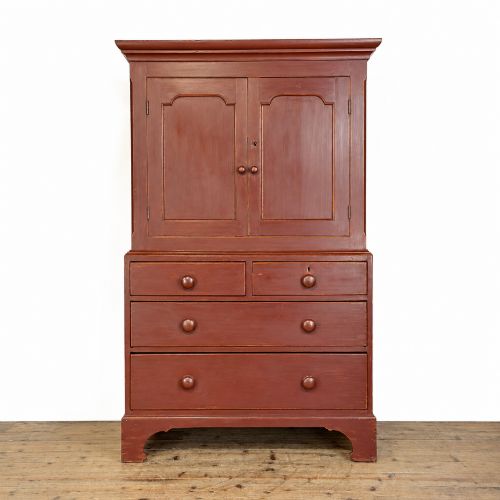
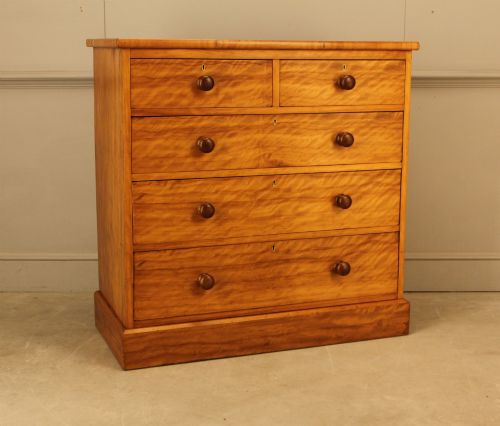
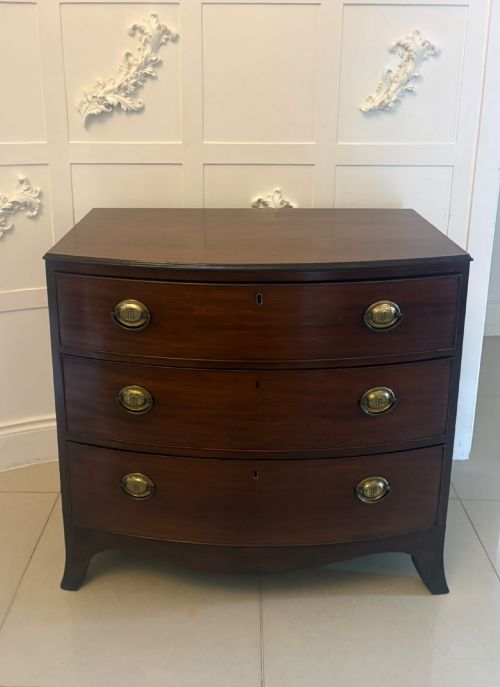
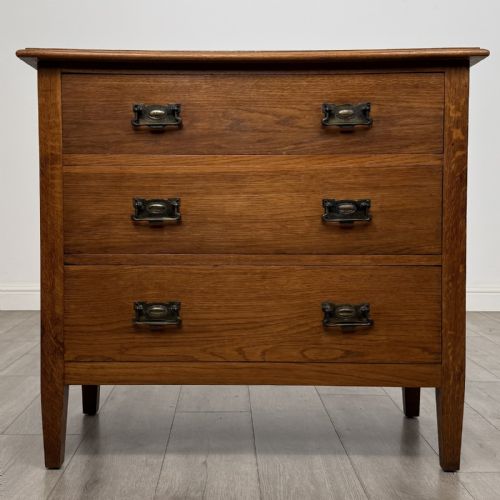
The selection on this page relies heavily on Victorian and twentieth-century examples, alongside Georgian and eighteenth-century items. Common configurations include two-over-three drawer arrangements, bow-front designs, and fitted cupboards with internal drawers.
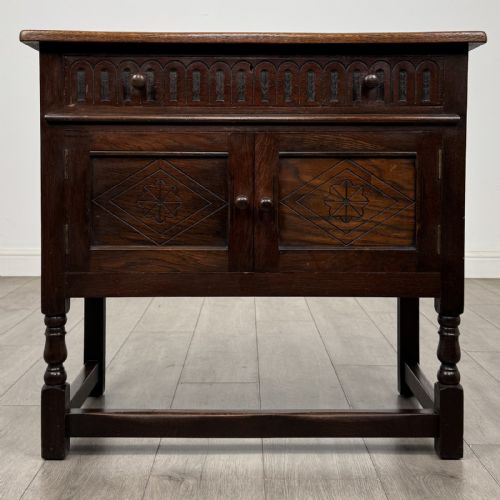
Woods such as oak, mahogany, pine, walnut, and ash define these pieces, often paired with brass handles, wooden knobs, or bracket and bun feet. Regional styles like English Country and Rustic Farmhouse appear alongside formal Georgian and Victorian cabinet-making.
How traditional storage drawers were made
Cabinet-makers built these pieces using solid timbers like oak, mahogany, and walnut, frequently applying burr walnut veneers for decorative surfaces. Pine served extensively for regional and farmhouse furniture, sometimes retaining original graining or paint finishes.
Joinery techniques relied on sturdy structural construction, visible in bracket feet, bun feet, and raised galleries. Drawer fronts were fitted with brass handles, brass cup handles, or turned wooden knobs depending on the period and workshop practice.
Some nineteenth-century pine pieces still boast their original painted graining, reminding us that imitation was the sincerest form of flattery.
What varies in quality
Quality in traditional storage drawers rests on the selection of timber, such as figured mahogany or rich burr walnut, and the precision of the cabinet-maker's joinery. Superior pieces display thoughtful proportions, such as graduated drawers and well-executed bracket feet.
The survival of original surface finishes, whether polished wood, original paint, or period brass hardware like acorn handles, elevates an example. Simpler pieces in pine or oak derive their character from honest utility and untouched patination.
The Traditional Storage Drawers Glossary
- Bow-front
- A cabinet front curved in a convex shape outward. This style gained popularity during the Georgian and later periods to soften room lines.
- Bracket foot
- A foot forming a simple architectural bracket supporting the corners of a chest. It elevates the body cleanly off the floor.
- Mule chest
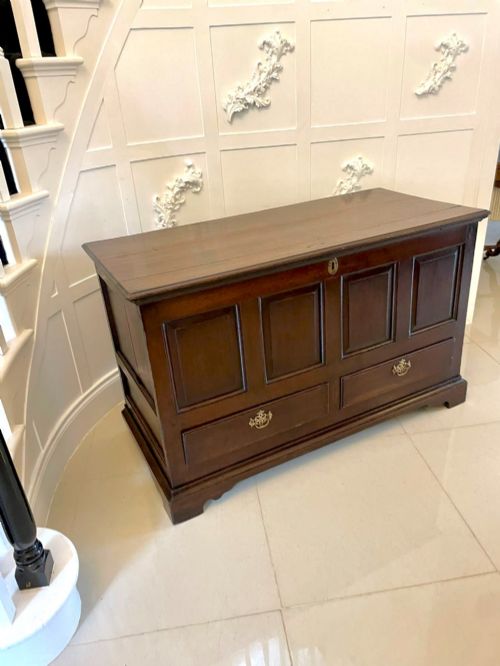
- A traditional chest featuring one or more drawers at the base beneath a hinged lid compartment. They bridge the evolution from simple coffers to drawer chests.
- Bun foot
- A rounded, slightly flattened spherical foot common on seventeenth-century and revival furniture. It provides a stable base for heavy oak carcases.
- Graduated drawers
- Drawers decreasing in depth from bottom to top within a chest. This arrangement creates a balanced visual perspective.
Traditional Storage Drawers: Frequently Asked Questions
What periods do these storage drawers come from?
The pieces span the eighteenth, nineteenth, and early twentieth centuries, covering Georgian, Victorian, Edwardian, and 1930s eras.
Craftsmanship and timber choices shift across these periods, moving from formal Georgian mahogany to practical Victorian pine and twentieth-century oak.
How do I distinguish oak from mahogany pieces?
Oak displays a prominent, open grain with visible medullary rays, often seen in eighteenth-century and rustic country furniture.
Mahogany offers a denser, finer reddish-brown grain favoured for formal Georgian and Victorian chest designs.
How were mule chests used in homes?
Mule chests combined top-opening storage for bulky items with lower drawers for smaller garments and linens.
They served as versatile multi-purpose storage before dedicated wardrobes became common in domestic interiors.