

Traditional Solid Oak Chest
A traditional solid oak chest brings heavy timber construction and enduring storage into a room, offering immediate utility and centuries of carpentry history.
Traditional Solid Oak Chest
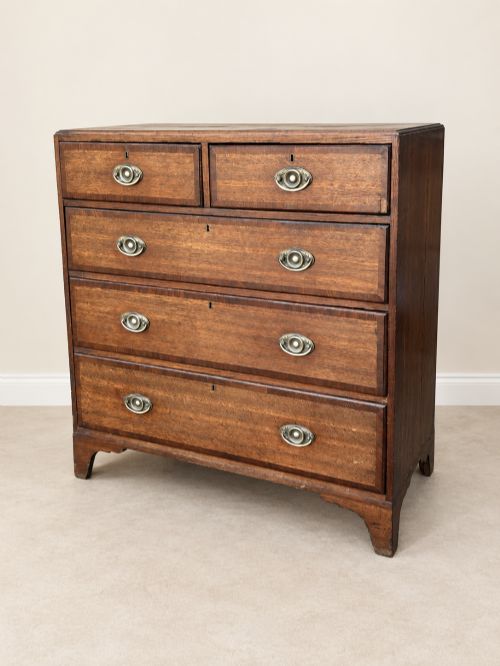
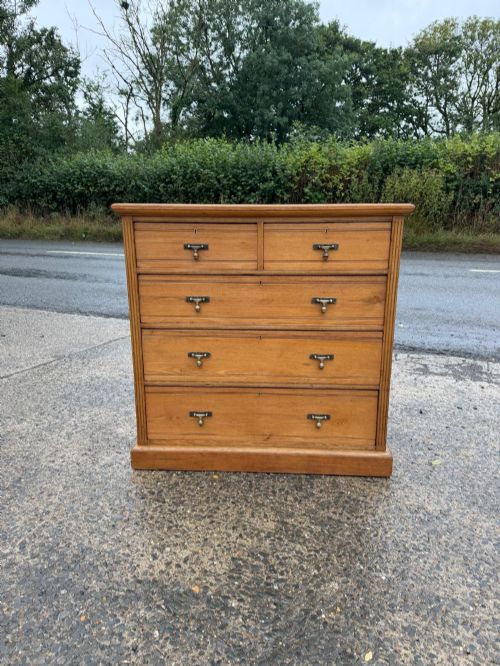
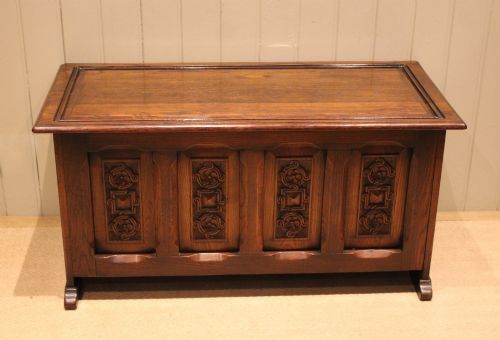
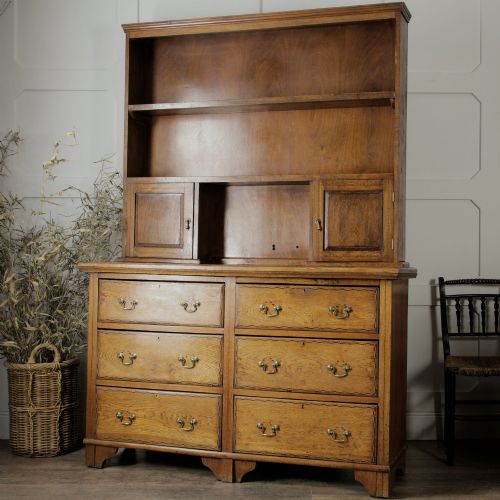
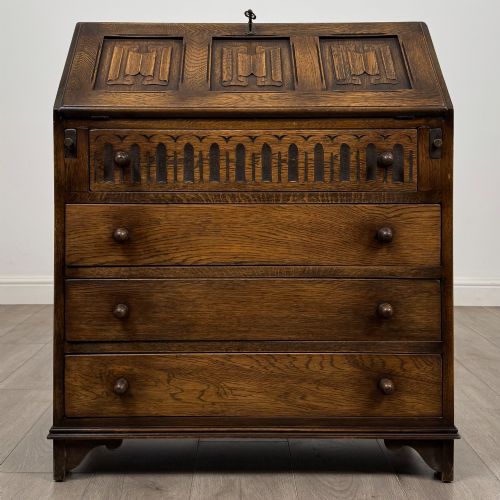
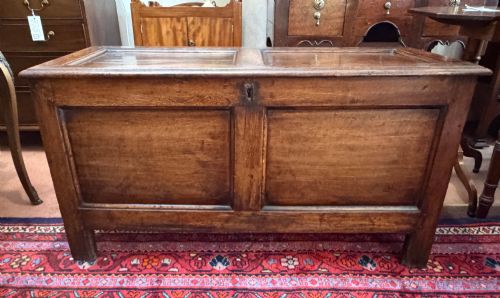
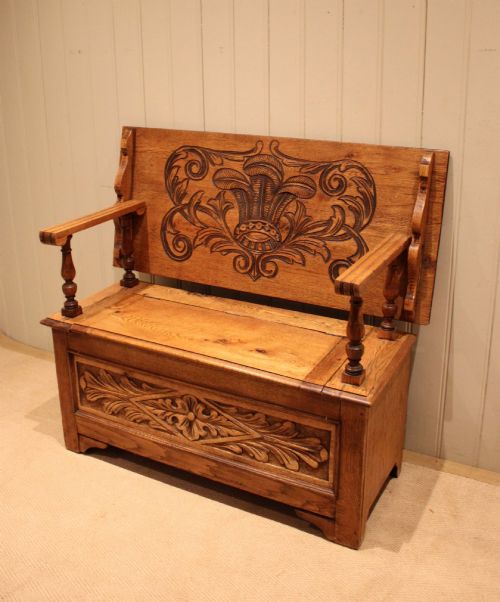
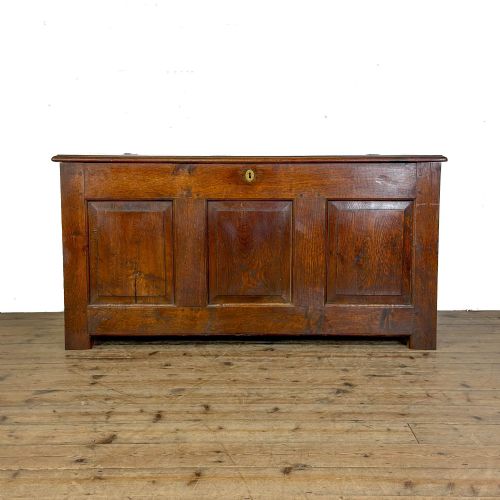
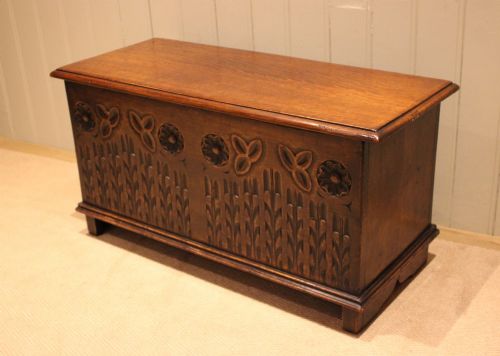
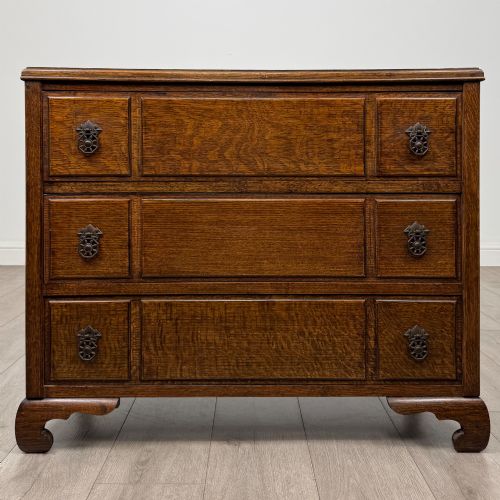
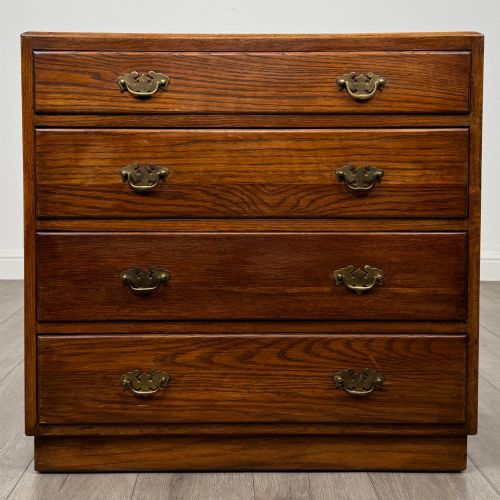
When you search for a traditional solid oak chest, you encounter a category that spans heavy joined blanket coffers from the seventeenth century and upright drawer units from the Georgian and Edwardian eras. The pieces on this page encompass storage furniture built primarily from solid oak, varying from plain panelled blanket boxes to carved mule chests and multi-drawer dressers.
You are most likely to meet Edwardian and Georgian examples on this page, alongside earlier seventeenth-century coffers and pieces influenced by the Arts and Crafts movement. These items range from small-proportioned bedside chests to large carved storage coffers fitted with original iron or brass hardware.
Materials and construction
These items utilise solid oak timbers, often combined with secondary woods for internal drawer linings, built using traditional joinery methods such as panel framing and dovetailing. Carved details, linenfold panels, and applied mouldings frequently decorate the exterior surfaces of coffers and drawer fronts.
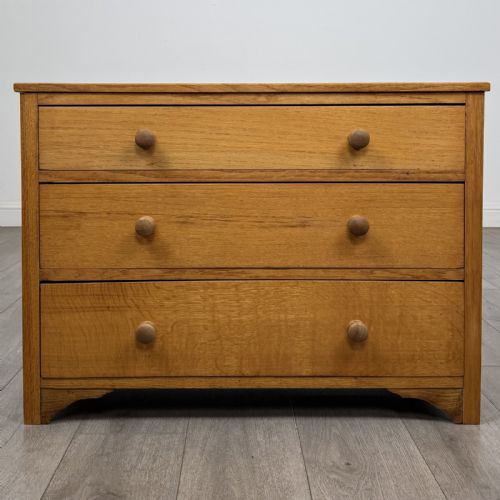
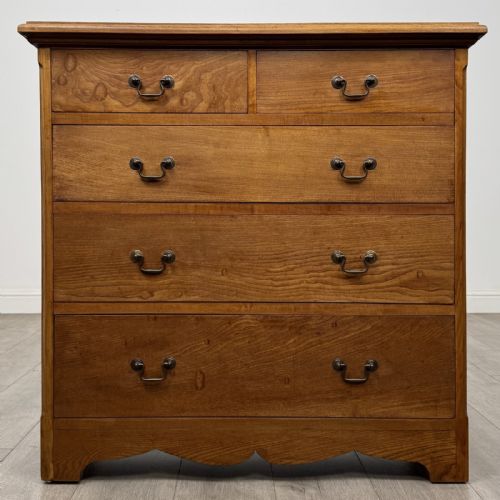
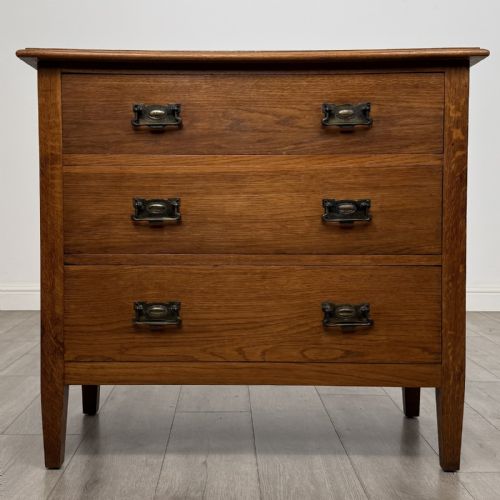
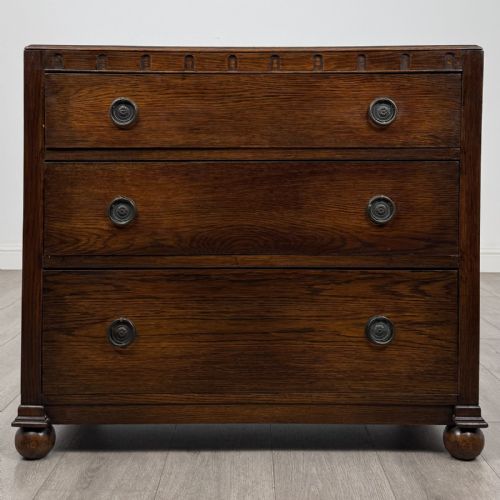
Hardware plays a structural and decorative role, featuring forged iron hinges, wrought iron straps, and brass handles including acorn designs and swing bail pulls. Feet styles vary from simple turned legs and bun feet to bracket supports and integrated plinths.
Listings feature oak storage items spanning the seventeenth, eighteenth, nineteenth, and early twentieth centuries, including Arts and Crafts and Georgian styles.
Distinctions in quality
The standard of a traditional solid oak chest rests upon the integrity of its timber and the precision of its jointing, where tight frame-and-panel construction and original backboards indicate superior workshop execution. Pieces retaining their original brass handles, ironwork, and feet command greater regard than those with modern replacements.
Depth of carving and proportion also divide the range, as crisply executed hand-carved panels on seventeenth-century coffers or Georgian chests demonstrate a higher level of artisan skill than later mass-produced revival items.
The Traditional Solid Oak Chest Glossary
- Coffer
- A heavy storage chest with a hinged lid, often constructed with joined oak panels. These boxes served primarily for linens and valuables before dedicated wardrobes became common.
- Mule chest
- A storage chest featuring one or more drawers built into the base beneath the main lift-top compartment. This form bridges the evolution between the simple coffer and the chest of drawers.
- Linenfold
- A style of carved wooden panelling resembling folded cloth, frequently seen on Tudor and revival oak furniture. It provides texture and visual relief to flat framing members.
- Bun foot
- A rounded, flattened ball-shaped foot supporting the corners of a chest of drawers or cabinet. They lift the case timber off the floor and project slightly beyond the carcase sides.
Traditional Solid Oak Chest: Frequently Asked Questions
Where should I place a blanket chest?
A blanket chest functions effectively at the foot of a bed, beneath a window, or as a focal point in a hallway. Its flat lid provides a surface for displaying textiles or decorative objects while keeping interior storage hidden.
Because solid oak reacts to extreme humidity and temperature shifts, position the chest away from direct radiators and active heat sources to protect the wood and historic joins.
What is the difference between a coffer and a chest?
A coffer strictly refers to a sturdy box with a lid accessed from the top, traditionally used for holding church plate, documents, or household linens. The term chest often implies a piece containing drawers, though historical usage frequently overlaps these definitions.
Many examples listed as blanket chests or trunks follow the coffer format with hinged lids, while others incorporate lower drawers to combine box storage with accessible drawer space.
How do I care for antique oak furniture?
Maintenance requires avoiding harsh chemical polishes and instead applying traditional beeswax sparingly to nourish the timber surface. Regular dusting with a dry, soft cloth prevents particulate buildup in carved crevices and panel grooves.
Keep the room climate stable to prevent the solid oak panels from splitting or warping as seasonal humidity changes throughout the year.