






Traditional Serving Stand
A traditional serving stand offers practical hospitality and timeless folding utility for modern rooms.
Traditional Serving Stand
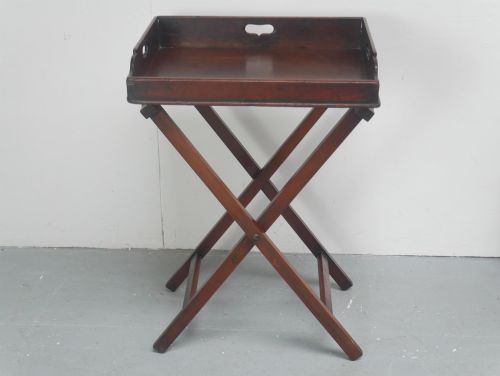
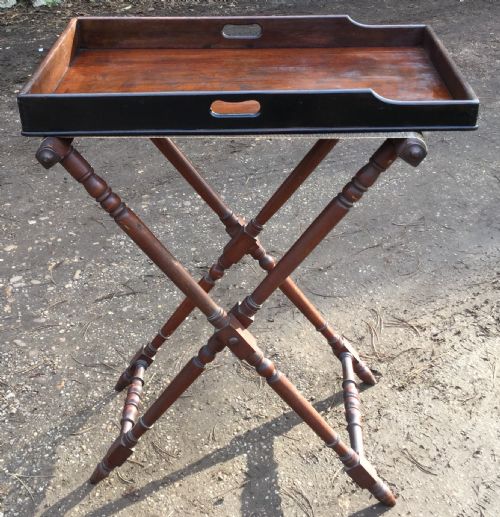
A traditional serving stand combines a removable tray with a folding or fixed wooden base, designed for carrying food and drink. These tables serve multiple functions as tray tables, occasional tables, side tables, and dumb waiters.
The versions met most frequently on this page date from the Georgian, Victorian, and 18th century periods through to the early twentieth century. Most examples utilise rich timber frames designed to collapse or stand firm for domestic hosting.
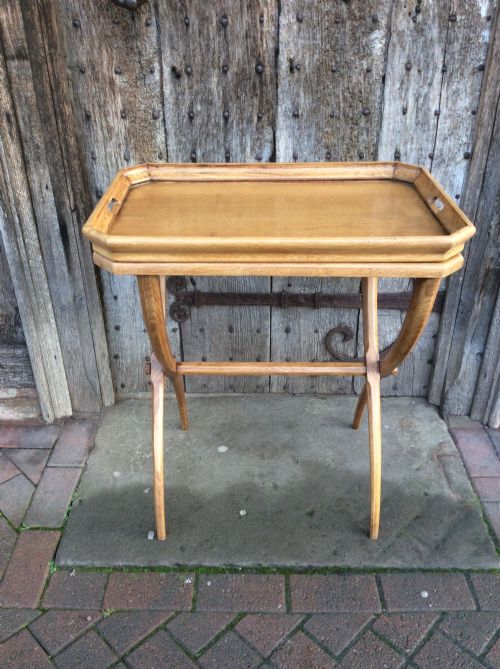
Makers historically produced these practical items in mahogany and oak, pairing a deep gallery tray with a sturdy support stand. They bridge the gap between portable service equipment and permanent parlor furniture.
How they were made
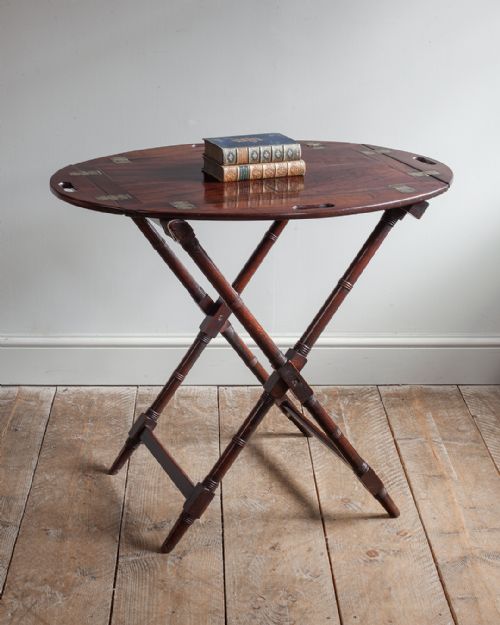
Cabinetmakers constructed these pieces primarily from solid mahogany and oak, selecting dense timbers capable of supporting heavy service trays. Brass fittings frequently reinforced the folding mechanisms and hinges on the stands.
Joinery techniques focused on stability and portability, utilising folding cross-frames alongside solid tiered platforms. Skilled hands shaped the tray edges with carved or raised galleries to prevent items from sliding during transit.
Traditional Serving Stand Retail Price Guide 2026
Typical asking prices for traditional serving stand among the pieces listed under this phrase on Sellingantiques today, from the lower quarter to the upper quarter. They describe what is for sale here now, not the wider market.
Current listings feature pieces spanning the eighteenth, nineteenth, and early twentieth centuries, constructed in mahogany, oak, and brass.
What varies in quality
The refinement of the woodwork separates standard utilitarian examples from finer pieces, particularly in the crispness of carved details on oak and the depth of polish on mahogany. Original matching stands elevate an item above marriages where the tray and base were paired at a later date.
Hardware integrity dictates day-to-day usability, with original brass components and smoothly functioning folding hinges preserving the piece's structural harmony. Timber selection also plays a major role, with well-figured grain patterns commanding greater visual presence.
The Traditional Serving Stand Glossary
- Dumb waiter
- A tiered stand or side table designed to hold dishes without the presence of servants. These multi-level pieces allow diners to help themselves during a meal.
- Gallery
- A raised wooden border running around the perimeter of a tray to keep glassware and plates secure. Finer examples feature intricate cutouts or pierced designs.
- Folding stand
- A collapsible wooden base supporting a removable tray, engineered for easy storage when not in use. X-frame designs are typical of this space-saving mechanism.
- Occasional table
- A versatile piece of furniture intended for light, sporadic use around a reception room. These smaller tables easily relocate to suit the needs of the household.
Traditional Serving Stand: Frequently Asked Questions
What is a traditional serving stand used for?
These pieces function primarily as portable serving stations and flexible side tables for drinks or food. Historically, they allowed staff to bring refreshments into a drawing room before folding away.
Today, they serve equally well as permanent occasional tables or mobile display surfaces in living spaces and dining rooms.
How do I identify a Georgian or Victorian stand?
Georgian versions typically display restrained mahogany frames with elegant, simple lines and deep timber patination. Victorian examples often incorporate heavier carved oak details or more elaborate gallery edges.
Examining the construction methods and wood species helps place the piece within its correct nineteenth or eighteenth-century context.
Are the trays removable from their stands?
Most traditional serving stands feature a loose tray resting securely atop a folding or fixed base. This dual-element construction allowed servants to carry the tray independently from the support structure.
Buyers should expect the top surface to lift off easily, though some multi-tier dumb waiter variants feature fixed shelves.
How should I care for a mahogany tray table?
Maintain the timber finish by applying high-quality beeswax periodically and avoiding placement near direct heat sources. Gentle cleaning with a soft, dry cloth preserves the historic surface shine.
Protect the wood from standing liquids by using coasters on the tray surface during everyday use.