
Traditional Rustic Wooden Stools
Traditional rustic wooden stools are honest forms of seating shaped by utility, offering tactile warmth and centuries of domestic history to any interior.
Traditional Rustic Wooden Stools
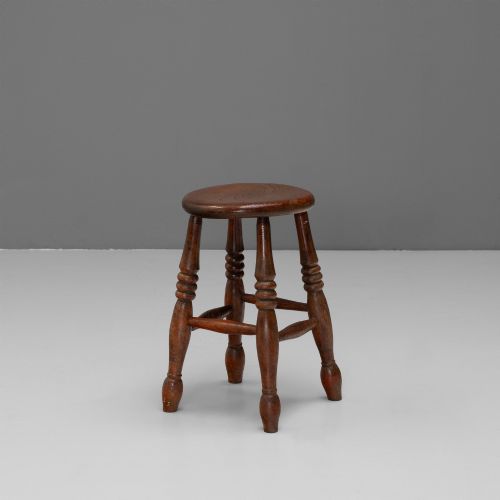
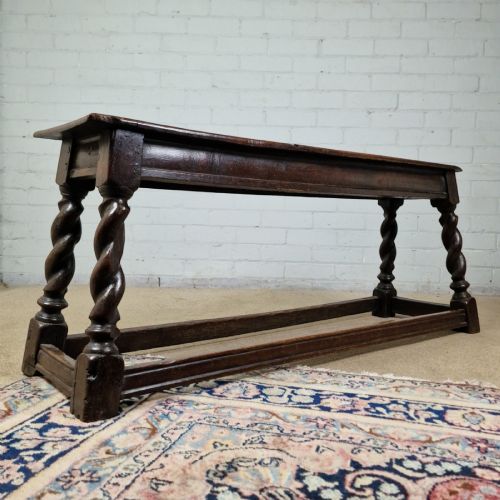
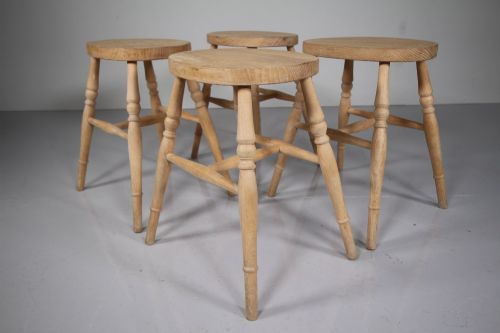
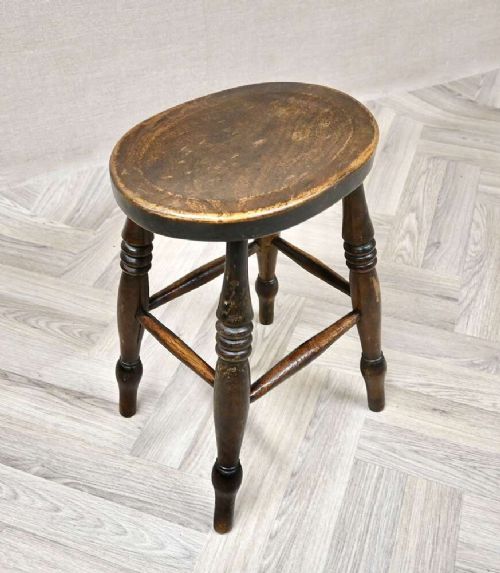
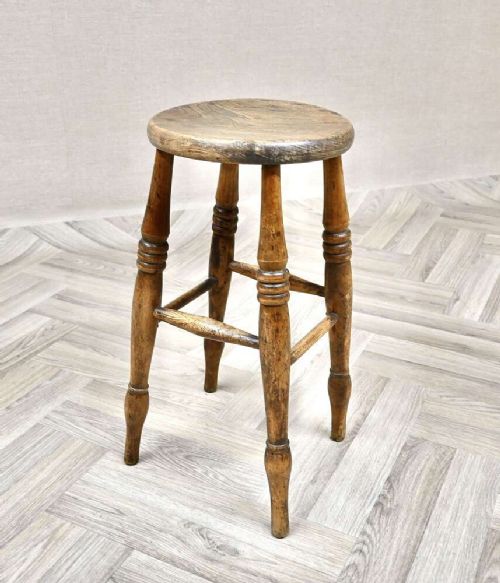
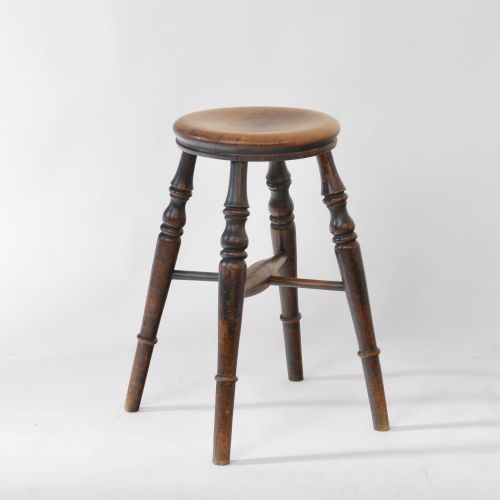
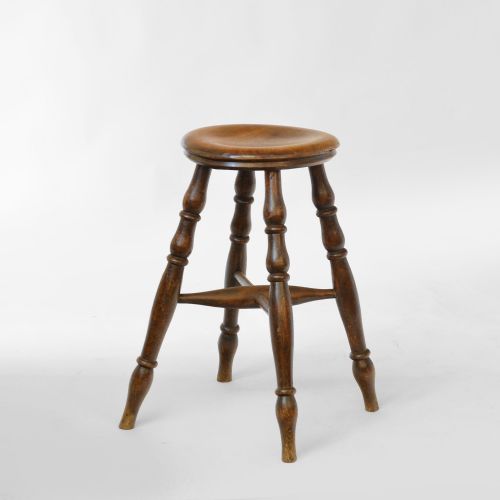
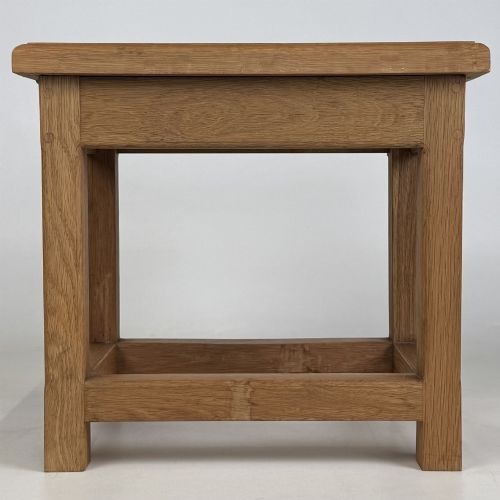
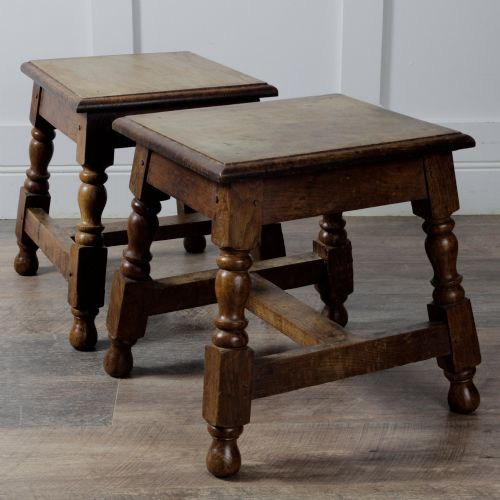
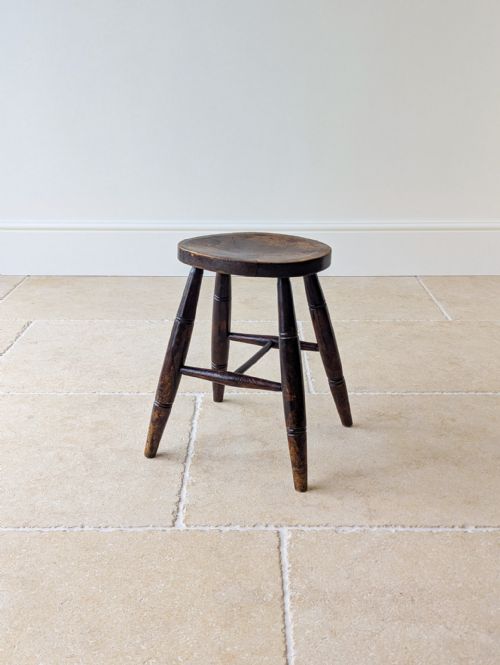
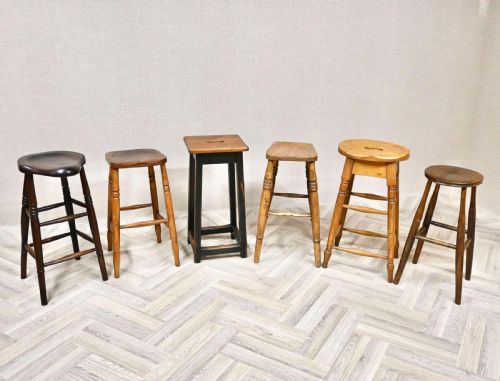
Traditional rustic wooden stools comprise a diverse lineage of utilitarian seating, ranging from three-legged milking stools to heavy joint stools and tavern bar stools. Buyers searching for traditional rustic wooden stools will encounter vernacular forms designed for specific domestic, agricultural or commercial tasks.
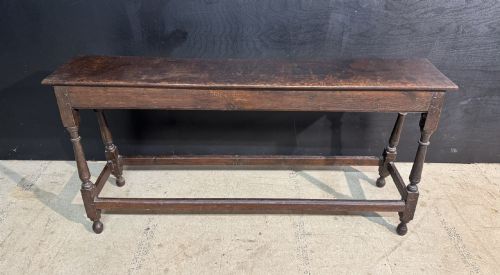
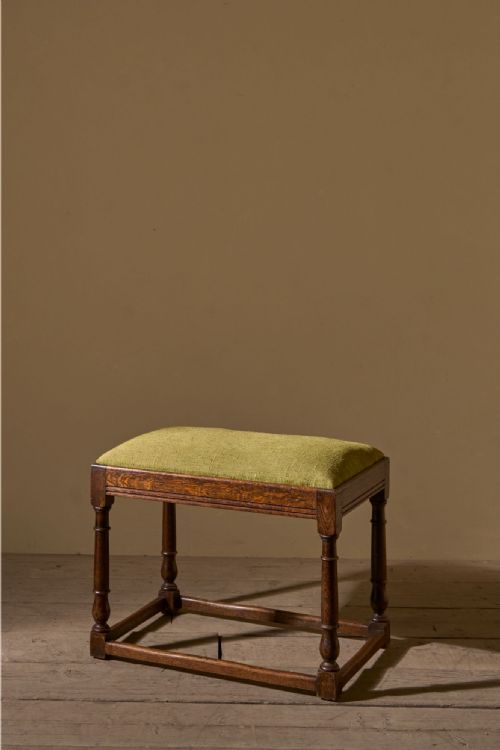
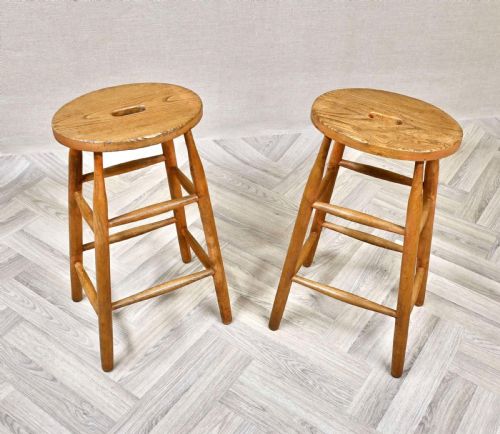
The selection on this page spans several centuries, with nineteenth-century examples and Edwardian pieces appearing alongside earlier Georgian formats. Forms include low footstools, step stools, side tables and tall bar stools, reflecting the practical needs of past workshops and households.
Origins stretch across English country styles and Victorian vernacular traditions, alongside occasional international examples such as Japanese street-vendor stools. Plain timber seats dominate, often paired with turned or pegged legs that reveal their functional origins.
How they were made
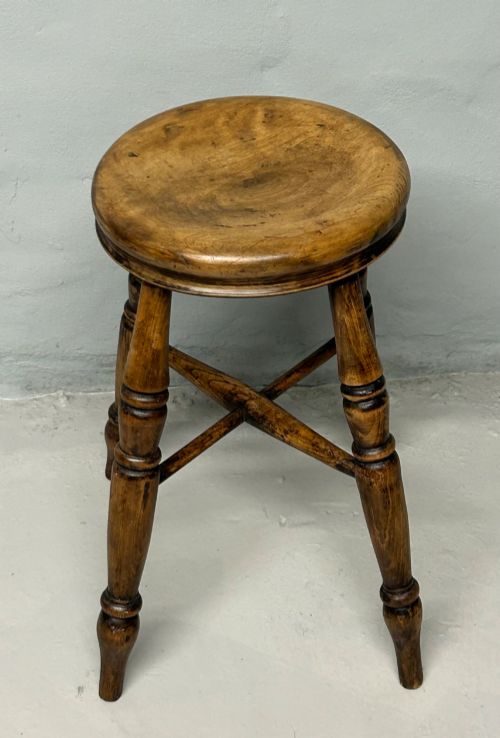
Construction relies heavily on native hardwoods like oak, elm, beech, ash, sycamore and pine, frequently combined within a single piece to serve different structural demands. Elm often provides durable, dished seats, while ash and beech supply resilient turned legs.
Joinery methods emphasise pegged construction and traditional jointed frameworks rather than modern hardware. Surfaces display the marks of hand-working, from adzed tops to turned spindles and rush seating woven directly into the frames.
Listings feature timbers including oak, elm, beech, pine, ash, sycamore and rush across periods spanning from the eighteenth century through the twentieth.
What varies in quality
Quality rests in the integrity of the timber and the honesty of the construction, where tighter grain and heavier scantling separate utilitarian workhorses from finer vernacular pieces. The depth of patination accumulated through generations of use dictates visual richness.
Proportion and structural balance define the upper tier of these pieces, ensuring that turned legs and peg joints remain tight and true. Finer examples retain original surfaces without excessive intervention, preserving the tool marks and wear patterns left by makers and users.
Jack Grimble
The Traditional Rustic Wooden Stools Glossary
- Joint Stool
- A sturdy wooden stool constructed with mortise and tenon joints secured by wooden pegs rather than vernacular bodger methods. These sixteenth and seventeenth-century inspired forms were traditionally used for sitting or serving at the dining table.
- Milking Stool
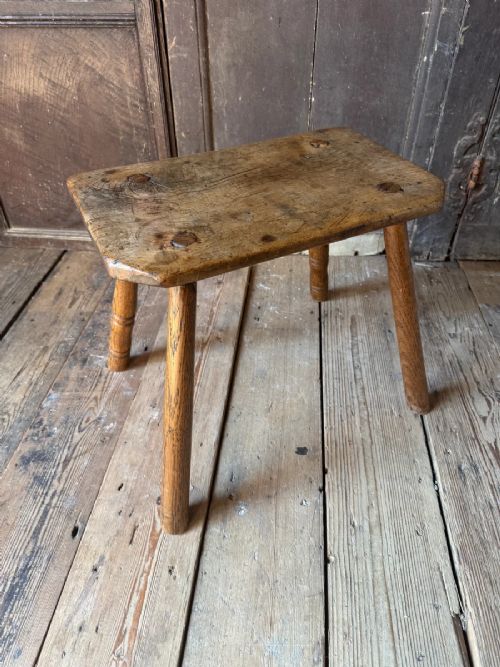
- A low, typically three-legged seat designed for stability on uneven agricultural floors during dairy work. The tripod design ensures the stool remains steady on ground that would cause a four-legged seat to rock.
- Vernacular
- Objects designed by regional craftsmen for local, practical utility rather than following academic architectural styles. These pieces rely on available local timbers and traditional regional building methods.
- Windsor
- A style of seating where individual turned spindles and legs are wedged directly into a solid, thick wooden seat. This construction method provides immense strength through mechanical locking under downward pressure.
- Rush Seat
- Seating surfaces woven from dried marsh rushes wound tightly around a wooden frame. This technique yields a resilient, yielding texture that softens with age and use.
Traditional Rustic Wooden Stools: Frequently Asked Questions
How were old rustic stools used?
These stools served as movable seating around the hearth, stable, workshop or pub, adapting easily to daily tasks where heavy chairs proved impractical.
Lower examples functioned as footstools or children's seats, while taller variants supported workers in taverns, shops and dairies.
How do I date a wooden stool?
Dating relies on observing construction methods, tool marks, wear patterns and the choice of timber within the framework. Pegged joinery, turned legs and native hardwoods like sycamore or oak often point toward nineteenth-century or earlier vernacular traditions.
Period styles such as Georgian or Edwardian influence the turning profiles and overall proportions of the piece.
How do I care for antique wooden stools?
Maintain these pieces by keeping them away from direct heat sources and drastic humidity changes that can cause timber to split or joints to loosen. Occasional treatment with suitable wax helps nourish the wood and preserve its historic patination without stripping character.