

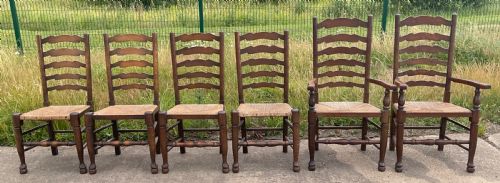


Traditional Rush Seated Carver
A traditional rush seated carver brings honest English country craftsmanship into a room through natural materials and enduring vernacular forms.
Traditional Rush Seated Carver
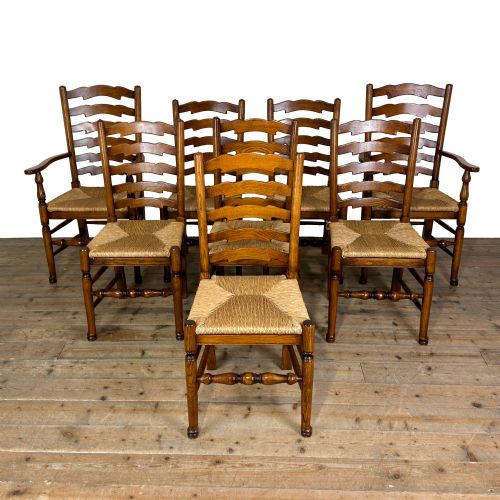
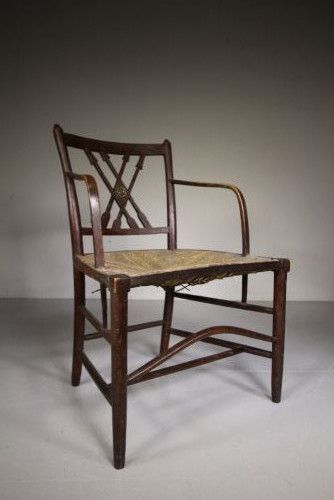
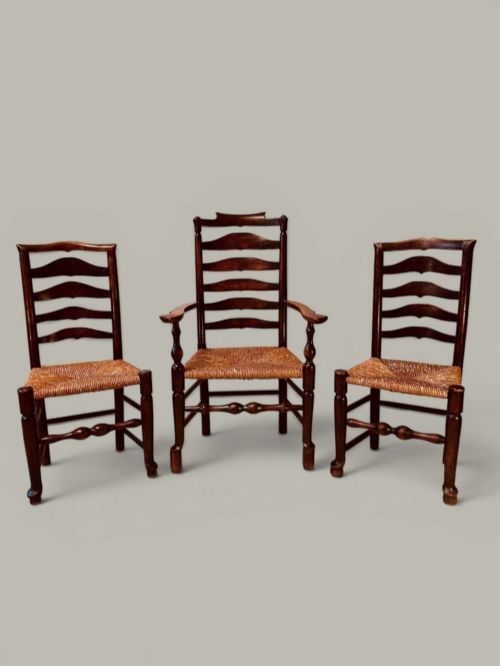
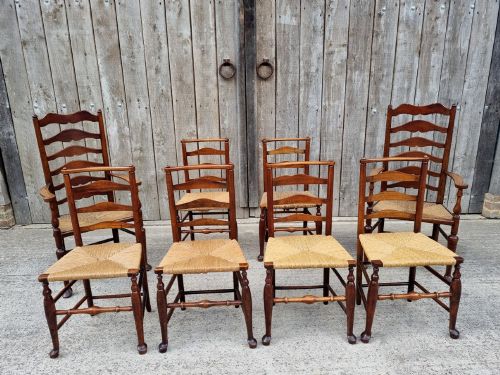
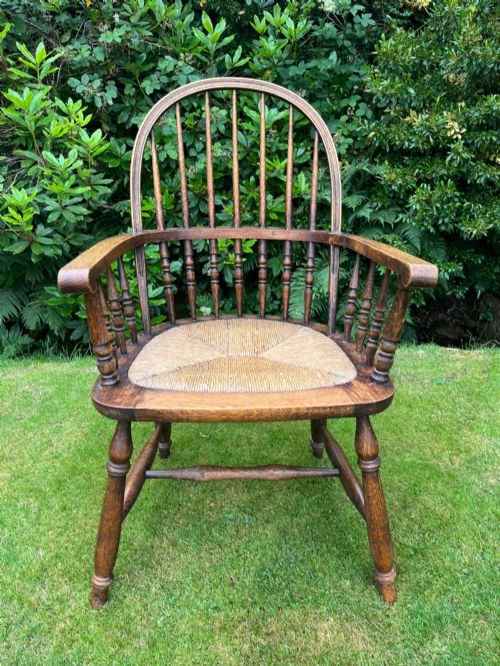
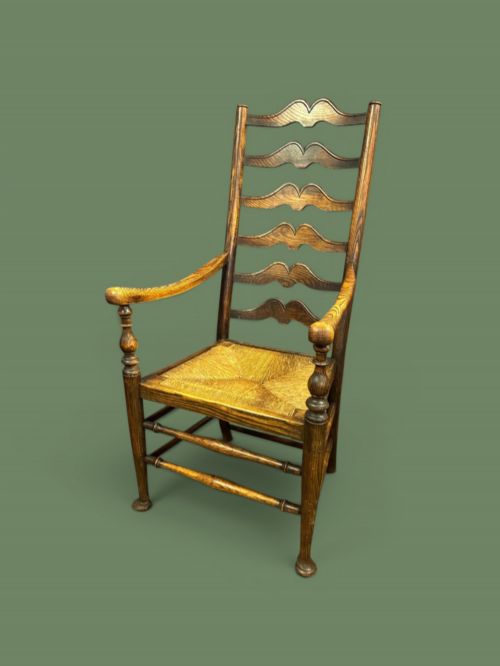
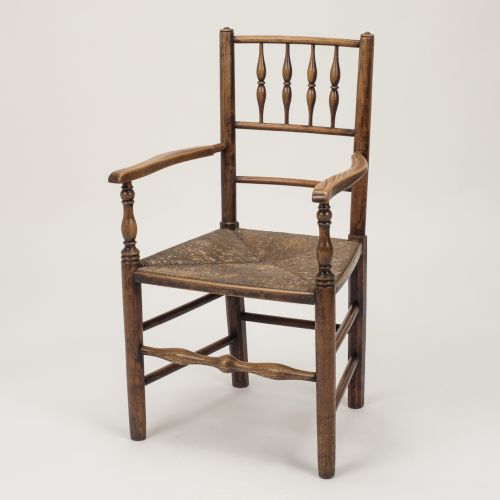
A traditional rush seated carver is a sturdy country armchair built with open arms, supporting daily domestic life through practical design. These seats appear primarily in 19th-century, Georgian, and Edwardian pieces, drawing on English country, Arts and Crafts, and vernacular traditions.
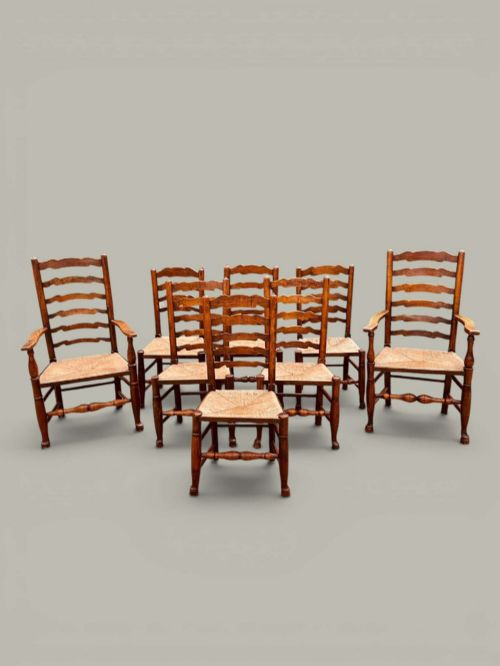
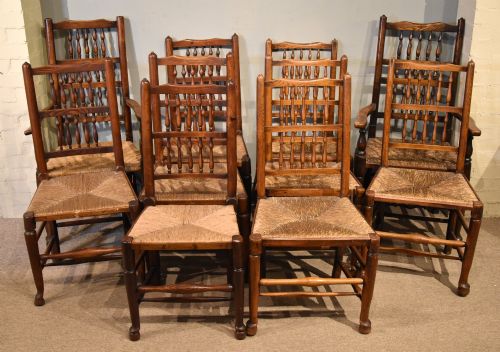
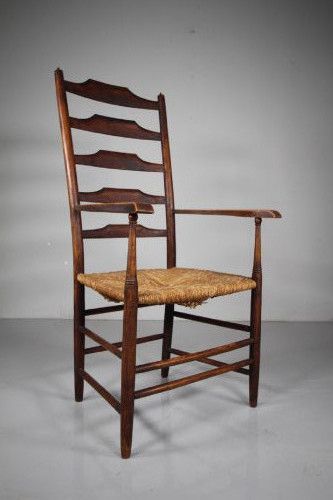
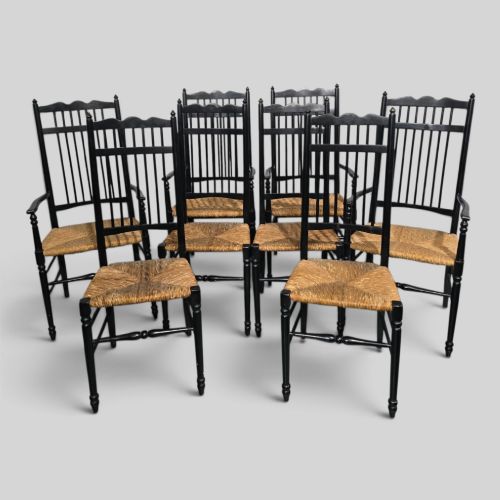
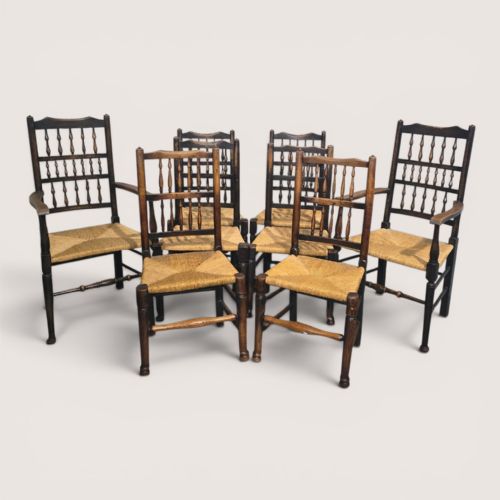
Makers shaped these armchairs for farmhouse kitchens and dining rooms using local timber and woven seating. The listings show forms ranging from ladderbacks and spindlebacks to workshop-attributed studio pieces.
Buyers encounter regional variations such as Lancashire, Cheshire, and Scottish crofter designs alongside simplified country vernacular chairs. Each example reflects the domestic requirements of its period, maintaining functional armrests and woven seats.
Construction and materials
Makers constructed frames from solid native hardwoods including oak, elm, ash, beech, fruitwood, and painted ash. These timbers provided the structural rigidity needed for upright ladderback and spindleback frameworks.
Seats utilise natural rush, carefully woven to form a durable and resilient platform within the wooden frame. Turnings, steam-bent components, and pegged joints held the uprights and rails together without modern metal fasteners.
Traditional Rush Seated Carver Retail Price Guide 2026
Typical asking prices for traditional rush seated carver among the pieces listed under this phrase on Sellingantiques today, from the lower quarter to the upper quarter. They describe what is for sale here now, not the wider market.
Harlequin sets bring together mismatched chairs that share a common vernacular language, proving that old kitchens loved a good mix-up.
Judging quality in vernacular seating
Quality depends on the harmony of timber selection, such as matching elm seats with ash or fruitwood frames. The crispness of ladderback turnings and the tightness of the rush weaving distinguish workshop production from basic utility work.
Structural integrity relies on original joinery and the survival of early surface patination on the timber. Chairs retaining their original painted finishes or untouched natural grain show superior preservation.
Philip Clissett·William Morris·E W Godwin·Dicon Nance·Liberty & Co
The Traditional Rush Seated Carver Glossary
- Carver
- An armchair designed with armrests, historically placed at the head of a dining table or used as a fireside seat.
- Rush
- Natural dried marsh grass woven tightly around a wooden seat frame to create a flexible and supportive base.
- Ladderback
- A chair back featuring multiple horizontal arched slats between two upright rear posts.
- Spindleback
- A chair back composed of numerous thin, turned vertical wooden spindles supporting the upper rail.
- Vernacular
- Everyday utilitarian objects built by regional makers following local traditions rather than formal academic styles.
Traditional Rush Seated Carver: Frequently Asked Questions
What defines a carver chair?
A carver is an armchair designed to match a set of dining chairs, traditionally used at the head of a table.
These armchairs provide extra support with integrated armrests while sharing the vernacular style of the surrounding seating.
How do I care for a rush seat?
Natural rush seats require a dry environment and protection from excessive moisture to prevent the woven marsh grass from becoming brittle.
Cleaning should be limited to gentle dusting with a soft brush rather than wet wiping.
Are ladderback chairs comfortable?
Ladderback chairs offer upright support designed for dining and kitchen tasks rather than lounging.
The horizontal slats are positioned to support the back while the woven rush yields slightly to the body.
How do I distinguish regional chair styles?
Regional variations appear in the shaping of the turnings, the height of the back rails, and the selection of local woods like elm or ash.
Lancashire and Cheshire designs often feature distinctive spindle arrangements and sturdy proportions unique to those areas.