

Traditional Rush Chairs
Traditional rush chairs bring genuine vernacular character to a room through woven seats and honest timber frames.
Traditional Rush Chairs
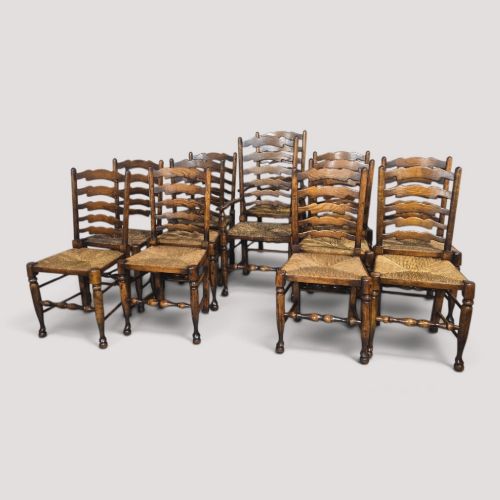
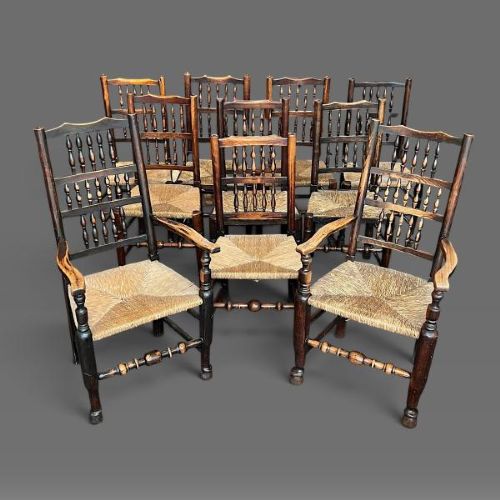
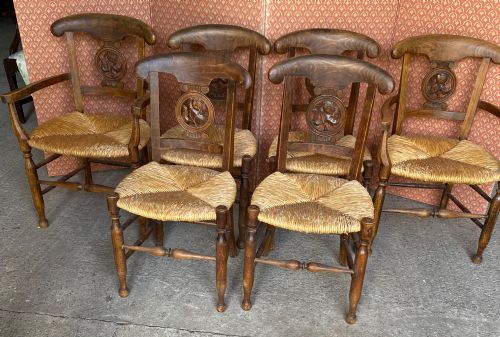
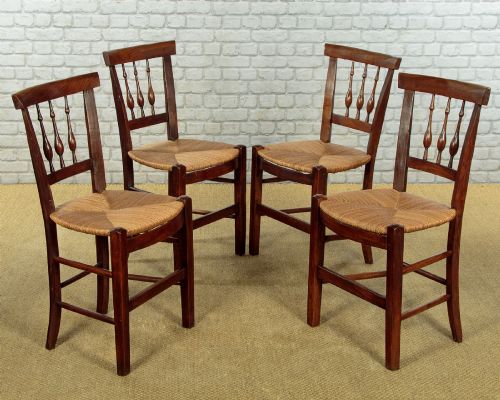
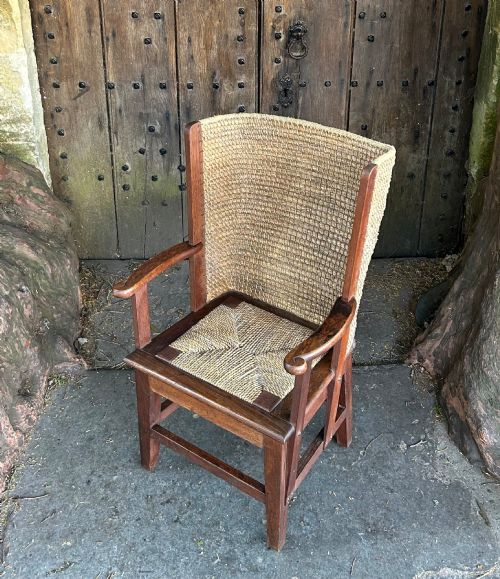
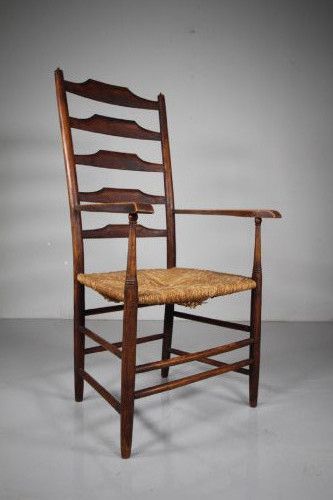
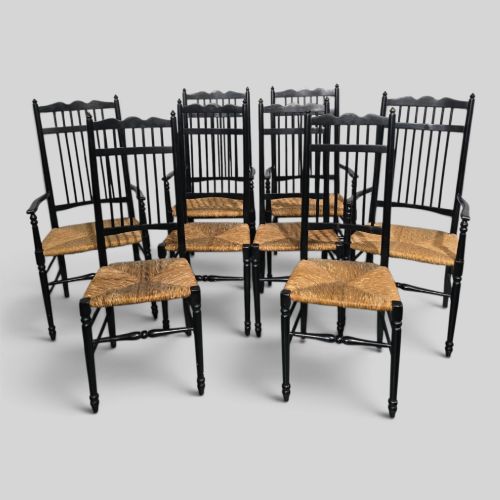
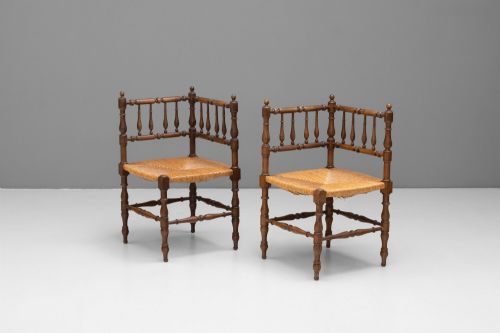
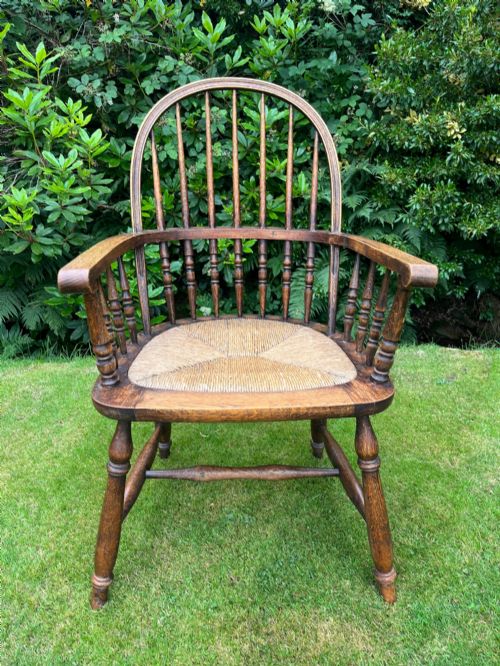
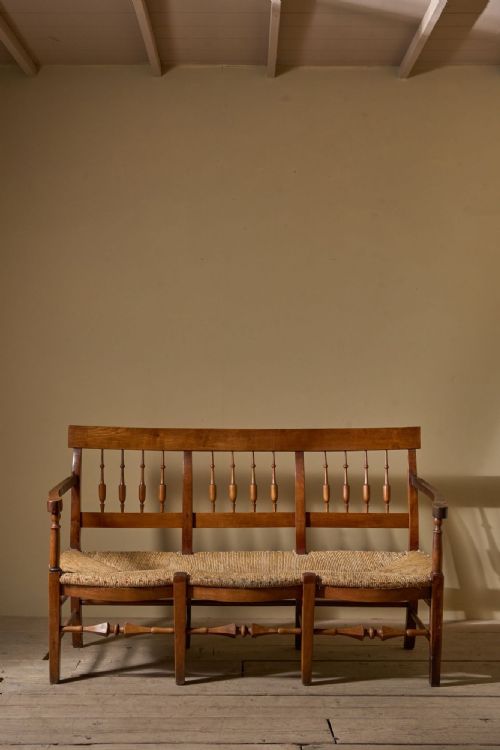
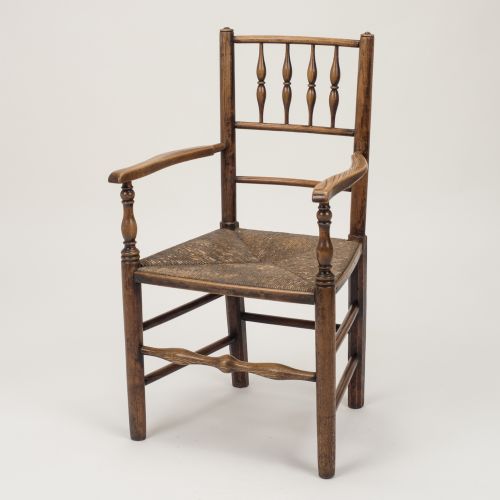
Traditional rush chairs comprise an array of vernacular seating forms, from single ladder backs and spindle backs to armchairs, rockers, high chairs, and benches. These pieces originate from regional English, Scottish, French, and Dutch traditions, spanning the eighteenth, nineteenth, and early twentieth centuries.
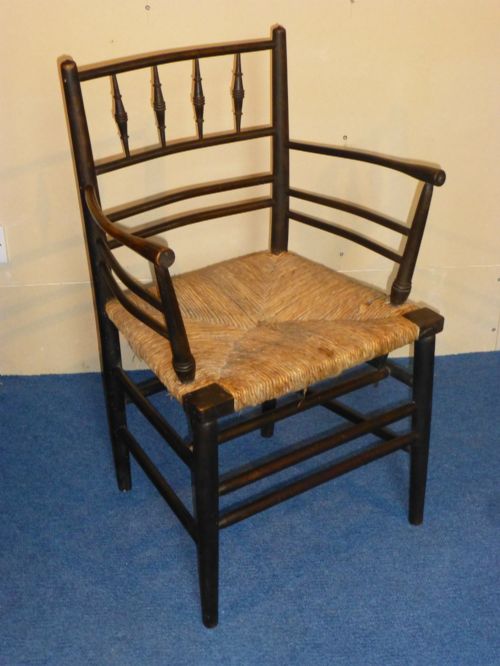
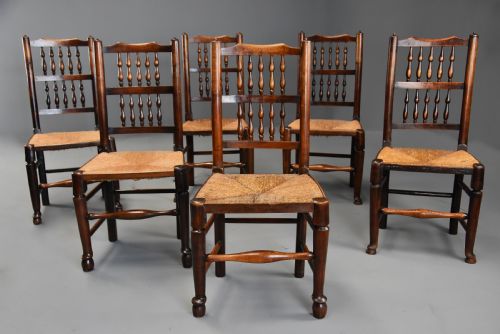
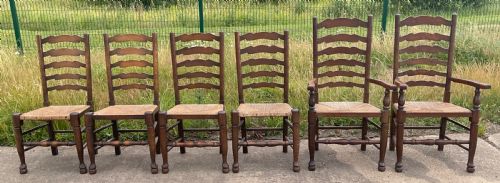
The most common examples encountered in traditional rush chairs are nineteenth-century country dining chairs and farmhouse carvers. These utilitarian seats reflect regional styles such as Lancashire, Cheshire, and the Arts and Crafts movement.
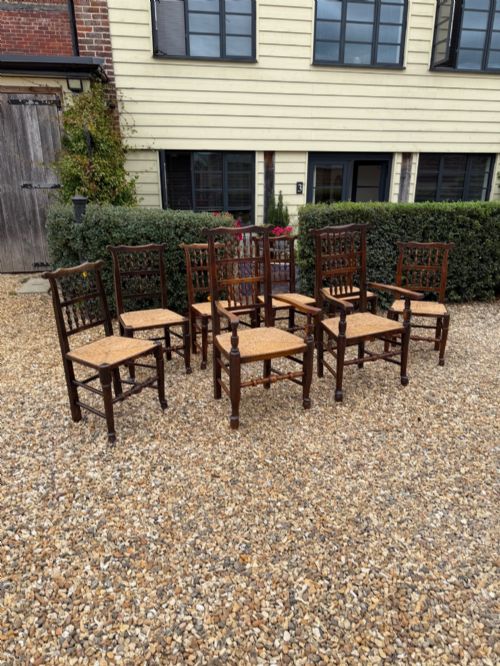
Makers utilised local woods like oak, ash, elm, beech, fruitwood, and painted surfaces to construct frames that supported woven rush seating. Sets range from small pairs to large dining gatherings of ten or twelve pieces.
How they were made
Traditional rush chairs combine locally felled timbers for the structural frames with dried marsh rush for the woven seats. Framemakers turned ash, beech, oak, elm, and fruitwood on lathes or shaped them by hand to form spindles, ladder backs, and sturdy legs.
The woven seats utilise long stems of marsh rush tightly twisted and hand-plaited around a wooden frame. This technique creates a resilient, supportive surface that yields slightly to the sitter while maintaining structural tension over decades of use.
Traditional Rush Chairs Retail Price Guide 2026
Typical asking prices for traditional rush chairs among the pieces listed under this phrase on Sellingantiques today, from the lower quarter to the upper quarter. They describe what is for sale here now, not the wider market.
What varies in quality
The distinction in traditional rush chairs rests on the integrity of the original timber frame and the tightness of the woven seat. Master turners and regional makers achieved balanced proportions and sturdy joints that endure centuries without excessive timber replacement.
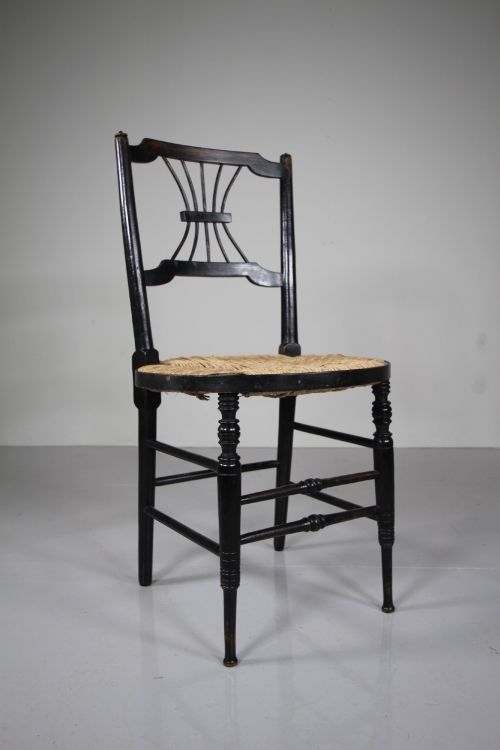
Surface preservation significantly influences the standing of a piece, whether through an untouched historic patina, original paint, or ebonised finishes. Examples associated with specific design movements or known workshops exhibit refined detailing within plain country forms.
William Morris·Philip Webb·Philip Clissett·E W Godwin
The Traditional Rush Chairs Glossary
- Rush
- A wetland plant material dried and twisted into cordage to weave traditional chair seats. It provides a durable and slightly elastic surface.
- Ladder back
- A chair back featuring horizontal wooden slats between the upright posts. This regional form appears frequently in English country seating.
- Spindle back
- A chair design incorporating numerous slender vertical turned wooden rods in the backrest. These members offer lightweight strength.
- Vernacular
- Objects made by regional craftspeople following local traditions rather than academic design rules. These pieces serve everyday domestic functions.
- Patina
- The surface texture and coloration developed by wood through age, handling, and wear. It indicates genuine historic use.
Traditional Rush Chairs: Frequently Asked Questions
How do I care for a rush seat?
Keep traditional rush chairs away from damp environments and direct heat sources to prevent the natural fibres from becoming brittle.
Dust the woven seat gently with a soft brush and avoid applying liquid cleaning products directly to the rush.
Are these chairs comfortable for daily use?
The woven rush conforms slightly to the body, offering a surprisingly supportive and flexible seat for dining or relaxing.
Many styles feature shaped ladder backs or armrests designed to provide ergonomic support during prolonged sitting.
How can I tell a regional style?
Regional attribution relies on specific framing details, turning shapes, and local timber choices such as Cheshire ash or Lancashire elm.
Country makers adapted designs to suit local materials and domestic needs, creating distinct regional variations.
Can a damaged rush seat be repaired?
Skilled craftspeople can re-weave damaged or worn rush seats using traditional marsh rush materials and techniques.
Restoring the seat preserves the functional life of the chair while maintaining its historical integrity.