


Traditional Rural Scene Picture
A traditional rural scene picture captures country life, featuring cottages, farmyards and agricultural landscapes through oils and watercolours.
Traditional Rural Scene Picture
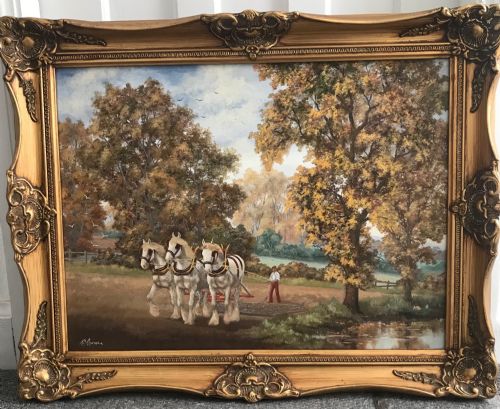
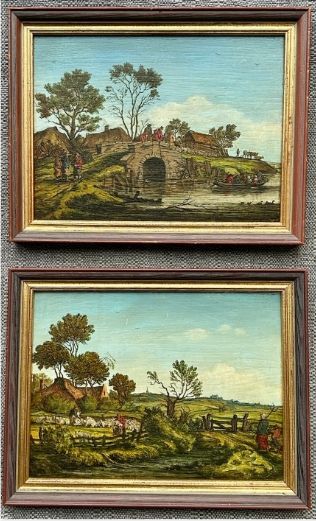
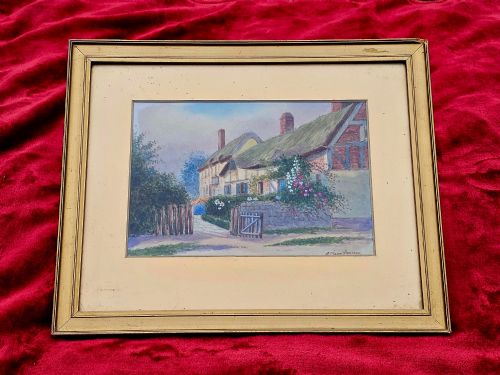
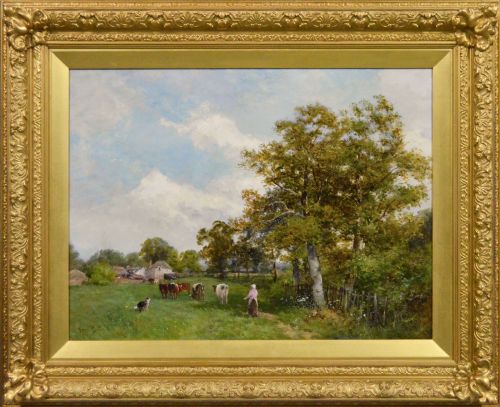
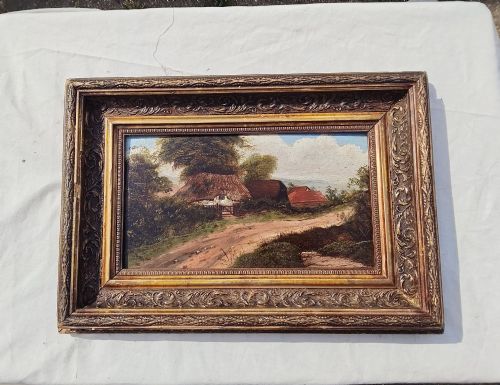
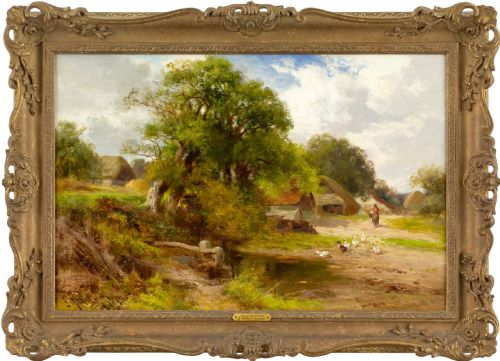
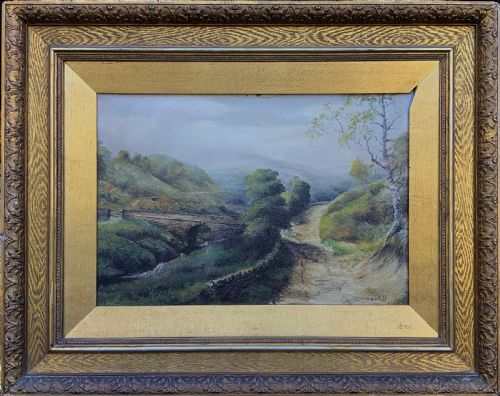
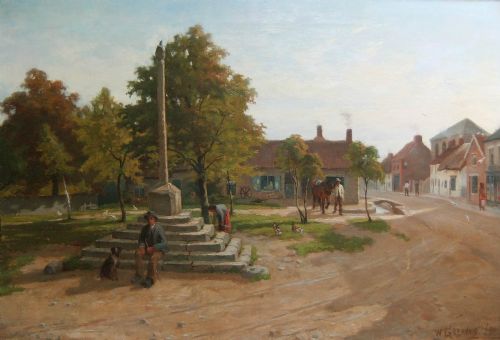
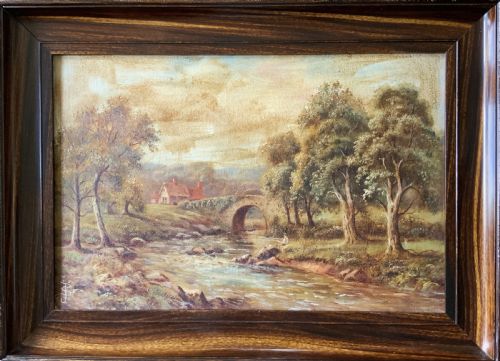
A traditional rural scene picture portrays the British and European countryside, focusing on cottages, farm labour, livestock and pastoral landscapes. These works record agrarian life through the nineteenth and twentieth centuries, spanning Victorian, Edwardian and mid-century periods.
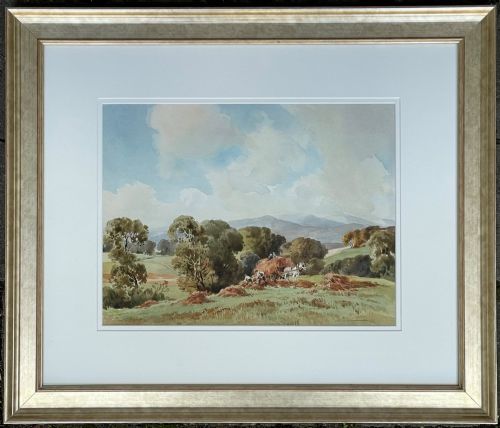
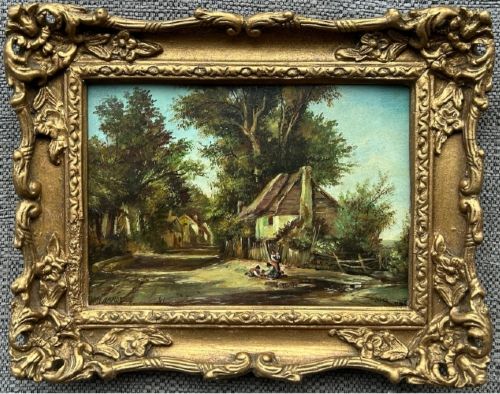
Most pieces encountered on this page take the form of framed oil paintings or watercolours. Subjects range from horse ploughing and sheep grazing to thatched cottages in Yorkshire, Sussex, Wales and Scotland.
Makers and schools represented include named artists from the British School, Flemish tradition and Norwich School alongside signed works. The common thread is a focus on traditional country life executed in oil on canvas, wood panels, or watercolour on paper.
Judging Quality
Quality rests in the handling of light, atmospheric depth and the naturalistic rendering of figures, animals and foliage. Stronger examples display confident brushwork and accurate perspective, capturing the movement of water, clouds or livestock.
The integration of the original frame, often in gilt wood, adds to the integrity of a piece. Condition of the canvas or paper panel, alongside clear signatures or traceable provenance to known artists, separates standard decorative works from fine art.
Geese, ducks, horses and cattle appear in these fields more often than people.
W Klombeck·Percy Lancaster·William Howard Hardy·David Bates·John Horace Hooper·William Greaves·Sydney Yates Johnson·Thomas Sidney Cooper·Henry John Yeend King·Henry John Boddington·M. C. Hider·James Hardy Junior·Willem Anton Alexander Knip·John Atkinson·R. Palnay·Robert Winchester Fraser·J.C. Grey·James William Booth·William Langley·Arthur Charles Dodd·Gudrun Sibbons·Ernest Cox·John Percy Cooke·Herbert Royle·Arthur Walker Redgate
The Traditional Rural Scene Picture Glossary
- Oil on Canvas
- Pigment bound in drying oil applied to stretched fabric. This medium allows for rich texture and deep colour blending.
- Watercolour Painting
- Pigments suspended in a water-based solution applied to paper. It creates luminous, translucent washes of colour.
- Wood Panel
- A rigid wooden support used instead of canvas. Artists during the nineteenth century frequently painted rural scenes directly onto prepared wooden boards.
- Gilt Wood
- Timber treated with gold leaf or metallic gilt finish. It forms the decorative border of traditional picture frames.
- British School
- A loose categorisation for artists working within Britain. It encompasses regional landscape traditions and rural realism.
Traditional Rural Scene Picture: Frequently Asked Questions
What periods do these paintings cover?
The works span from the early nineteenth century through the Victorian and Edwardian eras up to the mid-twentieth century. Examples include dated pieces from the 1880s, 1890s, 1900s, 1910s and 1960s.
Earlier pieces often reflect the Norwich School or Flemish traditions, while later works showcase mid-century British landscape painting.
Are these works signed by the artists?
Many pieces feature artist signatures or inscriptions, while others originate from recognised regional schools. Signed works by painters such as David Bates or Thomas Sidney Cooper offer clear attribution.
Unsigned works are typically attributed to period schools such as the British School or English School based on style and technique.
What subjects appear in these scenes?
Subjects focus on rural life, including harvest landscapes, hay cutting, ploughing horses, sheep grazing and cattle portraits. Village views such as Widecombe or Selworthy also feature prominently.
Coastal and river scenes, including depictions of cottages by streams and riverbanks, form another major category of rural imagery.
How should I hang an oil painting?
Oil paintings on canvas or wood panels benefit from stable indoor environments away from direct sunlight and damp conditions. Ensure the wall fixings match the weight of the gilt wood frame.
Watercolour paintings require protective glass and should be kept out of direct sunlight to prevent fading of the paper and pigments.