


Traditional Rural Painting
Traditional rural painting captures 19th-century and early 20th-century countryside life through pastoral scenes of cottages, farmyards, and livestock.
Traditional Rural Painting
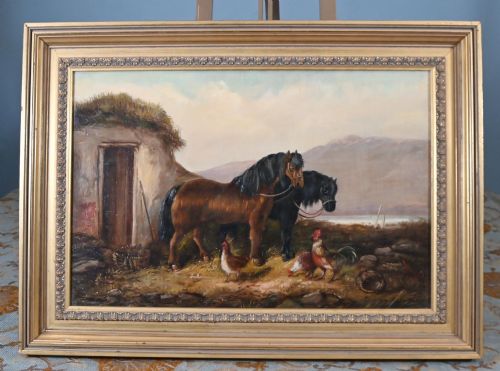
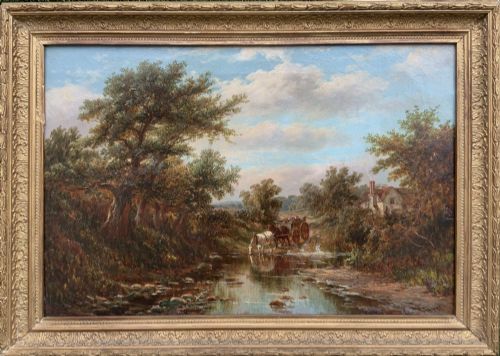
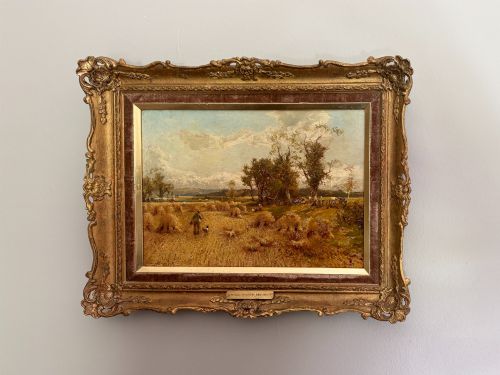
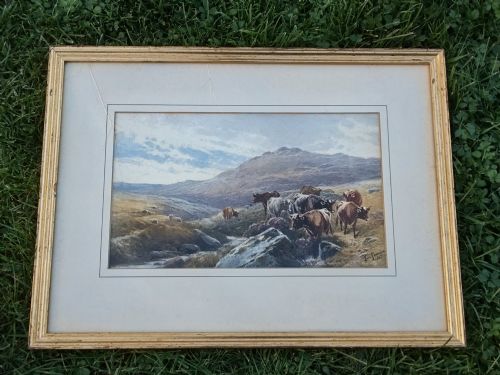
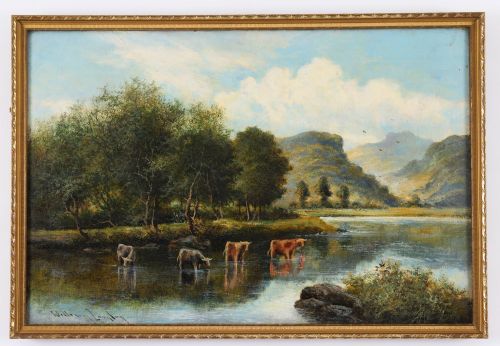
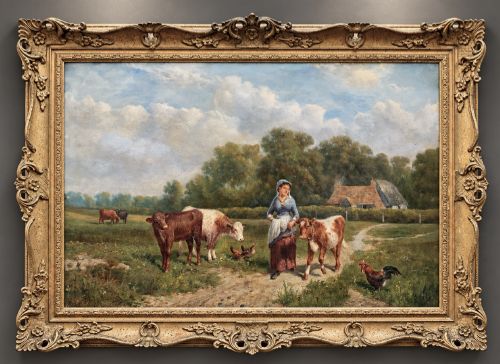
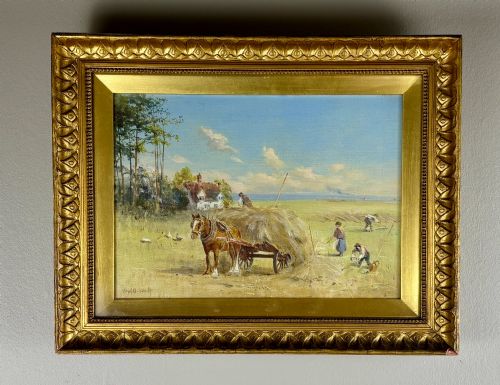
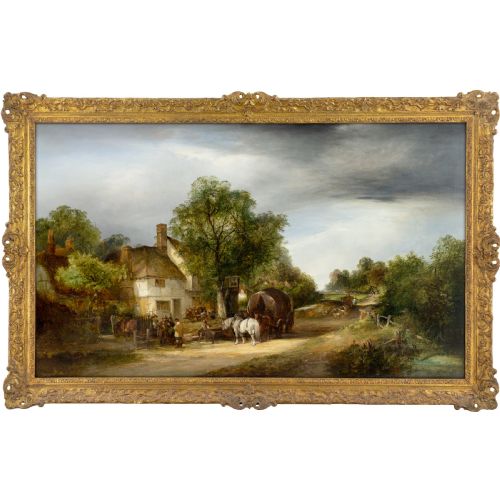
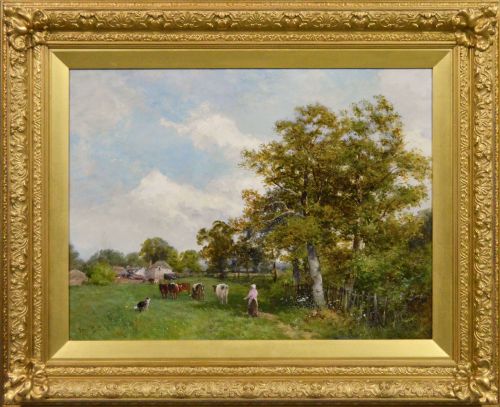
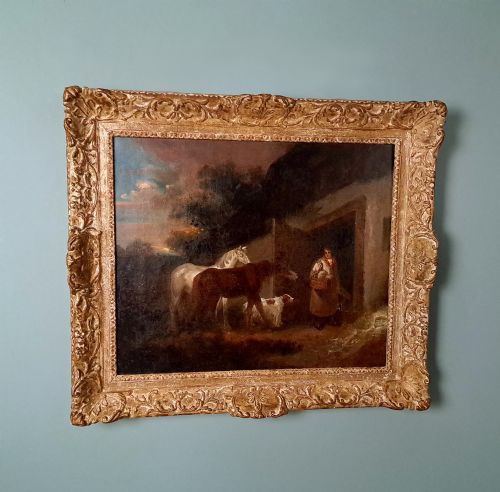
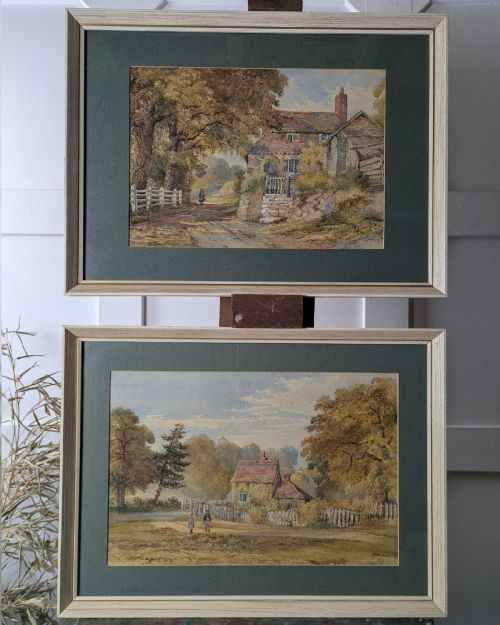
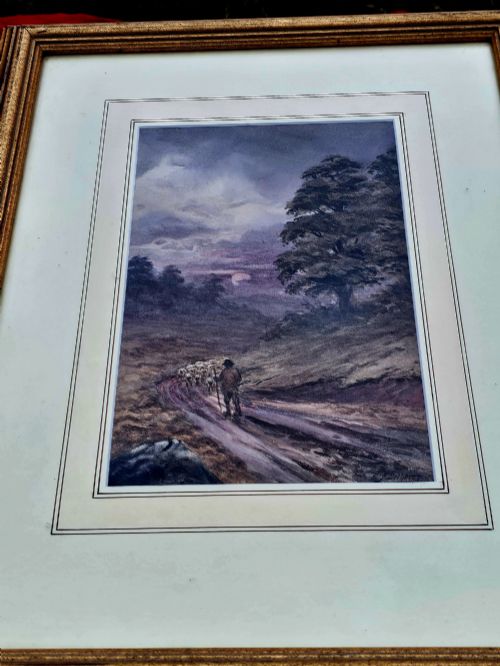
Traditional rural painting centres on depictions of the British countryside, featuring farmyards, harvest fields, livestock, and cottages. These works capture pastoral life during the Victorian and Edwardian periods, often showing figures herding sheep or gathering hay.
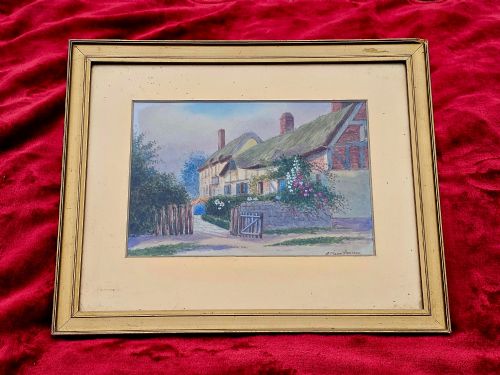
The pieces on this page span the 19th century through to the early decades of the 20th century. Works range from detailed Victorian realism and pastoral scenes to British Impressionism and watercolours by regional artists.
Materials and technique
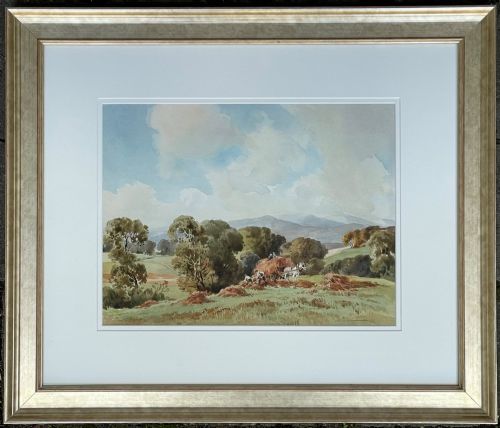
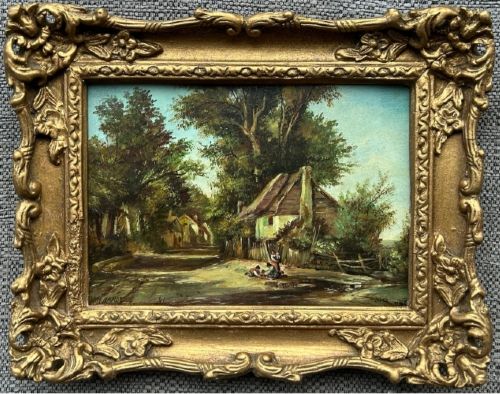
Artists utilised oil paint and watercolour as primary mediums, working on surfaces that include canvas, wood panels, wooden boards, paper, and card. Many pieces retain their original gilt wood frames, sometimes protected beneath glass.
Techniques vary from fluid brushwork in watercolours to textured impasto in oil paintings on canvas or panel. Painters employed these methods to render the natural light and atmospheric conditions of rural landscapes.
Traditional Rural Painting Retail Price Guide 2026
Typical asking prices for traditional rural painting among the pieces listed under this phrase on Sellingantiques today, from the lower quarter to the upper quarter. They describe what is for sale here now, not the wider market.
Several cows and sheep immortalised in these pastures outlived the artists who painted them by decades.
What separates the work
Quality rests in the handling of light, the accuracy of animal and human figures, and the depth of the composition. Skilled artists achieve a convincing sense of atmosphere and movement within the landscape.
The integration of the subject matter into its setting distinguishes finer works from routine topographical views. The quality of the original framing also contributes to the overall integrity of the piece.
William Langley·Thomas Rowden·Samuel Joseph Clark·Hugh Barry-Scott·William Manners·Thomas Thomas·Edward Charles Williams·William Shayer·George Graham·W Klombeck·Percy Lancaster·William Howard Hardy·A Marie Parsons·William Joseph Shayer Senior·EJ Letheren·David Bates·Robert John Hammond·Walter Heath Williams·John Horace Hooper·George Oyston·William Greaves·Miles Birkett Foster·George Morland·Sydney Yates Johnson·Owen Bowen
The Traditional Rural Painting Glossary
- Oil on canvas
- A painting technique where oil paint is applied to a stretched woven fabric support. This medium allowed artists to build rich layers of colour and texture.
- Watercolour
- A paint consisting of pigment suspended in a water-soluble vehicle, typically worked on paper. It creates luminous, translucent washes of colour.
- Wood panel
- A rigid wooden support used by painters instead of canvas. Artists often utilised panels for smaller cabinet-sized landscapes.
- Pastoral landscape
- An artistic genre depicting rural life and agricultural scenes in an idealized or naturalistic manner. These compositions frequently incorporate farm animals and rustic architecture.
- Gilt wood frame
- A wooden picture frame coated with a thin layer of gold leaf or metallic gilt paint. These frames defined the presentation of 19th-century fine art.
Traditional Rural Painting: Frequently Asked Questions
What periods do these paintings date from?
The listings span the Victorian era, the Edwardian period, and the early 20th century up to the 1930s.
Most works originate from the latter half of the 19th century, reflecting traditional rural subjects.
Are these paintings original works?
The selection consists of original oil paintings, watercolours, and works on panel or card.
Artists painted these scenes directly from nature or in studio settings during the 19th and early 20th centuries.
How do I care for antique watercolours?
Keep watercolours away from direct sunlight to prevent the pigments and paper from fading over time.
Display them in rooms with stable humidity levels to protect both the paper support and the original frame.
What subjects are most common?
Common subjects include harvest scenes, cattle and sheep being driven to market, and rustic cottages.
Artists frequently recorded agricultural life, coastal views, and river landscapes across British counties.