


Traditional Reclining Chair
A traditional reclining chair offers deep Victorian comfort, combining adjustable mechanics with sturdy timber frames like mahogany or oak.
Traditional Reclining Chair
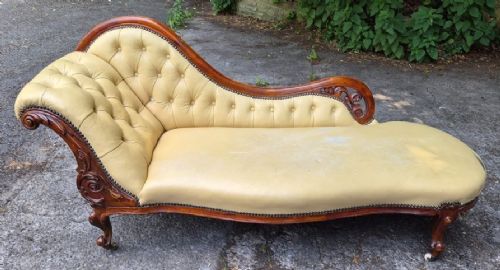
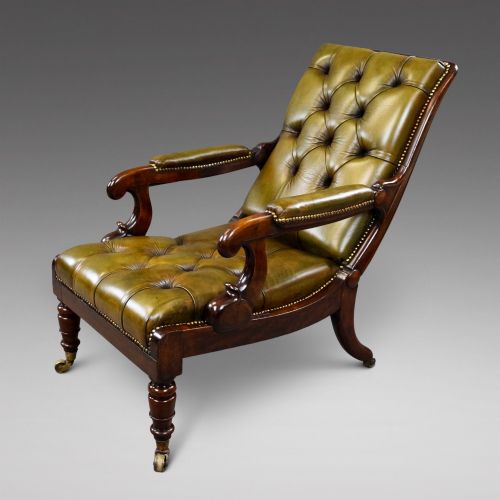
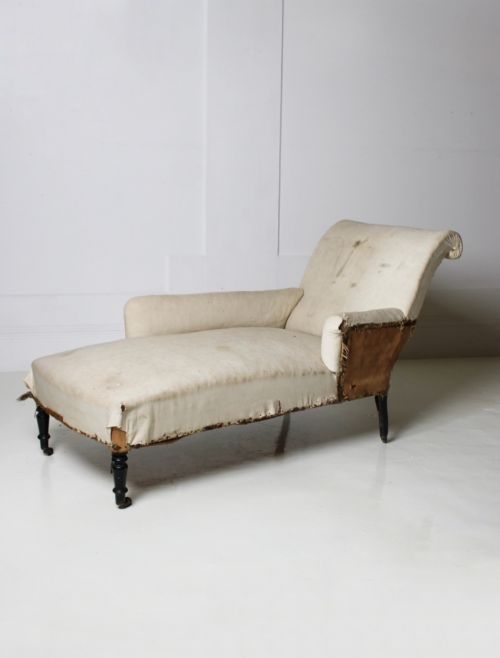
A traditional reclining chair provides adjustable seating designed for relaxation, spanning armchairs, daybeds, and chaise longues. When buyers search for a traditional reclining chair, they encounter nineteenth-century pieces ranging from heavy library armchairs to upholstered oak models.
The selections on this page feature forms from the Victorian era alongside Arts and Crafts and William IV examples. Pieces include carved mahogany frames, button leather upholstery, and oak structures intended for domestic repose.
How they were made
Frames are constructed from sturdy timbers including mahogany, oak, and ebonised wood, often enhanced with carved details or turned bobbin legs. Brass fittings provide the adjustable mechanics required for the reclining movement.
Listings span the nineteenth century and early twentieth century, featuring materials such as brass, mahogany, oak, leather, and calico across armchairs and daybeds.
What varies in quality
Quality rests in the precision of the adjustable mechanism and the integrity of the timber framing. Finer examples display meticulous carving on mahogany or oak alongside robust brass hardware.
The standard of upholstery and the retention of maker attribution elevate specific pieces. Attribution to respected workshops distinguishes certain armchairs and daybeds from standard production.
Howard and Sons·Heals of London
The Traditional Reclining Chair Glossary
- Chaise Longue
- An elongated upholstered chair designed for reclining, combining a chair and a daybed. These pieces frequently appear in nineteenth-century drawing rooms.
- Button Leather
- Upholstery technique where leather is pulled deep and secured with buttons to create a diamond pattern. This finish appears on nineteenth-century library chairs.
- Bobbin Leg
- Furniture leg turned on a lathe to resemble a series of wooden bobbins or spools. This decorative turning appears on nineteenth-century day beds.
- Ebonised
- Wood finished to resemble ebony through a staining and polishing process. It creates a dark, formal appearance on library armchairs.
Traditional Reclining Chair: Frequently Asked Questions
How do these chairs recline?
Adjustable reclining chairs utilise mechanical brass fittings embedded within the timber frame. These mechanisms allow the backrest or seat angle to shift.
Users manually adjust the position to suit reading or resting before securing the mechanism in place.
What is a daybed?
A daybed combines the functions of a sofa and a bed, suitable for daytime reclining. Nineteenth-century examples often feature upholstered surfaces supported by mahogany or oak frames.
Some variations incorporate chaise lounge designs or concealed storage compartments beneath the main cushion.
Where were these chairs used?
These pieces typically resided in nineteenth-century libraries, drawing rooms, and large country houses. They provided comfortable seating for extended reading or afternoon rest.
Library armchairs and adjustable oak chairs suited formal studies, while chaise longues occupied reception rooms.
How do I identify a Victorian piece?
Victorian seating is identified through timber choices such as mahogany and oak, alongside characteristic upholstery methods like button leather. Stylistic markers include carved frames and turned wooden legs.
Construction details and period brass hardware help distinguish these mid-nineteenth-century items from later reproductions.