

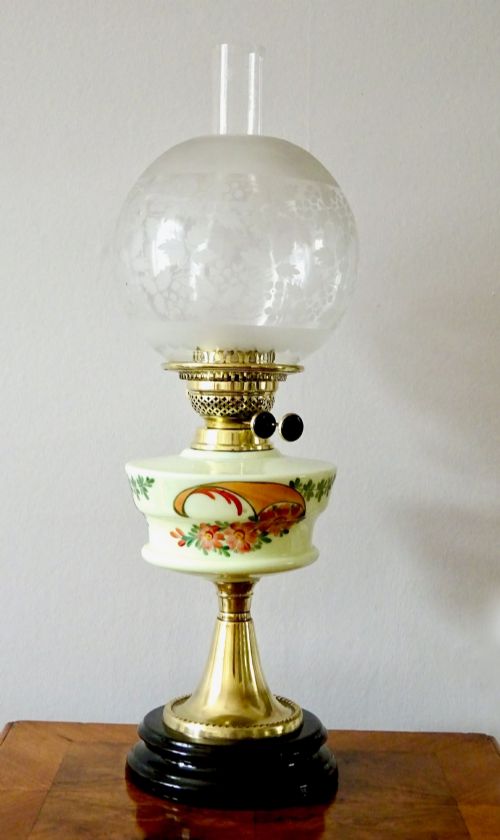


Traditional Paraffin Lamp
These traditional paraffin lamp designs bring warm light and period character into a room, combining brass columns with glass fonts and decorative shades.
Traditional Paraffin Lamp
A traditional paraffin lamp is a domestic lighting fixture designed to burn fuel through a wick, appearing here mostly in Victorian and Edwardian forms from the nineteenth and early twentieth centuries. These pieces typically combine a metal base with a glass reservoir and often retain their original glass shades.
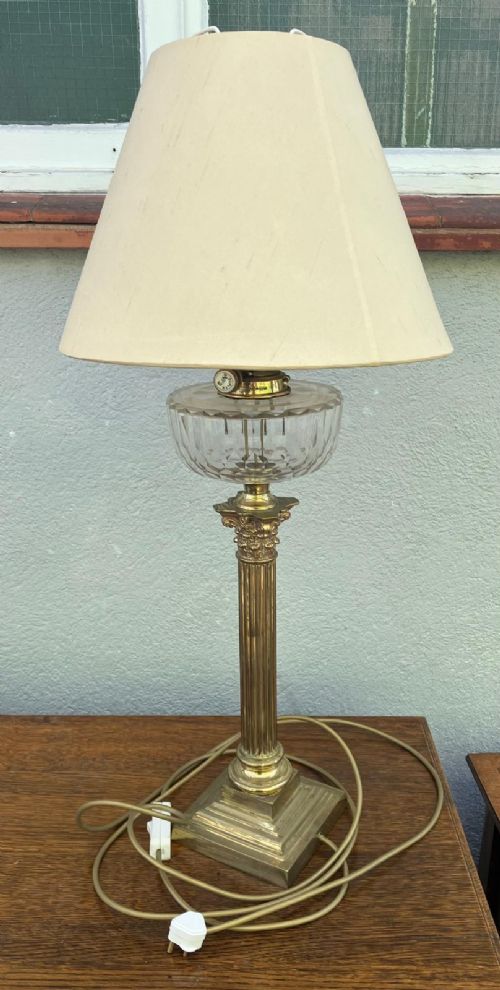
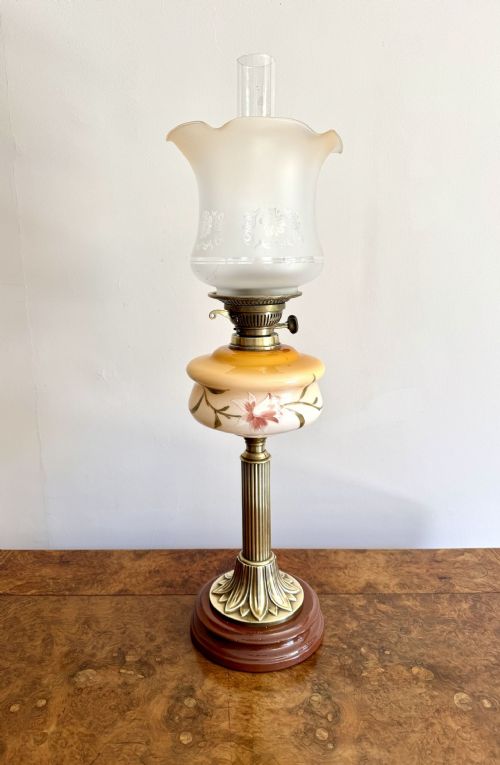
The versions most common on this page are table lamps and standard floor lamps featuring brass columns, frequently paired with opaline, cranberry, or etched glass tulip shades. Examples range from simple cottage table lamps to heavy neoclassical revival columns with Corinthian capitals.
Many of these oil lamps date from the eighteen fifties through to nineteen thirty, encompassing standard British and French domestic lighting. Some retain their original oil mechanisms, while others arrive converted to electric use for modern placement.
Materials and construction
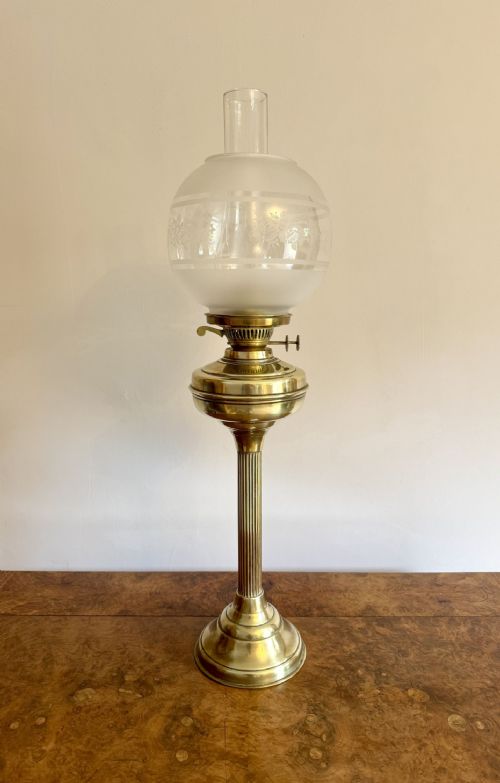
Brass forms the structural backbone for the vast majority of these lamps, shaped into fluted columns, stepped square bases, and repousse work. Copper and ebonised wood also appear in the metalwork and mounts.
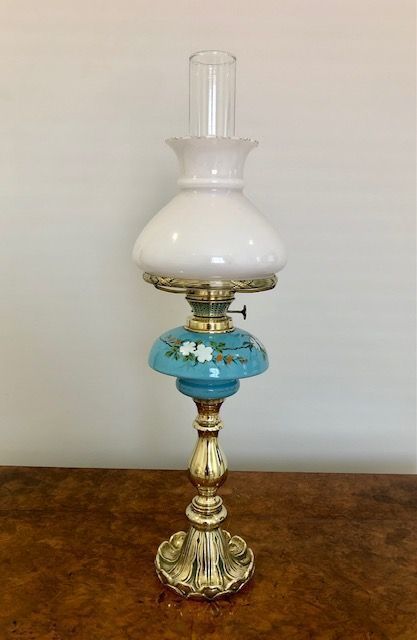
Glass provides the visual contrast through font reservoirs and shades, utilising opaline glass, cut glass, and deep cranberry glass. Etched glass tulip shades sit atop the burners to diffuse the light.
Fabrics occasionally contribute to the shades or accessories, though glass remains the dominant medium for the upper sections of the lamps.
Materials recur in combinations of solid brass, cut glass, opaline glass, and cranberry glass across both table and floor standing formats.
What defines quality
The distinction between a standard lamp and a superior example rests on the crispness of the casting in the brass column and the presence of architectural details like Corinthian capitals. Heavy gauge brass and refined repousse work mark out the better examples.
The choice of font and shade material elevates a piece, particularly where coloured glass such as cranberry or deeply cut glass is employed rather than plain white glass. Etched patterns on glass shades add further decorative depth.
The integrity of the structural components, from the stepped base to the collar and burner assembly, dictates the overall presence of the lamp.
Young's Special·Messengers·Harrods
The Traditional Paraffin Lamp Glossary
- Corinthian column
- A classical architectural column style featuring ornate acanthus leaf motifs at the top capital. This form is frequently used on the brass shafts of larger table lamps.
- Duplex burner
- A double-wick burner mechanism popular in the Victorian era to produce a brighter flame. It allowed for greater illumination than single-wick designs.
- Opaline glass
- An opaque, milky-white glass that diffuses light softly. It is commonly found in the shades paired with brass oil lamps.
- Cranberry glass
- A rich red-pink glass coloured with gold chloride during production. This material was favored for decorative font reservoirs.
- Repousse
- A metalworking technique where the metal is hammered from the reverse side to form a raised design. It appears on French and British brass bases.
Traditional Paraffin Lamp: Frequently Asked Questions
Can I still burn oil in these lamps?
Many traditional paraffin lamp examples retain their original internal mechanisms and burners, allowing them to function as originally intended.
Buyers should check individual listings to confirm whether the burner assembly is intact or if the piece has been converted to electricity.
How do I date a brass oil lamp?
Dating relies on stylistic clues such as Victorian aesthetic movement patterns, Edwardian proportions, or neoclassical revival column designs. Materials like cranberry glass and opaline shades also point toward specific decades in the nineteenth and early twentieth centuries.
Maker marks stamped onto the brass burners or collars often provide a more precise point of origin.
What is a duplex oil lamp?
A duplex lamp uses a twin-wick burner system designed to generate significantly more light than standard single-wick domestic lamps. This innovation became widespread during the Victorian period.
The larger twin wick arrangement typically requires a wider chimney and shade gallery.