


Traditional Panelled Coffer
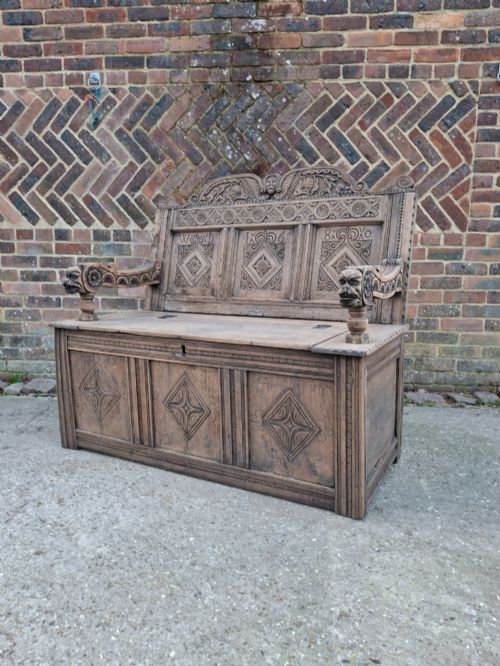
A traditional panelled coffer offers solid timber construction and honest storage, serving centuries of homes as a bench, box or blanket chest.
Traditional Panelled Coffer
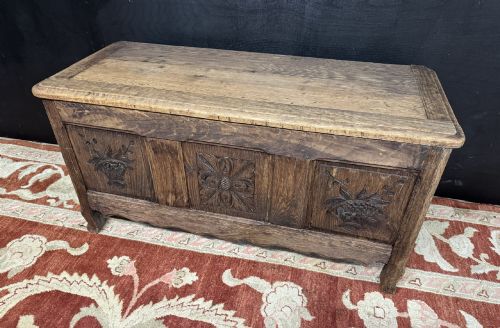
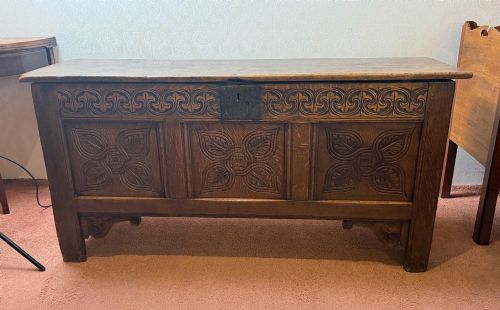
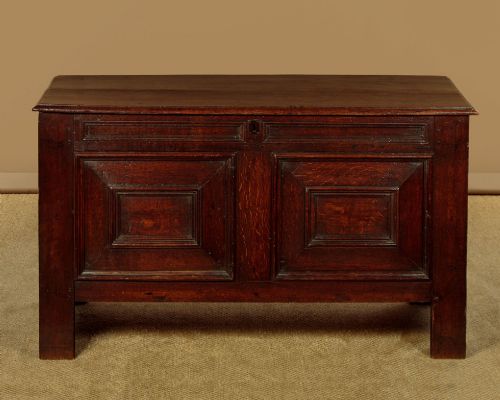
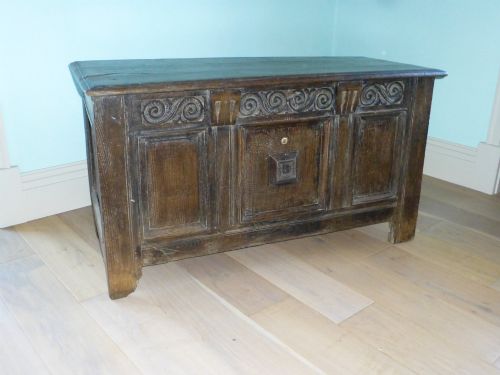
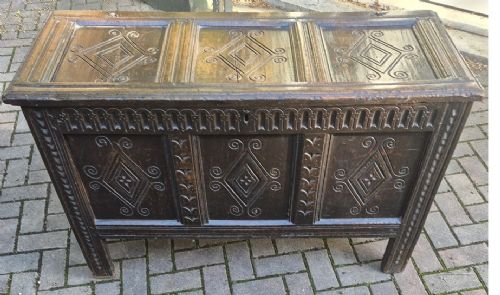
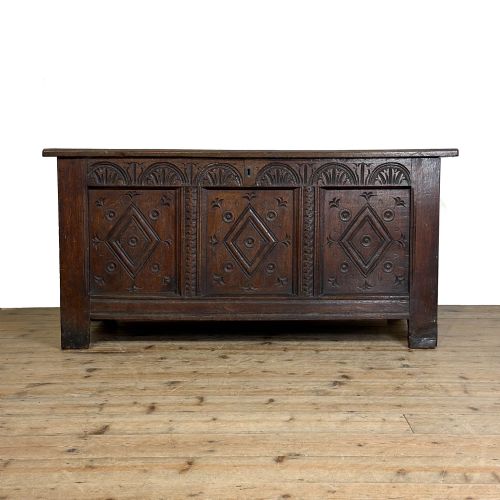
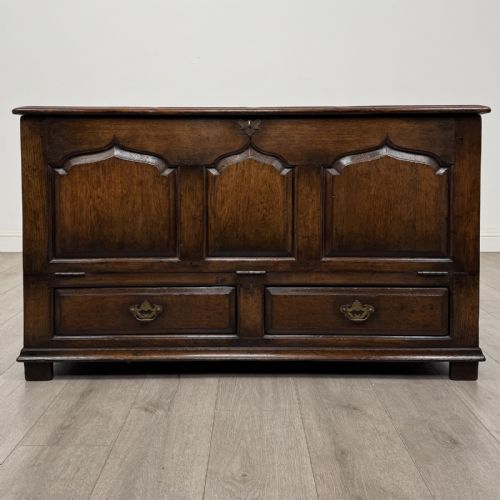
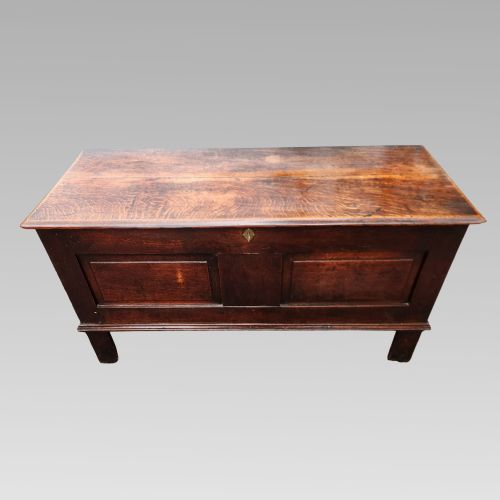
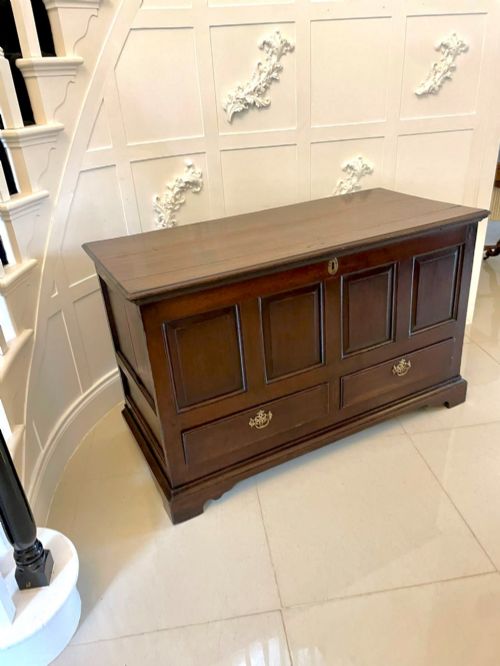
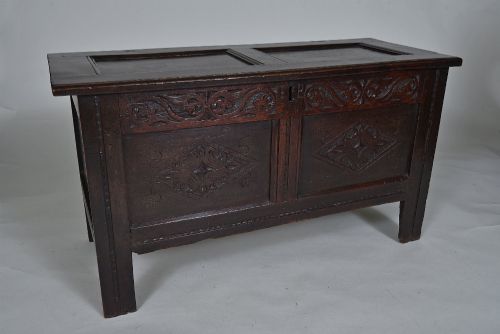
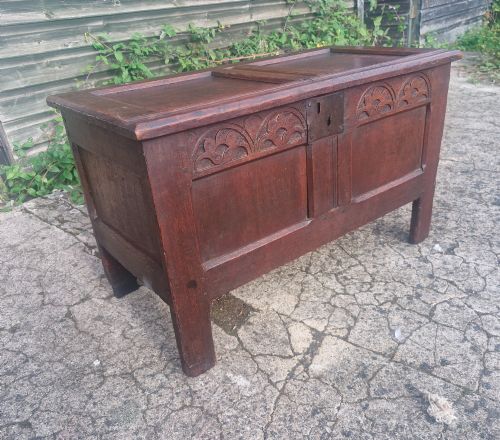
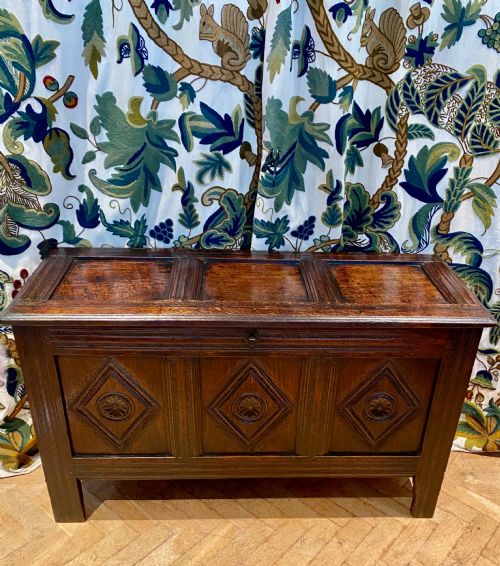
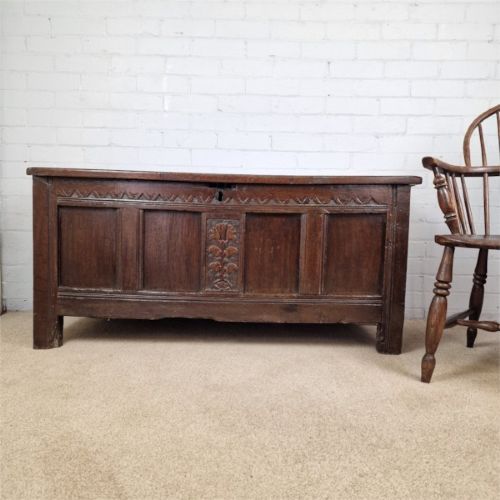
A traditional panelled coffer is a heavy wooden chest constructed primarily for domestic storage, frequently appearing in forms like blanket boxes and mule chests. The pieces gathered here span several centuries, including seventeenth, eighteenth and nineteenth-century examples alongside later revival items from the early twentieth century.
The dominant material visible across these listings is oak, often specified as English oak, solid oak or dark oak, supplemented by occasional instances of pine and ebonised wood. Styles range from strict seventeenth-century joinery and Jacobean ornamentation to Georgian proportions and French provincial expressions.
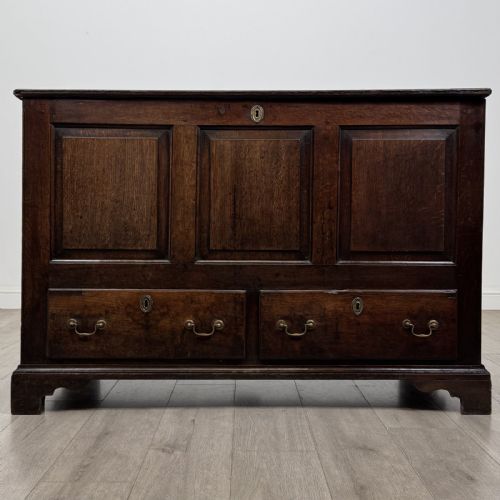
Buyers will encounter various formats, from straightforward lidded storage trunks to mule chests equipped with lower drawers, and occasionally modified pieces incorporating high backs or drop fronts. These items originate from domestic English and Welsh workshops as well as continental sources, reflecting regional vernacular woodworking traditions.
Distinguishing quality in timber and joinery
Quality rests in the integrity of the timber selection and the precision of the joinery rather than surface decoration alone. Pieces fashioned from solid English oak with tight, straight grain and original pegged joints represent the higher end of the range.
The depth and crispness of hand-carved panels, alongside the retention of original iron or brass hardware, separate ambitious vernacular workshop production from later mass-produced revival items.
Traditional Panelled Coffer Retail Price Guide 2026
Typical asking prices for traditional panelled coffer among the pieces listed under this phrase on Sellingantiques today, from the lower quarter to the upper quarter. They describe what is for sale here now, not the wider market.
Several chests carry the ghosts of ancient locks, reminding us that someone once guarded their Sunday best with a very small key.
The Traditional Panelled Coffer Glossary
- Panelled coffer
- A wooden storage chest constructed with a frame and recessed panels. This method prevents the wood from warping significantly over time.
- Mule chest
- A traditional storage chest featuring one or more drawers beneath the main lidded compartment. It bridges the transition between simple coffers and modern chest of drawers.
- Linenfold
- A style of carved wooden panelling that resembles folded fabric, popular during the Tudor and Jacobean periods. It adds texture and vertical emphasis to the front of the chest.
- Joined oak
- Furniture construction utilising mortise and tenon joints secured by wooden pegs rather than metal nails. This technique defines seventeenth-century cabinet making.
- Vernacular furniture
- Domestic items built by local craftsmen using regional materials and traditional designs. These pieces prioritize practical utility over high court fashions.
Traditional Panelled Coffer: Frequently Asked Questions
How were traditional coffers used?
These chests primarily stored valuable textiles, blankets, clothing and important household documents away from damp floors and pests.
In many historical homes, they doubled as seating benches or tables when space was limited and rooms served multiple daily functions.
How do I identify a seventeenth century coffer?
Early examples rely on heavy joined oak construction with pegged mortise and tenon frames rather than machine-cut joints.
They frequently display geometric mouldings, stile and rail panels, and heavy hand-wrought iron hinges rather than brass fittings.
What is the difference between a coffer and a mule chest?
A standard coffer consists of a single top-opening compartment enclosed by sides, front and back panels.
A mule chest incorporates one or more external drawers beneath the main storage well, allowing access to items without lifting the heavy lid.
How do I live with a heavy oak chest?
Place the chest away from direct heat sources and radiators to prevent the solid oak panels from drying out and splitting.
Maintain the wood using traditional waxes rather than modern silicone sprays to preserve the natural grain and historic patina.