

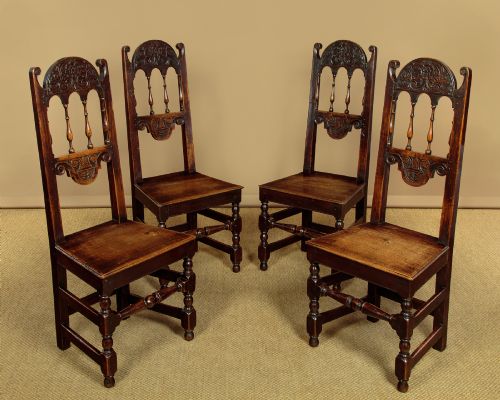
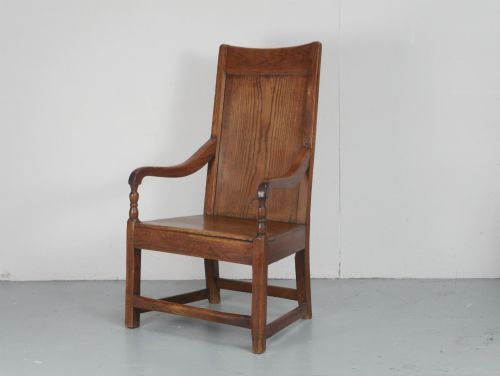
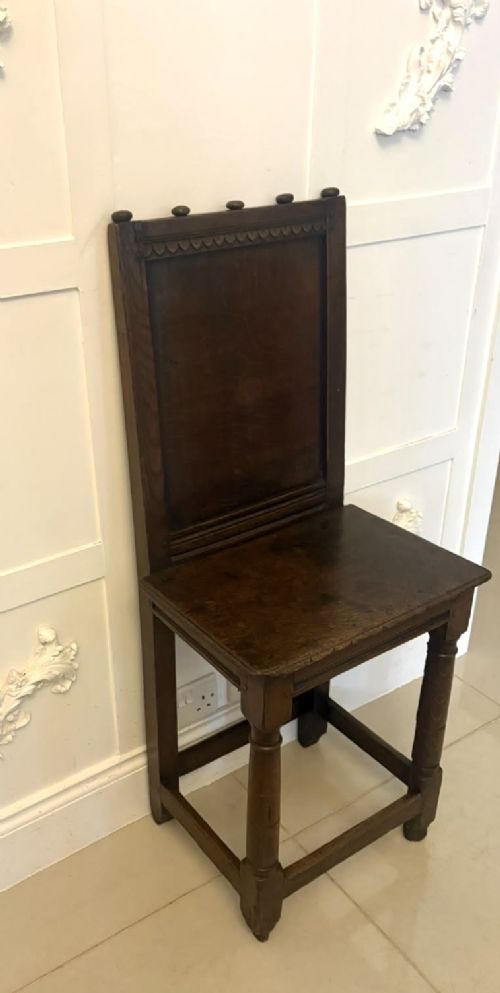

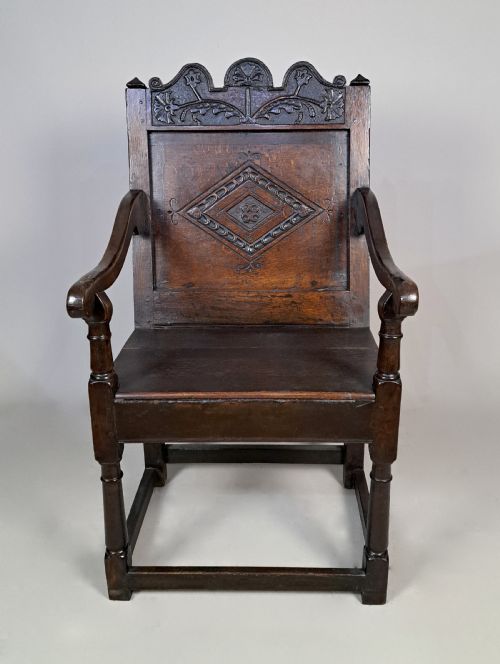

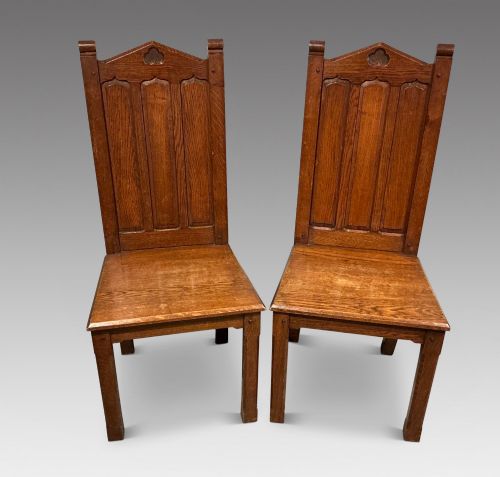

Traditional Panel Back Chair
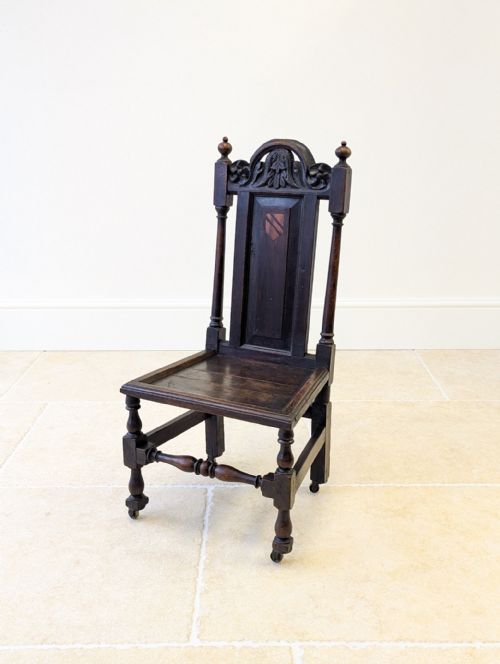
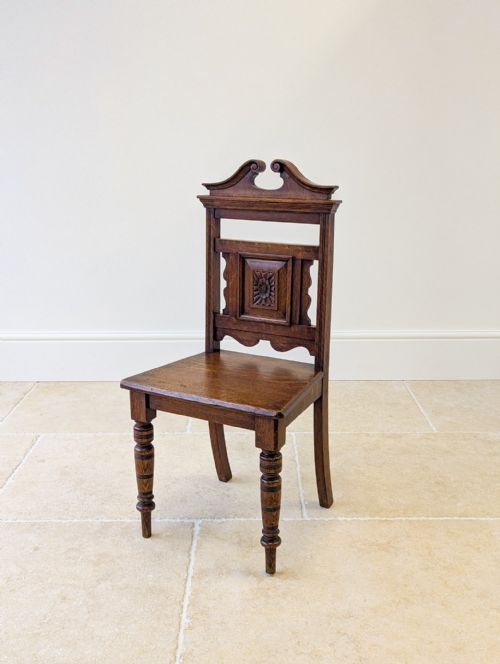
A traditional panel back chair offers sturdy timber construction and honest vernacular form, anchoring a room with centuries of quiet character.
Traditional Panel Back Chair
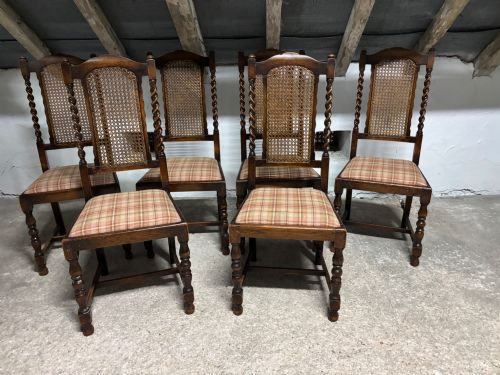
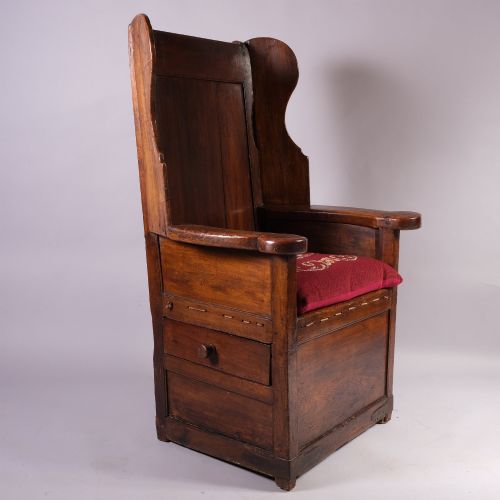
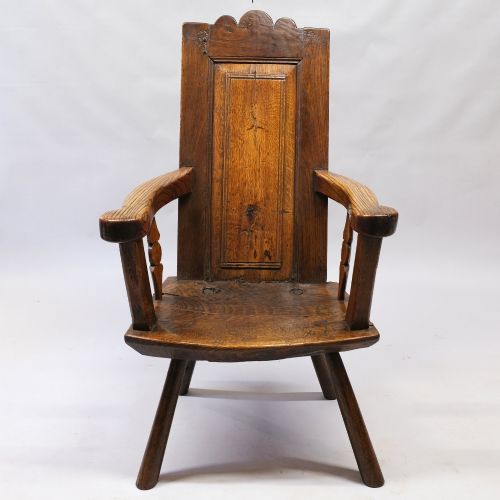
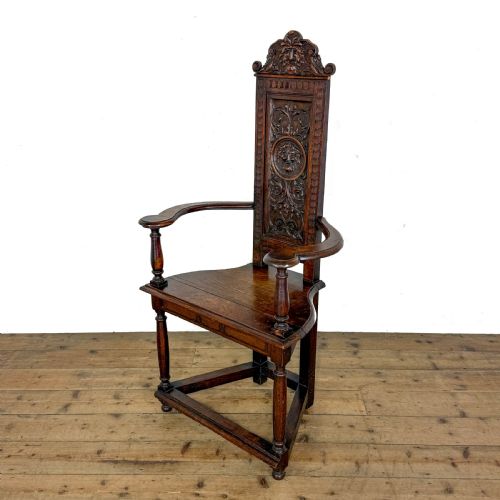
The selection ranges from upright armchairs and side chairs to dining sets and specialised regional seating like lambing chairs. Oak and elm dominate the forms, supplemented by ash and beech, reflecting the domestic timbers available to early makers.
Period examples sit alongside revival pieces made during the Victorian era and the early twentieth century, meaning buyers choose between centuries-old patina and later interpretations built with identical traditional methods.
What varies in quality
The integrity of the original timber and the retention of structural components separate superior examples from heavily restored pieces. Early chairs that retain their original feet, pegged joints and unthinned panel backs command greater regard from collectors.
The depth and crispness of hand carving also distinguish finer workshops from mass-produced revival items. Surface texture plays a role, with genuine early period pieces displaying a dry, undulating polish built up through generations of use.
Traditional Panel Back Chair Retail Price Guide 2026
Typical asking prices for traditional panel back chair among the pieces listed under this phrase on Sellingantiques today, from the lower quarter to the upper quarter. They describe what is for sale here now, not the wider market.
Listings feature oak, elm, fabric, metal, brass, hardwood, English oak and cane across pieces spanning the seventeenth century to the twentieth century.
The Traditional Panel Back Chair Glossary
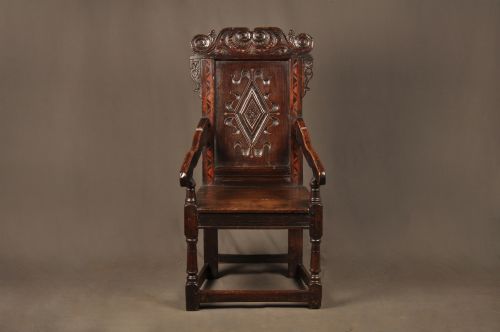
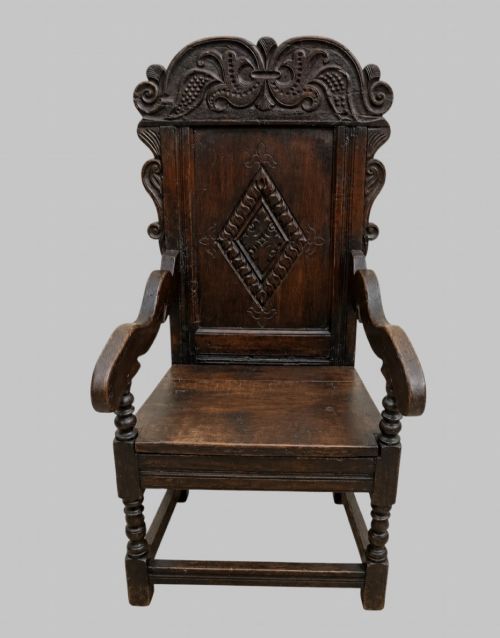
- Wainscot chair
- A heavy wooden armchair constructed with panelled backs and solid wooden seats, typical of the seventeenth century. These pieces were principal furnishings in prosperous households.
- Joint stool
- A low stool or side chair built with mortise and tenon joinery using specialised green woodworking techniques. The name derives from the carpenter's jointed construction.
- Lambing chair
- An enclosed vernacular armchair featuring high wings and a solid panelled base designed to shield the sitter from draughts. They are closely associated with rural domestic life.
- Strapwork
- A decorative carving motif resembling interlaced leather bands or flat straps arranged in geometric patterns. This style is frequently found on seventeenth-century panels and friezes.
- Medullary rays
- Radial cellular ribbons visible in quarter-sawn oak that create a characteristic silver fleck pattern. Their presence indicates traditional radial timber conversion.
Traditional Panel Back Chair: Frequently Asked Questions
How do I spot a revival chair?
Revival chairs from the Victorian period or the twentieth century often display machine-sawn timber marks and uniform machine carving rather than the tool signatures left by seventeenth-century makers. The wood seasoning and interior construction methods also reveal the actual date of manufacture.
Examining the underside and the pegs will show whether the piece was assembled with modern precision or traditional hand-cut tolerances. Subtle clues in the wear patterns help distinguish an intentional antique style from genuine age.
Can I use these chairs daily?
Most traditional panel back chairs are robustly built from solid oak or elm and handle daily seating without difficulty. Solid timber frames offer considerable stability for modern dining or study use.
Care should be taken with early seventeenth-century examples where dry joints benefit from stable indoor humidity and occasional professional maintenance. Protective pads under the feet prevent unnecessary friction on hard floors.
What timber was used?
English oak is the primary material for most wainscot and panelled chairs, chosen for its strength and abundance. Elm and ash appear frequently in regional vernacular pieces and Windsor-style variations.
Later revival pieces sometimes incorporate mixed hardwoods or imported timber, while country variants utilise whatever local wood was available to the carpenter.
How do I care for old oak?
Keeping wooden chairs away from direct heat sources and sudden temperature shifts prevents the timber from splitting or warping. Natural beeswax applied sparingly helps nourish the grain without building up a sticky film.
Dusting with a soft dry cloth maintains the surface sheen and preserves the dry polish accumulated over centuries. Avoid silicone-based sprays which can penetrate open grain and alter the timber's appearance.