
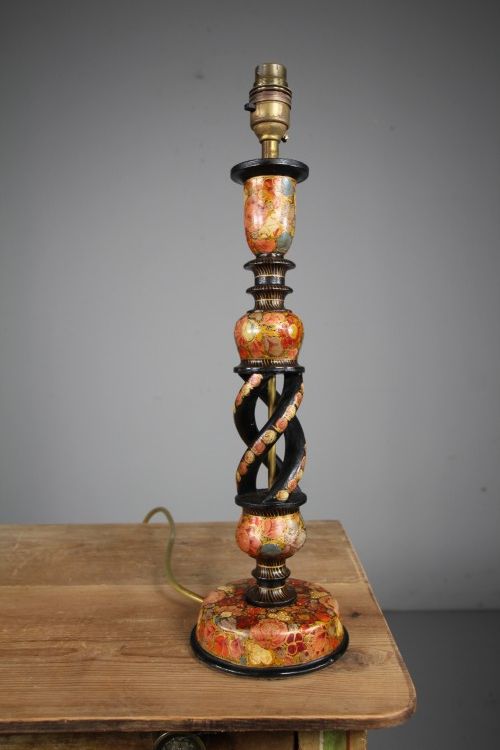


Traditional Painted Lamp Base
A traditional painted lamp base brings character and colour to a room, drawn from diverse global styles and earlier decorative porcelain or wood forms.
Traditional Painted Lamp Base
When you search for a traditional painted lamp base, you find pieces adapted from earlier ceramics and carved wooden vessels, spanning the eighteenth century to the early twentieth century. The selections here include table lamps, standard lamps, and oil lamps converted for modern use.
You are most likely to meet Kashmiri painted examples and Chinese porcelain vase lamps decorated in blue and white, Famille Verte, or Famille Rose palettes. These sit alongside Dutch Delftware, Satsuma porcelain, and lacquered wood forms from various periods.
Materials and construction
These lamps rely on rigid supports of porcelain, wood, lacquer, and papier-mache, combined with brass components for structural stability. Artisans applied hand-painted pigments over glazes or prepared wooden surfaces to achieve intricate Chinoiserie, Kashmiri, and floral motifs.
Many structural bodies originate as earlier vases, ginger jars, or side tables before conversion into lighting. Rewired electrical fittings and lamp holders are integrated into the top of the vessels to support fabric or silk shades.
Current listings feature porcelain, brass, lacquer, and silk across periods ranging from the eighteenth century to the Edwardian era.
Assessing quality and execution
The sophistication of the hand-painted decoration determines the visual impact of the piece, distinguishing finely detailed brushwork from simpler execution. The crispness of floral, landscape, or figurative motifs on porcelain and lacquered wood reflects the skill of the original maker.
The harmony between the painted body and the chosen form affects the overall presence of the lamp. Original mounting components, stable brass fixtures, and well-preserved surface finishes elevate the standing of the object.
The Traditional Painted Lamp Base Glossary
- Chinoiserie
- European decorative style reflecting Chinese artistic influences, frequently seen on lacquered and painted lamp bases. It uses scenic motifs and delicate patterns.
- Famille Verte
- Chinese porcelain palette dominated by green enamels, popular in nineteenth-century decorative pieces. This style adds rich botanical and figurative detail to the ceramic surface.
- Delftware
- Tin-glazed earthenware originating from the Netherlands, often decorated in blue and white. Antique examples provide a rustic ceramic body for lamp conversions.
- Satsuma
- Japanese earthenware with a crackle glaze, typically decorated in polychrome and gilt. These vessels are frequently adapted into distinctive table lamps.
- Baluster
- A moulded shaft or vase form with a rounded lower body tapering toward the top. This shape forms the structural profile of many porcelain lamp bases.
Traditional Painted Lamp Base: Frequently Asked Questions
Are these lamps safe to use today?
Many listings indicate that the pieces have been rewired to meet modern electrical standards for safe domestic use.
Buyers should check individual descriptions for wiring details and consult a qualified electrician if any components require updating.
How do I choose the right shade?
The scale of the painted base dictates the proportions of the fabric or silk shade needed to balance the silhouette.
Matching the tone of the shade to colours within the painted decoration helps create a cohesive appearance in the room.
Can I date a lamp by its decoration?
Styles such as Chinoiserie and Kashmiri painting appear across multiple centuries, so decoration must be assessed alongside material wear.
Porcelain types and wood preparation techniques often provide clearer indicators of the actual period of manufacture.
Where should I place a standard lamp?
Tall standard lamps suit corners or seating areas where they can provide ambient light without obstructing movement.
Their painted shafts contribute vertical colour and pattern to the interior space even when unlit.