
Traditional Open Chair
A traditional open chair is a seating form defined by exposed arms and timber frames, offering comfort and support across Georgian, Victorian, and later periods.
Traditional Open Chair
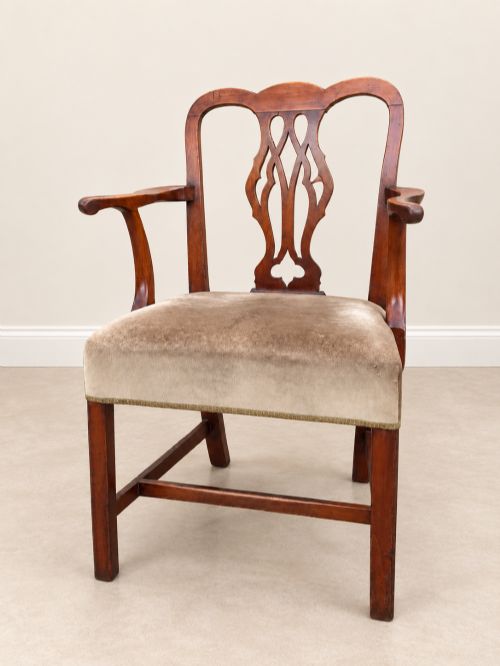
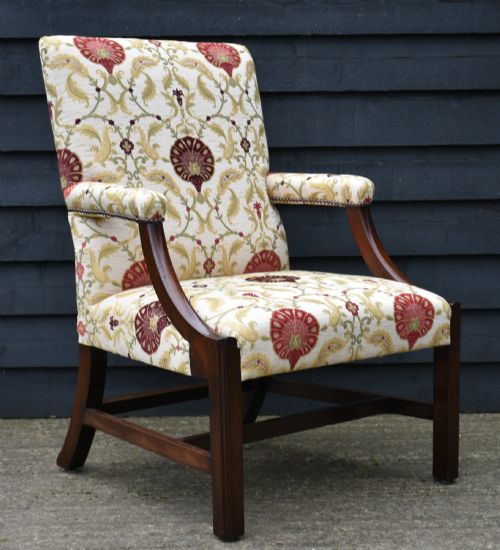
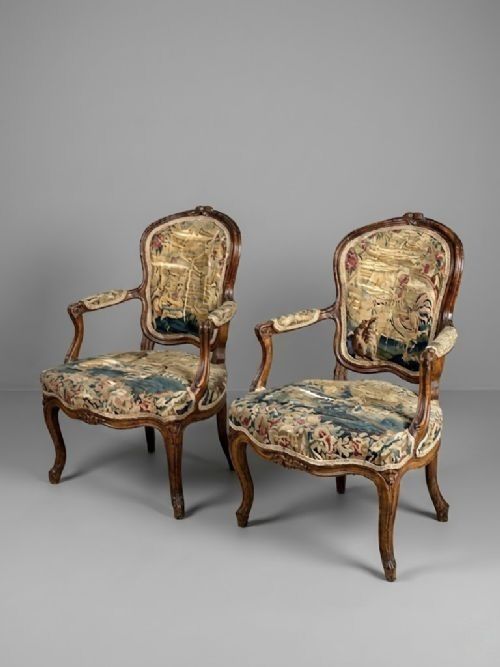
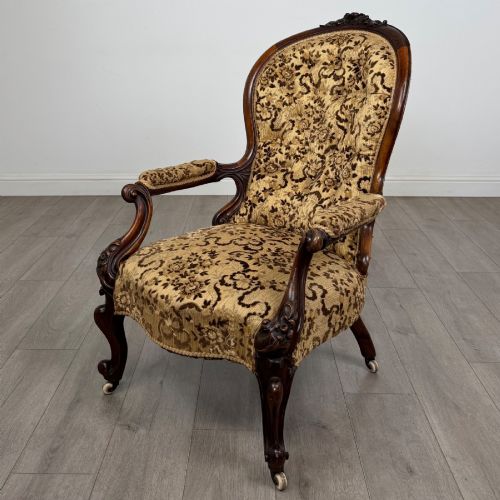
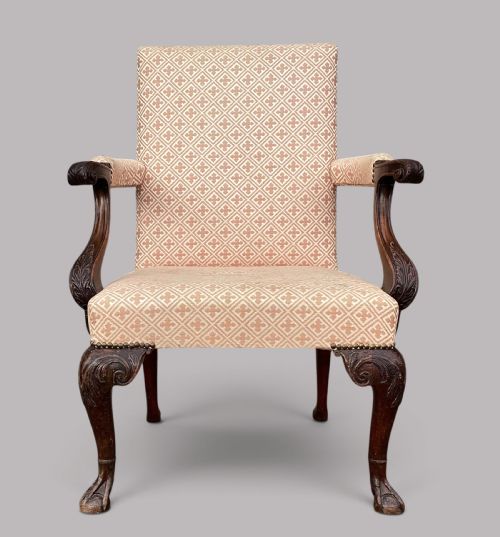
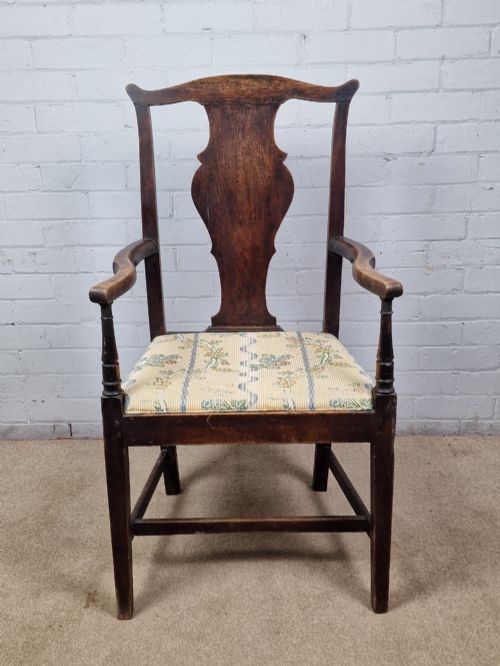
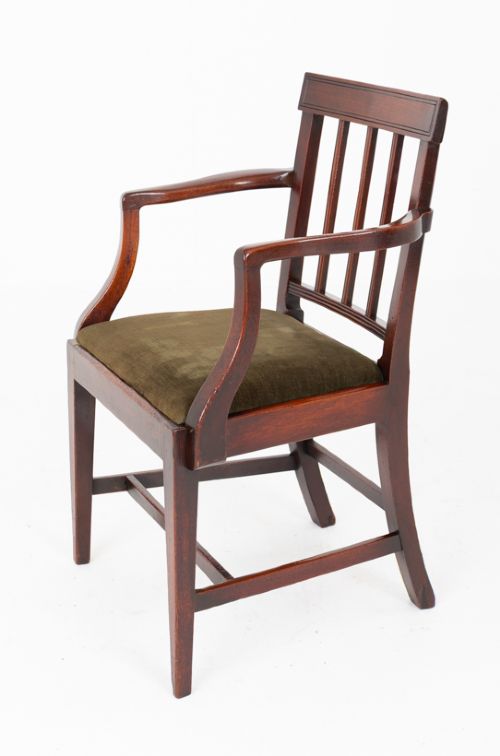
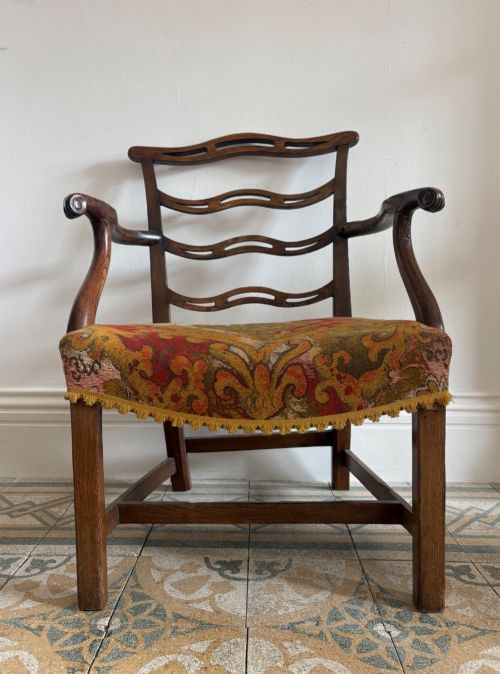
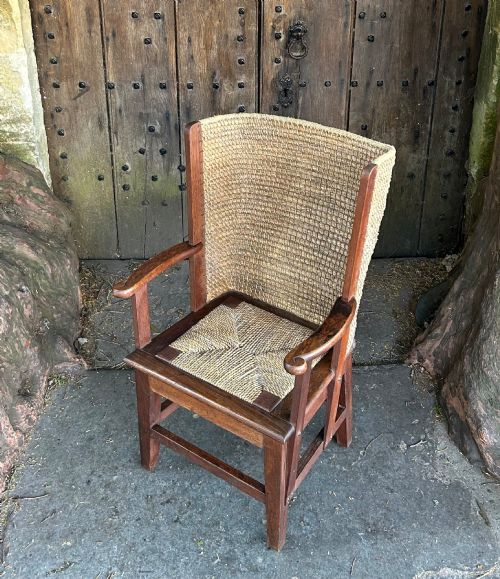
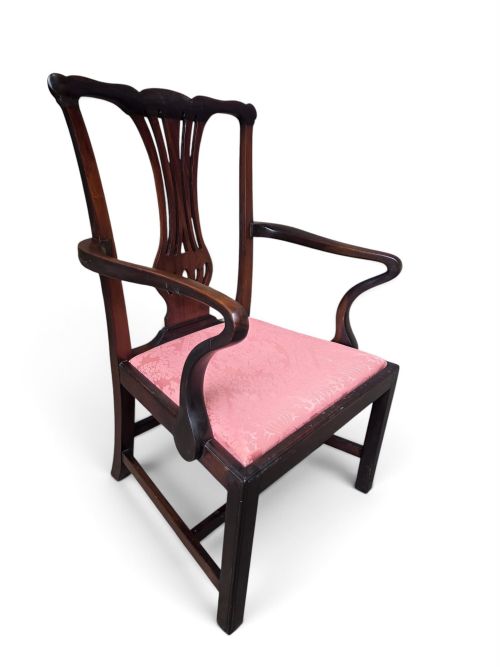
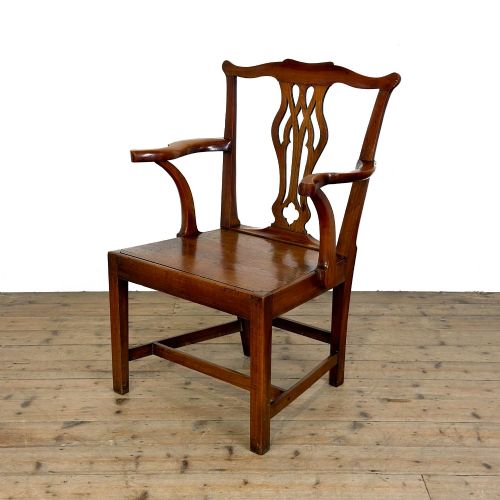
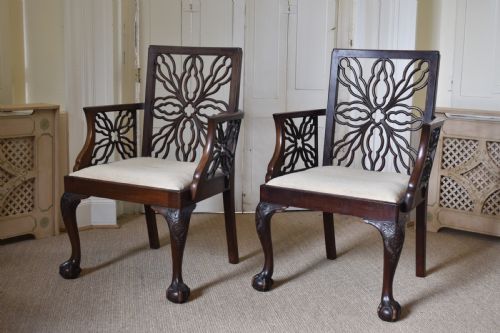
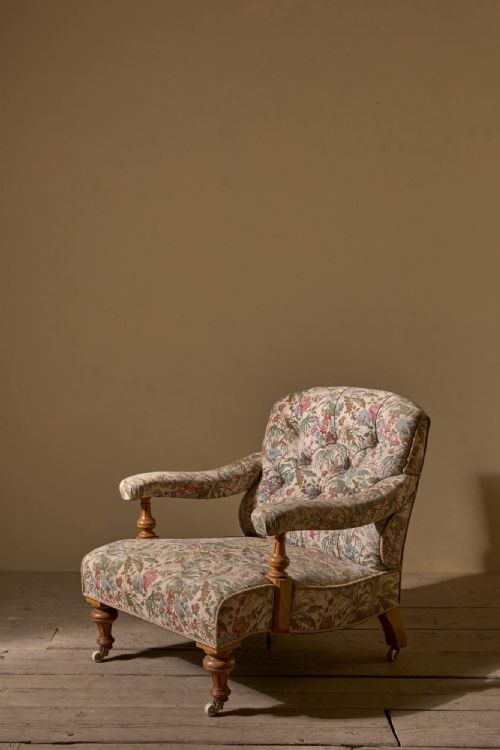
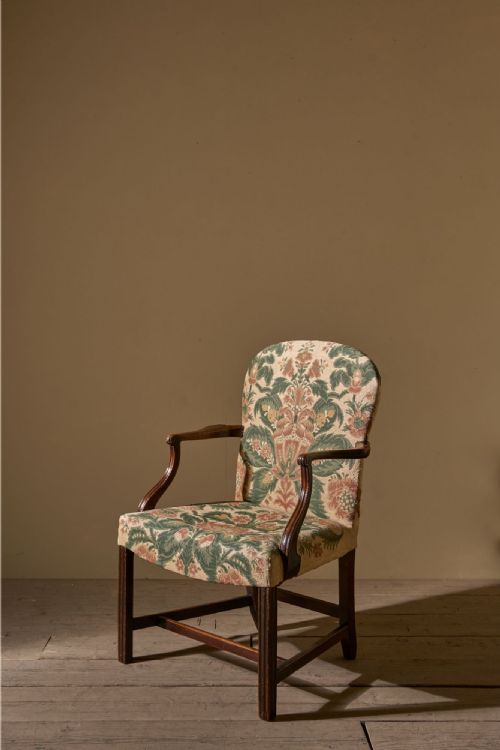
A traditional open chair brings together centuries of seating design, ranging from formal library and Gainsborough models to country house carvers and ladder-back forms. These pieces serve functional roles as desk chairs, armchairs, and occasional seating in domestic interiors.
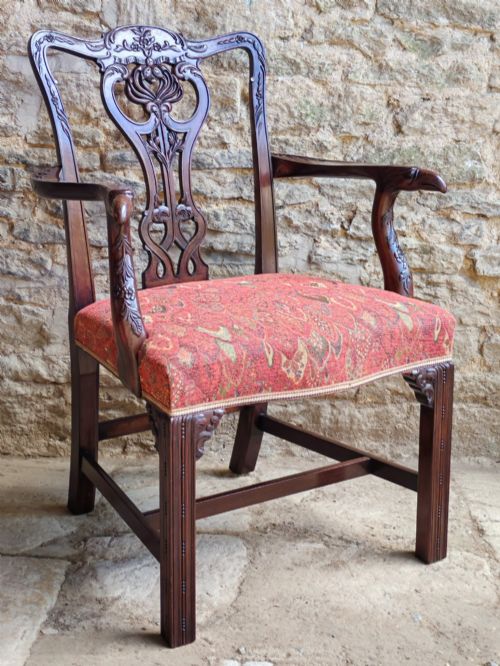
Buyers meet a diverse selection on this page, predominantly featuring mahogany and walnut frames alongside country elm and fruitwood examples. Many pieces incorporate revival styles such as Chippendale and Hepplewhite, spanning the eighteenth, nineteenth, and early twentieth centuries.
Materials and construction methods
Cabinet makers utilised dense hardwoods including mahogany, walnut, and oak to build sturdy frames capable of supporting intricate hand-carved details like blind fretwork and reeded legs. Country variations frequently relied on local timber such as elm, fruitwood, and laburnum paired with rush or woven seating.
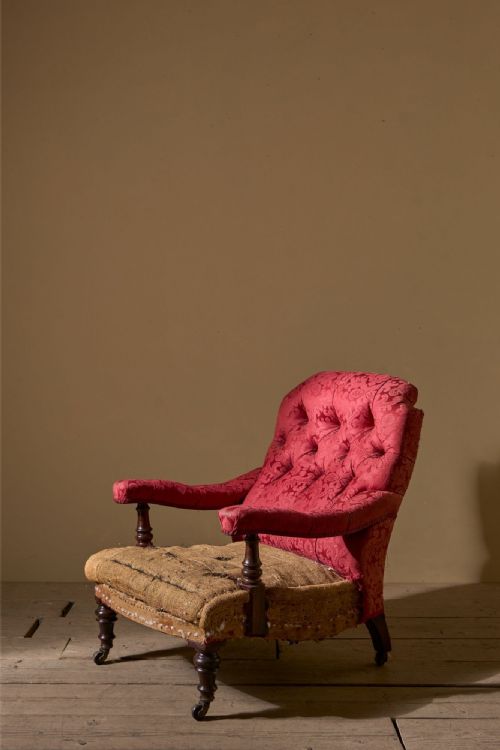
Upholstery techniques varied from traditional webbing and horsehair stuffing covered in leather, velvet, tapestry fabric, and hessian to cane panels integrated into the framework. Joinery relied on time-tested mortise and tenon methods to ensure structural longevity.
Listings feature eighteenth-century Georgian forms alongside nineteenth-century Victorian pieces and early twentieth-century revivals in mahogany, walnut, oak, and elm.
Distinctions in quality
The standard of a traditional open chair is dictated by the crispness of its hand-carving, the selection of figured timber veneers, and the integrity of its original frame construction. Superior examples maintain balanced proportions and sharp detailing that reflect the skill of the cabinet maker.
Later revivals and country pieces show greater variance in timber selection and decorative restraint, where utility and regional tradition superseded high-style urban craftsmanship.
Howard and Sons·Morison and Co
The Traditional Open Chair Glossary
- Carver chair
- An armchair designed primarily as a dining chair or desk seat, featuring open wooden arms. These chairs typically match a set of smaller side chairs.
- Gainsborough chair
- A wide, upholstered armchair with an open wooden frame, padded armrests, and short legs, popular during the eighteenth century. They frequently feature leather or tapestry upholstery.
- Ladder-back chair
- A vernacular seating form featuring horizontal wooden slats arranged in tiers across the backrest. These chairs often incorporate rush or woven seats.
- Blind carving
- Decorative relief carving applied to a flat surface without undercutting, commonly seen on mid-eighteenth-century mahogany chair rails. This technique mimics more complex fretwork.
- Wainscot chair
- An early form of heavy wooden armchair constructed with panelled backrests and solid seats. These pieces date to the seventeenth century.
Traditional Open Chair: Frequently Asked Questions
What is a traditional open chair?
A traditional open chair is an armchair featuring exposed wooden arms and a structural frame rather than fully upholstered sides. These seating forms developed across centuries for use in libraries, parlours, and dining rooms.
Design styles range from formal Georgian mahogany library chairs to rustic elm country carvers and late revival pieces.
How do I date an antique armchair?
Dating relies on examining the timber species, joinery methods, structural proportions, and decorative motifs present on the frame. Secondary woods and tool marks underneath the seat provide further clues regarding the era of manufacture.
Stylistic revivals during the Victorian and Edwardian periods often replicate earlier Georgian forms, requiring careful inspection of the wood patina and wear patterns.
Where were these chairs used?
These seating forms served multiple domestic and professional functions throughout the home. Library and desk chairs provided support for reading and writing, while parlour and morning room armchairs offered casual seating.
Country house variations furnished domestic dining spaces, hallways, and bedrooms, adapting regional styles to everyday utility.
What upholstery materials are used?
Original and replacement upholstery spans hand-dyed hide leather, woven tapestry fabrics, velvet, hessian, and practical rush seating. Traditional stuffing methods utilised horsehair and wool over webbing.
Cane panels also appear on specific library and occasional chair designs, providing lightweight backrests and seats.