



Traditional Oil Burner
These traditional oil burner designs bring domestic warmth through period brass, copper and glass forms.
Traditional Oil Burner
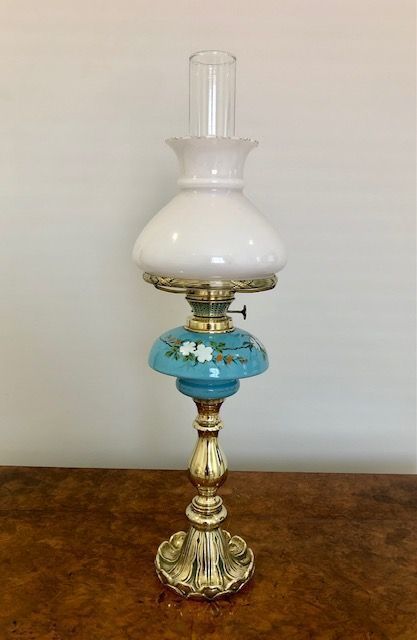
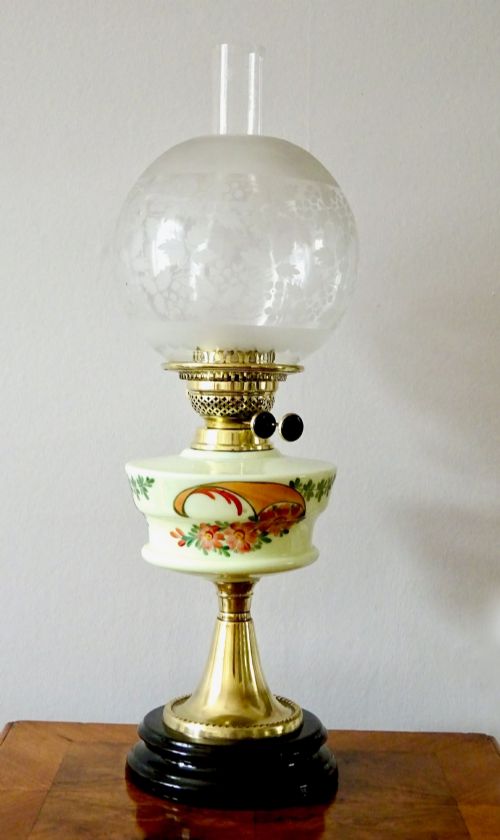
A traditional oil burner is typically encountered as a Victorian or Edwardian table or floor lamp, standing on a solid metal base with a glass font and shade. The selection spans standard domestic lighting as well as specific cultural forms such as Judaica and Himalayan Buddhist vessels.
Most pieces date from the nineteenth and early twentieth centuries, constructed from brass, copper or ebonised wood. They range from simple cottage table lamps to large standard lamps with Corinthian columns and etched glass tulip shades.
How they were made
Makers utilised heavy cast brass and copper for the structural columns and bases, often pairing them with cut glass, opaline glass or cranberry glass for the fonts and shades. Metal components were frequently polished or turned on lathes to create decorative fluting and stepped plinths.
Shades were shaped from blown or etched glass, sometimes featuring delicate frosted finishes or coloured glass overlays. Burner mechanisms in brass were engineered to house wicks securely for paraffin or oil combustion.
What varies in quality
The standard of a traditional oil burner is determined by the weight and casting quality of its metal base and the finish of its glass components. Heavier brass columns with crisp detailing and undamaged cut or coloured glass fonts sit at the upper end of the scale.
Artistic execution also separates standard utilitarian items from finer examples, such as those featuring specific Art Nouveau motifs or detailed etching on the glass shades.
Young's Special·Messengers·Harrods
The Traditional Oil Burner Glossary
- Font
- The oil reservoir of a lamp, commonly made from clear, cut, opaline or cranberry glass. It sits atop the column and feeds fuel to the burner mechanism.
- Duplex
- A type of burner mechanism utilising two flat wicks side by side to produce a brighter flame. It requires a specific matching double-slot collar.
- Opaline Glass
- An opaque, milky-white glass popular in Victorian lighting shades. It softens the light emitted by the burner flame.
- Judenstern
- A traditional hanging Sabbath lamp constructed from brass with multiple spouts for oil. These pieces have distinct cultural and religious origins.
Traditional Oil Burner: Frequently Asked Questions
What fuels do these traditional oil burners use?
These lamps were designed to burn paraffin or lamp oil for domestic illumination. Modern users generally keep them as decorative objects rather than active light sources.
When utilised today, appropriate fuel must be selected carefully to protect vintage brass and glass components from soot accumulation.
How do I date a brass oil lamp?
Dating relies on examining the metal casting style, burner patents, and glass manufacturing techniques. Victorian examples often feature heavy brass columns and ornate Victorian or Art Nouveau detailing.
Later Edwardian versions tend towards simpler domestic forms, while Georgian or earlier items display distinct handmade construction methods.
Are the glass shades original to the lamps?
Many lamps retain their original etched glass tulip or opaline shades, which match the period of the base. Replacement shades are common due to the fragile nature of blown glass over time.
Matching the fitter size and glass colour helps determine if a shade belongs to the particular era of the lamp body.
How should I clean a brass and glass lamp?
Gentle dusting with a dry cloth preserves the aged patina on brass surfaces. Harsh chemical polishes should be avoided to protect original finishes.
Glass fonts and shades can be washed separately in warm soapy water once removed safely from the metal collar.