


Traditional Oak Secretary
A traditional oak secretary offers a practical workspace and enclosed storage, combining sturdy timber with period craftsmanship for daily use.
Traditional Oak Secretary
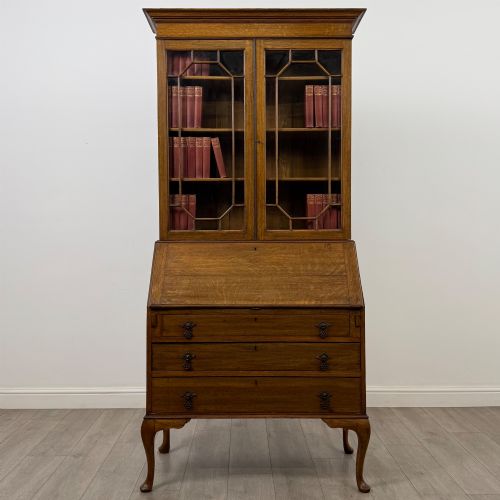
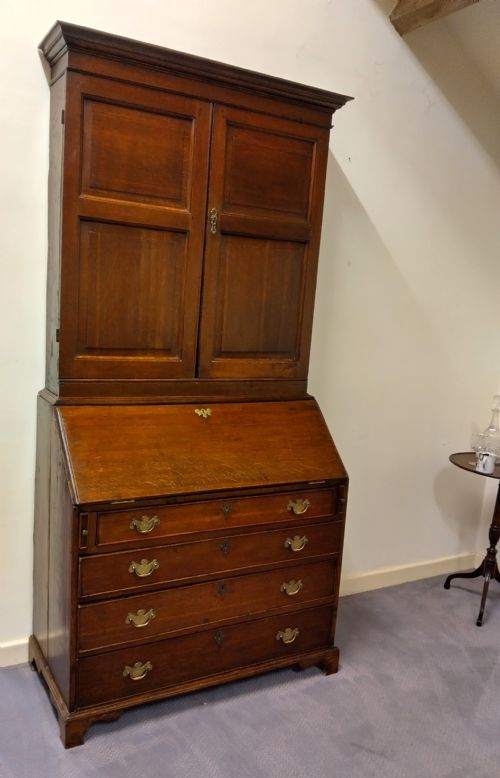
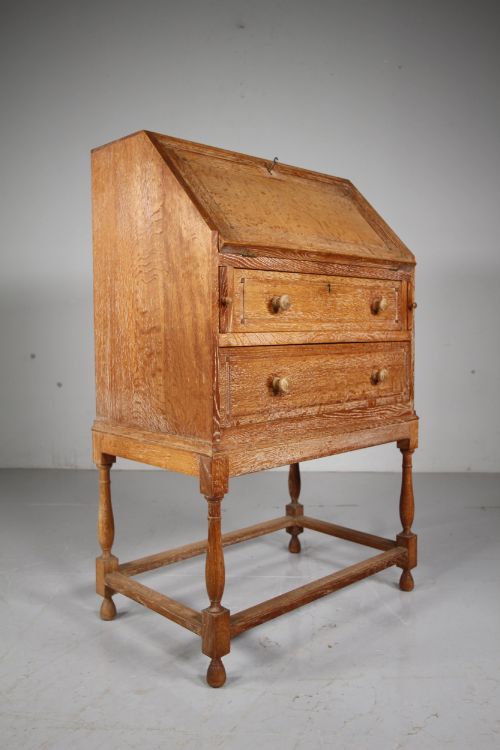
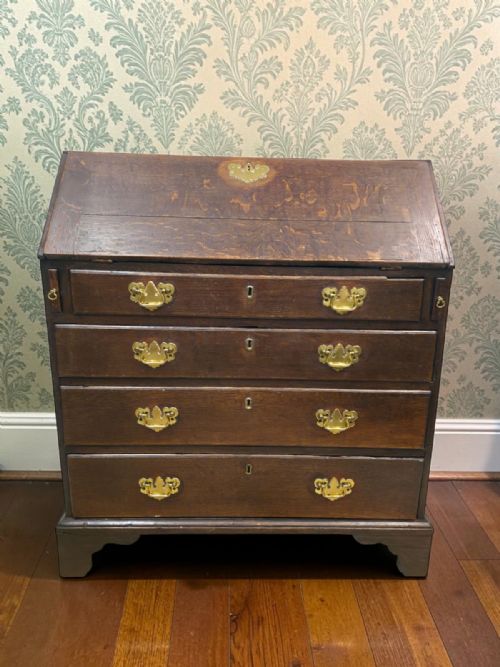
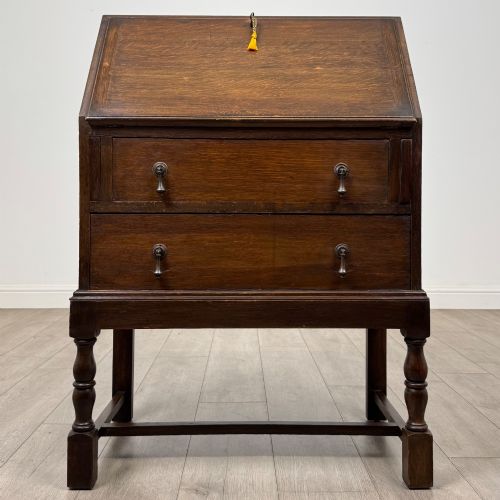
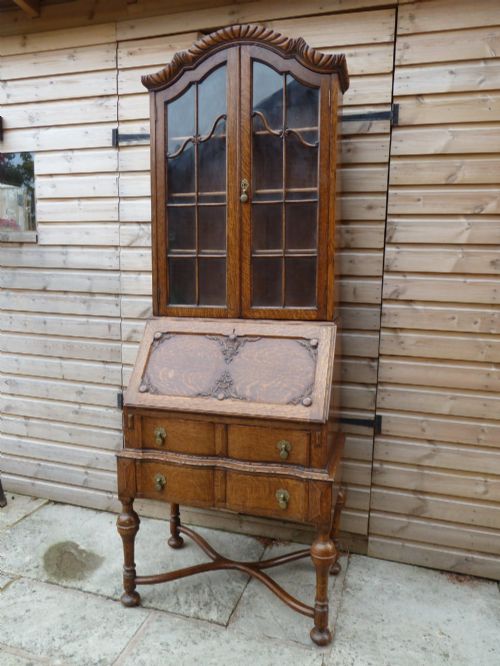
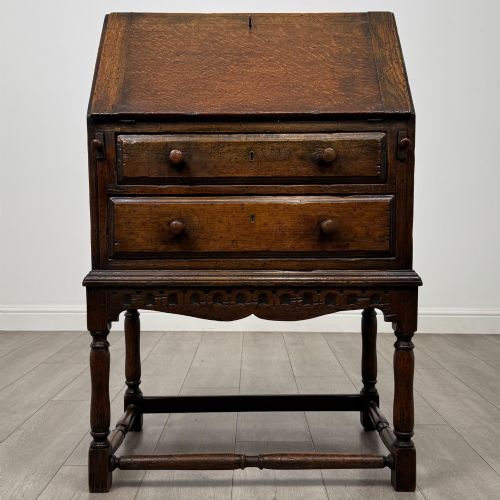
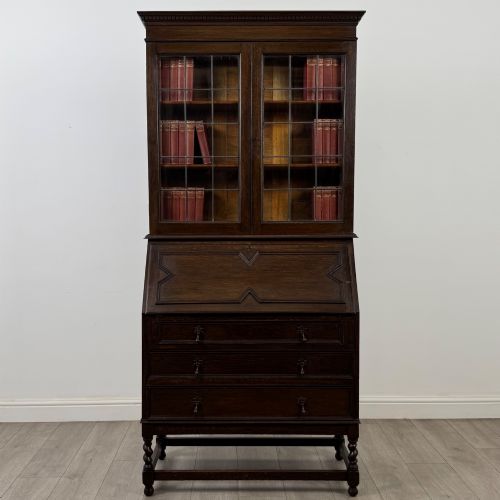
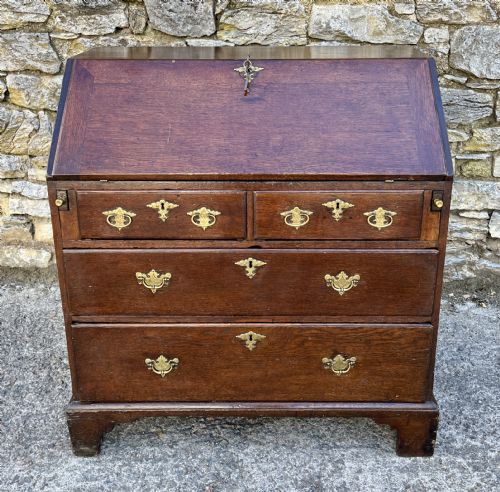
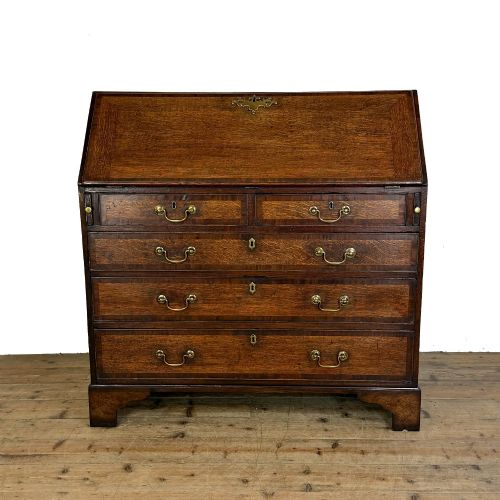
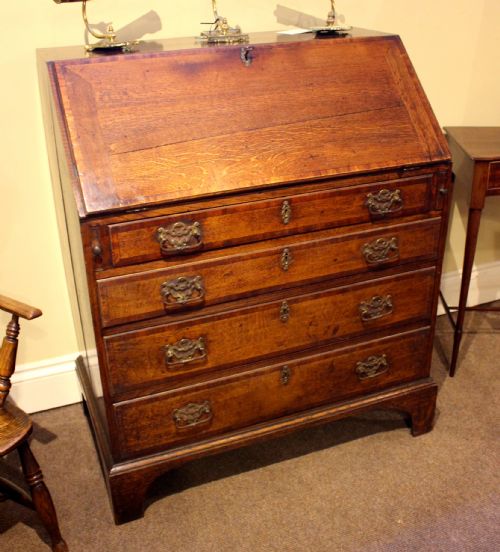
A traditional oak secretary encompasses fall-front writing desks and taller bureau bookcases spanning the Georgian, Edwardian, and twentieth-century periods. Buyers searching for a traditional oak secretary will frequently encounter Edwardian and 1920s examples alongside earlier eighteenth-century forms.
The objects serve as combined writing surfaces and storage units, often featuring fitted internal compartments behind the drop-down writing flap. Tall variations integrate upper bookcase sections with glazed or panelled doors above the desk base.
Judging quality
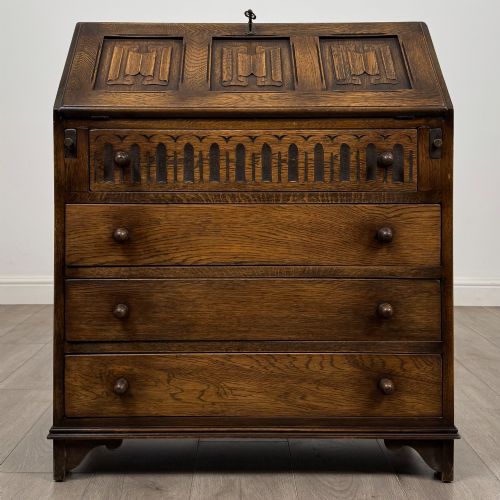
Quality differences depend on the selection of timber, the crispness of carved details such as linenfold motifs, and the execution of internal fitted drawers. Superior examples display thoughtful proportions and careful matching of oak grains.
Altered pieces or later reproductions occupy a different category from period originals, though craftsmanship standards remain distinct across Edwardian workshops and twentieth-century revivals.
Listings span from 1700 to the 1930s, encompassing Georgian, Edwardian, and Jacobean Revival styles.
Heals of London
The Traditional Oak Secretary Glossary
- Bureau
- A desk featuring a sloping hinged flap that drops down to form a writing surface. This term often interchanges with secretary.
- Bureau bookcase
- A two-part furniture form combining a lower writing desk with an upper enclosed shelving unit. Glass doors frequently protect the upper cabinet.
- Fall-front
- The hinged writing flap of a desk that pivots downward for use and conceals internal pigeonholes and small drawers when closed.
- Linenfold
- A style of wood carving that resembles folded parchment or linen, common on panels of certain period furniture. It provides distinct surface texture.
- Green baize
- A woven wool fabric traditionally used to line writing surfaces on desks and game tables. It offers a soft pad for pen work.
Traditional Oak Secretary: Frequently Asked Questions
How do I use a secretary desk?
Lower the hinged fall-front flap to reveal the internal writing surface and pigeonholes for correspondence. Store papers and stationery within the fitted compartments when the desk is closed.
Keep the writing surface clear of heavy items to protect the hinges and support struts. Use traditional desk blotters to preserve the timber or baize lining during daily writing.
How do I date an oak bureau?
Examine the construction methods, hardware, and timber preparation to determine the period of manufacture. Eighteenth-century examples often feature solid oak construction and hand-cut dovetails, while Edwardian and 1920s pieces may utilise oak veneer and different internal configurations.
Look for maker labels, such as those from Heals of London, which help identify twentieth-century production. Stylistic indicators like Jacobean revival carving or Edwardian proportions also point towards specific decades.
What is the difference between a bureau and a secretary?
In British terminology, a bureau refers to a writing desk with a sloping flap, whereas a secretary often implies a taller cabinet piece with similar writing functions. Both terms describe furniture designed for correspondence and document storage.
Regional preferences and historical periods influence which term appears in listings. Both descriptions apply to the oak writing cabinets found across Georgian and twentieth-century periods.