

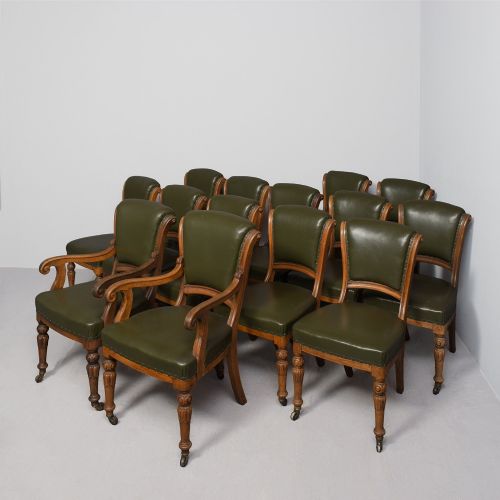
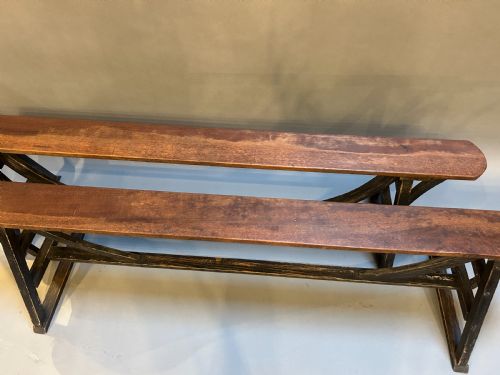
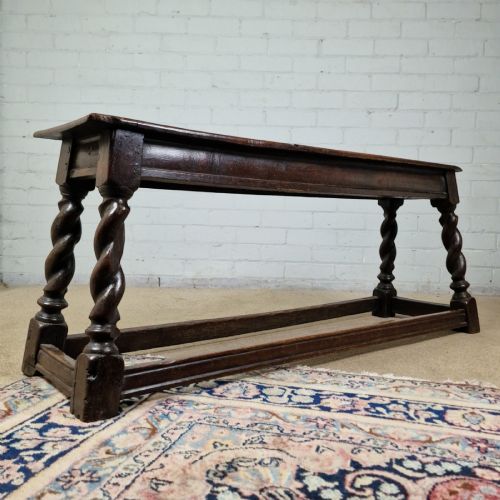
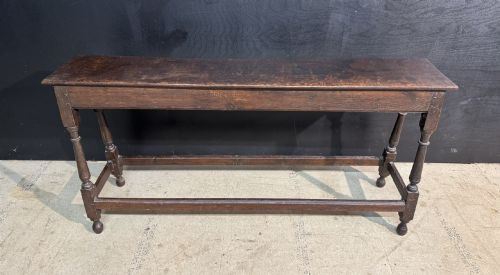
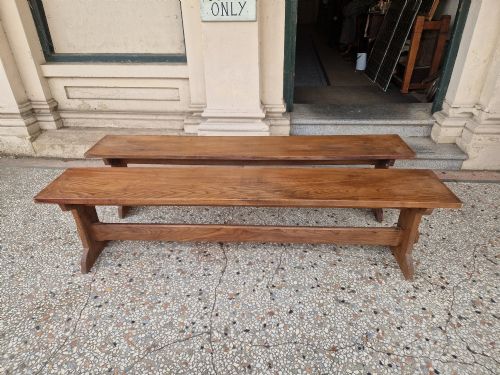
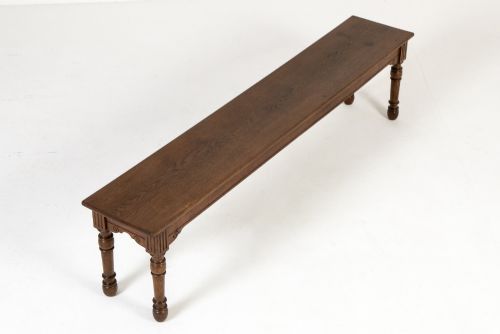
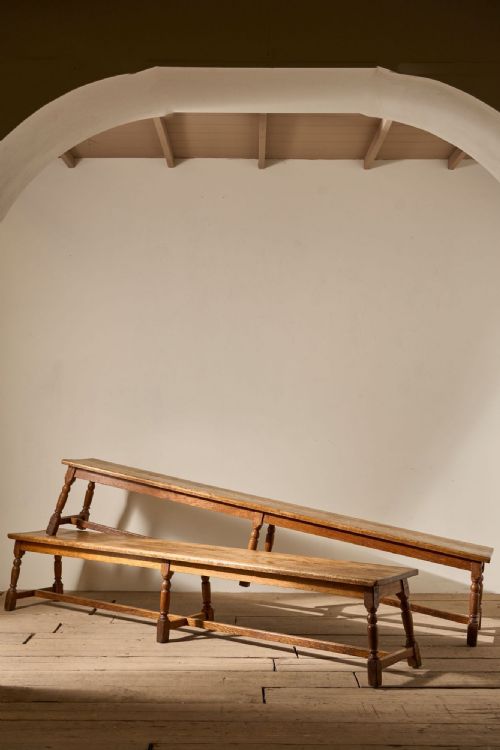
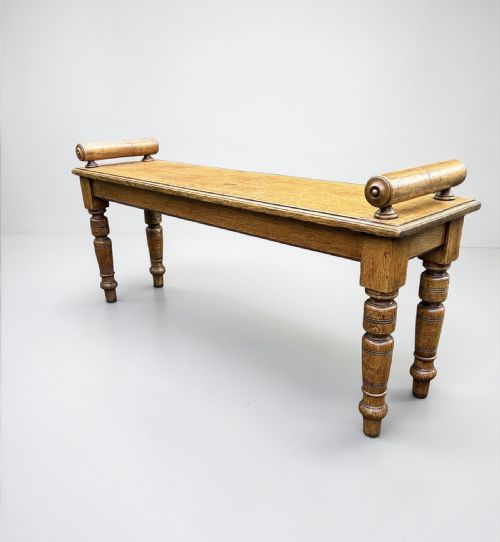


Traditional Oak Long Seat
A traditional oak long seat brings rustic warmth and solid utility to a hallway or dining room, offering sturdy length and time-worn character.
Traditional Oak Long Seat
The selection ranges from rustic farmhouse planks and joint stools to elaborate hall benches and tavern refectory seating. Many examples reflect specific regional styles such as English country, Georgian country, and Jacobean revival.
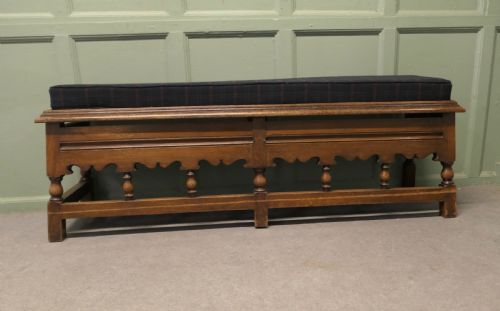
Buyers frequently encounter nineteenth-century oak hall benches and long plank benches alongside eighteenth-century forms. Certain pieces include upholstered elements like tweed and wool cushions or function as boot stores and window seats.
Materials and construction methods
Construction relies heavily on solid oak timber, often selected for its durability and prominent grain patterns. Makers utilised traditional joinery techniques, visible in heavy trestle designs, jointed frames, and thick plank tops.
Selected pieces incorporate supplementary materials such as painted finishes for decorative effect. Upholstered sections utilise textiles like tweed and wool to provide softer seating surfaces on window seats and hall benches.
Traditional Oak Long Seat Retail Price Guide 2026
Typical asking prices for traditional oak long seat among the pieces listed under this phrase on Sellingantiques today, from the lower quarter to the upper quarter. They describe what is for sale here now, not the wider market.
Materials documented across the inventory include solid oak, painted wood, wool, and tweed.
Assessing quality in construction and age
Quality rests upon the integrity of the timber and the honesty of the construction, distinguishing straightforward utilitarian benches from finer architectural or provincial workshop pieces. The weight and thickness of the oak boards dictate stability and longevity.
Provenance and age significantly influence the standing of a piece, separating eighteenth-century examples with deep patina from later revival items. The retention of original surfaces, fixings, and uncompromised structural joints marks the higher tier of these seating forms.
The Traditional Oak Long Seat Glossary
- Joint Stool
- An early form of wooden seating constructed with pegged mortise and tenon joints rather than turned legs. These sturdy pieces preceded widespread chair usage in many households.
- Refectory Bench
- A long, narrow bench originally designed to accompany a dining table in communal halls or monasteries. They offer linear seating capacity for multiple diners.
- Trestle
- A structural support consisting of a horizontal beam fixed to two splayed legs. This design provides maximum legroom and robust support for long table benches.
- Hall Bench
- A piece of furniture positioned in an entryway or corridor, frequently featuring a high back or integrated storage for garments and footwear. Victorian and Georgian examples often double as window seats.
- Patina
- The surface sheen and colour developed by wood over decades of handling, polishing, and exposure to light. It serves as a key indicator of genuine age and continuous use.
Traditional Oak Long Seat: Frequently Asked Questions
What is a traditional oak long seat used for?
These long timber seats function primarily as communal dining seating or narrow hallway furniture. Their elongated proportions suit placement alongside refectory tables or against corridor walls.
Certain variations incorporate storage capabilities for boots or feature upholstered cushions to serve as comfortable window seats in traditional rooms.
How do I date a traditional oak long seat?
Dating relies upon examining the tooling marks, construction methods, and timber characteristics visible across the piece. Eighteenth-century examples typically display hand-planed surfaces and pegged joints, whereas later Victorian and twentieth-century items often show machine assistance and revival stylistic traits.
Changes in proportion and the presence of documented regional provenances help narrow down the era of manufacture.
Are these benches comfortable for daily dining?
Most historic oak benches offer firm, upright seating without backrests, designed for practical utility rather than lounging. Adding custom cushions made from wool or tweed can significantly increase comfort during extended meals.
Their linear nature allows multiple diners to share a single side of a table efficiently.
How should I care for old oak seating?
Preserving the timber involves maintaining a stable indoor environment away from direct heat sources and dramatic humidity fluctuations. Regular dusting with a dry cloth keeps the surface clean.
Occasional application of appropriate wax feeds the wood and protects the historic patina without sealing the pores.