


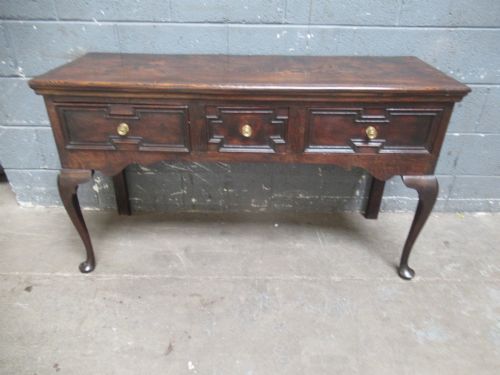


Traditional Oak Hall Dresser
These traditional oak hall dressers bring heavy timber presence and honest utility to an entranceway, offering centuries of regional English craftsmanship.
Traditional Oak Hall Dresser
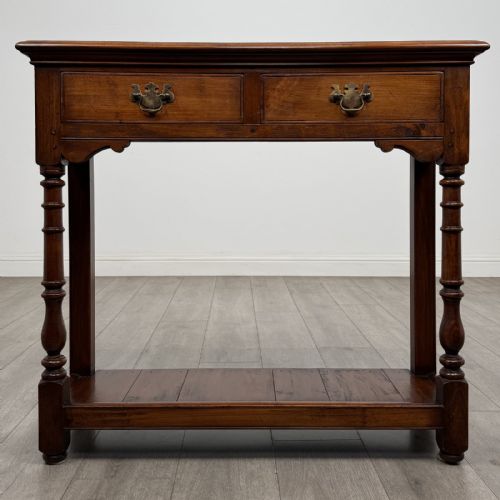
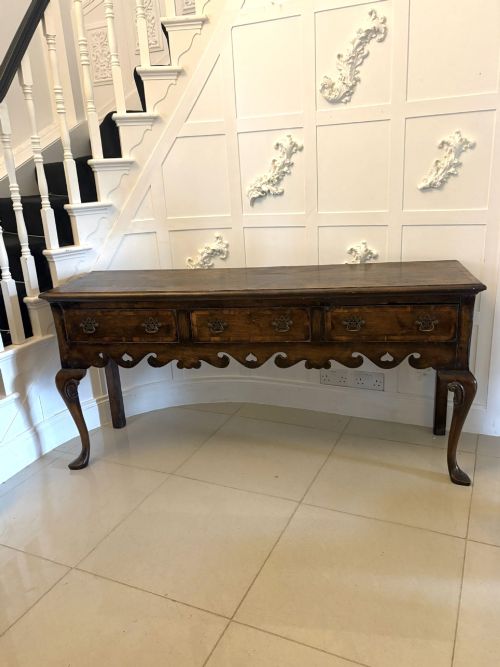
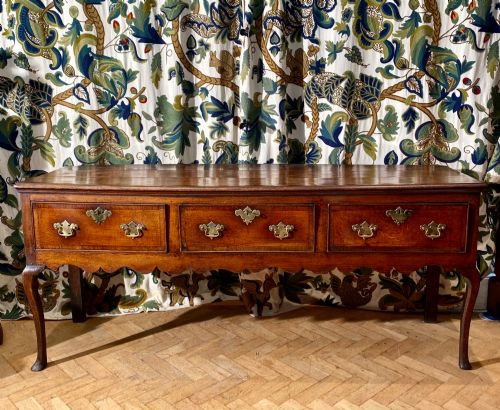
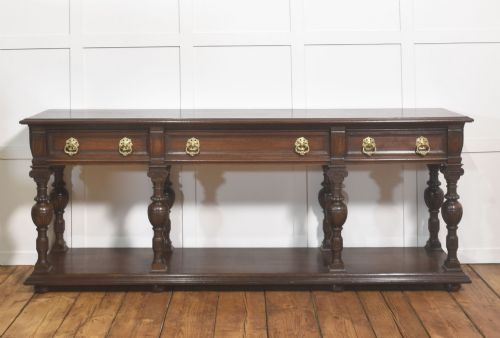
When searching for a traditional oak hall dressers, a buyer encounters pieces spanning from the seventeenth century through to revivals around nineteen hundred. The selection includes Welsh potboard dressers, low serving bases, and substantial court cupboards.
Most examples found here present as heavy timber bases with drawers, open potboards, or enclosed upper sections. They originate from English country workshops and regional makers working primarily in solid oak and elm.
How they were made
Joiners built these traditional oak hall dressers using solid oak and elm, often incorporating pine for secondary parts. Turnings, panels, and drawer frames rely on traditional pegged mortise and tenon joinery.
Hardware consists of forged iron and brass handles or hinges matching the period of construction. Surfaces range from bleached timber to polished oak showing decades of honest wear.
Traditional Oak Hall Dresser Retail Price Guide 2026
Typical asking prices for traditional oak hall dresser among the pieces listed under this phrase on Sellingantiques today, from the lower quarter to the upper quarter. They describe what is for sale here now, not the wider market.
Materials documented across the available stock include solid oak, elm, pine, brass, and iron.
What varies in quality
The division between simpler country pieces and finer examples rests in the depth of carved detail and the weight of the timber used. Seventeenth-century court cupboards display complex architectural mouldings, whereas later revival pieces often rely on simpler turned legs and flat panel construction.
Surface preservation significantly impacts the character of each piece. Original timber patination and untouched brass or iron mounts set apart pieces that retain their historical integrity from those altered or heavily restored later.
The Traditional Oak Hall Dresser Glossary
- Potboard
- An open lower shelf built into a dresser base for storing pots and serving dishes. This feature defines many traditional English country dining and hall pieces.
- Court Cupboard
- A heavy enclosed two-tier cupboard originating in the seventeenth century. These pieces often feature recessed upper sections supported by carved columns.
- Deuddarn
- A traditional Welsh two-part cupboard featuring enclosed upper and lower storage compartments. They represent regional woodworking traditions of rural Wales.
- Cabriole Leg
- A furniture leg that curves out and then in, mimicking an animal's leg. This form appears on later Georgian style revival pieces from around nineteen hundred.
Traditional Oak Hall Dresser: Frequently Asked Questions
Where should I place a hall dresser?
These pieces suit wide hallways, entrance lobbies, or dining rooms where their shallow depth allows them to sit against a wall without obstructing movement. Their surface provides a practical drop zone for keys and post.
Ensure the chosen wall has sufficient width to accommodate the heavy proportions and overhang of the top board without crowding surrounding doorways.
How do I clean antique oak?
Dust the timber regularly with a dry, soft cloth to prevent grit accumulation in the grain and carved recesses. Avoid modern silicone polishes that build up and attract dust over time.
Feed the dry wood occasionally with traditional beeswax applied sparingly and buffed thoroughly to maintain the natural lustre of the finish.
How can I tell a revival piece from an original seventeenth-century one?
Examine the tool marks, timber shrinkage, and construction joints for consistency with the stated period. Seventeenth-century examples show hand-riven timber and irregular hand-cut joints, while revival pieces from the late nineteenth or early twentieth century often display machine-sawn components.
Secondary woods, nail types, and backboards also provide clear clues regarding whether a piece dates to the 1600s or a later revival workshop.