




Traditional Oak Farm Table
A traditional oak farm table brings sturdy timber and honest utility straight into a modern dining room.
Traditional Oak Farm Table
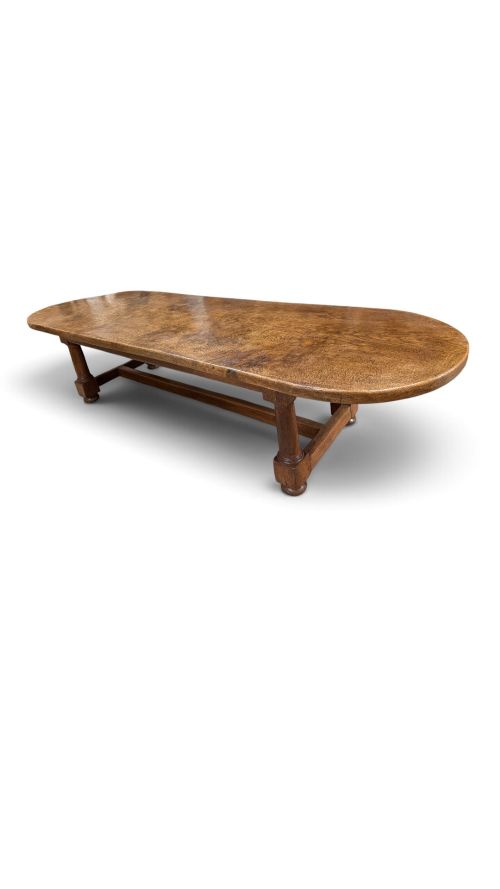
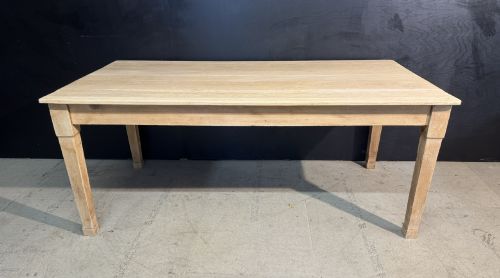
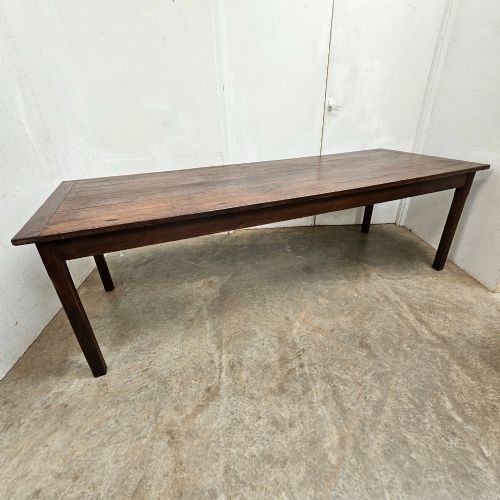
A traditional oak farm table is a heavy dining or kitchen surface built for daily domestic use. These pieces span several centuries, appearing in forms such as refectory tables, trestle tables, and rustic farmhouse designs.
Most examples found here date from the seventeenth century through to the early twentieth century. They range from simple country formats to revivalist styles including Jacobean and Edwardian interpretations.
Materials and construction methods
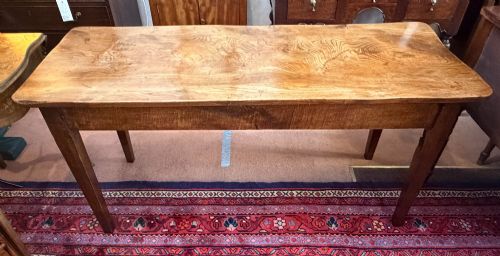
Makers relied primarily on solid oak, frequently paired with elm for tops and beech or fruitwood for subsidiary parts. Brass fixtures occasionally appear on operational elements, while pine is used in related vernacular structures.
Joinery techniques prioritize structural strength, utilising thick timber boards fixed to robust trestles or framed legs. Surfaces show the marks of hand-planing and natural timber movement accumulated over generations of use.
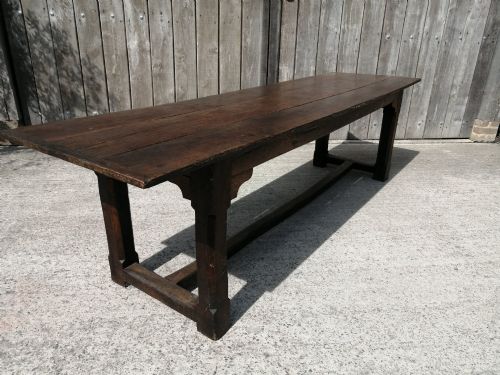
Several tables are large enough to comfortably seat twelve diners, perfect for hosting medieval banquets or very large Sunday roasts.
Assessing quality in construction
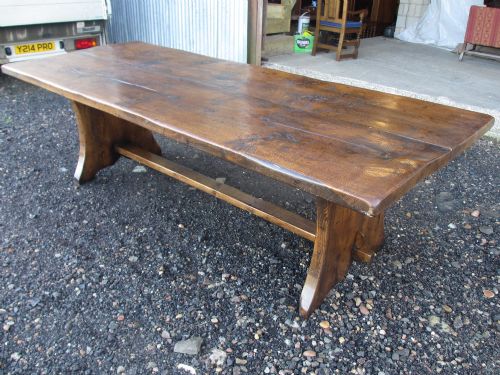
The distinction between ordinary and exceptional pieces lies in the selection of timber and the integrity of the original structure. Single plank tops of substantial thickness and width represent higher tiers of craftsmanship.
Proportion and the handling of supporting elements, such as shaped trestle ends or finely turned legs, determine visual balance. Unaltered patination and timber surfaces untouched by aggressive restoration elevate the standing of a piece.
The Traditional Oak Farm Table Glossary
- Refectory table
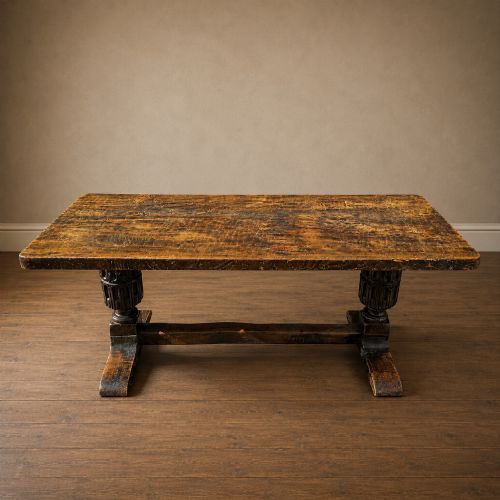
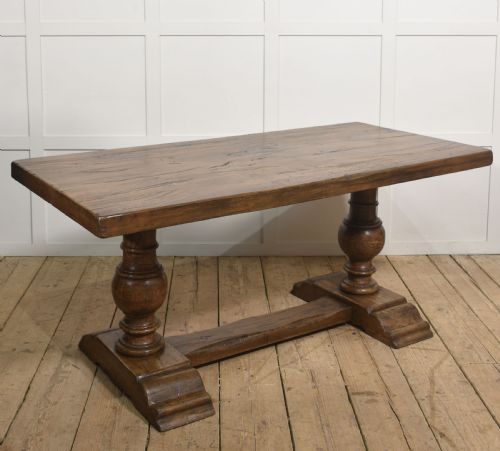
- A long, narrow dining table traditionally used in communal halls and monastic refectories. These forms dominate the heavier oak listings.
- Single plank top
- A tabletop surface constructed from one board of timber running the entire length. This feature is particularly prized in seventeenth and eighteenth-century examples.
- Trestle ends
- Support structures positioned at either end of a table rather than conventional corner legs. They often feature shaped profiles for added stability.
- Parquetry
- Geometric wood mosaic work used for decorative surface patterns. This technique appears on specific continental fruitwood examples.
- Patina
- The surface sheen and colour developed by timber through age, handling, and light exposure. It serves as a primary indicator of historical authenticity.
Traditional Oak Farm Table: Frequently Asked Questions
How do I clean a traditional oak farm table?
Use a damp cloth with mild soap for routine cleaning, avoiding harsh chemical sprays that strip natural oils. Dry the surface thoroughly immediately afterwards to protect the grain.
Apply a traditional beeswax periodically to nourish the timber and maintain the soft sheen. This preserves the historical patina without building up an artificial gloss.
Can I use these tables for daily family dining?
These tables were originally built for heavy daily use, making them exceptionally durable for modern family life. Solid timber construction withstands frequent gathering and everyday wear without compromising structural integrity.
Use coasters and placemats to protect against extreme heat and moisture rings. Embracing minor marks as part of the ongoing history of the timber ensures relaxed enjoyment.
How do I date an antique oak table?
Examine the construction marks, tool traces, and timber joints to establish the period of manufacture. Hand-cut peg joints and saw marks indicate older vernacular methods.
Compare the style, such as Jacobean revival details or George I proportions, with documented pieces. Variations in hardware and secondary woods like elm or beech also help narrow the timeline.
Will a large refectory table fit my kitchen?
Measure your floor space carefully, allowing ample room for chairs to pull out comfortably on all sides. Refectory tables are often long and narrow, which helps them fit into galley or rectangular spaces.
Consider the placement of trestles or legs relative to where chairs will sit. Benches can also tuck underneath to save floor space when the table is not in use.