
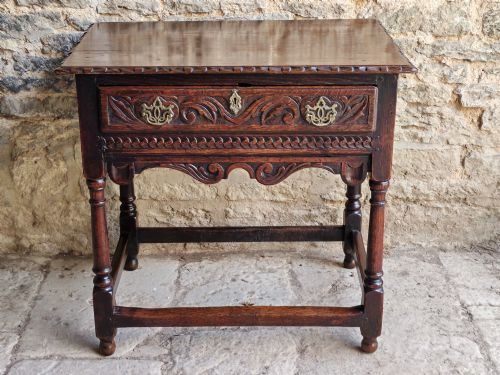
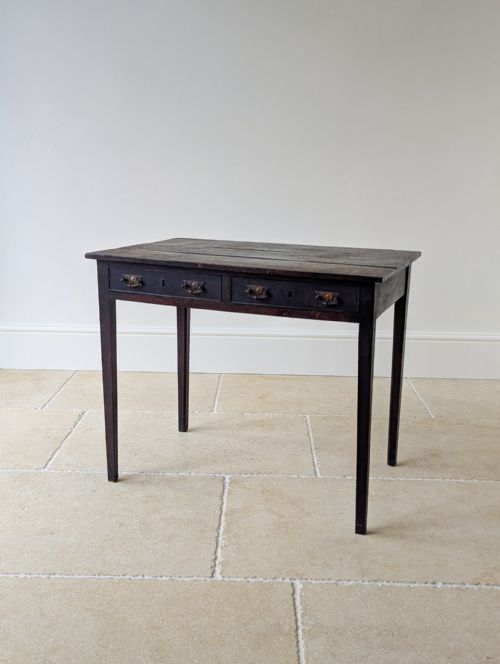


Traditional Oak Dressing Table
A traditional oak dressing table brings warm timber grain and practical surface space to a bedroom, offering centuries of regional craftsmanship.
Traditional Oak Dressing Table
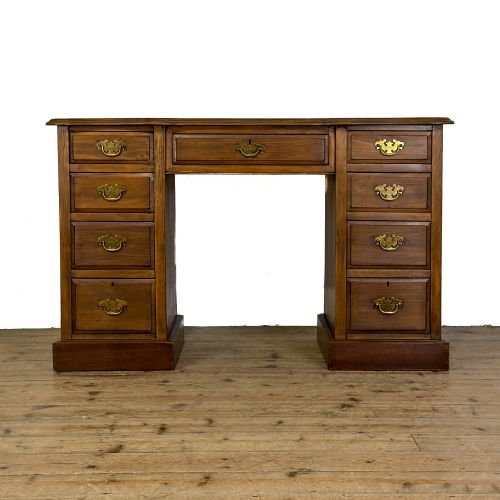
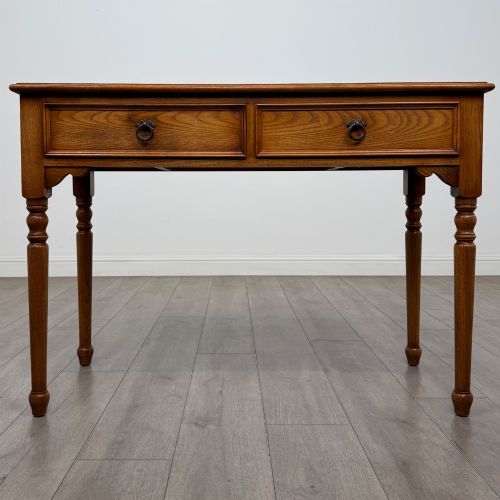
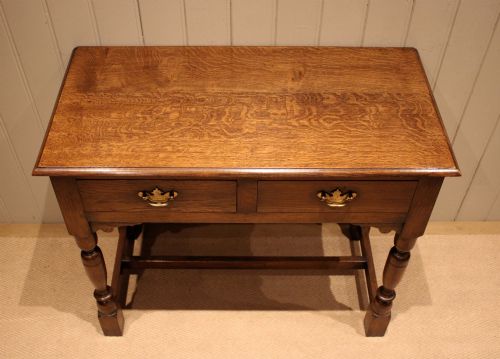
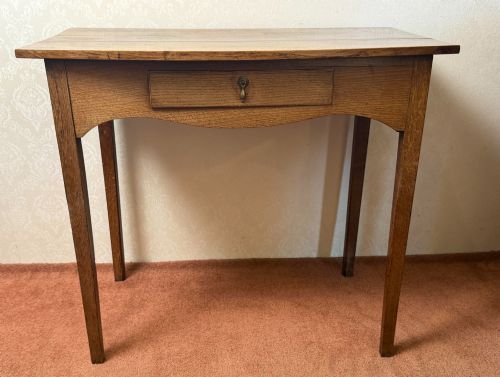
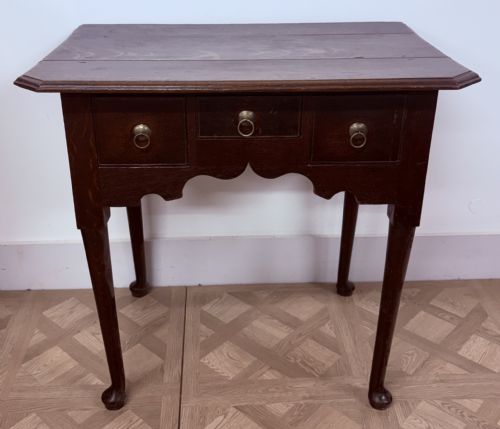
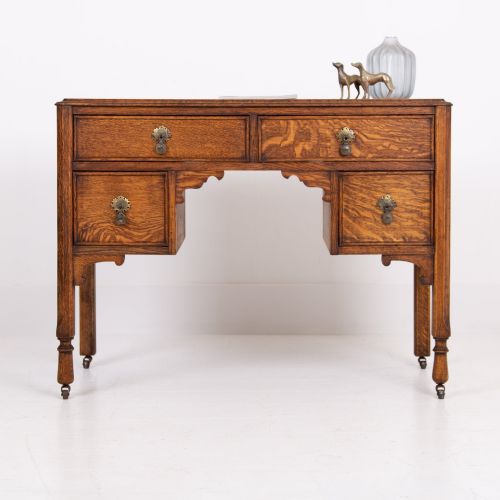
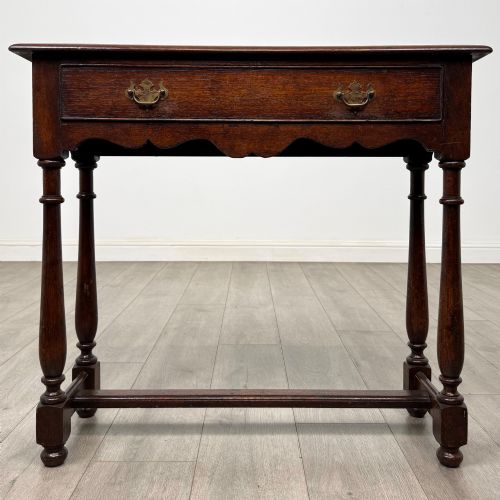
A traditional oak dressing table sits within a lineage of sturdy timber furniture designed for personal grooming and daily writing tasks. When searching for this form, buyers encounter examples spanning from the early 18th century through to the Edwardian period and the 1920s.
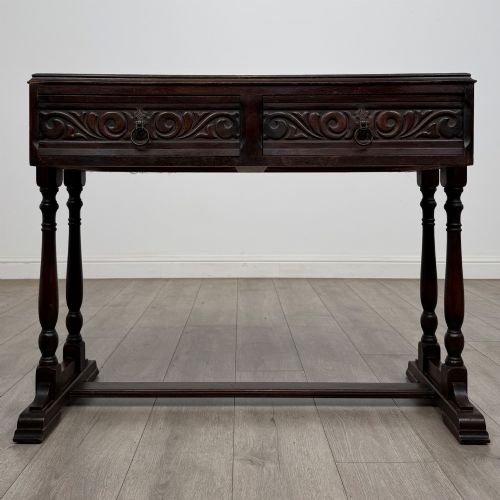
The pieces appearing on this page typically manifest as side tables, lowboys, writing desks, and console tables fashioned from oak, often supplemented by fruitwood and elm. Stylistic influences range from robust Jacobean and William and Mary revivals to restrained George III designs and English Country traditions.
Early specimens from the 1700s and mid-18th century provide compact proportions with fitted drawers, while later 19th-century and Edwardian pieces lean towards heavier carved decoration or narrow footprints suitable for smaller rooms.
How they were made
Cabinetmakers relied heavily on solid oak for structural integrity, occasionally introducing fruitwood or elm for secondary elements or contrasting drawer linings. Timber selection dictated the grain pattern, ranging from straight quarter-sawn boards to richly figured surfaces.
Construction techniques involve traditional joinery methods such as mortise and tenon frames, hand-cut dovetails for drawer boxes, and pegged joints on earlier examples. Surfaces received hand-applied finishes that enhanced the natural warmth of the wood without masking its inherent texture.
Early cabinetmakers occasionally mixed domestic fruitwood into oak drawer linings just to use up offcuts in the workshop.
What varies in quality
Quality rests upon the selection of timber and the crispness of the hand-carved details found on friezes, legs, and drawer fronts. Superior examples display thoughtful grain alignment and retain their original brass hardware, which anchors the visual proportions of the piece.
Structural integrity also separates standard utility pieces from finer creations, visible in the tightness of the joinery and the smooth glide of fitted drawers. The depth of the colour and the honesty of the timber patination reflect the age and care a table has received over generations.
Gillows
The Traditional Oak Dressing Table Glossary
- Lowboy
- A small oak or fruitwood table with one or more rows of drawers, originally used as a dressing table or side table. These compact tables usually feature cabriole or straight legs.
- Quarter-sawn
- A method of milling oak logs that produces distinctive parallel fleck markings across the grain. This cut improves dimensional stability in solid timber furniture.
- George III
- A British design period spanning the latter half of the 18th century characterised by refined proportions and classical restraint. Furniture from this era balances utility with elegant classical detailing.
- Jacobean Revival
- A 19th-century stylistic movement resurrecting the heavy turned supports, geometric paneling, and deep carving of 17th-century English interiors. Pieces in this style emphasise robust construction and dark oak finishes.
- Fruitwood
- Dense timber harvested from fruit-bearing trees such as pear or apple, utilised for secondary framing or contrasting details. It accepts fine turning and carving exceptionally well.
Traditional Oak Dressing Table: Frequently Asked Questions
How do I identify an 18th-century oak lowboy?
Examine the drawer construction for hand-cut dovetails and the underside of the boards for tool marks left by early saws. Eighteenth-century pieces generally show dry, oxidised timber surfaces beneath.
Check for pegged joinery in the frame and timber shrinkage that aligns with genuine age rather than simulated distress.
Can I use an antique side table for writing?
Many surviving side tables and lowboys feature adequate knee clearance and fitted drawers suitable for correspondence and modern laptop use. Their shallow depth allows them to fit comfortably into tight spaces.
Ensure the working height matches your chair before committing a table to daily desk duty.
How do I care for antique oak furniture?
Maintain the timber by applying a microcrystalline wax polish sparingly a couple of times a year to nourish the grain. Avoid placing oak tables near direct heat sources or in strong sunlight.
Use coasters and felt pads to protect the historic polish from moisture rings and scratches.
What is the difference between Georgian and Edwardian oak?
Georgian oak pieces rely on straightforward proportions, minimal decoration, and functional drawer configurations. They date from the 18th century and exhibit early hand-tool characteristics.
Edwardian oak furniture often incorporates revival styles with machine assistance, heavier mouldings, and sometimes factory-stamped hardware.