
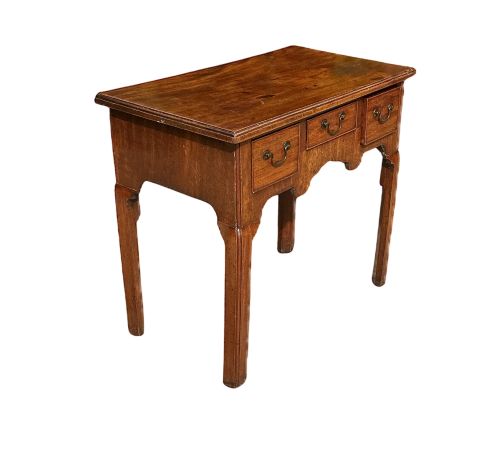
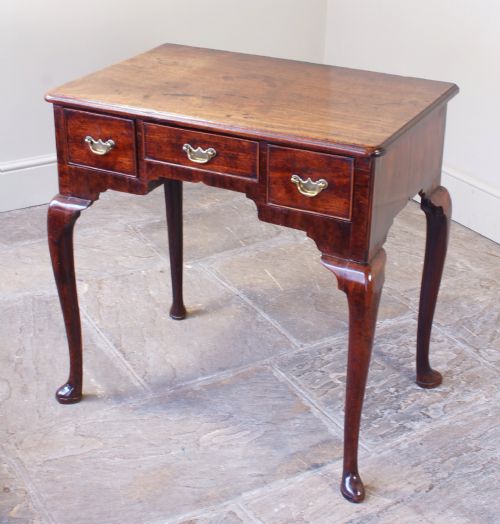


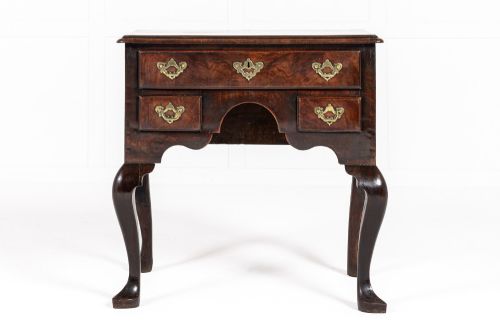

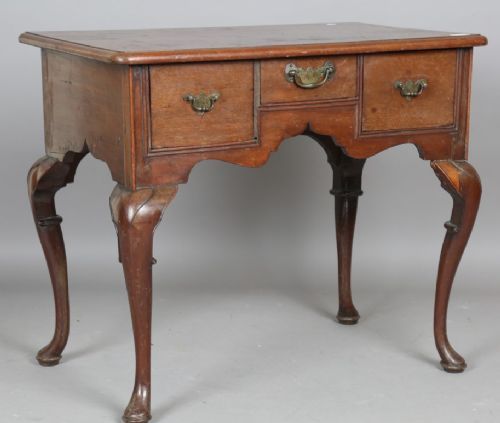
Mid 18th Century Lowboy
A mid 18th century lowboy offers compact table storage with deep roots in Georgian domestic life, prized for its proportion and craftsmanship.
Mid 18th Century Lowboy
A mid 18th century lowboy is a low side table typically outfitted with drawers, designed to serve practical storage needs in dressing rooms or parlours. When searching this phrase, buyers encounter pieces spanning the Georgian era, including specific George II designs alongside related dresser bases and side tables.
The most common version to meet on this page is constructed from oak, often sharing forms with side tables and featuring multiple drawers. Walnut and mahogany examples also appear frequently, alongside occasional variations in fruitwood marquetry and red walnut.
Origins trace directly to English and Irish workshops of the 18th century, showcasing cabinet-making traditions of the period. These tables frequently incorporate pad feet and multiple drawer configurations to balance utility with elegance.
Materials and construction methods
Cabinet-makers of the period relied heavily on hardwoods such as oak, mahogany, and walnut to build durable framework and drawer structures. Bleached oak and red walnut also appear, reflecting the specific timber supplies utilised across different workshops.
Inlaid decoration and marquetry surface work demonstrate advanced fruitwood techniques applied to select walnut pieces. Joinery integrates traditional methods to support the lowboy body, while brass hardware typically secures the drawer elements.
Listings combine oak, mahogany, walnut, and fruitwood marquetry across 18th century Georgian side tables, lowboys, and dresser bases.
Factors of quality and distinction
The choice of timber creates a primary distinction, as dense mahogany and figured walnut demand greater skill in handling than standard oak. Grain pattern selection and the crispness of carved details elevate certain examples above simpler utility pieces.
Surface treatment and patination heavily influence the character of each piece, distinguishing tables that retain their original finish from those altered over time. The integration of decorative elements like fruitwood marquetry further separates standard lowboys from more ambitious cabinet work.
The Mid 18th Century Lowboy Glossary
- Lowboy
- A small table with drawers, standing on relatively short legs, commonly used as a dressing table or side table in the 18th century. It provides compact surface space and concealed storage.
- Dresser base
- The lower section of a kitchen or dining room dresser, functioning as a heavy sideboard or serving table. These items share similar proportions and periods with standard lowboys.
- Pad foot
- A simple foot shape where the leg terminates in a rounded, pad-like block resting directly on the floor. This foot style appears frequently on mid 18th century oak examples.
- Marquetry
- The art of applying decorative pieces of veneer to a structure to form intricate patterns and pictures. Fruitwood marquetry appears on select walnut lowboys from this era.
- Red walnut
- A descriptor used for specific colonial or regional walnut timbers displaying reddish hues. Pieces built from this material possess distinct colouration compared to standard European walnut.
Mid 18th Century Lowboy: Frequently Asked Questions
What is a lowboy used for?
A lowboy functioned historically as a small dressing table or general side table for storing personal items in private chambers.
Today, owners utilise them as compact hallway surfaces, bedside tables, or living room accent pieces where space is limited.
Where were lowboys placed?
These tables were typically positioned against walls in bedrooms, dressing rooms, or formal parlours during the Georgian era.
In modern interiors, their modest proportions allow them to fit easily into narrow hallways, alcoves, or behind seating arrangements.
Are lowboys and side tables different?
A lowboy specifically denotes a small table equipped with one or more tiers of drawers, whereas a general side table may lack drawers entirely.
Many listings group them together due to overlapping forms and shared domestic functions during the 18th century.