
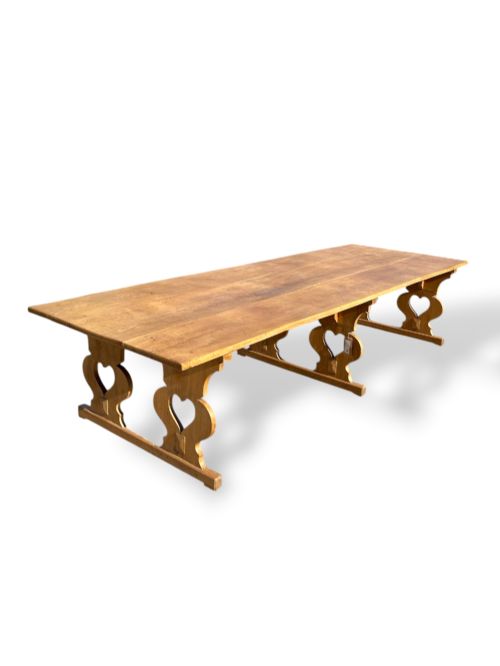
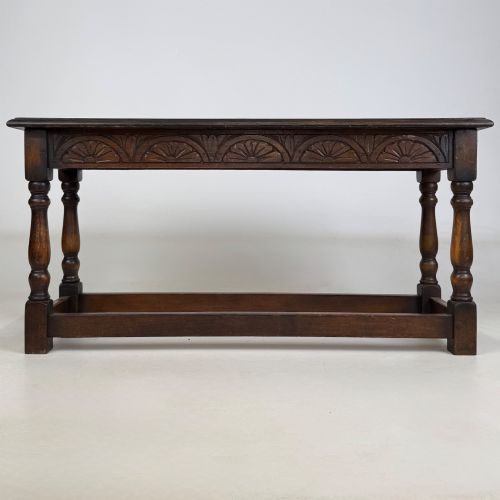


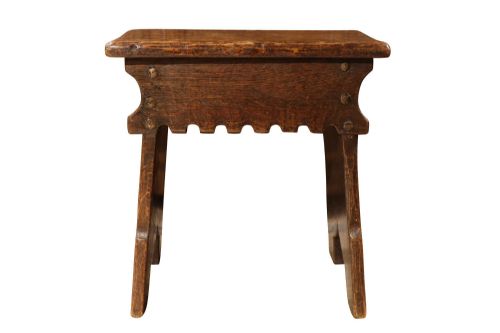


Traditional Oak Bench Table
A traditional oak bench table offers dual-purpose ingenuity, serving as a seat and a surface through clever historical designs.
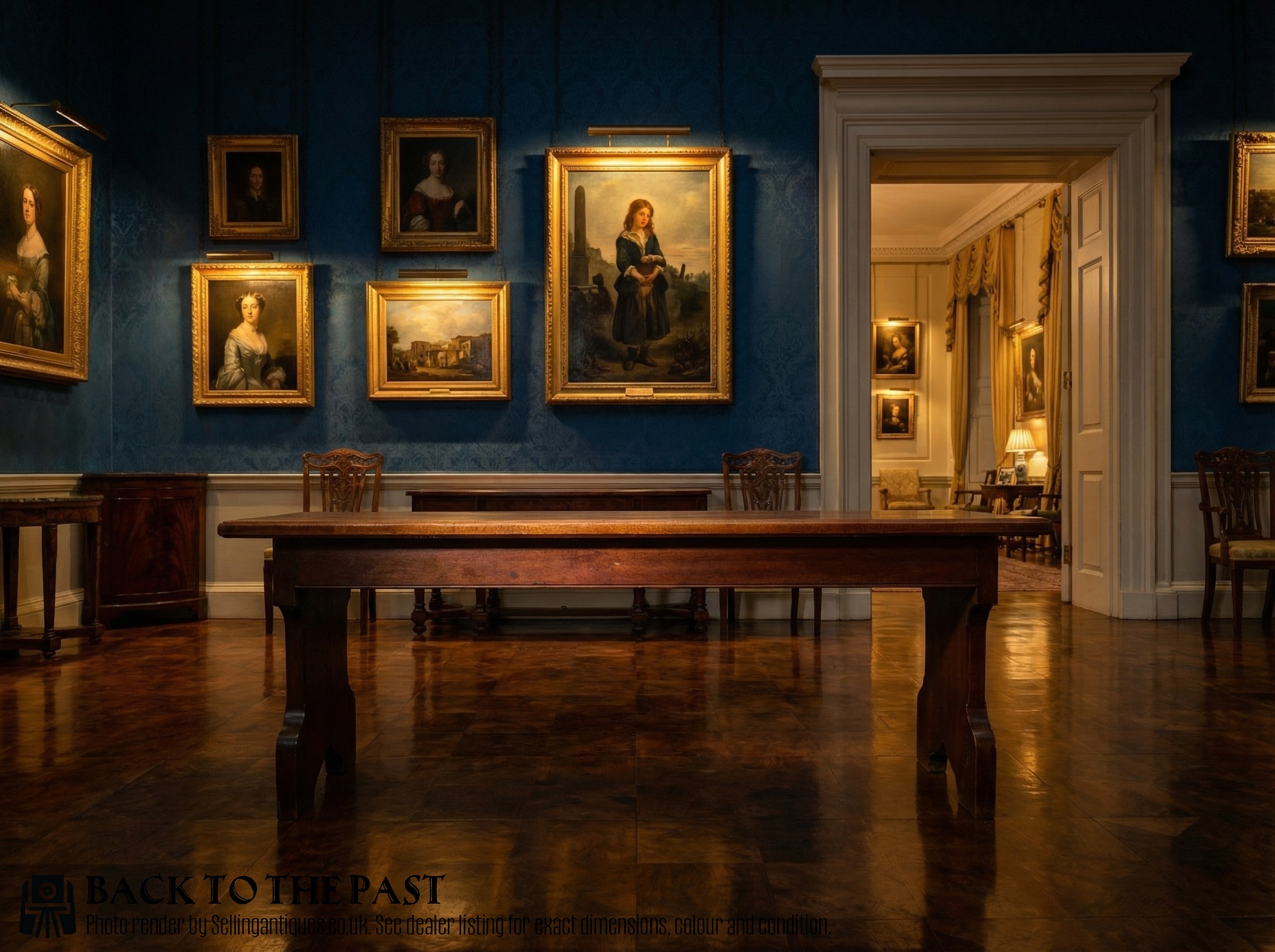
Traditional Oak Bench Table
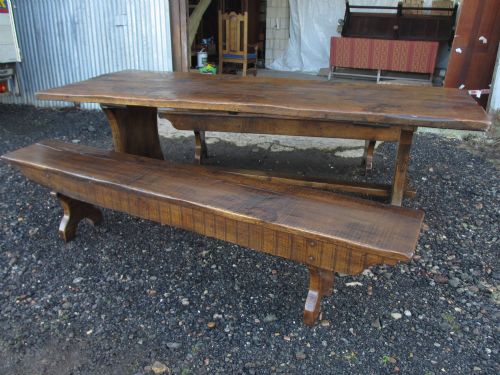
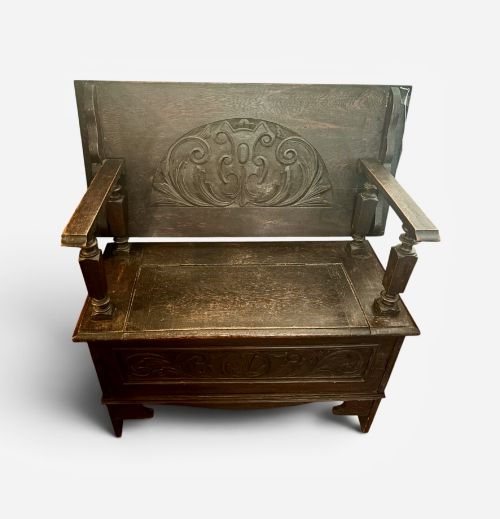
A traditional oak bench table encompasses versatile forms like monk's benches, hall seats, and refectory sets that bridge the gap between seating and surface utility. These pieces draw from eras including the Georgian, Victorian, Edwardian, and early twentieth century, showing strong ties to rustic country, farmhouse, and Jacobean revival traditions.
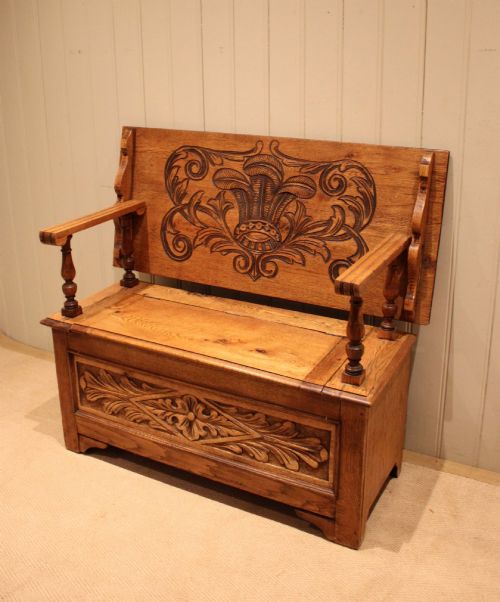
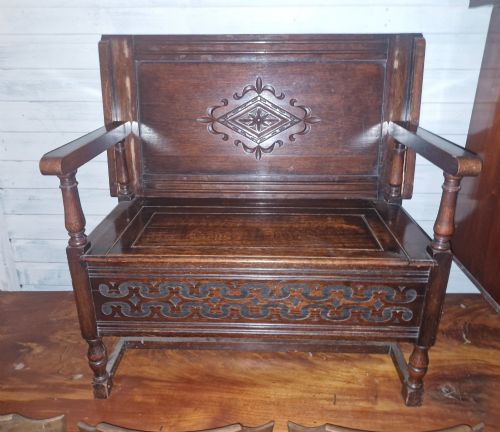
Buyers are most likely to encounter monk's benches featuring fold-over tops that transform a backrest into a table surface, alongside solid oak refectory tables with matching benches and hall seats with lift-up storage compartments. The selection spans compact hallway pieces to substantial French and English country house workbenches and tavern tables.
The origins of these items stretch across English, French, and Catalan workshops, utilising regional hardwoods to create utilitarian furniture designed for daily domestic or artisanal life. Whether configured as an armchair, a settle, or a long trestle dining set, each variation highlights robust construction intended for hard use.
Assessing Quality and Character
Quality rests in the integrity of the timber selection, visible in dense grain patterns, solid oak thickness, and the depth of natural patination accumulated over generations. Superior examples exhibit harmonious proportions and uncompromised structural unity across complex mechanisms like fold-over table tops.
Hand-carved detailing and traditional pegged joinery distinguish finer workshop pieces from simpler utilitarian outputs. The presence of authentic wear, balanced colour, and original structural elements elevates the standing of any piece within this category.
Catalan shepherds apparently required seating sturdy enough to double as an impromptu workbench out on the rugged hillsides.
The Traditional Oak Bench Table Glossary
- Monk's bench
- A multi-functional piece of furniture featuring a hinged back that folds down over the arms to form a table surface. It often includes a box seat compartment underneath for storage.
- Refectory table
- A long, narrow dining table traditionally used in communal dining halls and paired with matching benches. These often feature substantial trestle or pegged frame construction.
- Pegged construction
- A traditional method of joining timber sections using wooden dowels or pins instead of metal nails. This technique accommodates wood expansion and contraction over time.
- Settle
- An early wooden bench featuring a high solid back to block drafts, carved panel details, and enclosed storage beneath the seat. They were historically placed near hearths in domestic interiors.
- Patina
- The deep, lustrous surface sheen developed on timber through decades of handling, polishing, and natural oxidation. It serves as a visual indicator of age and consistent care.
Traditional Oak Bench Table: Frequently Asked Questions
What is a monk's bench used for?
A monk's bench functions as a dual-purpose item, operating as a seated chair with a high back or converting into a flat table by pivoting the top forward.
Historically, this space-saving design provided a secure seat and an eating surface within smaller domestic rooms.
How do I identify an Edwardian oak bench?
Edwardian oak benches often display revival styles such as Jacobean carving, combined with lighter framing proportions than their heavier Victorian predecessors.
Examining the underside, timber grain, and construction joints helps reveal the manufacturing period.
Are workbenches used as tables?
Antique workbenches serve effectively as large coffee tables or serving surfaces due to their deep timber tops, integrated vices, and robust industrial character.
They bring tactile history and substantial surface area into modern living spaces.
What is a five-plank stool?
A five-plank stool is an early form of seating constructed from distinct solid boards joined together to form a sturdy top and supporting ends.
These pieces rely on simple, robust carpentry traditions rather than complex upholstery.