

Traditional Monastery Table
A traditional monastery table brings substantial timber and historic character to a dining space, offering generous proportions for daily gatherings.
Traditional Monastery Table
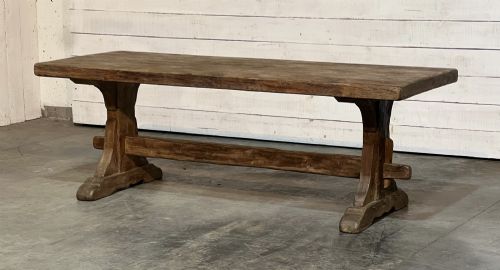
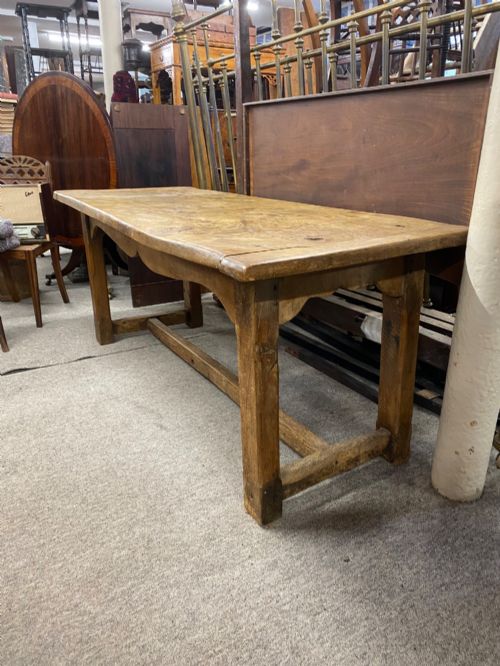
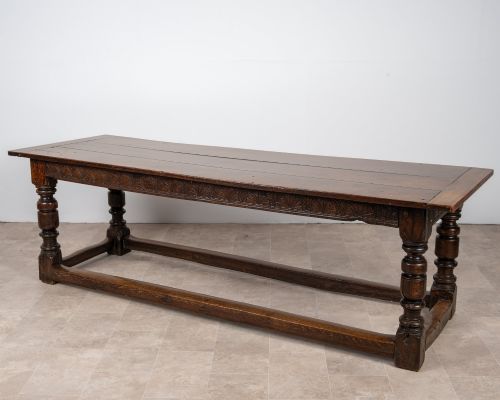
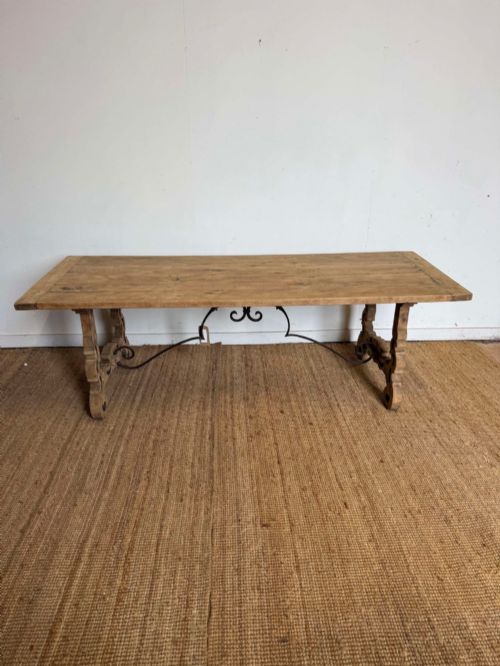
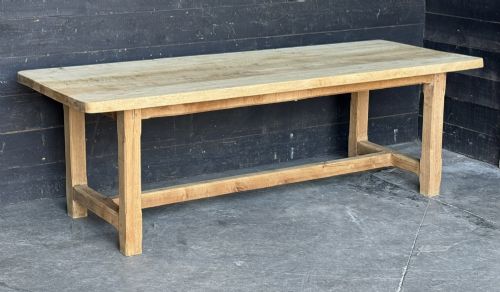
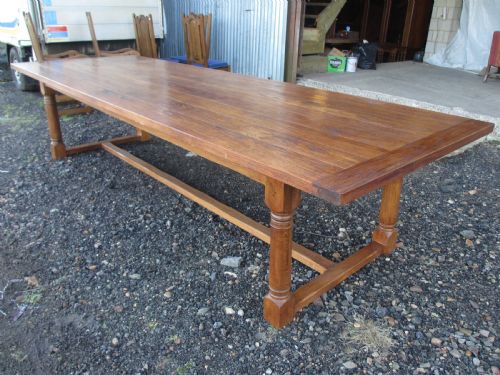
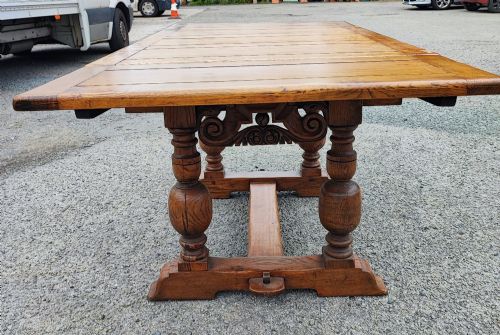
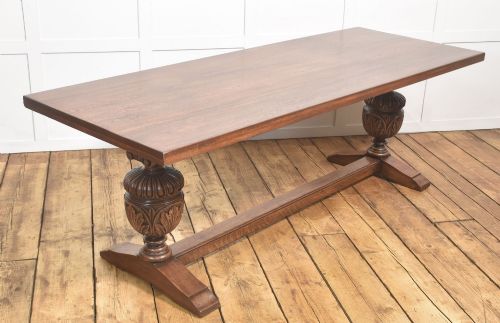
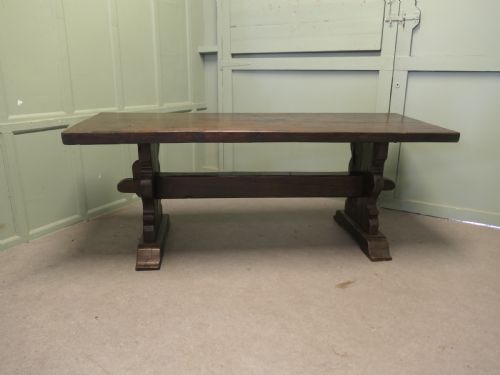
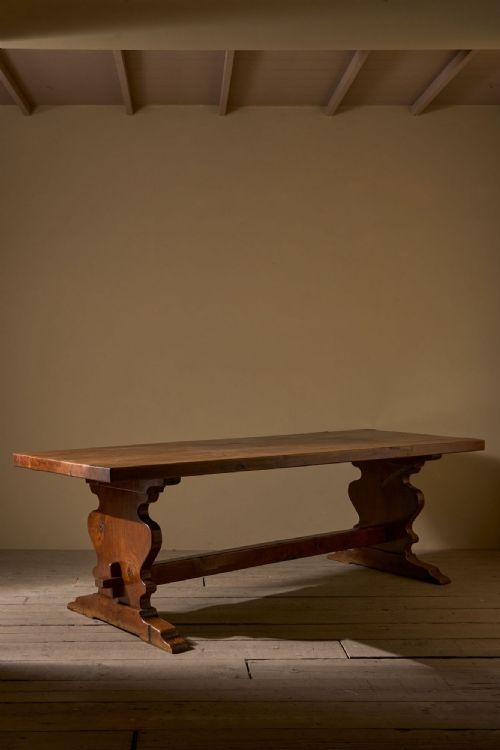
A traditional monastery table typically presents as a long, heavy dining surface designed for communal meals, drawing directly from historical refectory forms. These large tables appear frequently in solid oak, walnut, elm, and pine, spanning periods from the seventeenth century through to the early twentieth century.
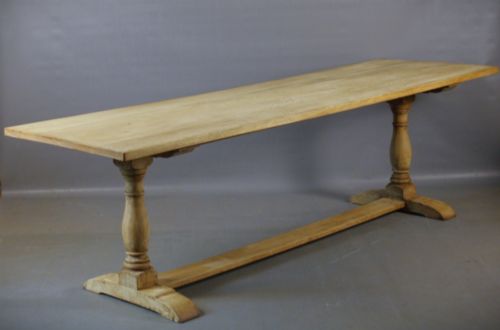
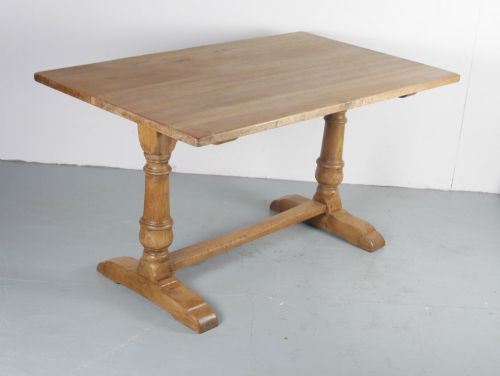
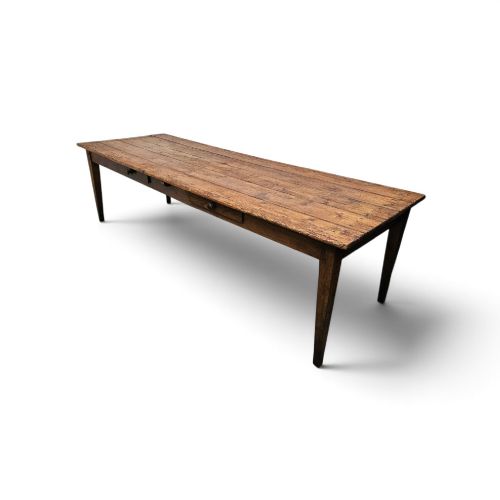
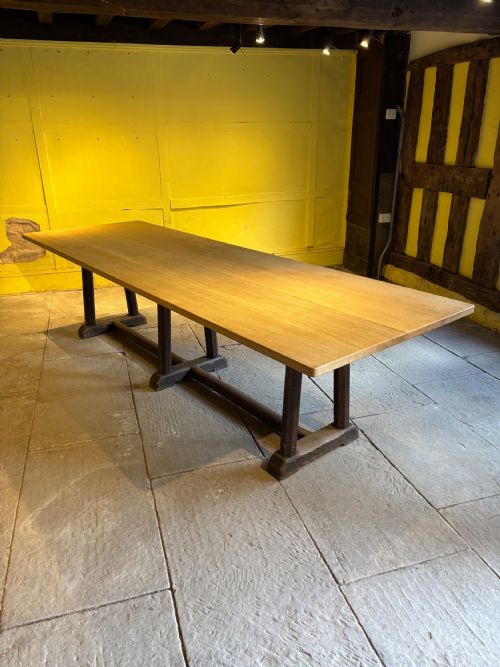
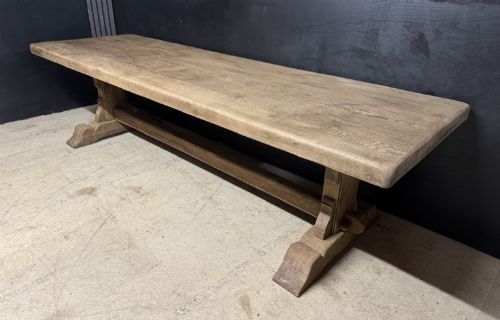
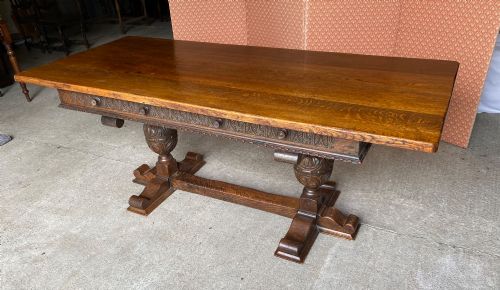
Buyers meet various iterations on this page, including seventeenth century examples, eighteenth century pieces, and later revivals such as Jacobean Revival and Gothic Revival styles. Many pieces feature planked timber tops paired with trestle ends, shaped supports, or matching bench forms.
Origin points range from English country workshops to French provincial makers, resulting in variations between rustic farmhouse aesthetics and more formal architectural detailing.
Materials and construction methods
Makers relied primarily on solid oak, supplemented by walnut, elm, and pine, building robust timber structures capable of enduring heavy daily use. Planking techniques define the tabletops, utilising two or three wide boards joined securely together.
Support systems depend on sturdy trestle ends, shaped legs, or heavy frames, often incorporating brass or wooden fixings. Surfaces remain unpainted or show bleached finishes, highlighting the natural grain and texture of the wood.
Traditional Monastery Table Retail Price Guide 2026
Typical asking prices for traditional monastery table among the pieces listed under this phrase on Sellingantiques today, from the lower quarter to the upper quarter. They describe what is for sale here now, not the wider market.
Listings span periods from the 17th century through the Edwardian era, constructed primarily in solid oak, walnut, elm, and pine.
Judging quality in historic dining furniture
Quality rests in the selection of the timber and the integrity of the original construction, distinguishing heavy, stable pieces from lighter reproductions. The thickness of the plank top and the depth of the grain contribute significantly to the physical presence of the table.
The harmony between the base construction and the top dictates the overall success of the piece, particularly where shaped trestles or period stylistic details are involved.
The Traditional Monastery Table Glossary
- Refectory table
- A long narrow dining table originally built for monastic dining halls. These pieces form the core of the items listed under this search.
- Draw leaf table
- A table equipped with sliding leaves tucked beneath the main top that pull out to extend the surface length. This mechanism offers flexibility for seating additional guests.
- Trestle ends
- Supporting vertical frames set near the ends of a table rather than corner legs. They provide stability and allow maximum legroom along the length.
- Plank top
- A table surface constructed from individual boards joined edge to edge rather than a single sheet. Historic examples often display two or three wide planks.
- Jacobean Revival
- A nineteenth or twentieth century style imitating the heavy, geometric ornamentation of early seventeenth century English furniture. Pieces often feature carved friezes and sturdy turned supports.
Traditional Monastery Table: Frequently Asked Questions
How do I seat twelve people?
Many large refectory and farm tables provide sufficient length to accommodate twelve diners comfortably, particularly versions exceeding standard proportions.
Matching bench forms or slim chairs assist in fitting guests along the extended sides without crowding the trestle supports.
Are these tables suitable for daily use?
Solid oak and walnut construction ensures these surfaces handle heavy everyday kitchen and dining activities with ease.
Historic timber withstands regular use while accumulating a natural patina over decades of family gatherings.
What is a bleached oak finish?
Bleached oak involves lightening the natural tone of the wood while retaining the underlying grain pattern and texture.
This treatment appears on Edwardian and later pieces, offering a brighter aesthetic than dark traditional finishes.
How do I distinguish seventeenth century pieces?
Seventeenth century tables display authentic period construction techniques, hand-carving, and dense timber patination developed over centuries.
Revival pieces from the nineteenth and twentieth centuries emulate these early forms but carry later structural markers.